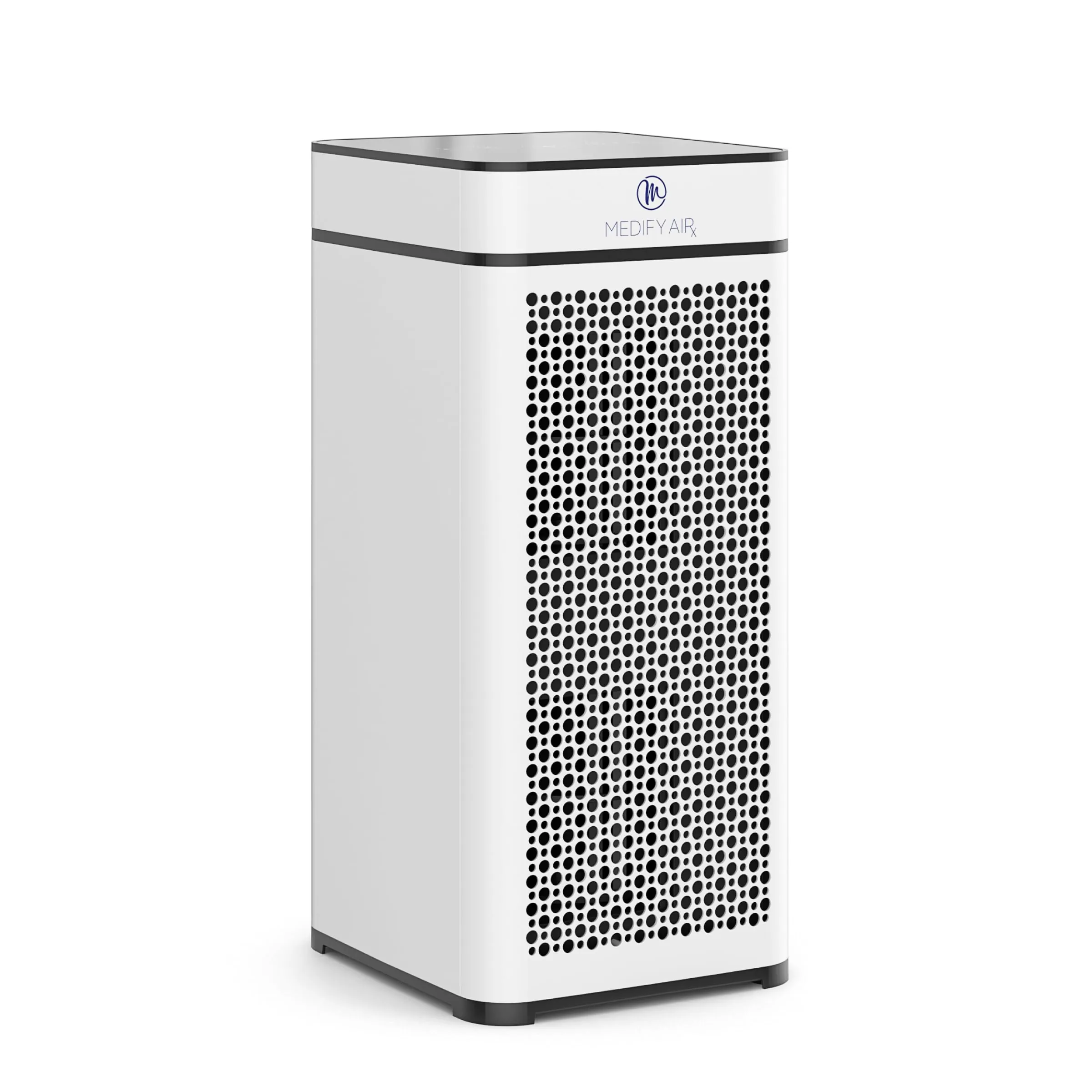
#1 Overall Winner
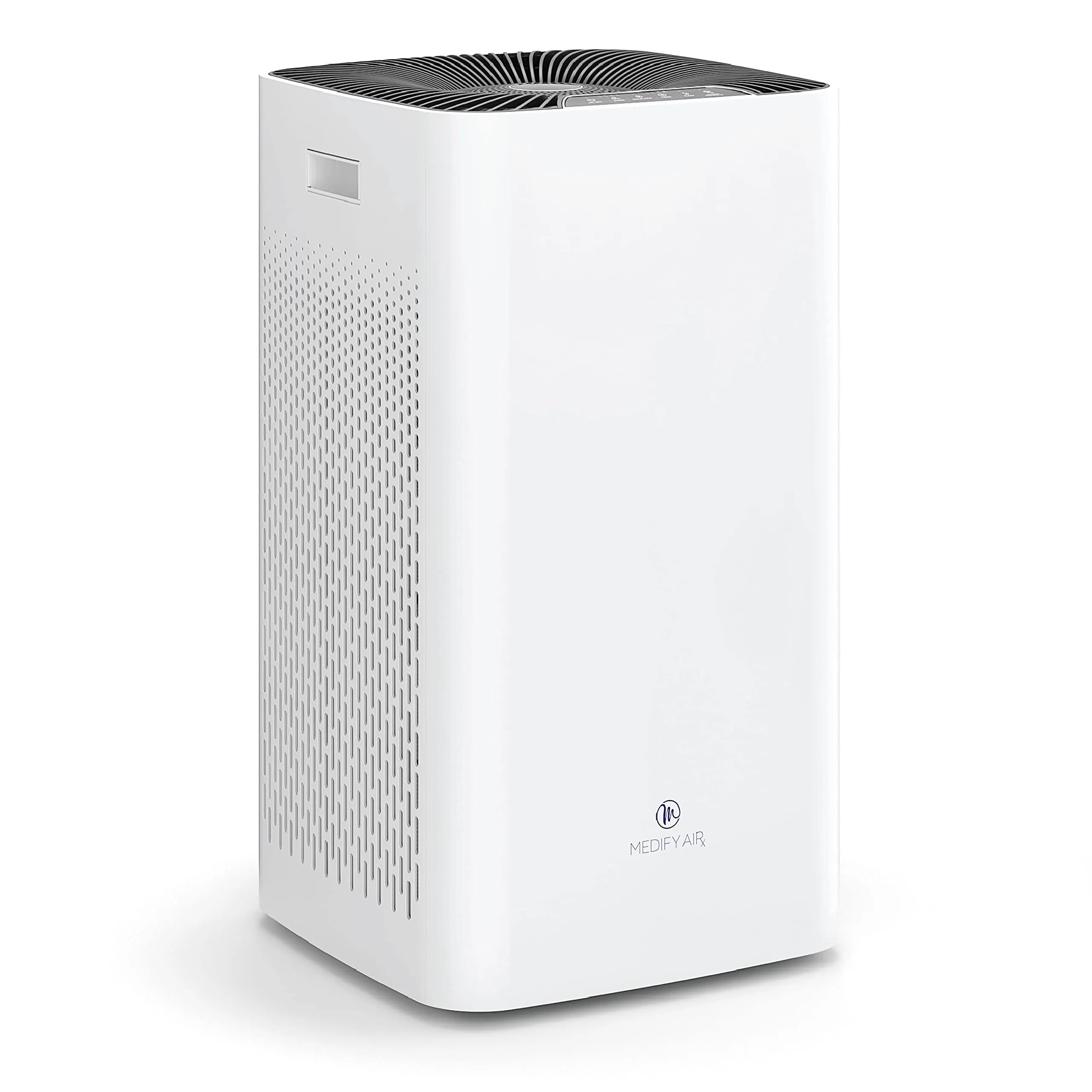
Medify MA-112 Air Purifier V3.0
- High claimed coverage for very large rooms and open-plan areas.
Comparison
The Medify MA-112 and MA-14 both use H13 filtration for airborne particles, odors and common household pollutants, but they serve very different room sizes. The MA-112 prioritizes high claimed coverage and automatic sensing, while the MA-14 is a lower-cost, lightweight purifier for smaller rooms.
#1 Overall Winner
Contender
Choose the MA-112 for large rooms, open-plan spaces and buyers who want auto mode, air sensing and longer stated filter life. Choose the MA-14 for smaller rooms, portable use and a much lower upfront cost. Both offer H13 filtration, but their size and intended coverage are substantially different.
Overall winner
Depends on your needs
| Feature | Medify MA-112 Air Purifier V3.0 | Medify MA-14 Air Purifier | Winner |
|---|---|---|---|
| Primary room fit | Very large rooms and open spaces | Small to medium rooms | Medify MA-112 Air Purifier V3.0 |
| Claimed coverage in one hour | Up to 4,455 sq ft | Up to 470 sq ft | Medify MA-112 Air Purifier V3.0 |
| CADR | 1009 | 120 | Medify MA-112 Air Purifier V3.0 |
| Filtration | Dual H13 HEPA and activated carbon | H13 high-efficiency filter | Medify MA-112 Air Purifier V3.0 |
| Fan speeds | Four | Three | Medify MA-112 Air Purifier V3.0 |
| Automatic sensing | Dust sensor, PM2.5 indicator and auto mode | Not stated | Medify MA-112 Air Purifier V3.0 |
| Sleep features | Sleep mode with dimmed panel | Sleep mode with dimmed lighting | Tie |
| Maximum stated noise | 70 dB | 55 dB | Medify MA-14 Air Purifier |
| Weight | 32 lb | 2.4 lb | Medify MA-14 Air Purifier |
| Filter life | About 6 months | About 3–4 months | Medify MA-112 Air Purifier V3.0 |
| Upfront price | $594.99 | $99.99 | Medify MA-14 Air Purifier |
| Smart-home support | Not stated | Not smart-home compatible | Tie |
For general home use, the MA-112 works best as a fixed appliance in the main living area, where its stated airflow and broad coverage can serve a larger shared zone. The MA-14 is more flexible for targeted room cleaning: it can be placed near a bed, desk, nursery or pet area and moved when household routines change. A home with several enclosed rooms may benefit more from appropriately sized units than from relying on one oversized purifier across closed doors.
Both purifiers are relevant to home hygiene because they are marketed for dust, pollen, pet dander, odors and smoke. The MA-112 has the advantage for a large pet area or an open living-and-kitchen zone, where more air needs to be circulated. Its sensor and auto mode may also be useful when airborne dust changes. The MA-14 is better suited to smaller odor-prone spaces, but it should be sized to the room rather than expected to clean air across an entire home.
Neither product controls temperature or humidity, but both can contribute to perceived room comfort by filtering airborne particles and odors. The MA-112 is better positioned for improving the air feel in a large shared space, especially where cooking smells, pets or outdoor smoke are concerns. The MA-14 is a better physical fit for a sleeping area or personal office. Both include sleep-oriented operation, although high-speed noise may be distracting for some users.
The MA-112 has the clearer performance advantage for large-area purification. Its supplied CADR of 1009, dual H13 filtration and claimed one-hour coverage up to 4,455 square feet indicate substantially greater air-moving capacity than the MA-14, which is claimed for up to 470 square feet. Reviews for the Medify range frequently describe reduced odors, dust and discomfort in pet or smoke contexts, though those experiences are not a substitute for controlled room testing. The MA-14 still appears well suited to its intended small-to-medium-room role, but it should not be selected for the same coverage demands as the MA-112.
Both models have strong overall buyer sentiment in the supplied data, but reliability should be considered alongside the reported exceptions. Reviews include an account of a working unit performing well for months, as well as accounts of received units with rattling or poor assembly. Some feedback also mentions unclear or delayed communication around shipping or registration. The available reviews are not consistently separated by model, so they cannot establish that one model is more reliable. Inspect either purifier on arrival, keep proof of purchase and complete any required warranty registration promptly.
Both products use H13 filtration and are marketed for particles down to 0.1 microns, including pollen, pet dander, dust and smoke-related contaminants. The MA-112 has the stronger cleaning proposition for large rooms because of its dual-filter configuration, high supplied CADR and automatic dust response. The MA-14 is more appropriate for cleaning the air in one smaller room at a time. Customer feedback describes positive odor and dust outcomes, but a few reviews say smoke odor removal was incomplete.
Neither purifier heats, cools or dehumidifies. Their climate-comfort relevance is limited to air quality: both are marketed for smoke, pollen, dust, odors and other airborne contaminants. The MA-112 has the stronger case for a large living area affected by outdoor smoke or cooking-related odors because it is rated for greater coverage. The MA-14 is better reserved for a contained bedroom, study or nursery.
Both models are listed as CARB and ETL compliant in the supplied details and include filter replacement reminders, which can help users keep the filtration system operating as intended. The MA-112 adds a child lock, which can reduce unintended control changes in homes with children or pets. Its optional ionizer should be treated as an optional mode; buyers who do not want to use it can leave it off. Because the MA-112 is heavy, it should be placed on a stable surface and lifted carefully. No specific overheating, tip-over or electrical-fault claims are provided, so standard manufacturer placement and operating guidance remains important.
For everyday comfort, the MA-112 is better for a large family space where pets, cooking odors or outdoor air events affect more than one activity zone. Its auto mode can reduce the need for repeated manual changes. The MA-14 offers a more personal form of comfort: it is easy to position near a bed or workspace and includes a dimmed sleep mode and night light. Comfort depends on matching purifier size to the room and avoiding unnecessarily loud fan settings.
Both models are designed for straightforward plug-in operation with touch controls, sleep settings and a filter reminder. The MA-14 is the easier model to relocate because of its much lower listed weight, making it convenient for temporary use in a bedroom or office. The MA-112 is still simple to operate, but its size makes it more suitable for a permanent position. Buyers who want set-and-forget operation may prefer the MA-112's auto mode; those who want minimal controls may prefer the MA-14.
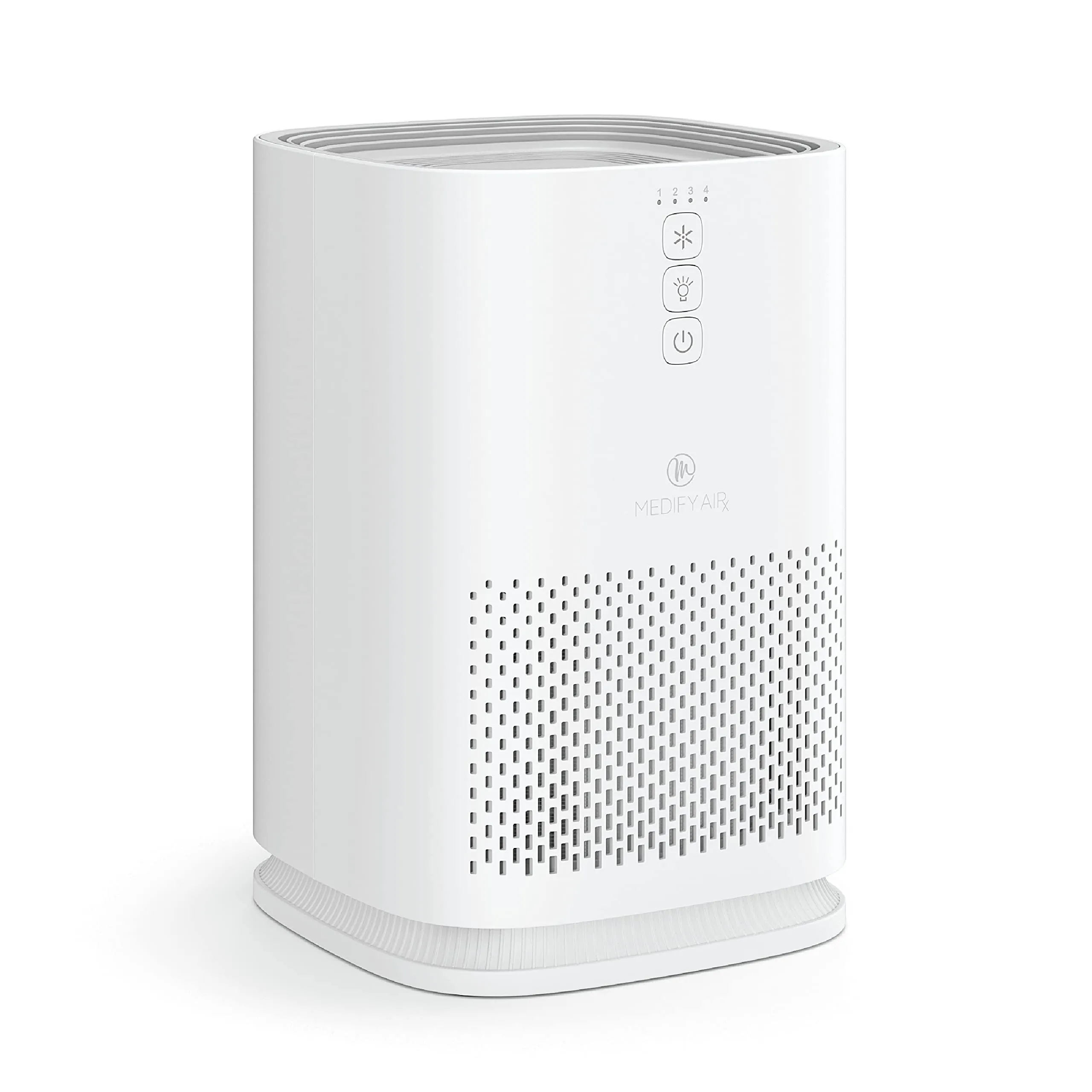
The MA-112 is a substantial floor-oriented purifier, listed at 20 by 15.2 by 11 inches and 32 pounds. It is designed to remain visible and stationed where it can serve a broad area. The MA-14 is presented as a tabletop purifier and is listed at 2.4 pounds, making it the more adaptable choice for a desk, bedside table or shelf. The supplied MA-14 measurements conflict with its tabletop positioning and weight, so buyers should confirm dimensions with the seller before purchase.
Capacity is the defining difference. Medify states that the MA-112 can clean up to 4,455 square feet in one hour, or 2,228 square feet in 30 minutes, with a CADR of 1009. The MA-14 is stated to clean up to 470 square feet in one hour with a CADR of 120. Room layout, ceiling height, open doors and pollution source all affect real-world results, but the MA-112 is plainly the model for much larger volumes of air.
The MA-14 is the better fit for flats, bedrooms, desks and rooms with limited floor area because it is described as a tabletop purifier and is lightweight. The MA-112 consumes more physical space but uses that larger format to support much higher stated coverage. It makes sense where a purifier can remain in an open part of a large room. Buyers should verify MA-14 dimensions before ordering because the supplied specifications contain conflicting size information.
The MA-14 has the lower stated maximum noise level, while the MA-112 is specified up to 70 dB. Both offer sleep-oriented settings, and reviews are divided: some buyers call low settings quiet, while others find higher speeds intrusive. The MA-14 is the safer starting point for a quieter small-room setup on paper, but either model may become noticeable when run at maximum airflow.
Neither model requires permanent installation: both are plug-in purifiers with touch controls. The MA-14 is easier to set up temporarily because its listed weight is very low and it is intended as a tabletop unit. The MA-112 requires more thoughtful placement due to its size and weight; allow open airflow around the intake and exhaust rather than pushing it tightly against furniture. No app pairing, wiring or hub setup is stated for either purifier.
The supplied review material includes positive comments about the MA-112's modern appearance and accessible filters, but it also contains reports of rattling, crooked seams and thin plastic filter-cover releases on some units. Similar model-specific quality detail is not reliably separated for the MA-14 in the supplied reviews. Both products should be inspected promptly after delivery, particularly for loose internal parts or panel fit. The MA-112's larger, heavier form could be less forgiving if dropped, while the MA-14's light weight supports easier handling.
Neither model has detailed long-term component-life data in the supplied information. The MA-112's filter is stated to last about six months, compared with about three to four months for the MA-14, which may mean fewer routine filter changes. Review comments about thin plastic cover releases and rattling on some units are reasons to handle the MA-112 carefully and check fit on delivery. For either model, regular filter replacement and avoiding falls or blocked intakes are sensible long-term care measures.
Maintenance for both models centers on replacing the filter when the reminder indicates it is due. The MA-112's replacement filter is stated to last around 3,000 hours or six months, while the MA-14's is stated to last around 2,500 hours or three to four months. The MA-112 therefore has a less frequent stated replacement cycle, although its filters may cost more. Neither supplied description provides washable-filter instructions, so buyers should follow the product manual rather than assume filters can be cleaned and reused.
The MA-14 is the clear portability choice. At a listed 2.4 pounds, it is practical to carry between a bedroom, office and smaller living area. The MA-112 is listed at 32 pounds and is more appropriately positioned as a stationary large-room appliance. One review also notes that its single handhold can make lifting less balanced, reinforcing the case for choosing a permanent location.
The MA-112 is more fully equipped. Its touch panel includes four fan speeds, a zero-to-eight-hour timer, sleep mode, a filter indicator, child lock, optional ionizer, dust sensor, PM2.5 indicator and auto mode. The MA-14 takes a simpler approach with three speeds, sleep mode, a night light and a filter replacement indicator. Both provide the essentials for everyday manual operation, but the MA-112 offers more adjustment and can respond automatically to detected airborne dust.
The MA-112 offers meaningful onboard automation through its dust sensor, PM2.5 indicator and auto mode, allowing fan behavior to respond without constant manual changes. It also has a timer. The MA-14 has no stated sensor-based automation or timer; its operation is primarily manual, with a sleep mode and filter reminder. Neither model has supplied app or smart-home controls.
Both products are listed as plug-in units with 95-watt specifications, but no measured energy-use or annual running-cost data is supplied, so a decisive electricity-efficiency claim is not possible. The MA-112 may be operationally efficient for a large open area because its higher airflow can cover more space with one unit. The MA-14 may be the more proportionate choice when only one small room needs treatment. Filter replacement frequency also matters: the MA-112 has the longer stated interval.
The MA-14 provides the stronger value proposition for a single small or medium room. Its purchase price is far lower, it retains H13 filtration and basic sleep and filter-indicator features, and it is easy to move where needed. The MA-112 costs much more, but its value lies in replacing the need to use several small purifiers in one large open area, while adding auto mode, sensing and a longer stated filter interval. Neither model is automatically inexpensive to own: buyer feedback notes filter costs, so replacement-filter pricing and availability should be checked before deciding.
Both products come from Medify Air and carry the same stated CARB and ETL listings, H13 filtration positioning and lifetime-warranty offer with registration. Their aggregate ratings and large review counts indicate broad buyer engagement. However, the supplied feedback also includes complaints about quality control, shipment issues and communication in isolated cases. Since they share the same brand and warranty framework, there is no clear brand-trust winner; model choice should rest on room size, features, price and handling needs.
Both models have the same supplied aggregate rating and review count, with very positive overall customer-satisfaction assessments. Repeated praise includes easy setup, fresher-feeling air, odor reduction and usefulness around pets, pollen and smoke concerns. Noise is the most consistent point of disagreement: low or sleep modes are often described as quiet, while higher settings can be disruptive for some buyers. Value feedback is also mixed because replacement filters add ongoing expense. The review examples are not consistently model-specific, so perceived satisfaction should be treated as an indicator for the range rather than a precise model-by-model result.
Both models are backed by a stated USA registered lifetime warranty, so buyers should check the registration requirements and complete them promptly. The supplied reviews include a cautionary account of missed registration timing and concerns about seller communication or defective delivered units. Keep the order details and inspect the purifier immediately after arrival. The MA-14 has a slightly stronger support assessment in the supplied scoring, but the provided warranty terms are broadly the same.
The Medify MA-112 wins for large-room air cleaning because it has vastly greater stated coverage, a higher supplied CADR, dual H13 filtration and useful automatic controls. Its main limitations are the high purchase price, 32-pound weight, ongoing filter expense and mixed reports on high-speed noise and occasional build quality.
The Medify MA-14 is the better everyday purchase for a smaller room. It is much cheaper, lightweight and simple to place near a bed or desk, while retaining H13 filtration, sleep mode and a filter reminder. Its limitations are its lower room capacity, shorter stated filter life and lack of sensing or auto mode. Select the MA-112 for scale and automation; select the MA-14 for compact, room-by-room value.

Overall winner
Depends on your needs
The MA-112 is the stronger fit for large spaces because its stated coverage and CADR are far higher, and it adds sensor-based auto mode. The MA-14 is the more practical option for a bedroom, office or other smaller room when lower purchase cost, low weight and a compact footprint matter more than whole-area coverage.
The MA-112 is the more suitable choice for a large living room or open-plan area. Medify states coverage up to 4,455 square feet in one hour and provides a CADR of 1009. The MA-14 is specified for up to 470 square feet in one hour, making it better matched to smaller enclosed spaces.
Yes. The supplied data lists the MA-14 at 2.4 pounds, while the MA-112 is listed at 32 pounds. That difference makes the MA-14 a much more convenient choice for moving between a bedroom, office or nursery. The MA-112 is better treated as a purifier with a dedicated location.
The MA-112 has the fuller control set. It includes a dust sensor, PM2.5 pollution indicator, auto mode, an eight-hour timer, four fan speeds and a child lock. The MA-14 focuses on basic operation with three fan speeds, sleep mode, a night light and a filter replacement indicator.
The MA-14 has the lower stated maximum noise level, while both models offer a low-speed or sleep setting intended for quieter use. However, buyer feedback is mixed for both, with some users finding them unobtrusive and others finding higher settings too loud for sleep. Higher fan settings should be expected to be more noticeable.
Medify states that the MA-112 replacement filter lasts about 3,000 hours, or roughly six months. The MA-14 filter is stated to last about 2,500 hours, or about three to four months. Actual replacement timing can vary with fan speed, runtime and the amount of dust, smoke or pet debris in the room.
Both models are marketed for pet dander and odors, and both combine H13 particle filtration with odor-focused filtration. Reviews describe positive experiences in pet areas and around litter boxes, although individual odor results can depend on room size, pollutant source and placement. The MA-112 is better suited to a larger shared pet area.
No connected controls are provided for either model in the supplied data. The MA-14 is explicitly listed as not smart-home compatible. The MA-112 has automatic operation through its onboard dust sensor, but there is no stated Wi-Fi, app, voice-assistant or smart-home ecosystem support.
Check our rankings and expert guides to find the best home lifestyle products for your goals.