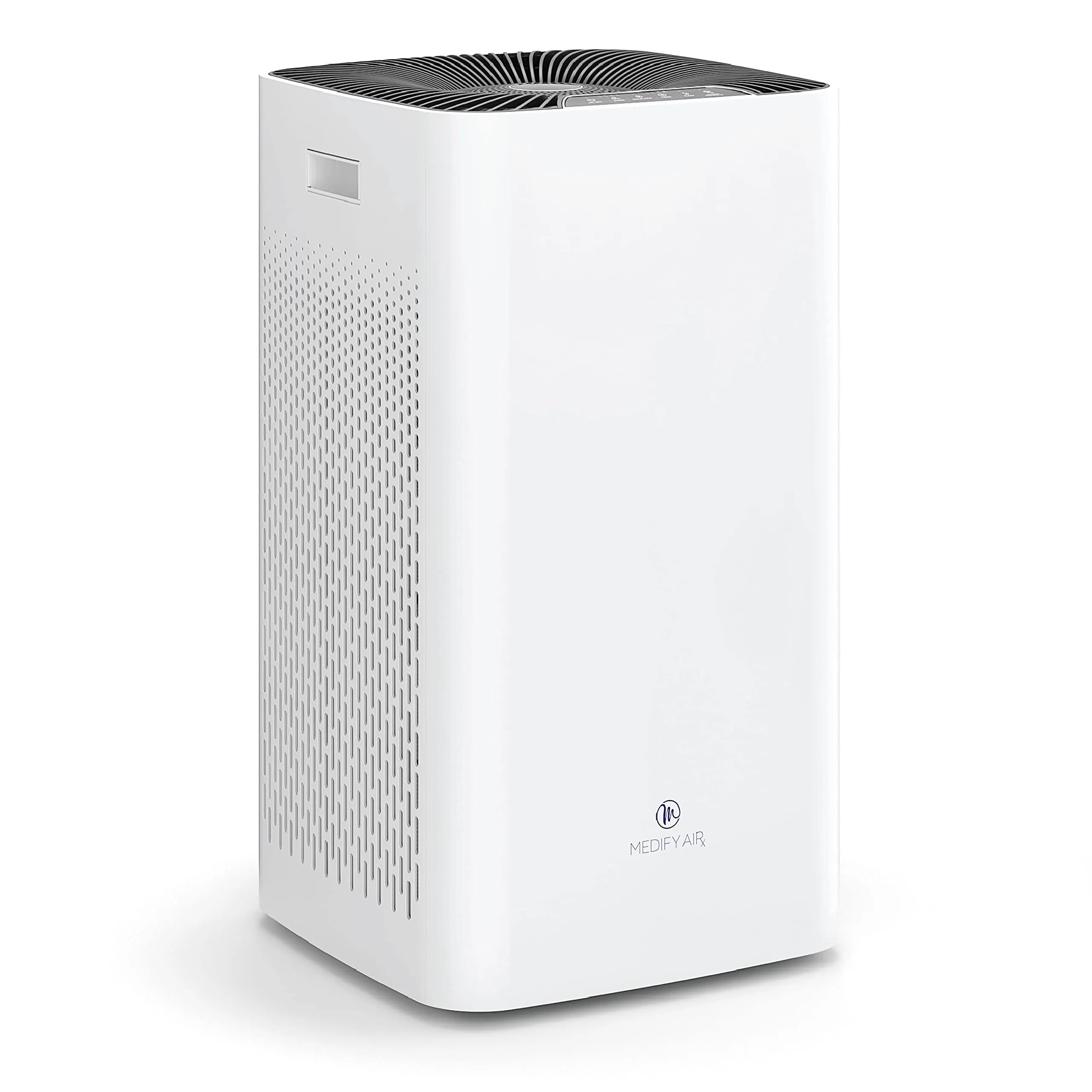
#1 Overall Winner
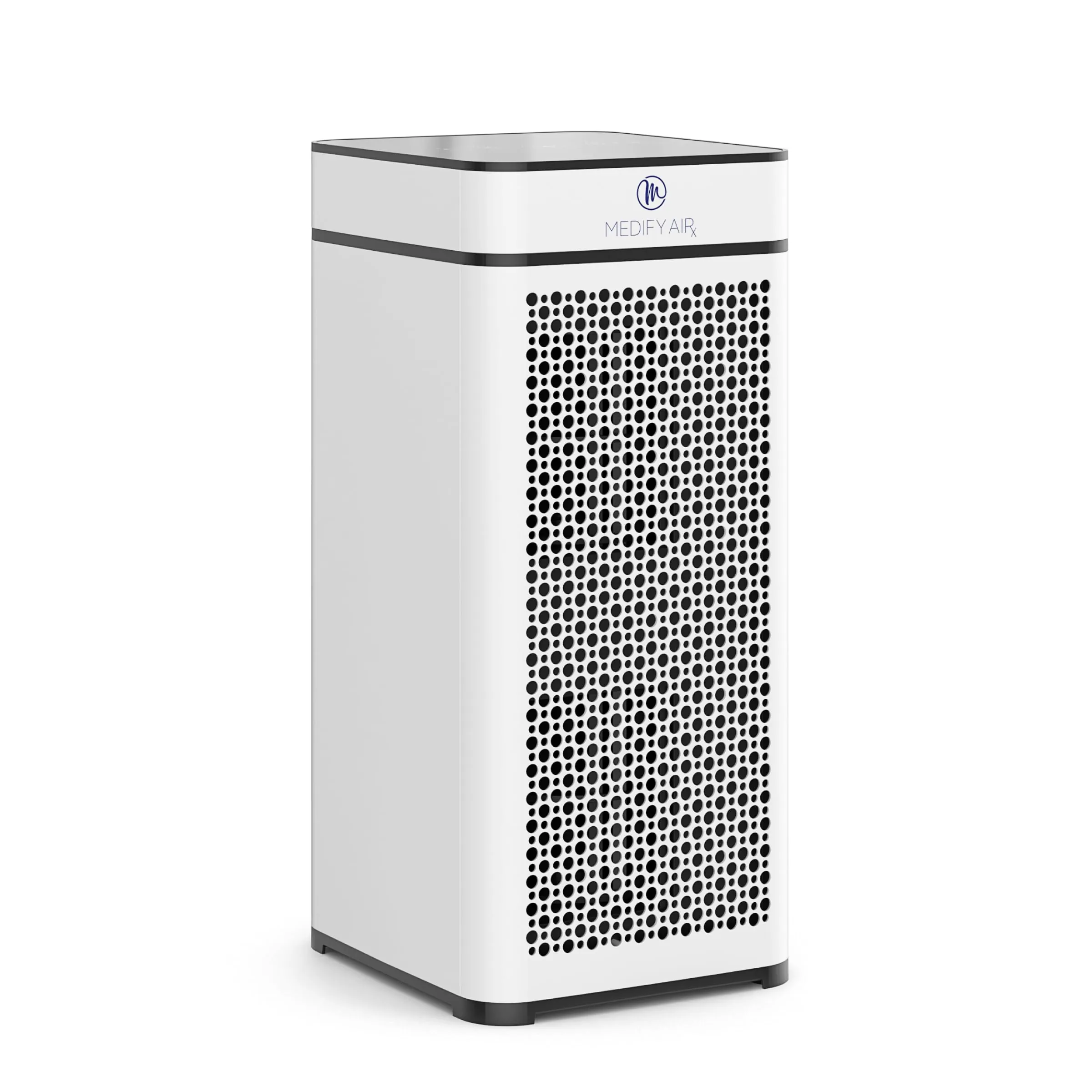
Medify MA-112 Air Purifier V3.0
- Very large stated coverage, with a CADR of 1009 and up to 4,455 sq ft in one hour.
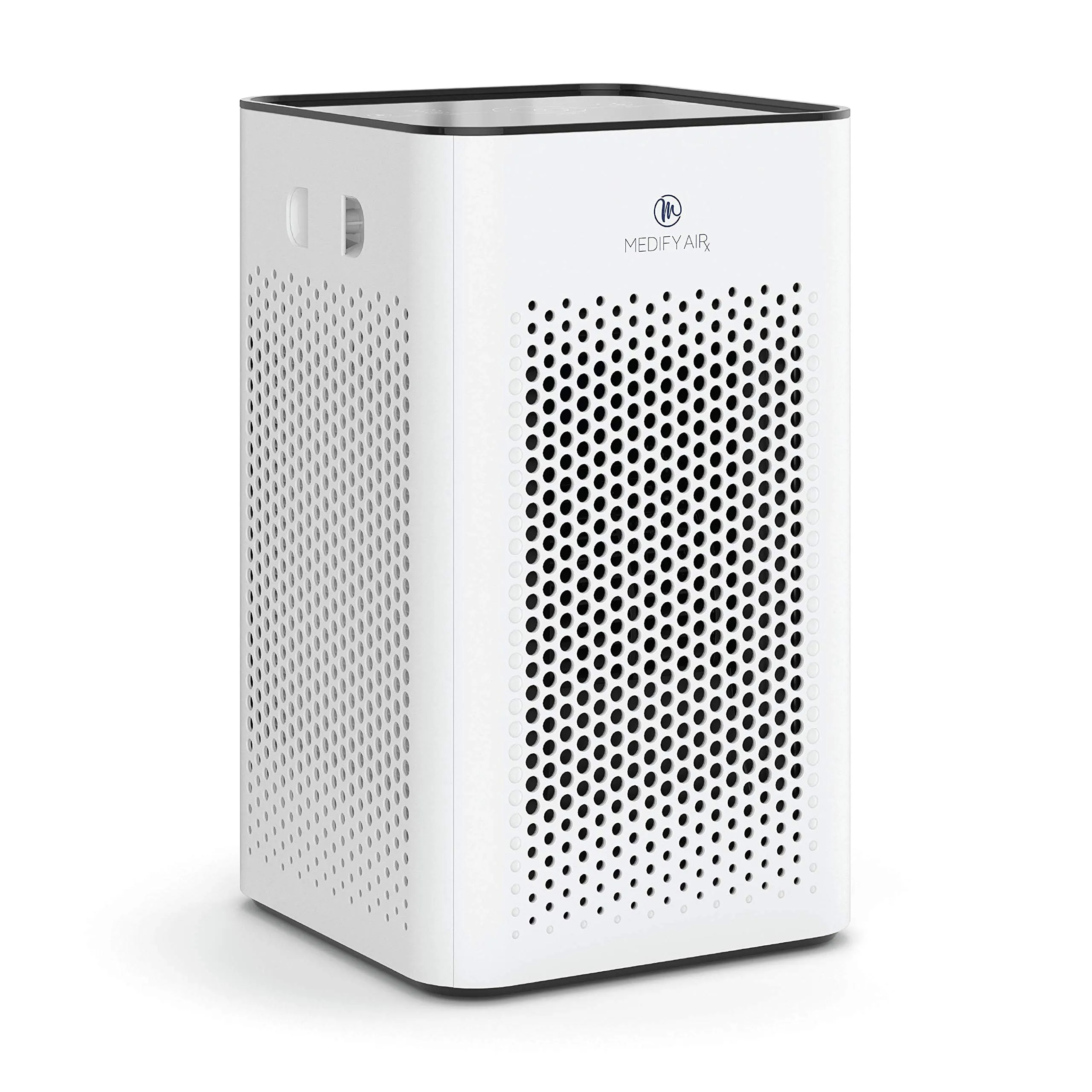
Comparison
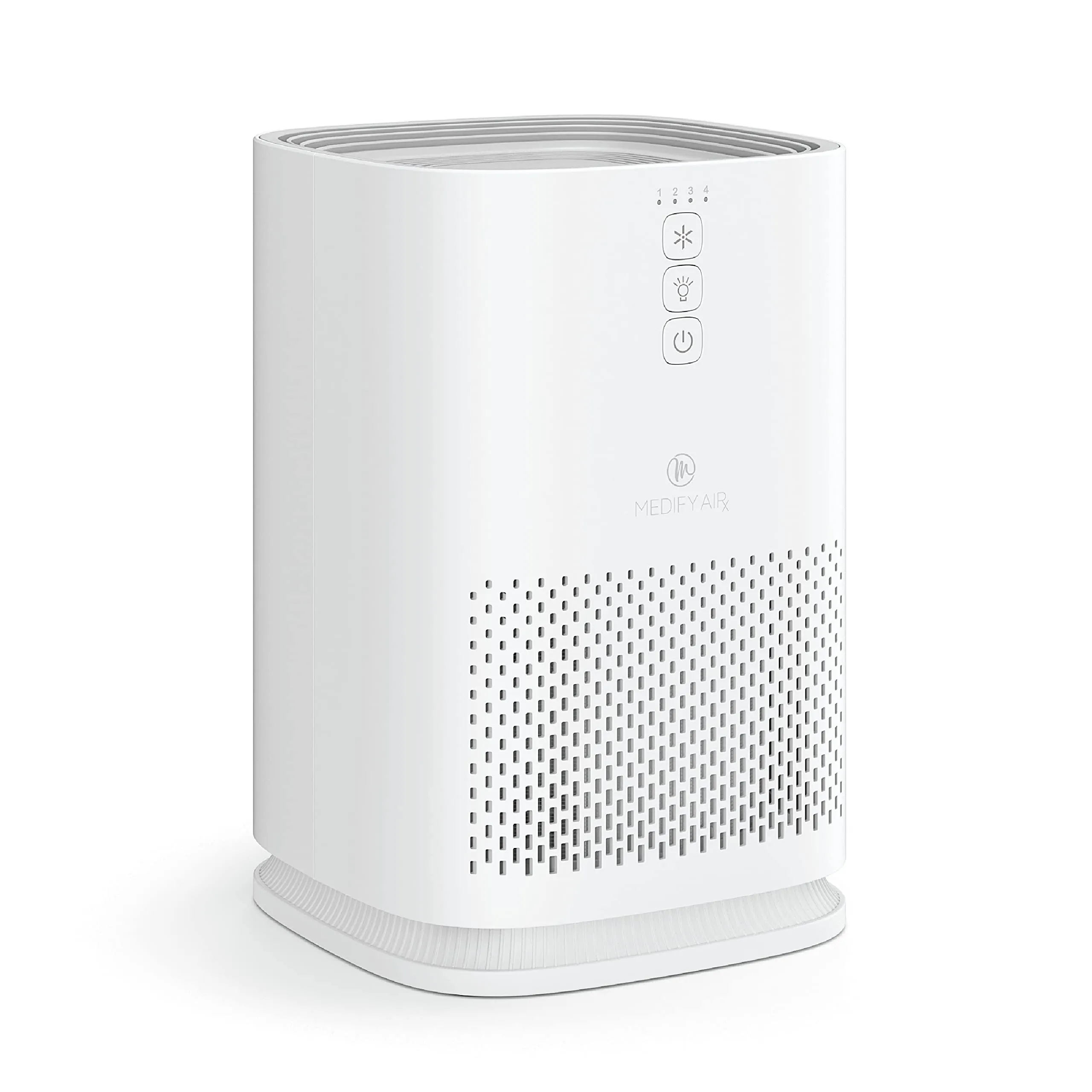
The Medify MA-112 and MA-25 both use H13 HEPA filtration for allergens, smoke, odours, pollen and pet dander. The MA-112 is the high-capacity option for large open spaces, while the lighter, lower-cost MA-25 is a more natural fit for bedrooms and smaller rooms. The main trade-off is coverage and automation versus portability, lower wattage and a smaller initial investment.
#1 Overall Winner
Contender
Choose the MA-112 for a large open-plan home, expansive living room or other high-coverage need, particularly if auto mode and a particle indicator matter. Choose the MA-25 for a bedroom, office or smaller living space where portability, lower wattage and a lower upfront price are more important. Both have strong filtration credentials, but neither eliminates recurring filter costs.
Overall winner
Depends on your needs
| Feature | Medify MA-112 Air Purifier V3.0 | Medify MA-25 Air Purifier | Winner |
|---|---|---|---|
| Primary fit | Large open rooms and shared spaces | Bedrooms and small-to-medium rooms | Depends |
| Stated coverage in one hour | Up to 4,455 sq ft | Up to 825 sq ft | Medify MA-112 Air Purifier V3.0 |
| Filtration | Dual H13 HEPA with activated carbon | Dual H13 HEPA filters | Tie |
| Fan speeds | 4 speeds | 3 speeds | Medify MA-112 Air Purifier V3.0 |
| Air-quality automation | Auto mode, dust sensor and PM2.5 indicator | Not listed | Medify MA-112 Air Purifier V3.0 |
| Stated maximum noise | 70 dB | 49.3 dB listed | Medify MA-25 Air Purifier |
| Power consumption | 95 W | 28 W | Medify MA-25 Air Purifier |
| Weight | 32 lb | 7.3 lb | Medify MA-25 Air Purifier |
| Filter service interval | About 3,000 hours or 6 months | About 2,500 hours or 3–4 months | Medify MA-112 Air Purifier V3.0 |
| Core controls | Touch panel, timer, sleep mode, child lock | Touch panel, timer, sleep mode, child lock | Tie |
| Upfront price | $594.99 | $148.99 | Medify MA-25 Air Purifier |
| Warranty | Lifetime warranty with registration | Lifetime warranty with registration | Tie |
For everyday home use, the MA-112 works best as a central purifier for a large shared zone rather than a device to move around daily. Its coverage and automatic sensing suit kitchens opening onto living areas, pet zones and larger homes. The MA-25 is more flexible for a room-by-room approach: it can be placed in a bedroom overnight, then moved to an office or living room. A household with several enclosed rooms may find multiple MA-25 units more practical than one large MA-112, while a single expansive room favours the MA-112.
Both purifiers are relevant to home hygiene because they are marketed for airborne dust, pollen, pet dander, smoke and odours. Reviews for both models mention cooking and pet odours, along with reduced dust or fresher-feeling air. The MA-112 is the stronger option for an open kitchen-living area because of its much larger stated coverage and auto mode. The MA-25 is better for a separate kitchen or adjoining smaller room, provided it has the clearance required around its intake vents and rear cable connection.
Neither product controls temperature or humidity, but both can contribute to indoor comfort by filtering airborne particles and odours. The MA-112 has the edge where a large space feels affected by cooking, pets, dust or seasonal smoke, and its sleep mode can dim the panel for evening use. The MA-25 is more bedroom-friendly in scale and has a lower listed maximum noise level. Still, high settings on either purifier may be distracting in a quiet sleeping or work environment.
Both models show strong evidence of performing their core air-cleaning role, supported by high filtration claims and generally positive buyer feedback around dust, odours, pet dander and allergy comfort. The MA-112 has the practical performance advantage in large spaces: it combines substantially higher stated coverage with four speeds, a dust sensor and auto mode. The MA-25 is well matched to smaller rooms and is repeatedly praised for collecting dust and improving bedroom air. Neither model's real-world result should be assumed to match a stated coverage figure in every layout; room separation, airflow and pollutant source all affect outcomes.
The MA-25 has the better reliability outlook in the provided comparison data. Reviews include a report of a unit continuing to operate despite an LED issue and a replacement being arranged, as well as another report of a noisy unit being replaced. MA-112 feedback is overwhelmingly positive for working units, but there are notable accounts of internal rattling, poor assembly and concerns about shipping communication. These are not universal experiences, but MA-112 buyers should test controls, fan operation and unusual noises promptly, then complete warranty registration within the required period.
Air-cleaning performance appears strong for both models, with reviews describing dust collection, improved air freshness and odour reduction. The MA-112 has the advantage for large-scale pollutant management because it has dual H13 HEPA and activated-carbon filtration, substantially higher stated coverage, and sensor-based automatic adjustment. The MA-25 is also well regarded for dust, allergy and pet-related use in smaller rooms. It should not be expected to provide the MA-112's level of air circulation in a very large open-plan space.
These are air purifiers rather than heating, cooling or humidity-control appliances. Their climate-comfort role is limited to cleaning indoor air. The MA-112 is the better choice for a large room affected by smoke, outdoor pollution, pet dander or cooking odours because of its far greater stated coverage and automatic dust sensing. The MA-25 suits smaller enclosed spaces where a lower-power, lighter purifier is enough. For either unit, placement and keeping airflow paths unobstructed will affect its ability to circulate cleaned air.
Both products list child locks, sleep-mode panel dimming and CARB and ETL status, and both are intended for plug-in indoor use. The MA-112's child lock is useful in busy family or pet areas, while its 32 lb weight means it should be placed securely and lifted carefully. One reviewer specifically felt its single hand hold could make the unit awkward to carry. The MA-25 is lighter but should not be placed where its vents are blocked by walls or furniture. Neither listing should be read as a substitute for ventilation, source control or following the supplied operating instructions.
Both models can improve perceived household comfort when dust, allergens, pet dander, cooking smells or smoke are persistent concerns. MA-112 reviews particularly describe more comfortable shared living spaces and reduced odours after cooking or around litter areas. MA-25 buyers often mention easier breathing at night and fewer allergy or sinus symptoms in smaller rooms. The MA-112 is more appropriate for broad coverage, while the MA-25 is easier to position near where a person sleeps or works. Noise at higher speeds remains the comfort trade-off for both.
Both models are plug-in purifiers with touch controls and simple daily functions. The MA-112 is easier to automate because its sensor can adjust operation in auto mode, but its 32 lb body makes moving or repositioning it less convenient. The MA-25 is much easier to carry between rooms and buyers generally find it simple to use. Its practical drawbacks are placement: its air vents need clearance, and the rear-mounted cord means it cannot sit flush against a wall. Some reviewers also dislike the illuminated controls when the unit is off.
The MA-112 is designed as a substantial floor-standing purifier: it has a 20 by 15.2 by 11 inch footprint and needs a stable permanent location. Its touch panel, panel dimming and large air-moving design suit a central living area, but the 32 lb weight limits flexibility. The MA-25 is lighter and narrower at 20 by 10 by 18 inches, making it easier to accommodate in a bedroom or office. Its intake layout, top controls and rear cable placement reduce how closely it can sit to walls or furniture.
Capacity is the clearest distinction. The MA-112 is listed to clean up to 4,455 sq ft in one hour and 2,228 sq ft in 30 minutes, with a CADR of 1009. The MA-25 is listed for up to 825 sq ft in one hour. The MA-112 therefore makes more sense for a large open floor plan, while the MA-25 is intended for individual rooms. For divided homes, it is important not to treat either stated figure as coverage across closed doors and separate rooms.
The MA-25 is the more space-efficient option for flats, bedrooms and offices because of its lighter, narrower form and room-by-room purpose. It still needs airflow clearance around its vents and rear power connection. The MA-112 uses more floor space and is better reserved for a central position in a large open area, where its bigger body and airflow capacity can be used properly. In a small room, the MA-112 may be more purifier than necessary.
The MA-25 has the quieter stated specification, with a listed range beginning at 19.8 dB and a maximum of 49.3 dB, versus the MA-112's stated maximum of 70 dB. Both include sleep mode, and users of both models report quiet low-speed operation. However, reviews also consistently indicate that higher settings can be clearly audible. The MA-25 is the safer choice for a bedroom where low-speed operation is sufficient; the MA-112 may sound more like a fan when its larger airflow is needed.
Neither model requires permanent installation: both are plug-in units with touch controls. The MA-112 needs more planning because its weight and large-room role favour a stable, unobstructed floor position. The MA-25 is quicker to relocate, but reviewers note that its side and front intake vents, plus the rear power connection, mean it needs space around it rather than placement tight against a wall. In either case, install the supplied filter correctly and keep air paths clear.
The MA-25 has the stronger build-quality outlook from the available scoring and buyer feedback, with reviewers describing a compact, attractive unit and reporting responsive replacement support in some cases. The MA-112 has a modern glass-covered control panel and reviews praise its appearance, but its feedback includes concerns about thin plastic filter-cover releases, a single carry hold and isolated reports of crooked seams or internal rattling. That does not negate many successful MA-112 experiences, but it makes an immediate inspection and functional check especially worthwhile.
The MA-25 has the stronger durability outlook based on the available scores and buyer feedback, although both products depend on scheduled filter replacement to remain useful. The MA-112's larger body is intended for demanding coverage, but a reviewer raised concerns about thin plastic filter-cover releases and the risk of dropping the unit when using its single carry hold. Reports of defective, rattling MA-112 units also temper confidence. The MA-25's lighter design makes accidental relocation damage less likely, but its long-term condition will still depend on careful handling and filter access.
Both purifiers use replaceable filters and provide a filter-change indicator. The MA-112's listed filter life is about six months, compared with about three to four months for the MA-25, so it should require fewer scheduled changes. Buyers of both models mention that genuine replacement filters are expensive. The MA-25's dual filters are accessed from the sides, and buyers generally find changes manageable, but availability has been a problem for at least one international reviewer. Before purchase, confirm replacement-filter availability and current pricing in your location.
The MA-25 is decisively more portable. At 7.3 lb, it can be moved between a bedroom, office and smaller living space with relatively little effort. The MA-112 weighs 32 lb and is better considered a stationary unit for a large shared area. A reviewer also noted that its single carry hold can make lifting awkward. Choose the MA-112 for capacity, not frequent relocation.
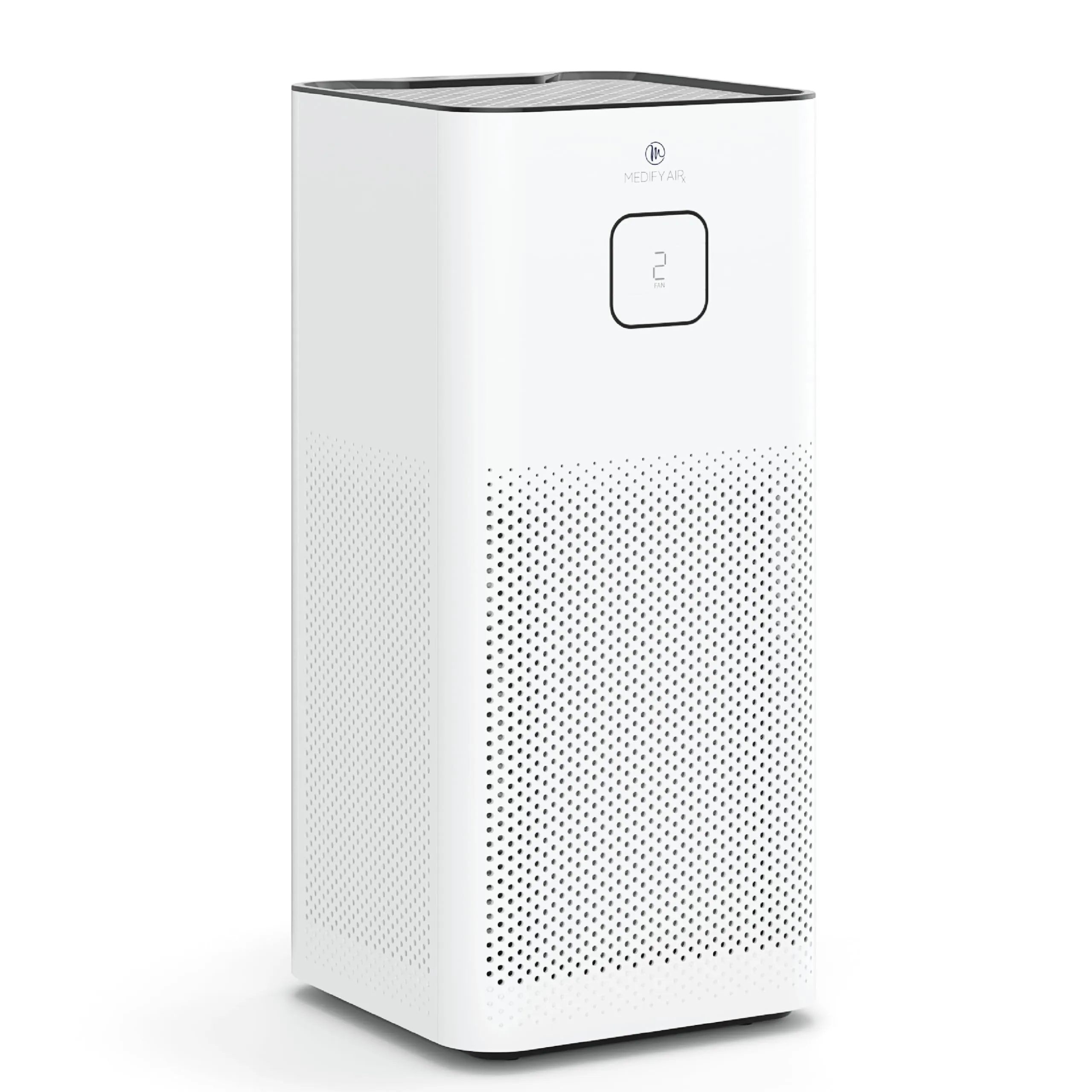
The MA-112 has the fuller feature set. Alongside its timer, sleep mode, child lock and filter indicator, it adds auto mode, a dust sensor, PM2.5 pollution indicator, four speeds and an optional ionizer. The MA-25 keeps the key essentials—touch controls, three speeds, timer, sleep mode, filter reminder and child lock—but does not list automatic sensing or an ionizer. For buyers who want to select a speed and leave the unit running, the MA-25 remains straightforward. For changing air conditions, the MA-112 offers more control and feedback.
The MA-25 has the lower listed wattage at 28 W, compared with 95 W for the MA-112, so it is the more restrained choice for continuous single-room operation based on the provided specifications. The MA-112 uses more power but is designed to move and filter air across a much larger area, so its suitability depends on whether that additional capacity is needed. The MA-25 is listed as Energy Star Certified. Both require filter replacements, which are a key part of their ongoing cost and material use.
The MA-25 offers stronger value for buyers cleaning a bedroom, office or other smaller space. Its $148.99 price, lower listed wattage and lightweight design avoid paying for large-area capacity that may not be needed. The MA-112 costs $594.99, but its price is more defensible for one large, open area where its much higher stated coverage, sensor functions and longer listed filter interval can replace the need for several smaller units. Neither is automatically inexpensive to own: buyers of both models report costly filters, so current replacement pricing should be part of the decision.
Both products come from Medify Air and carry the same headline lifetime warranty with registration, so there is no inherent brand advantage between them. Customer sentiment suggests that support can be helpful: MA-25 reviewers describe replacement assistance for a noisy unit and an LED issue. MA-112 reviews include praise for the product but also concerns about communication and warranty-registration timing after defective deliveries. The practical lesson for either model is to retain purchase information, inspect the unit promptly and register it as instructed.
Both products have a 4.6 out of 5 star average from a large number of reviews, and buyer sentiment is predominantly positive. MA-112 users frequently praise its ability to freshen large areas, reduce cooking or litter-box odours and improve comfort during allergy or smoke concerns. MA-25 users commonly report visible dust collection, cleaner-feeling bedroom air and reduced sneezing or sinus discomfort. Common negatives overlap: expensive replacement filters and noticeable high-speed noise. The MA-112 additionally has more quality-control complaints, while MA-25 feedback highlights placement, control-light and international filter-availability issues.
Both listings state that a USA-registered lifetime warranty is available. Support feedback is mixed but includes positive MA-25 reports of replacement help for an LED fault and a noisy unit. MA-112 buyers should pay close attention to registration timing: one review described missing the prescribed registration period after receiving defective units. For either purifier, check the current warranty terms, regional eligibility and replacement-filter availability before committing.
The Medify MA-112 wins when large-area air cleaning is the requirement. Its major strengths are its substantially higher stated coverage, dual H13 HEPA and activated-carbon filtration, and automatic air-quality features. Its main limitations are its high cost, 32 lb weight, higher listed power use and mixed reports around noise and isolated quality-control issues.
The MA-25 is the better balanced choice for a typical bedroom or smaller room. It keeps H13 HEPA filtration and core controls in a much lighter, lower-cost package with a lower stated maximum noise level. Its main limitation is scale: it cannot replace the MA-112 in a large open space, and its filters have a shorter stated replacement interval. Choose according to room size rather than headline features alone.
Overall winner
Depends on your needs
The MA-112 is the stronger choice for a large open area because it has far greater stated coverage, higher airflow capacity and sensor-led automatic operation. The MA-25 is the more practical choice for a bedroom or smaller room, especially where lower upfront cost, lighter weight and easier repositioning matter more than whole-home-scale coverage.
The MA-112 is better suited to a large living room or open-plan area. Its stated one-hour coverage is 4,455 sq ft, compared with 825 sq ft for the MA-25. It also has auto mode and a dust sensor, which can make day-to-day operation more hands-off when activity, cooking or dust affects indoor air.
The MA-25 is the easier model to move. It weighs 7.3 lb, while the MA-112 weighs 32 lb. The MA-112 is better treated as a larger, more permanent floor unit. The MA-25 is more suitable if you want to use one purifier in different bedrooms, an office or a smaller living area.
The MA-25 has the lower stated maximum noise level and is designed to operate very quietly on its lowest speed. However, reviews for both models are mixed at higher settings. The MA-112 offers sleep mode and can be quiet on low, but its maximum stated level is higher, so it is more likely to be heard when running hard.
Both models use H13 HEPA filtration and are listed with particle retention down to 0.1 microns. The MA-112 specifically lists dual HEPA H13 filtration with activated carbon, while the MA-25 uses dual filters and is marketed for allergens, odours, smoke, pollen and pet dander. Both include a filter replacement indicator.
The MA-112 has a longer stated filter life of around 3,000 hours or about six months. The MA-25 filter is stated to last around 2,500 hours or three to four months. Actual replacement timing will depend on fan speed and air conditions, and buyers of both models commonly mention filter cost as an important ongoing expense.
The MA-112 has the more extensive automatic feature set. It includes auto mode, a dust sensor and a PM2.5 pollution indicator, alongside a timer, sleep mode and filter reminder. The MA-25 has a timer, sleep mode, filter reminder and child lock, but its listed features do not include air-quality sensing or automatic fan adjustment.
Neither model appears difficult to set up: both are plug-in units with touch controls and included filters. The MA-25 may be simpler to place because of its lower weight, although its front and side vents and rear power connection need clearance. The MA-112 needs more dedicated floor space and should be inspected promptly for any shipping or assembly issues.
Check our rankings and expert guides to find the best home lifestyle products for your goals.