#1 Overall Winner
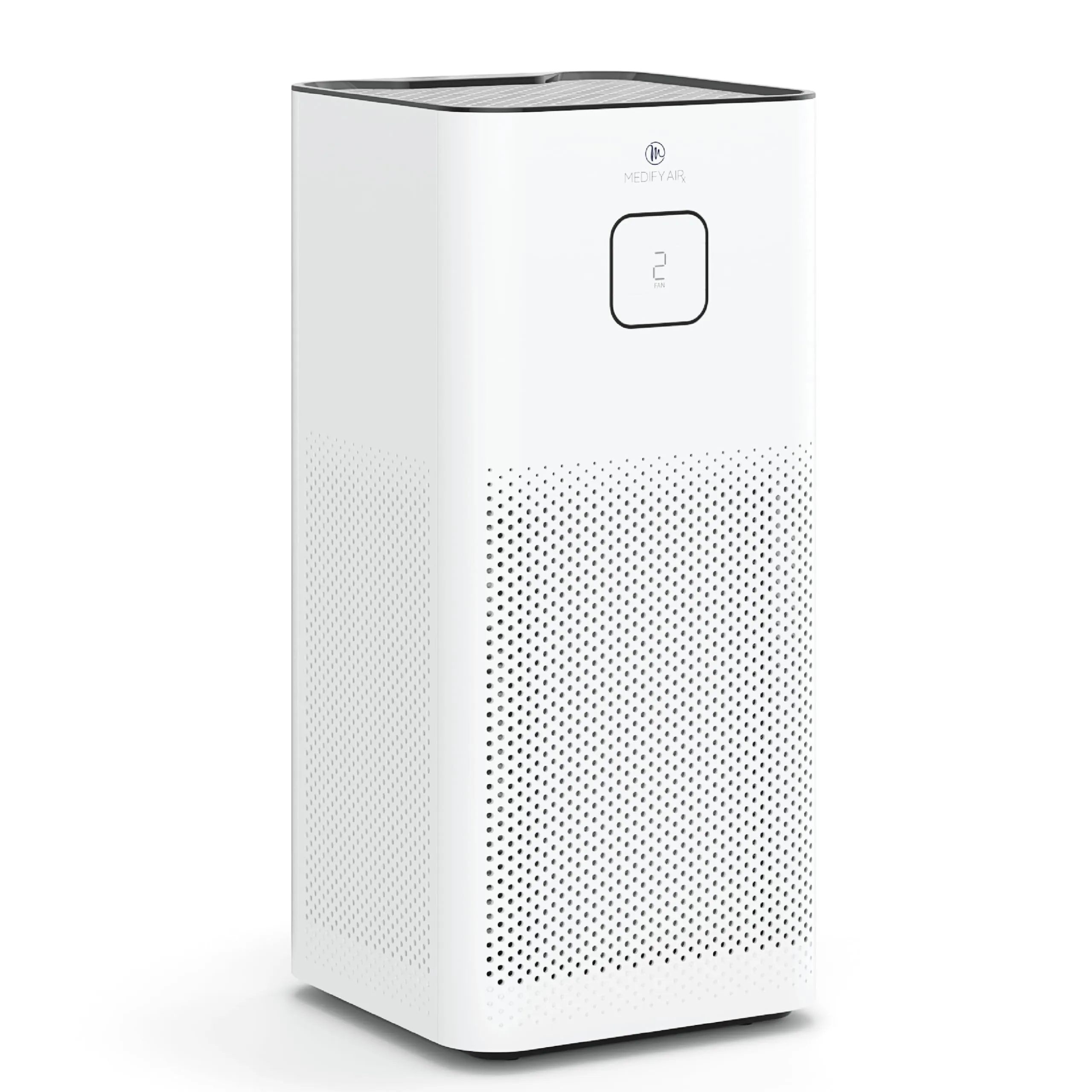
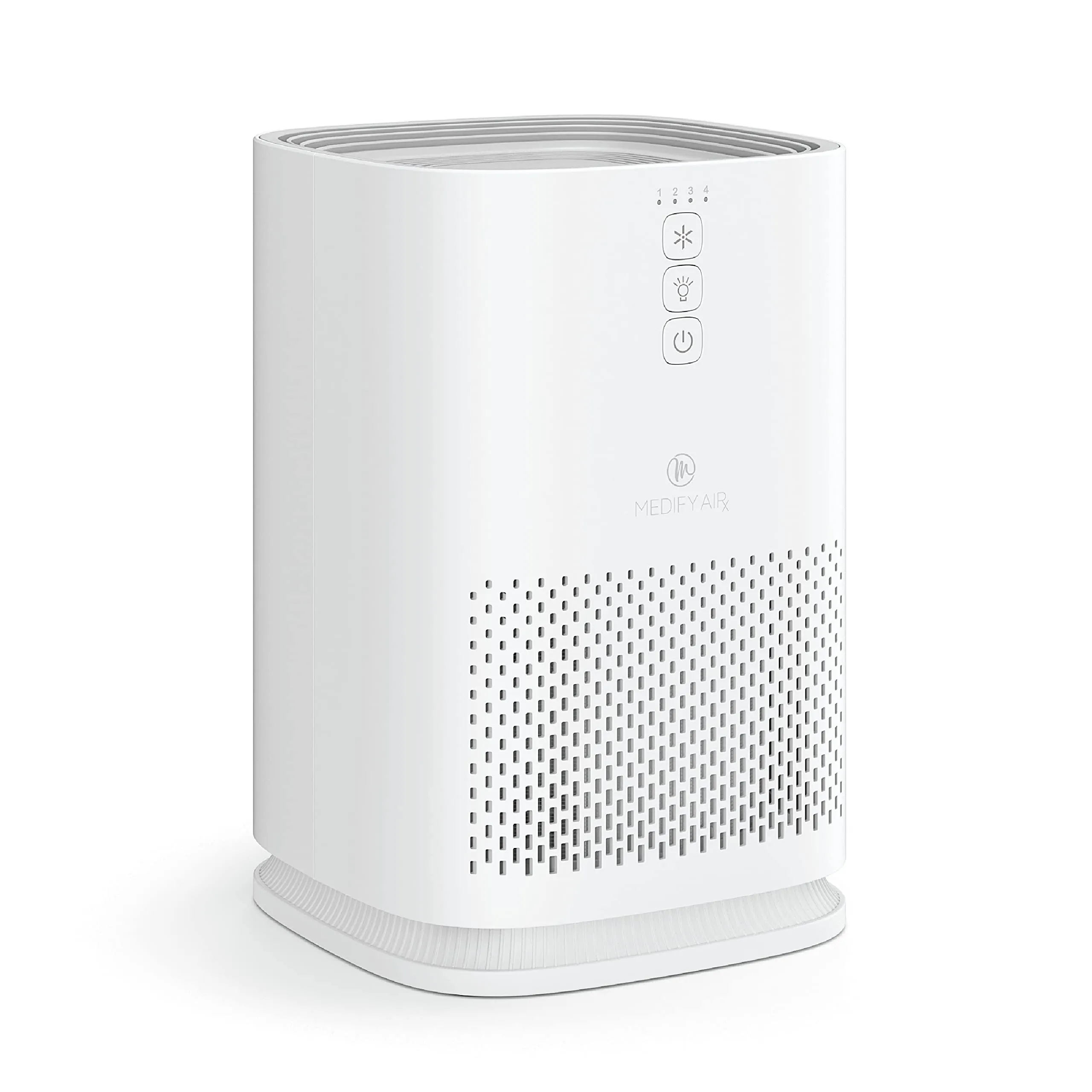
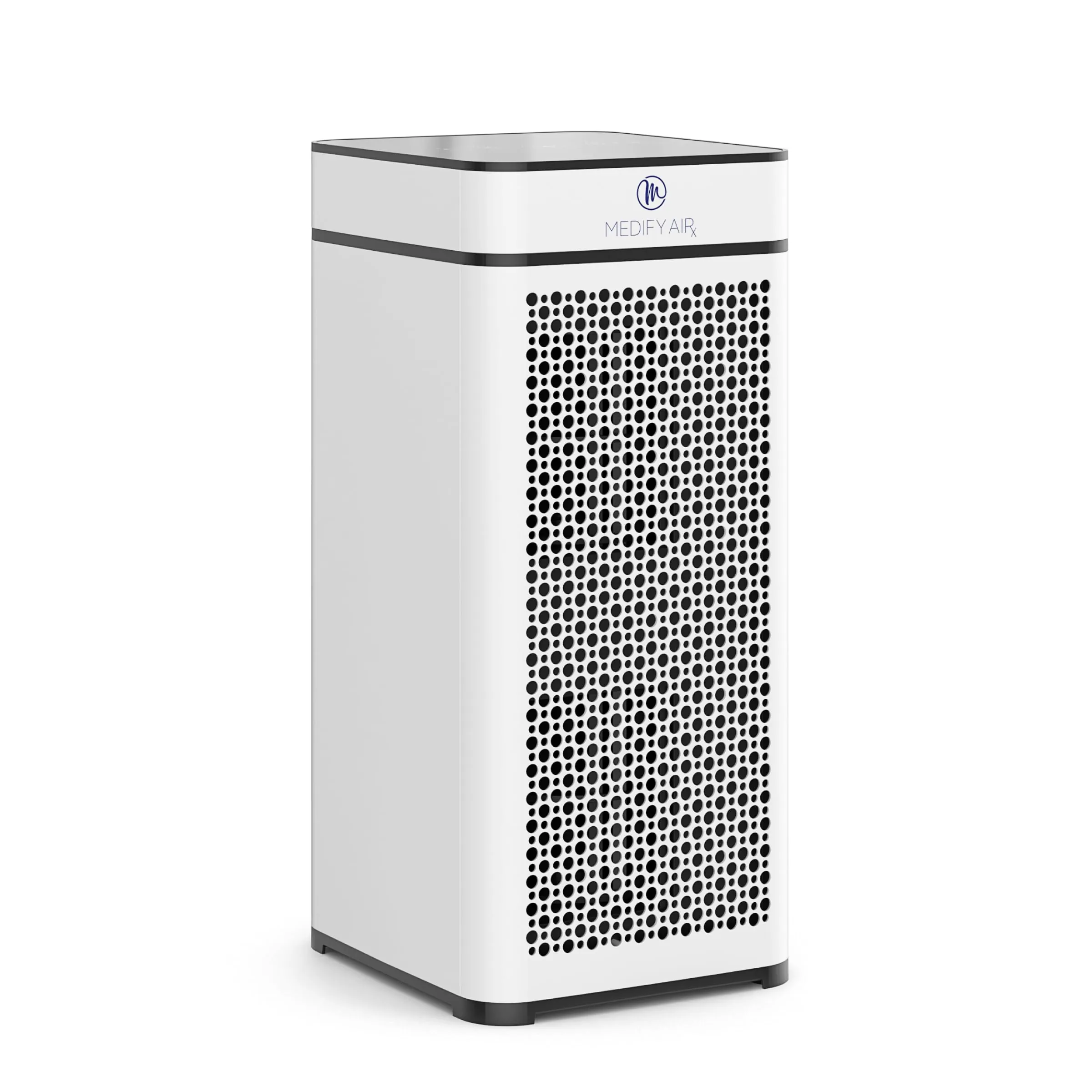
Medify MA-14 Air Purifier
- H13 True HEPA filtration is claimed to capture particles down to 0.1 microns.
Comparison
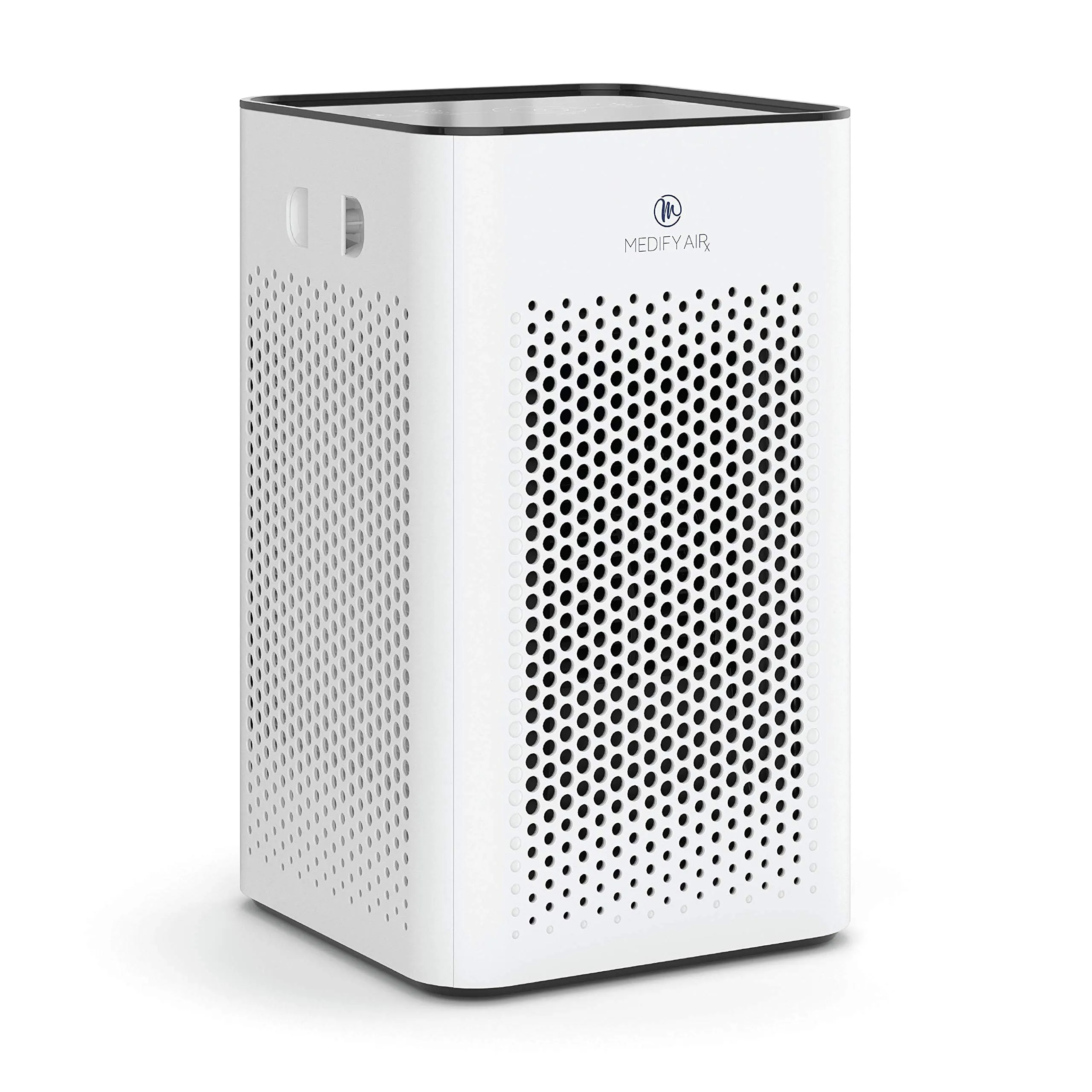
The Medify MA-14 and MA-25 are H13 True HEPA air purifiers designed for dust, pollen, smoke, odors and pet dander. The MA-25 has higher claimed room coverage and more controls, while the MA-14 costs less and is markedly lighter for flexible room-to-room use.
#1 Overall Winner
Contender
Choose the Medify MA-25 for a larger room and its timer and child lock. Choose the Medify MA-14 for a lower purchase price, easy portability and bedroom-scale use. Both offer the same stated H13 filtration approach, but replacement filters and high-speed noise are important trade-offs.
Overall winner
Depends on your needs
| Feature | Medify MA-14 Air Purifier | Medify MA-25 Air Purifier | Winner |
|---|---|---|---|
| Claimed coverage in one hour | Up to 470 sq ft | Up to 825 sq ft | Medify MA-25 Air Purifier |
| Filtration | H13 True HEPA; 0.1-micron claim | H13 True HEPA; 0.1-micron claim | Tie |
| Fan speeds | 3 speeds | 3 speeds | Tie |
| Sleep mode | Yes, with dimmed lights | Yes, with dimmed lights | Tie |
| Timer | Not listed | 0–8 hours | Medify MA-25 Air Purifier |
| Child lock | Not listed | Yes | Medify MA-25 Air Purifier |
| Listed weight | 2.4 lb | 7.3 lb | Medify MA-14 Air Purifier |
| Stated noise information | Maximum listed at 55 dB | 19.8–49.3 dB stated | Medify MA-25 Air Purifier |
| Replacement filter interval | About 2,500 hours / 3–4 months | About 2,500 hours / 3–4 months | Tie |
| Upfront price | $99.99 | $148.99 | Medify MA-14 Air Purifier |
| Warranty | Registered lifetime warranty | Registered lifetime warranty | Tie |
| Smart connectivity | Not smart-home compatible | Not listed | Depends |
For everyday home use, both models suit households dealing with dust, pets, pollen, cooking smells or seasonal air-quality concerns. The MA-14 is easier to reposition for targeted use in a bedroom, office or nursery. The MA-25 is better suited to staying in one larger living area, where its higher claimed coverage can be more useful. Neither model is listed with connected controls, so operation is handled directly from the unit.
Both purifiers are relevant to home hygiene because they are marketed for airborne dust, smoke, odors and pet dander rather than surface cleaning. The MA-25's larger claimed coverage makes it the more practical choice for an open-plan living and kitchen area, while the MA-14 is a sensible option for a smaller enclosed space. Neither replaces source control, ventilation or normal cleaning routines.
Neither product heats, cools or controls humidity, but both can contribute to perceived room comfort by filtering listed airborne contaminants. Reviews for both models often mention fresher-feeling air and improved comfort around allergies or odors. The MA-25 is better positioned for a larger shared room, while the MA-14's portability makes it easier to bring that support into a bedroom or office. Actual results depend on room size, airflow and filter condition.
Both models have strong evidence of intended air-cleaning performance in their supplied scores and buyer feedback. Their listings make the same H13 filtration and 0.1-micron particle-removal claims, and owners commonly report less dust, fewer odors and improved allergy comfort. The MA-25 has the advantage for larger spaces because of its higher claimed hourly coverage. The MA-14 appears especially well suited to targeted cleaning in smaller rooms. Reports of limited smoke improvement in one MA-14 review and varied individual experiences mean neither should be treated as a substitute for removing the pollution source.
The MA-25 has the stronger reliability position in the supplied scores, with many owners reporting long-term satisfactory use and one review describing responsive replacement support for a fault. The MA-14 also has substantial positive feedback, but isolated reports describe defective, rattling units and concerns about fragile components. Both models are simple non-connected appliances, avoiding app or connection failures. On either model, inspect for loose parts, unusual noise and correct operation when it arrives, then complete any required warranty registration promptly.
For airborne cleaning, both products are listed to handle dust, pollen, pet dander, odors and smoke, and both receive strong performance and buyer-satisfaction signals. Reviewers of each model report visible filter dust and reductions in household smells. The MA-25 has an edge for cleaning a larger room because of its higher claimed coverage. The MA-14 remains a credible choice for concentrated use in a smaller area. Neither model cleans floors, fabrics or settled dust directly.
As air-cleaning appliances, both models may support comfort during pollen, smoke or odor events, but they do not provide temperature or humidity control. The MA-25 has the stronger larger-room fit due to its higher claimed coverage. The MA-14 is better for smaller rooms or for moving closer to a temporary odor source. Keep expectations focused on airborne particle and odor filtration rather than cooling, heating or moisture management.
Both models are plug-in air purifiers with touch controls, sleep mode and filter-change indicators. The MA-25 adds a child lock, giving it an advantage in homes where children or pets may press controls. Both are listed as CARB and ETL compliant, and the MA-25 listing also states Energy Star certification. Neither should have its intake or outlet blocked, and the MA-25 in particular needs clearance around its vents. A few MA-14 reviews mention loose or rattling units, so do not use a unit that appears damaged or operates abnormally; pursue support instead.
Both purifiers can improve household comfort where dust, pet dander, pollen or odors are an ongoing irritation. Buyers commonly describe fresher air and fewer allergy-related symptoms, though these are individual reports rather than measured outcomes. The MA-25's claimed coverage is more helpful for a larger shared room. The MA-14 is more convenient for creating a quieter-feeling bedroom or personal workspace setup because it is easier to relocate.
The MA-14 has the easier day-to-day case for users who move a purifier often, as its listed weight is far lower and reviews describe plug-in operation as simple. The MA-25 is also generally straightforward, with touch controls and accessible filters, but its placement needs more attention because its vents and rear cable require clearance. Its timer and child lock add useful control but slightly more setup choices.
The MA-14 prioritises compact, low-weight placement flexibility and is easier to carry to a bedroom, office or other room. The MA-25 is taller, heavier and better treated as a semi-permanent room appliance. Its design has practical placement constraints: reviews note that front and side vents, plus the rear cable, need space away from walls. The MA-14 is more space-efficient; the MA-25 is more suitable where open floor placement is available.
Coverage is the clearest separation. Medify claims the MA-14 cleans up to 470 sq ft in one hour, whereas the MA-25 is claimed to clean up to 825 sq ft. The MA-14 is the more proportionate option for bedrooms, offices and smaller rooms. The MA-25 better fits a larger living room or shared space. For open plans, room layout, doorways and pollution sources can affect results, so claimed coverage should be treated as a planning guide.
The MA-14 is the better choice for small homes, bedside placement and rooms where floor or tabletop space is limited. Its low weight supports flexible storage and repositioning. The MA-25 occupies more visual and physical space and needs clear space around its air vents, reducing placement options near walls or furniture. In return, it is designed for a larger claimed coverage area, which may make one unit more practical in an open room.
Both models are designed to be quieter on sleep or low settings, and owners often find those modes suitable for bedrooms. The MA-25 has a lower stated noise range and a slight advantage in the supplied noise comparison. Still, high-speed noise receives mixed feedback for both products. If quiet overnight operation is essential, use sleep or low mode and avoid relying on maximum speed beside a bed or desk.
Neither model requires permanent installation: plug it in, place it on a stable surface and leave airflow space around the unit. The MA-14 is especially straightforward to reposition due to its low listed weight. The MA-25 needs more deliberate placement because reviews note side and front vents plus a rear power cord that should not be pressed close to a wall. Both use touch controls and do not require app pairing.
The MA-25 has the stronger build-quality position based on the supplied comparison data and generally positive owner comments on construction. The MA-14 has an attractive touch-panel design, but several reviews flag thin plastic filter-cover releases, an awkward single carry hold and isolated rattling or assembly problems. The MA-25 is not free of concerns: one owner reported a noisy unit that was replaced. Check either purifier promptly after delivery and retain warranty details.
The MA-25 has the better durability outlook in the supplied comparison data, supported by generally positive construction feedback and a registered lifetime warranty. The MA-14's light body is convenient but some reviews question how well its thin filter-cover releases or single carry hold would tolerate rough handling. Both rely on replaceable filters, so long-term ownership also depends on continuing access to the correct replacements. Avoid lifting either unit by unstable panels and keep vents clear.
Maintenance is similar at its core: both provide filter-change reminders and state that filters last around 2,500 hours, or roughly three to four months. The MA-14's single 360-degree filter arrangement may be simpler to manage, while the MA-25's dual filters add more filtration surface but require attention to both sides. Filter expense is a repeated complaint for both. MA-25 buyers outside major markets should confirm original-filter availability before purchase.
The MA-14 clearly wins for portability. At a listed 2.4 pounds, it is much easier to carry between a bedroom, office and living area, and reviews describe it as light to move. The MA-25 is listed at 7.3 pounds, so it is still movable but better suited to a more fixed location. Its larger claimed coverage reduces the need to relocate it as often.
The MA-14 keeps controls straightforward: three speeds, sleep mode, a night light and filter replacement indicator. The MA-25 retains those essentials and adds a zero-to-eight-hour timer and child lock, giving it more control for family homes or scheduled use. Both use touch controls and list programmable features, but neither product is supplied with app, Wi-Fi or smart-home compatibility details. The MA-25 therefore wins on onboard features, while the MA-14 may appeal to users who prefer fewer controls.
The MA-25 has the better efficiency position in the supplied scores and a lower listed wattage than the MA-14. It also offers higher claimed coverage, which can make it more practical for a larger room rather than using multiple smaller units. However, both require filter replacements at a stated interval of about three to four months, and filter cost is a recurring concern in reviews. Running either model at a lower useful setting may also be preferable for noise and routine use.
The MA-14 offers the better value proposition for a smaller room: it costs less upfront, has the same stated H13 filtration claim and is significantly easier to move. The MA-25 costs more but justifies that difference for buyers who will use its higher claimed coverage, timer and child lock. Value for either model is affected by replacement filters, which buyers frequently describe as expensive. The MA-25 may be more economical than buying multiple smaller units for one larger room, but only if its placement and coverage fit the space.
There is little separation on brand trust because both products are sold by Medify Air and carry the same stated registered lifetime warranty. Buyer feedback for both is broadly positive, with repeated appreciation for perceived filtration results. Support experiences are mixed in the supplied reviews: one MA-25 owner reports a successful replacement, while MA-14 feedback includes concerns about communication and quality control. Registering the product and keeping purchase records is sensible for either model.
Both products have a 4.6 out of 5 star average from more than ten thousand reviews, indicating strong overall buyer sentiment. MA-14 feedback frequently praises easy operation, light weight, odor reduction and bedroom use, but includes some complaints about noise, filters and defective units. MA-25 buyers similarly praise allergy and dust relief, quiet lower settings and design, while noting high-speed noise, filter costs and placement quirks. The MA-14 holds a slight advantage in the supplied satisfaction comparison, but both have substantial positive feedback.
Both listings state that a USA registered lifetime warranty is available. That makes registration timing important, particularly as one MA-14 review advises checking the product on arrival and registering promptly. A supplied MA-25 review reports a replacement unit being arranged after a fault, while another highlights replacement-filter availability problems in a particular country. Confirm warranty eligibility and filter availability for your location before buying.
For most larger-room shoppers, the Medify MA-25 is the better overall choice because it combines higher claimed coverage with a timer, child lock and strong reported filtration results. Its main limitations are a higher purchase price, dual-filter running costs, a heavier body and placement requirements around its vents. The Medify MA-14 is the better focused choice for smaller rooms and portable use. It provides the same stated H13 filtration claim at a lower price and is much easier to carry, but has fewer features, lower claimed coverage and some reported quality-control concerns. Both are solid non-smart purifiers if you budget for filters and use them at a suitable fan setting.
Overall winner
Depends on your needs
The MA-25 is the stronger choice for a larger room because it has higher claimed hourly coverage and adds a timer and child lock. The MA-14 is the better fit for buyers who need a lighter, less expensive purifier for bedrooms or smaller rooms. Both use the same stated H13 filtration approach and receive generally positive buyer feedback.
The MA-14 is particularly practical for a bedroom because it is lightweight, compact in use and includes sleep mode with dimmed panel lights. The MA-25 can also work well overnight, with a stated low minimum noise level and sleep mode, but it takes more space and needs clear airflow around its vents.
Yes. Medify claims the MA-25 can clean up to 825 sq ft in one hour, compared with 470 sq ft for the MA-14. That makes the MA-25 the more suitable option for a larger living room or shared area, provided it can be positioned with open space around its intake vents.
Both models offer quieter low or sleep settings, but feedback on higher speeds is mixed. Reviews describe the MA-14 as quiet at low speed but potentially loud at maximum. MA-25 owners similarly find low and medium settings manageable, while high speed can be prominent in a quiet room.
Yes. Both listings state a filter life of about 2,500 hours, or roughly three to four months. Buyers should include replacement-filter availability and cost in their budget. Reviews for both models commonly identify filters as expensive, and one MA-25 review reports difficulty obtaining original filters in a particular region.
No smart-home compatibility, Wi-Fi connection or app control is listed for either model. Their controls are designed for direct use on the appliance. The MA-25 offers more onboard control through its timer and child lock, while the MA-14 focuses on fan speed, night light, sleep mode and filter reminders.
The MA-14 is the easier model to move, with a listed weight of 2.4 pounds versus 7.3 pounds for the MA-25. Buyers specifically describe the MA-14 as light to carry room to room. The MA-25 is still a tabletop-style unit, but is a better candidate for a more permanent location.
Both products are marketed for pollen, pet dander, odors, smoke and dust, and their H13 filters are stated to capture particles down to 0.1 microns. Many reviews report fresher-feeling air, odor reduction and fewer allergy symptoms. Results will vary with room conditions, pollutant source, fan setting and filter maintenance.
Check our rankings and expert guides to find the best home lifestyle products for your goals.