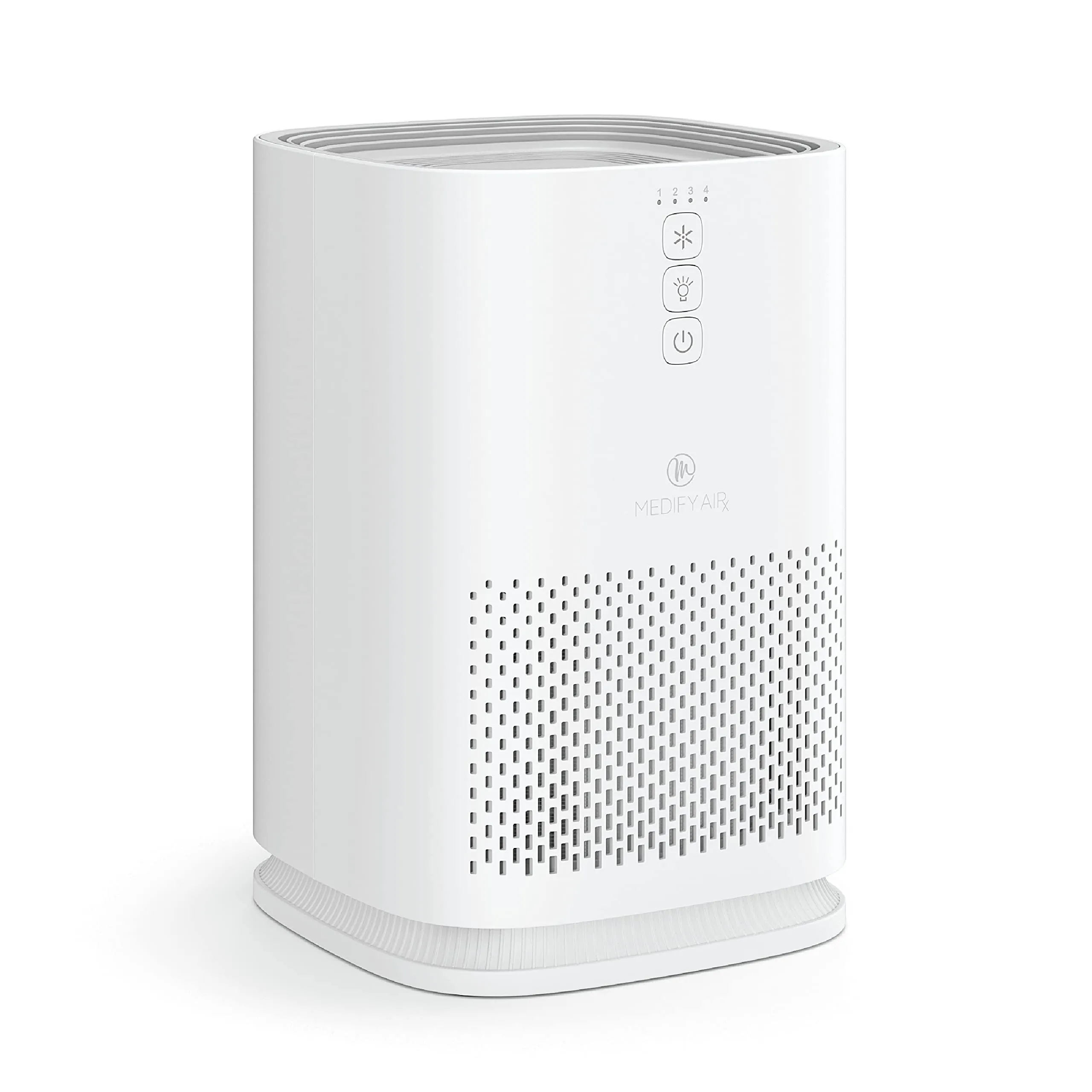
#1 Overall Winner
Medify MA-14 Air Purifier
- Listed H13 HEPA filtration for particles down to 0.1 microns.
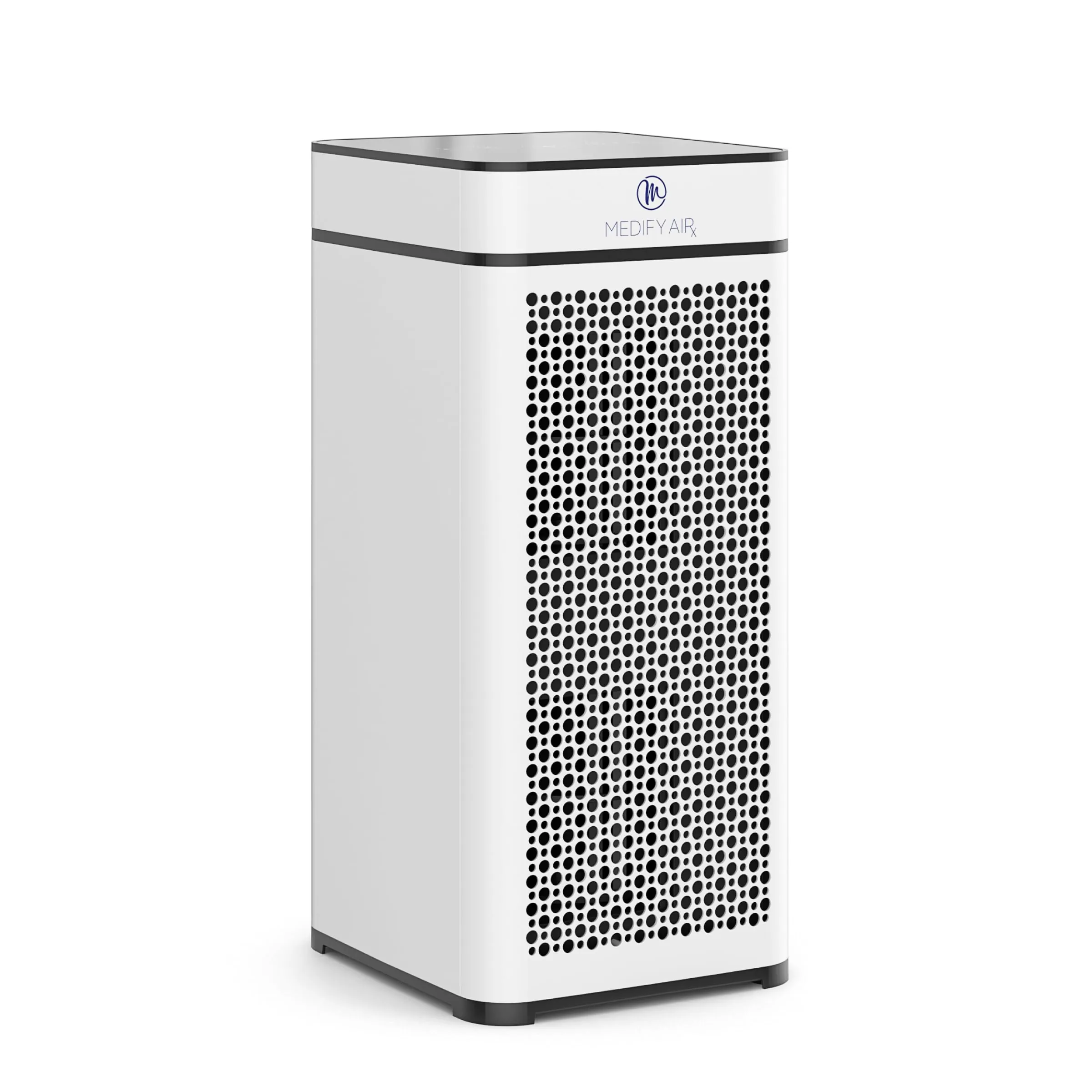
Comparison
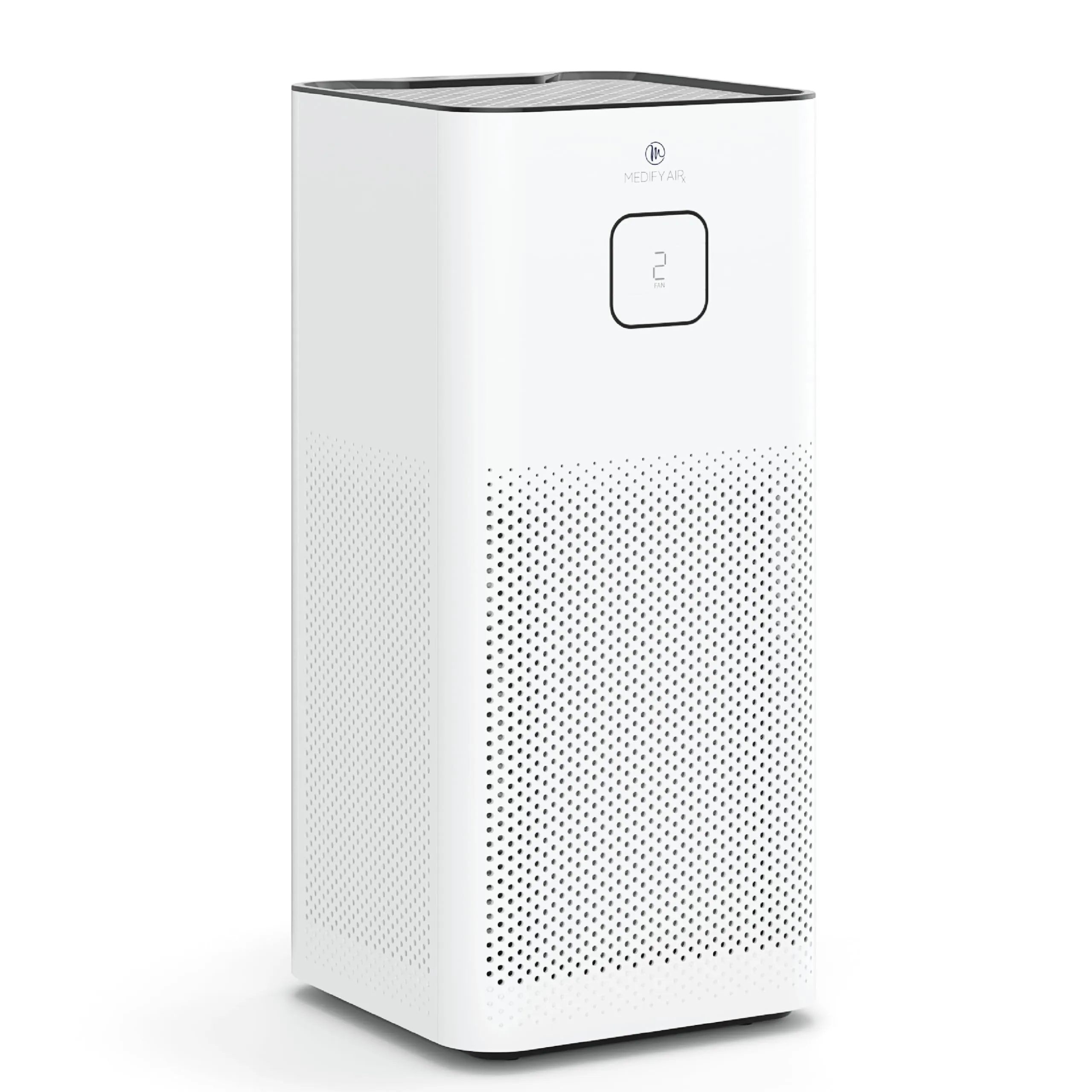
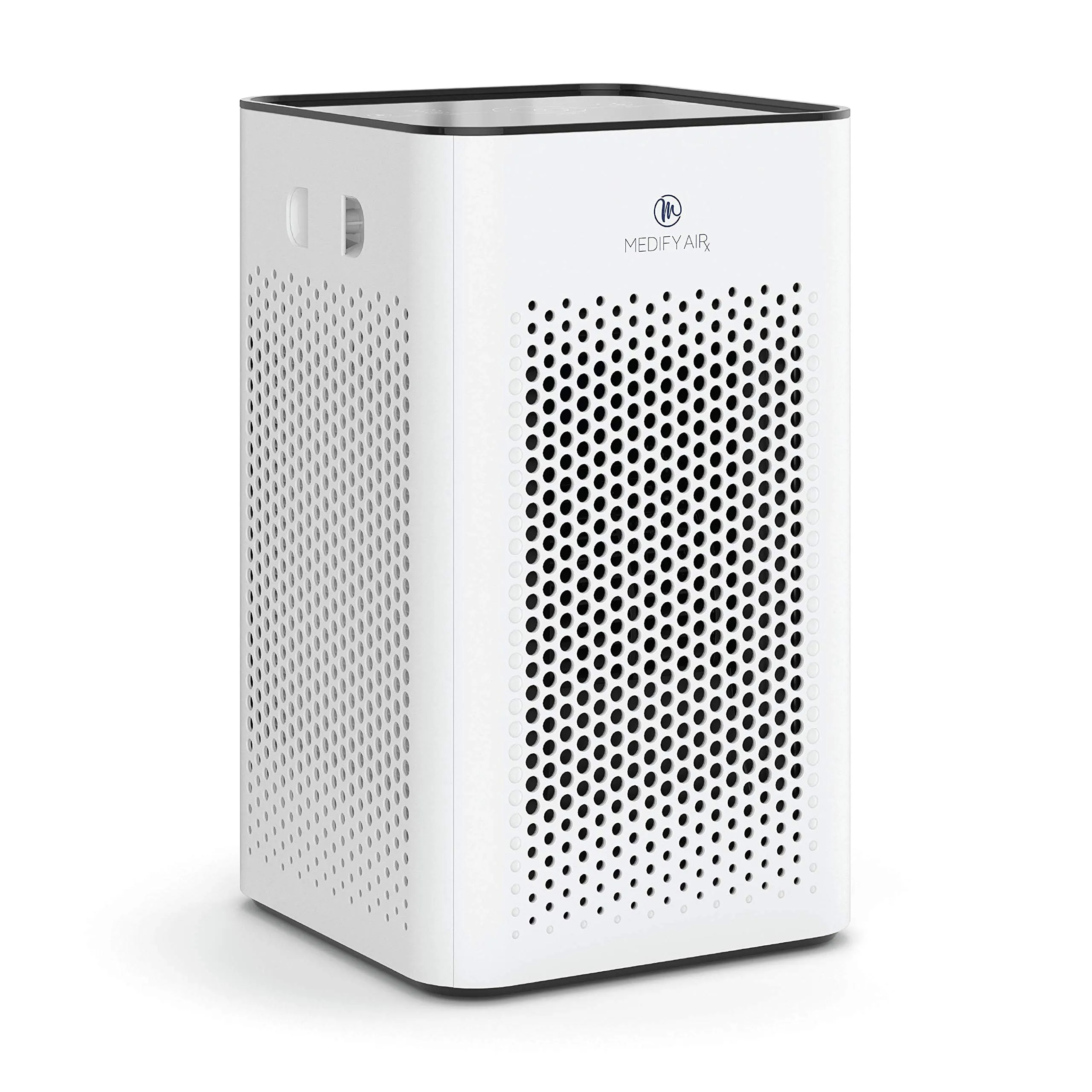
The Medify MA-14 and MA-40 are H13 HEPA air purifiers designed to address dust, pollen, pet dander, odors, and smoke. The MA-14 is the lower-cost, more portable model for small to medium rooms, while the MA-40 is built around far greater stated coverage and adds a timer and child lock.
#1 Overall Winner
Contender
Choose the Medify MA-14 for a small to medium room, a lower upfront price, and easy room-to-room portability. Choose the Medify MA-40 for a large living area, higher stated airflow, a timer, and a child lock. For either model, account for replacement-filter costs and check the unit on arrival for fit and noise.
Overall winner
Depends on your needs
| Feature | Medify MA-14 Air Purifier | Medify MA-40 Air Purifier | Winner |
|---|---|---|---|
| Primary room fit | Small to medium spaces | Large spaces | Medify MA-40 Air Purifier |
| Stated one-hour coverage | Up to 470 sq ft | Up to 1,793 sq ft | Medify MA-40 Air Purifier |
| CADR | 120 | 406 | Medify MA-40 Air Purifier |
| Filtration | H13 HEPA, down to 0.1 microns | H13 HEPA, down to 0.1 microns | Tie |
| Core controls | Touch controls, 3 speeds, sleep mode | Touch controls, 3 speeds, sleep mode | Tie |
| Extra controls | Night light | 0–8-hour timer and child lock | Medify MA-40 Air Purifier |
| Filter interval | About 3–4 months | About 6 months | Medify MA-40 Air Purifier |
| Portability | 2.4 lb listed weight | 15 lb listed weight | Medify MA-14 Air Purifier |
| Upfront price | $99.99 | $249.99 | Medify MA-14 Air Purifier |
| Noise | Sleep mode; mixed higher-speed feedback | Sleep mode; mixed higher-speed feedback | Depends |
| Maintenance | More frequent filter changes | Less frequent listed filter changes | Medify MA-40 Air Purifier |
| Smart features | No smart-home compatibility listed | No app or connectivity listed | Tie |
For everyday home use, the MA-14 is best treated as a targeted room purifier: place it in a bedroom, office, nursery, or other small to medium area and move it as needs change. The MA-40 is better suited to a fixed position in a large communal room, where its stated coverage and CADR can be put to use. Both offer a straightforward plug-in setup and sleep mode, but neither is listed as a connected smart-home appliance.
Both units are relevant to household air hygiene rather than surface cleaning. Their listings identify dust, pollen, odors, smoke, and pet dander among the contaminants they target, and supplied buyer feedback includes reports of reduced cooking and litter-box odors. The MA-14 is suitable for a smaller kitchen-adjacent space or pet area, while the MA-40 is the more appropriate choice for a large kitchen-living area. Neither replaces ventilation, routine cleaning, or source control.
Neither purifier heats, cools, or changes humidity, but both can contribute to perceived room comfort by filtering listed airborne contaminants. The MA-14 is more practical for personal spaces where portability matters; its sleep mode can help reduce light disturbance at night. The MA-40 is stronger for maintaining cleaner-feeling air across a larger shared room. In both cases, higher fan speeds may be more audible, so quieter settings are more suitable for sleep or focused work.
The MA-40 has the clearer performance advantage for large-room air cleaning. It is listed with a CADR of 406 and coverage up to 1,793 square feet in one hour, compared with the MA-14's CADR of 120 and stated 470-square-foot one-hour coverage. Both use listed H13 HEPA filtration down to 0.1 microns and are intended for similar contaminants. Buyer feedback for both is generally favorable on perceived odor and air-freshness improvements, though these observations do not substitute for measured in-home results. For smaller rooms, the MA-14 should be the more proportionate choice.
Both models have generally positive customer sentiment, with buyers often reporting straightforward operation and perceived air-quality benefits. However, the supplied reviews also identify issues worth considering: some users find high fan speeds louder than expected, and a small number describe rattling, loose internal parts, or poor assembly on arrival. Because the supplied review material is shared across these listings, it does not establish a clear reliability winner. Check operation, panel controls, filter fit, and unusual noises immediately after delivery, then register the product if pursuing the listed lifetime warranty.
The MA-40 leads in air-cleaning reach because of its higher stated CADR and much larger coverage claim. Both models list H13 HEPA filtration for dust, pollen, smoke, odors, and pet dander, and supplied buyer feedback frequently mentions perceived reductions in smells and dust. The MA-14 can still be highly suitable when used within its smaller stated room range. Results will depend on room layout, pollutant source, fan setting, and how well the space is matched to the purifier.
These are air purifiers rather than climate-control units: neither listing describes temperature or humidity adjustment. Their climate-comfort role is filtering listed airborne contaminants, including smoke, pollen, dust, odors, and pet dander. The MA-40 is the better option for a large common room during smoke or allergy periods because of its greater stated coverage. The MA-14 is the more practical choice for a single bedroom, office, or smaller enclosed space.
Both are plug-in appliances with sleep mode and filter reminders, and both listings identify CARB and ETL status. The MA-40 additionally includes a child lock, which can help prevent unintended touch-panel changes in homes with children or pets. No specific overheating, electrical, or tip-over protections are described in the provided data, so these should not be assumed. Place either unit on a stable surface, maintain clear airflow around it, follow the manufacturer instructions, and inspect it for rattling, loose parts, or damage before regular operation.
Both models can improve everyday comfort for households bothered by dust, pet-related odors, pollen, or smoke, based on their listed filtration targets and generally positive buyer comments. The MA-14 is more comfortable as a personal-room companion because it can be moved easily and has a dimmed sleep mode. The MA-40 is more useful when several people share a large living space and need broader stated coverage. Neither replaces heating, cooling, humidity control, or fresh-air ventilation.
There is little separation in basic usability: both are plug-in units with touch controls and filter-change reminders, and supplied buyer feedback commonly describes setup as easy. The MA-14 has an advantage for users who want to move a purifier often because of its much lower listed weight. The MA-40's timer and child lock can make daily operation simpler in a busy household, but its larger form is better left in a chosen room.
The MA-14's main design benefit is practical mobility: its 2.4-pound listed weight makes it easier to reposition around a home. Its controls include a night-light function and sleep mode for bedside placement. The MA-40 prioritizes room-scale use over portability, at a listed 15 pounds, and adds a timer and child lock on its touch panel. Both are white plug-in purifiers designed for visible placement rather than concealed installation.
The MA-40 is the clear capacity choice. Its listing states coverage up to 1,793 square feet in one hour, versus up to 470 square feet for the MA-14. That difference matters most in larger living rooms, open-plan homes, classrooms, and broad office areas. The MA-14 remains better matched to smaller rooms, where buying excess capacity may be unnecessary and its low listed weight offers more flexibility.
The MA-14 is the more space-efficient choice for smaller homes, bedrooms, and offices because it is intended for a smaller coverage area and is easy to relocate rather than occupying one permanent position. The MA-40 uses more of a room as a dedicated appliance but can be more space-efficient in a large open area if one unit replaces several smaller purifiers. Match the model to the room rather than simply choosing the bigger option.
Both purifiers include a low-speed sleep mode intended to reduce sound and dim panel lights, but buyer noise feedback is mixed for each. The MA-14 listing gives a maximum noise figure of 55 dB, while the MA-40 lists 46 dB minimum and 66 dB maximum. Users sensitive to noise should expect higher fan settings to be more noticeable and use lower speeds in bedrooms or workspaces where possible.
Installation is simple for both: they are plug-in air purifiers with touch controls, so no permanent mounting, plumbing, or smart-home pairing is described. Select a stable location with room for airflow, install the supplied filter as directed, and use the filter reminder for future changes. The MA-14 is easier to reposition after setup, while the heavier MA-40 is best placed deliberately in the large room it is intended to serve.
The MA-40 has a modest edge in the supplied build-quality assessment, but neither model is free from concerns. Reviews provided for this comparison include reports of rattling, crooked seams, and loose internal parts in a minority of delivered units, while other buyers describe a modern-looking unit and accessible filter. One review also notes thin plastic filter-cover releases and a handle arrangement that may make carrying less secure. Inspect either purifier promptly after delivery and retain purchase documentation.
The MA-40 has a slight edge in the provided durability assessment and a longer listed filter interval, but long-term durability remains uncertain for both. Some reviews mention thin plastic cover components, concerns about carrying stability, and isolated defective units with rattling. Other buyers report sustained satisfactory use. Neither listing provides detailed replacement-part availability beyond replacement filters. Handle both units carefully, avoid moving them by an insecure grip, and inspect filter covers during routine changes.
Both models simplify routine care with a filter-replacement indicator and replaceable filters. The MA-14 needs more frequent filter changes according to its listed 2,500-hour, three-to-four-month interval. The MA-40's filter is listed for 3,000 hours, or about six months, reducing the frequency of scheduled maintenance. Filter expense is a repeated value concern in the supplied feedback, so factor replacement-filter pricing into ownership cost rather than considering purchase price alone.
The MA-14 wins on portability. Its listed 2.4-pound weight makes it easy to shift between a bedroom, office, or pet area as household needs change. At a listed 15 pounds, the MA-40 is still movable but is more naturally a stationary large-room purifier. Supplied reviews also suggest taking care when carrying units because grip and cover components may be vulnerable to rough handling.
Both models keep the core experience simple with touch controls, three fan speeds, sleep mode, and a filter replacement indicator. The MA-14 also lists a night light. The MA-40 offers the fuller control set by adding a 0–8-hour timer and a child lock, useful in shared rooms or homes with children and pets. Neither listing describes app control, air-quality readouts, Wi-Fi, voice control, or smart-home integrations, so operation remains manual.
The MA-40 has the stronger efficiency case when it replaces the need for multiple small units in a large room, because it has much higher stated coverage and CADR. Its filter is also listed for about six months, compared with roughly three to four months for the MA-14. Both listings show 95-watt power use, so there is no stated wattage advantage. Actual operating cost will depend on fan speed, runtime, electricity pricing, and replacement-filter pricing.
The MA-14 offers better value for buyers who only need small-to-medium-room coverage. At $99.99, it provides the same listed H13 HEPA filtration class, three speeds, sleep mode, and filter indicator as its larger sibling. The MA-40 costs $249.99, but its much broader stated coverage, higher CADR, timer, child lock, and longer listed filter life can justify that premium in a large shared room. Neither is automatically the budget winner over time: supplied feedback flags replacement filters as expensive, and the correct room-size match is central to value.
Both products are from Medify Air and carry the same general listing signals: CARB and ETL status plus a USA registered lifetime warranty. Their identical brand background means there is no meaningful brand-trust distinction between them. Buyer sentiment is broadly favorable, but supplied reviews include concerns about isolated quality-control issues and communication around shipping or warranty registration. Buyers should read the current warranty registration terms and confirm replacement-filter availability before committing.
Both listings show the same strong aggregate customer rating and review count, with feedback commonly praising ease of setup, perceived improvement in air freshness, odor reduction, and usefulness around allergens or pets. Noise is the most consistent divided issue: some buyers consider low settings quiet, while others find stronger settings intrusive. Value comments are also mixed because of replacement-filter cost. A minority of supplied reviews describe defective or rattling units, so the overall positive sentiment should be balanced with a prompt delivery inspection.
Both products are listed with a USA registered lifetime warranty and CARB and ETL status. The supplied review material advises registering promptly and describes at least one buyer's difficulty with timing and shipment communication. Because detailed claim procedures, exclusions, and replacement arrangements are not provided, review the current registration and support terms before purchase. Keep the order record and test the purifier soon after it arrives.
The Medify MA-40 is the clearer overall choice for large rooms because it combines much higher stated coverage and CADR with useful extras such as a timer, child lock, and longer listed filter interval. Its main limitations are the higher upfront cost, greater weight, and continued concerns about noise and filter expense. The Medify MA-14 is the better targeted-room purchase: it is dramatically lighter, less expensive, and retains the same listed H13 HEPA filtration, sleep mode, and basic touch controls. Its main limitations are lower stated coverage and more frequent filter changes. Neither model is a smart-home device, and both should be checked carefully at delivery given isolated buyer reports of build-quality problems.
Overall winner
Depends on your needs
The MA-40 is the stronger overall choice for large rooms because it has much greater stated coverage, a higher CADR, a timer, and a child lock. The MA-14 is the better fit for smaller rooms, lower upfront spending, and frequent repositioning because it is considerably lighter.
The MA-14 is generally the more practical bedroom choice when the room falls within its stated coverage, as it is lightweight, compact in purpose, and includes sleep mode with dimmed lights. Either model may be used at low speed overnight, but buyer feedback on noise at higher speeds is mixed.
The extra cost is most justified when the purifier will serve a large living space, open-plan area, or other room needing higher stated airflow and coverage. For a single small or medium room, the MA-14 offers the same listed H13 filter class and core sleep-mode controls for less upfront cost.
Both product listings specify H13 HEPA filtration and state removal of listed airborne particles down to 0.1 microns. Their stated contaminant coverage includes common household concerns such as dust, pollen, pet dander, odors, and smoke. They use different replacement-filter models and replacement intervals.
The MA-14 is the more portable option. It is listed at 2.4 pounds, compared with 15 pounds for the MA-40, making it better suited to moving between a bedroom, office, or smaller living area. The MA-40 makes more sense when it can remain in one larger central room.
Both models have three fan speeds and a sleep mode, but noise impressions are mixed in the supplied buyer feedback. Some users find lower settings quiet enough for daily or overnight use, while others report that higher speeds are noticeable. Choose placement and fan speed based on how noise-sensitive the room is.
The MA-14 replacement filter is listed for 2,500 hours, or roughly three to four months. The MA-40 replacement filter is listed for 3,000 hours, or about six months. Actual replacement needs can vary with fan use and indoor conditions, and both units include a filter-replacement indicator.
No smart-home compatibility is listed for the MA-14, and neither provided listing includes app, Wi-Fi, voice-assistant, or remote-control features. These are manual touch-controlled purifiers. The MA-40 adds a timer and child lock, but it is not presented as a connected appliance.
Check our rankings and expert guides to find the best home lifestyle products for your goals.