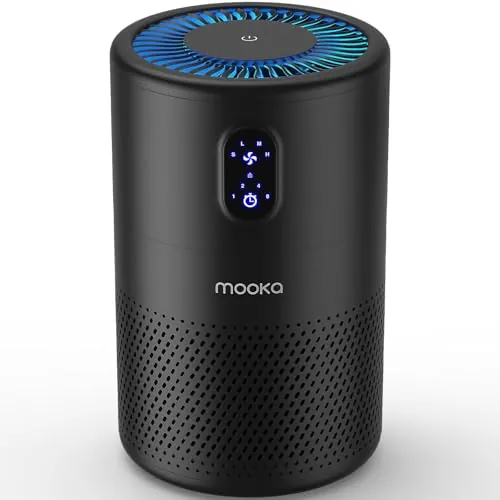
#1 Overall Winner
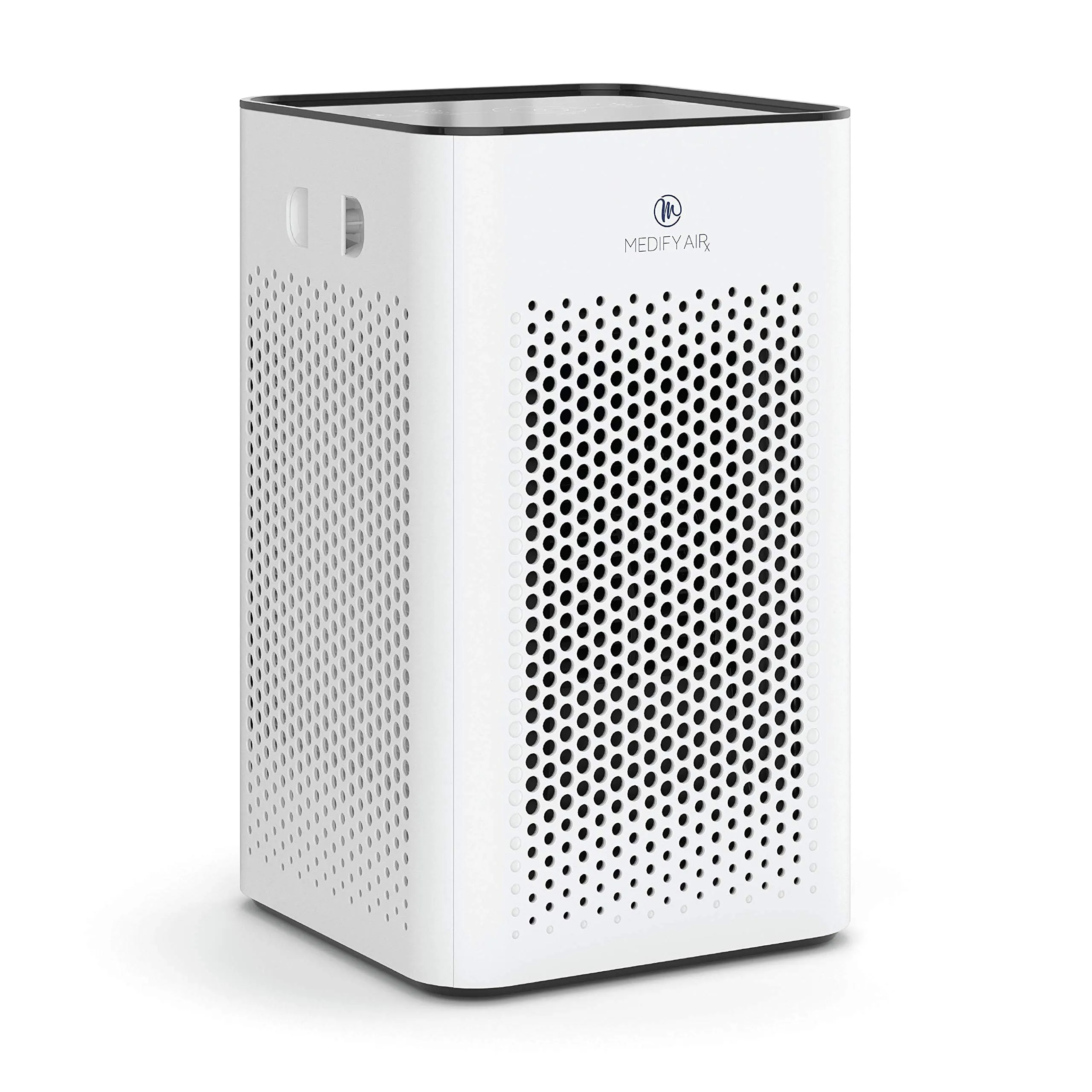
Medify MA-25 Air Purifier
- H13 HEPA filtration is specified to capture particles down to 0.1 microns.
Comparison
The Medify MA-25 and MA-40 are H13 HEPA air purifiers designed for dust, pollen, pet dander, smoke, and odor control. The MA-40 is the higher-capacity choice for large shared areas, while the MA-25 costs less, uses less listed power, and is easier to move for bedroom or medium-room use.
#1 Overall Winner
Contender
Choose the Medify MA-40 for a large living area where its higher claimed coverage matters most. Choose the Medify MA-25 for a bedroom or medium room if you want lower upfront cost, lower listed power use, and easier portability. Both offer similar core filtration and control features, but replacement filters add an ongoing cost.
Overall winner
Depends on your needs
| Feature | Medify MA-25 Air Purifier | Medify MA-40 Air Purifier | Winner |
|---|---|---|---|
| Primary fit | Bedrooms and medium rooms | Large rooms and open areas | Medify MA-40 Air Purifier |
| Claimed one-hour coverage | Up to 825 sq ft | Up to 1,793 sq ft | Medify MA-40 Air Purifier |
| Filtration | H13 HEPA; 0.1-micron claim | H13 HEPA; 0.1-micron claim | Tie |
| Listed wattage | 28 watts | 95 watts | Medify MA-25 Air Purifier |
| Weight | 7.3 lb | 15 lb | Medify MA-25 Air Purifier |
| Filter life | 2,500 hours; about 3–4 months | 3,000 hours; about 6 months | Medify MA-40 Air Purifier |
| Maximum stated noise | 49.3 dB | 66 dB | Medify MA-25 Air Purifier |
| Controls | Touch panel, timer, sleep, lock | Touch panel, timer, sleep, lock | Tie |
| Upfront price | $148.99 | $249.99 | Medify MA-25 Air Purifier |
| Build feedback | Placement and light quirks reported | Some rattling and assembly concerns reported | Medify MA-25 Air Purifier |
| Warranty | Stated lifetime warranty | Stated lifetime warranty | Tie |
| Overall household choice | Lower-cost, lower-power room purifier | Higher-capacity main-room purifier | Depends |
For everyday home use, the MA-25 fits best as a room-by-room purifier that can be moved between a bedroom, office, nursery, or smaller living space. The MA-40 is better treated as a fixed main-room appliance because its claimed coverage is far greater, but it is heavier and uses more listed power. Both provide the same basic controls and address similar pollutant categories. In either case, leave suitable clearance around the air inlets and use the model in a room size that matches its intended capacity.
Both products are relevant to home hygiene because their listings identify dust, odors, pollen, pet dander, and cigarette smoke as filtration targets. Reviews for each model mention help with cooking smells and dust, while pet households also report improved comfort. The MA-40 has the advantage for an open kitchen-living layout due to its larger stated coverage. The MA-25 is more appropriate for a separate kitchen-adjacent room or smaller apartment space. Neither replaces source control, ventilation, or regular surface cleaning.
Neither model heats, cools, or controls humidity, but both are intended to improve indoor air comfort through particle and odor filtration. Buyers of both models frequently describe fresher-feeling rooms and fewer allergy or stuffiness symptoms; these are individual reports rather than measured outcomes. The MA-25 has the more favorable listed noise figures for a nearby bed, while the MA-40 offers more claimed airflow for larger shared spaces. Sleep mode on either model dims the control panel for less visual disturbance at night.
Both models have strong stated filtration credentials and buyer feedback supporting their usefulness against dust, pollen, pet-related particles, smoke, and odors. The MA-40 has the performance edge in larger spaces: it claims 1,793 sq ft of one-hour coverage and lists a CADR of 406, compared with the MA-25's claimed 825 sq ft. The MA-25 remains a capable option when used in a smaller room and is regularly praised for overnight use at lower speeds. For either purifier, reported performance will depend on room layout, airflow, outdoor air entry, pollutant level, and fan speed.
The MA-25 has generally favorable long-term buyer feedback, including reports of continued operation and positive warranty-service experiences. Its main reported practical issues are not major operational failures but filter availability in at least one international case, high-speed noise, and panel-light behavior. The MA-40 also has many satisfied users, but reliability feedback is more mixed because a minority of reviews describe rattling, loose internal parts, or poorly assembled received units. For either model, verify operation, fan noise, and filter fit immediately after arrival, and retain purchase and warranty-registration information.
Air-cleaning capability is strong on paper for both models: each uses H13 HEPA filtration and claims 99.9% removal down to 0.1 microns for listed pollutants. The MA-40 leads for larger-area cleaning due to its stated CADR and much higher coverage claim. The MA-25 has substantial positive feedback for visible filter dust accumulation and perceived relief in smaller rooms. Individual reviews cannot verify removal rates, and consistent results depend on filter condition, fan setting, placement, and the amount of pollution entering the room.
These are air-quality appliances rather than heating, cooling, or humidity-control devices. Both are specified to filter smoke, pollen, dust, odors, and pet dander, and reviewers mention use during smoke events and for cooking smells. The MA-40 is more appropriate for a large communal room where cooking odors spread into the living area. The MA-25 is better for a bedroom or enclosed medium room where lower listed power use and lower stated noise are more relevant. Neither listing provides humidity or temperature control.
Both listings include a child lock, sleep mode, and stated CARB and ETL credentials. The MA-25 specification also lists Energy Star certification. Neither product should have its air inlets or outlets blocked, and both should be placed on a stable surface away from conditions that could interfere with normal airflow. The MA-25's lower weight makes it easier to move, while the MA-40's 15 lb build and reported carrying imbalance in one review warrant careful handling. Review reports of rattling or loose parts in some MA-40 units are a reason to stop and inspect a questionable unit rather than continue using it.
Both purifiers can support a more comfortable indoor environment by targeting the particles and odors named in their listings. Reviewers often mention fresher rooms, less dust, and improved day-to-day comfort around allergies, pets, or cooking odors. The MA-25 is the more natural choice for sleep-focused comfort because of its low stated minimum noise and lower-power format. The MA-40 better serves comfort across a large common space, provided its higher-speed sound is acceptable and it is placed away from areas where noise is distracting.
Both are straightforward plug-in purifiers with touch controls and a filter indicator, so everyday operation should be simple. The MA-40 has stronger ease-of-use advantages for a dedicated large room because it is designed to cover more space without moving it around. The MA-25 is easier to reposition due to its lower weight, but review feedback notes that its side and front vents plus rear power cord restrict close wall placement. Both use sleep mode for dimmer nighttime operation.
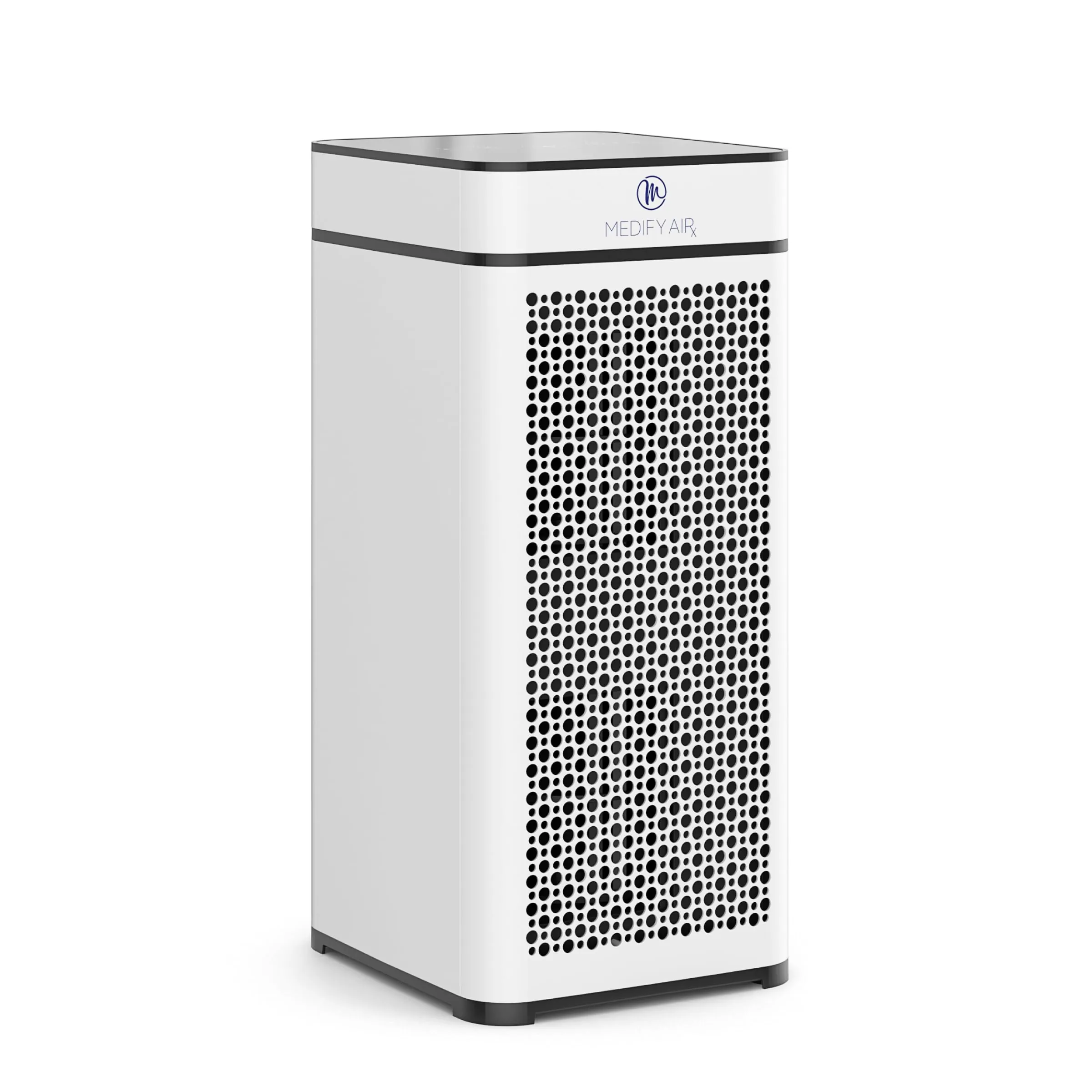
The MA-25 is the more portable, vertical-format option at 7.3 lb, but it needs breathing room around the front and side vents and behind the unit for its cord. The MA-40 is heavier at 15 lb but has a lower, wider profile that may fit under visual sightlines in a living room. Its larger claimed coverage makes the extra footprint more purposeful in a main area. Neither should be treated as a shelf or side table, since unobstructed airflow is important.
Capacity is the clearest difference. The MA-25 claims coverage up to 825 sq ft in one hour, which suits many bedrooms, offices, and medium rooms. The MA-40 claims up to 1,793 sq ft in one hour, or 896 sq ft in 30 minutes, and lists a CADR of 406. This makes it the more appropriate starting point for large living rooms and open-plan areas. Do not rely on maximum claims alone if the space has open doors, high ceilings, active cooking, pets, or outdoor smoke infiltration.
Both products can work in apartments and homes, but they use space differently. The MA-25 has a smaller, lighter format that is easier to fit into a bedroom or office, although its intake vents require clearance on multiple sides. The MA-40 has a broader footprint but a lower profile and can replace the need for multiple smaller purifiers in one large room. For a small room, the MA-25 is usually the more proportionate choice; for an open area, the MA-40 uses floor space more effectively.
The MA-25 has lower stated noise figures, from 19.8 dB to 49.3 dB, while the MA-40 lists 46 dB to 66 dB. Reviews nevertheless show mixed experiences with both models: lower settings are commonly considered comfortable, whereas high settings can be intrusive. For a bedside position or quiet office, the MA-25 has the more favorable published noise profile. For occasional high-output use in a larger room, the MA-40's added airflow may justify the extra sound.
Installation is simple for both: place the purifier on a stable surface with airflow clearance, install the supplied filter as directed, plug it in, and select a fan setting. The MA-25 needs particular attention to placement because its vents are on the front and sides and its power cord connects at the rear. The MA-40 requires no stated mounting or wiring, but its greater weight means it is best positioned deliberately rather than moved often. Neither model has stated app pairing or hub setup.
The MA-25 receives generally positive feedback for its compact appearance and lightweight build, though some buyers point to practical design quirks around vent clearance and panel lights. The MA-40 is described as modern-looking and unobtrusive for its size, but build feedback is less consistent. A minority of reviews report crooked seams, internal rattling, or loose components in received units; one review also noted thin filter-cover releases and a single carrying hold. Inspect either unit on arrival, particularly the MA-40.
The stated lifetime warranty on both products is reassuring, but published buyer feedback gives the MA-25 a slightly more consistent durability picture. One MA-25 owner reported long use and a replacement after an LED fault, while another described more than a year of strong dust collection. The MA-40 has positive ongoing-use accounts, but reports of rattling and thin plastic filter-cover releases create more uncertainty around unit-to-unit build consistency. Filter access and careful handling matter for both, especially when moving the heavier MA-40.
Both models use replaceable filters, show a filter-replacement indicator, and need unobstructed airflow and periodic external cleaning. The MA-40 has the convenience advantage in stated replacement frequency: its filter is listed for about six months, versus roughly three to four months for the MA-25. However, buyers for both models frequently describe replacement filters as expensive. Check the correct filter part number, current local availability, and price before purchase. The MA-25's listed replacement filter is B084Q965BF; the MA-40's is B07MTQFFNT.
The MA-25 is the better portable option at 7.3 lb, making it more realistic to shift between a bedroom, office, and living space. The MA-40 weighs 15 lb, so it can be relocated but is more suitable as a dedicated unit for a larger room. One review also notes that the MA-40's single handhold can make carrying less balanced. Choose the MA-25 if frequent repositioning is part of the plan.
Feature sets are closely matched. Both listings include touch operation, three fan speeds, a 0–8-hour timer, sleep mode, a filter-replacement indicator, and a child lock. Both are programmable according to their specifications, but neither listing provides app control, Wi-Fi connectivity, voice-assistant support, or a stated air-quality display. The practical distinction is capacity rather than controls: the MA-40 adds higher claimed room coverage and a stated CADR, while the MA-25 focuses on lower-power, compact room use.
The MA-25 has the efficiency advantage on listed electricity demand, rated at 28 watts versus 95 watts for the MA-40. That lower rating may suit users who run a purifier continuously in a bedroom or office. The MA-40's higher power use accompanies substantially greater claimed coverage, so it may be more efficient in practical terms when one unit must serve a large room. Its longer stated filter interval may also reduce replacement frequency. Actual operating costs depend on fan speed, use time, and local electricity and filter prices.
The MA-25 offers the lower entry price and much lower listed wattage, giving it a stronger value case for a bedroom, office, or medium room. Its limitation is a shorter stated filter life, and recurring filter cost is a regular buyer complaint. The MA-40 costs more but provides substantially greater claimed coverage, a stated CADR, and a longer listed filter interval. It can be better value when it eliminates the need for multiple smaller units in a large space. Neither is a clear bargain without checking replacement-filter pricing and availability where you live.
Because both products are from Medify Air, there is no meaningful brand-versus-brand difference. Each listing states a lifetime warranty and CARB and ETL credentials, and reviews for both include positive comments about support and product effectiveness. Warranty experiences can vary: one MA-25 owner reported a favorable replacement response, while an MA-40 review advised registering promptly after receiving the unit. Confirm warranty terms, registration requirements, and filter availability for your region before relying on long-term support.
Both models have the same 4.6 out of 5 star average and a large volume of reviews, indicating broad buyer engagement. MA-25 feedback frequently praises dust collection, air freshness, allergy comfort, compact design, and quiet low-speed operation; common complaints concern filter cost, high-speed sound, placement, and lights. MA-40 feedback similarly praises odor reduction, ease of setup, large-room usefulness, and air freshness. Its recurring negatives are high-speed noise, costly filters, and a smaller but important group of reports about rattling or assembly quality. The MA-40 has a slightly higher review count.
Both listings state a USA registered lifetime warranty. The MA-25 has positive review evidence of a replacement being provided after an LED issue, while MA-40 feedback includes a reminder to register promptly and check warranty paperwork. Since filter access is essential to continued use, buyers should also confirm local availability of the correct replacement filter before purchasing either model.
The Medify MA-40 wins this comparison for large-room air cleaning because it has substantially higher claimed coverage, a stated CADR, and a longer listed filter interval. Its main limitations are the higher purchase price, higher listed wattage, heavier build, and some review reports of inconsistent assembly quality.
The Medify MA-25 is the better targeted choice for bedrooms and medium rooms. It combines the same stated H13 HEPA filtration approach with lower power use, a lower initial price, lighter weight, and more favorable published noise figures. Its limitations are lower capacity, more frequent stated filter replacement, and placement-related quirks. Both are well-reviewed options, but filter expense and high-speed noise should be considered before choosing either one.

Overall winner
Depends on your needs
The MA-40 is the stronger overall choice when large-room coverage is the priority, with a claimed 1,793 sq ft of coverage in one hour. The MA-25 is better suited to buyers who need a lighter, lower-wattage unit for a bedroom or medium room and prefer a lower upfront price.
The MA-40 is the more suitable option for a large living room or open-plan area because its claimed one-hour coverage is substantially higher and it has a stated CADR of 406. Room layout, doors, open windows, and pollutant sources can still affect real-world results.
The MA-25 has lower stated minimum and maximum noise figures than the MA-40. Buyer feedback for both models is mixed: low or sleep settings are often considered suitable for bedrooms, while higher settings can be distracting in quiet spaces.
Both models are specified with H13 HEPA filtration and claims of capturing particles down to 0.1 microns. Their listings identify dust, pollen, pet dander, cigarette smoke, and odors among the contaminants they are designed to filter.
The MA-25 has a listed power rating of 28 watts, compared with 95 watts for the MA-40. Actual electricity use depends on the selected fan speed and operating hours, but the listed figures favor the MA-25 for lower-power routine use.
The MA-40 replacement filter is listed for 3,000 hours, or about six months, while the MA-25 filter is listed for 2,500 hours, or around three to four months. Replacement costs were a recurring concern in reviews for both models, so check current filter availability and prices before buying.
Neither model requires complex installation. Both are plug-in units with touch controls, fan-speed selection, timers, sleep mode, child lock, and a filter-replacement indicator. The MA-25 needs clear space around its vents, and the MA-40 should be checked on arrival for any unusual rattling noted in a minority of reviews.
The MA-25 is easier to reposition because it weighs 7.3 lb, compared with 15 lb for the MA-40. The MA-40 can still be moved, but its larger-capacity role makes it more practical as a dedicated purifier for a main room or large shared area.
Check our rankings and expert guides to find the best home lifestyle products for your goals.