#1 Overall Winner
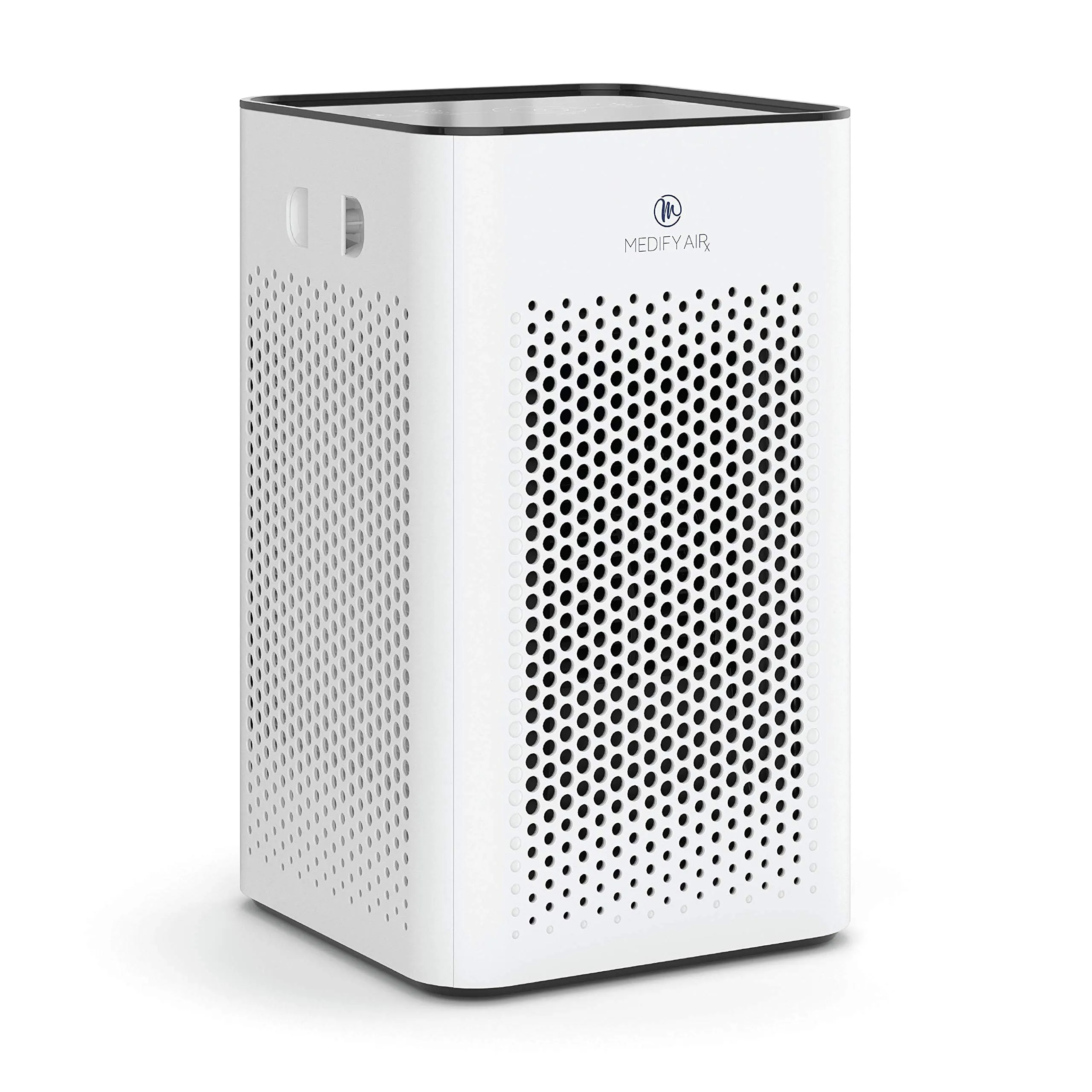
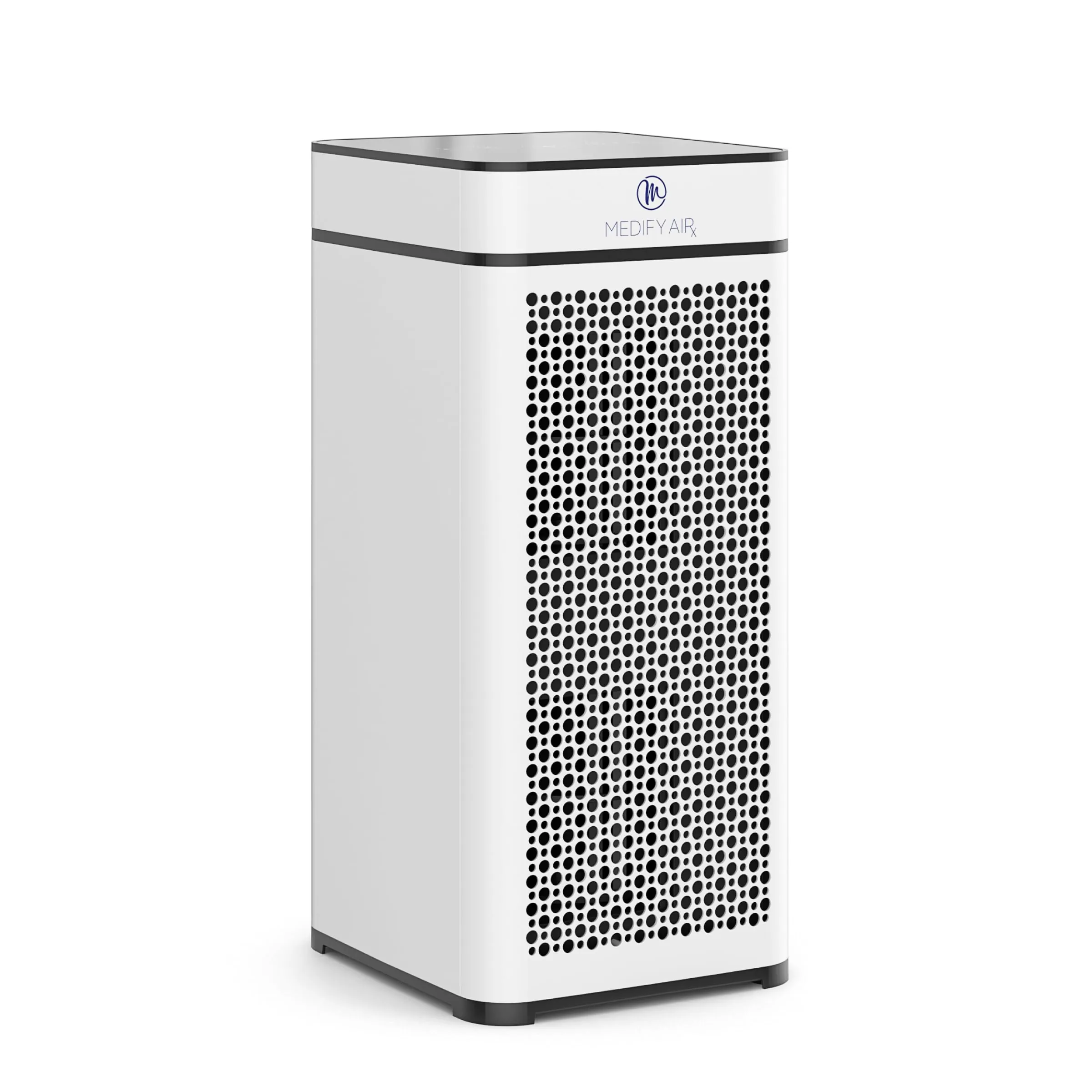
Medify MA-25 Air Purifier
- H13 HEPA filtration stated to capture particles down to 0.1 microns.
Comparison
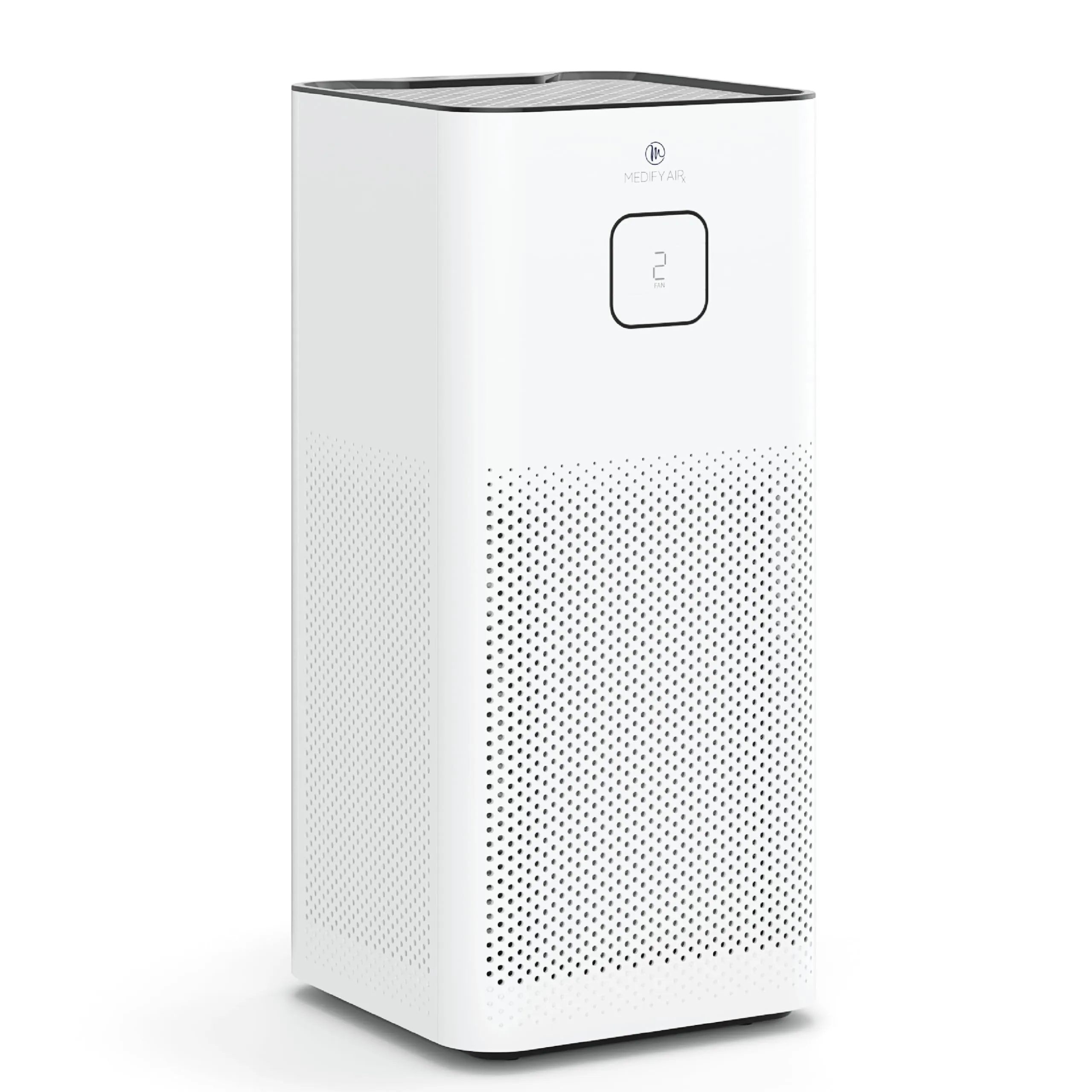
The Medify MA-25 and MA-50 V3.0 are H13 HEPA air purifiers with timers, sleep modes, child locks, and stated filtration down to 0.1 microns. The MA-50 V3.0 is built around far larger stated coverage, while the MA-25 costs less, uses less listed power, and has lower stated noise figures. Choose based on the room you need to treat rather than filtration type, since their headline filtration claims are similar.
#1 Overall Winner
Contender
Buy the MA-25 for smaller rooms, a lower initial outlay, and lower stated noise and wattage. Choose the MA-50 V3.0 for a large room or open-plan area where its much greater stated coverage is worth the higher price. Both offer similar core filtration and everyday controls.
Overall winner
Depends on your needs
| Feature | Medify MA-25 Air Purifier | Medify MA-50 Air Purifier V3.0 | Winner |
|---|---|---|---|
Stated one-hour coverage |
Up to 825 sq ft |
Up to 2,640 sq ft |
Medify MA-50 Air Purifier V3.0 |
Price |
$148.99 |
$299.99 |
Medify MA-25 Air Purifier |
Filtration |
H13 HEPA; stated 0.1-micron retention |
Tie |
Fan speeds |
3 |
4 |
Medify MA-50 Air Purifier V3.0 |
Listed wattage |
28 watts |
70 watts |
Medify MA-25 Air Purifier |
Listed noise range |
19.8–49.3 dB |
22–59 dB |
Medify MA-25 Air Purifier |
CADR |
Not provided |
598 |
Medify MA-50 Air Purifier V3.0 |
Filter interval |
2,500 hours; about 3–4 months |
Tie |
Core controls |
Touch panel, timer, sleep, child lock |
Touch controls, timer, sleep, child lock |
Tie |
Portability |
7.3 lb listed weight |
Listed weight requires confirmation |
Medify MA-25 Air Purifier |
Best fit |
Smaller rooms and lower-cost entry |
Large rooms and open areas |
Depends |
For everyday home use, the MA-25 suits a room-by-room approach: it can serve a bedroom, office, nursery, or smaller living space without the upfront cost of a large-capacity model. The MA-50 V3.0 is better for a central placement in a large shared area, such as an open living and dining zone. Both require open airflow around their intake and outlet areas, so neither should be pressed tightly against furniture or walls.
Both products are air-cleaning appliances rather than floor-cleaning tools. Their listings identify dust, pollen, smoke, pet dander, and odors among the contaminants addressed by their filtration systems. The MA-50 V3.0 is the more suitable single-unit choice for a large kitchen-adjacent open plan area because of its greater stated coverage. For a separate kitchen or smaller room, the MA-25 may be sufficient.
Neither model heats, cools, or controls humidity, but both can support indoor comfort by filtering the listed airborne particles and odors. The MA-25 has lower stated noise figures and may be the more comfortable option near a bed or desk on low speed. The MA-50 V3.0 is more useful where a larger room needs air circulation and filtration, though its upper fan settings have a higher stated noise ceiling.
Both models have strong stated air-cleaning credentials, using H13 HEPA filtration and claiming removal of listed particles down to 0.1 microns. The MA-25 has strong buyer feedback for dust collection and improved comfort around allergies, although one buyer did not notice a difference. The MA-50 V3.0 has the performance advantage for sheer room coverage, with a stated 2,640-square-foot one-hour capacity and CADR of 598. For a smaller room, however, greater throughput is not automatically more useful than the MA-25's lower-cost, lower-wattage operation.
Reliability evidence is broadly favorable but not complete. Both products have the same strong aggregate rating and a large review count, while the available feedback includes repeat purchases and a report of responsive support after an MA-50 LED fault. There are also isolated concerns: one purifier was reportedly replaced because of noise, and another buyer struggled to obtain original replacement filters in the Netherlands. Neither listing provides connected software, so there are no app or pairing failures to consider. Filter supply is a practical reliability issue because operation depends on timely replacements.
Both models are designed to filter the listed airborne contaminants, including dust, pollen, smoke, pet dander, and odors. The MA-25 has particularly strong feedback around visible filter dust accumulation and perceived relief from allergy and sinus discomfort. The MA-50 V3.0 has the stronger coverage specification and listed CADR, so it is more capable on paper for cleaning a larger volume of air. For one small room, their practical difference may be less pronounced.
These are air purifiers, not temperature or humidity appliances. Their climate-related role is improving perceived room freshness by filtering listed particles and odors. The MA-25 is suited to individual rooms and has lower stated operating noise, while the MA-50 V3.0 is better equipped for a large combined living space where cooking smells, pets, pollen, or smoke may circulate. Neither replaces ventilation, heating, cooling, or humidity control.
Both models include child locks, which can help prevent unwanted control changes in homes with children or pets. Their listings also identify safety-related compliance information: the MA-25 lists CARB and ETL, while the MA-50 V3.0 lists CARB, ETL, and Energy Star. They are AC-powered appliances, so follow the supplied electrical instructions and keep airflow openings unobstructed. No overheating, fire, or tip-over claims are provided in the product data, so no performance conclusion should be drawn on those points. Replace filters as directed and use the correct model-specific filter.
For bedside and desk comfort, the MA-25 has the advantage because of its lower stated noise range, lower purchase cost, and compact positioning role. Buyers commonly describe improved comfort around dust, allergies, and stale-feeling air, though these are individual experiences rather than guaranteed outcomes. The MA-50 V3.0 is more comfortable in a different sense: it can cover a larger shared space from one location. Its higher-speed sound may be a trade-off in quiet evening use.
Both models use straightforward touch controls and include a filter indicator to simplify routine ownership. Sleep mode can dim panel lighting, and the timer allows basic unattended operation. The MA-25 is more convenient to move because its 7.3-pound listed weight is plausible and clearly stated. Buyer feedback highlights placement quirks for Medify units, including the need to keep vents clear and a rear power cord that can limit wall placement. The MA-50 V3.0's listed weight should be verified.
The MA-25 favors a compact, room-to-room design, while the MA-50 V3.0 favors high-capacity coverage from a larger-area placement. Both use top-mounted control areas and a white finish. Reviews of the related Medify format note that top controls prevent using the top surface as a shelf and that the rear cable plus front and side vents need clearance. This makes either model less flexible in a tight corner than its rectangular shape may suggest.
Capacity is the decisive difference. The MA-25 is stated to clean spaces up to 825 square feet in one hour, which fits many bedrooms, offices, and contained living areas. The MA-50 V3.0 is stated for up to 2,640 square feet in one hour and 1,320 square feet in 30 minutes, making it more appropriate for large living spaces and open layouts. Avoid choosing by the highest number alone: room layout, doors, and placement affect real-world use.
The MA-25 is better suited to limited spaces because it is positioned as a compact tabletop purifier and has a clearly listed manageable weight. Both models have the same stated dimensions in the supplied specifications, but the MA-50 V3.0's much greater coverage may allow one unit to serve a larger shared area. In either case, do not treat the top as usable storage and leave clearance around the front, sides, and rear cable area.
The MA-25 has the quieter stated range, from 19.8 to 49.3 dB, compared with 22 to 59 dB for the MA-50 V3.0. Both provide sleep modes and are intended to be discreet at low speeds. Buyer feedback is mixed overall: low settings are often considered quiet, but higher settings can be clearly audible. The MA-25 is the safer fit for a quiet bedroom; the MA-50 V3.0 favors output over low maximum noise.
Neither purifier requires permanent installation; both run from AC power and can be placed where airflow is unobstructed. Setup should consist of fitting the supplied filter, placing the unit with clearance around vents, and selecting a fan speed or timer. Feedback notes that the rear power-cord position and intake or outlet locations can prevent close wall placement. The MA-25 is simpler to relocate due to its clearly listed low weight, while buyers should verify the MA-50 V3.0's physical details.
The two purifiers use a similar control-and-filter concept, with supplied H13 filters and touch-operated panels. Available buyer feedback is generally positive on construction and reports at least one long-term MA-50 owner receiving a replacement after an LED issue. That is encouraging but does not establish fault-free durability. The MA-25 has a reported issue with a flashing power light when off, while both designs need careful placement because their airflow paths should not be blocked.
Both purifiers depend on regular filter replacement rather than washable permanent filtration, with a stated 2,500-hour interval. The available reviews include an MA-50 that continued operating after an LED light failed, but there is not enough long-term evidence to separate the models decisively for durability. The MA-25's compact listed weight may make it easier to handle carefully when repositioning. Before buying either, confirm the availability and price of the correct model-specific replacement filter.
Maintenance is similar: both have filter indicators and state that replacement filters last about 2,500 hours, or three to four months. Neither listing describes a washable HEPA filter, so planned replacement cost is central to ownership. The MA-25 uses filter B084Q965BF; the MA-50 V3.0 uses B08Y9CQ9B9. Buyers describe filter pricing as expensive, and one MA-25 review reports international sourcing difficulty. Check local stock before committing to either model.
The MA-25 is the more portable choice. Its listed 7.3-pound weight supports moving it from a bedroom to an office or small living room as needed. The MA-50 V3.0 is intended to cover a much larger area from one placement, so frequent movement is less central to its purpose. Its listed 0.36-pound weight is not credible for this type of appliance and should be confirmed rather than used for a buying decision.
The feature sets are closely matched. Each purifier provides touch controls, a 0–8-hour timer, sleep mode, a child lock, and a filter replacement indicator. Both also use a stated 2,500-hour filter interval. The MA-50 V3.0 adds a fourth fan speed, giving users one more manual airflow choice, while the MA-25 has three speeds. Neither listing provides app control, Wi-Fi connectivity, voice-assistant support, or sensor-based automatic operation, so these are primarily manual appliances.
The MA-25 has the lower listed wattage at 28 watts, compared with 70 watts for the MA-50 V3.0, so it is the more restrained option for continuous use in a smaller room. The MA-50 V3.0 has higher throughput and is listed as Energy Star certified, which may matter when cleaning a large area with one appliance. Both require replacement filters at the same stated interval, so filter costs remain an important part of long-term efficiency.
The MA-25 offers better value when its 825-square-foot stated coverage matches the room: it costs about half as much as the MA-50 V3.0, has similar core filtration and controls, and uses substantially less listed power. The MA-50 V3.0 can justify its higher price for a genuinely large room because it provides far greater stated coverage, a CADR figure, and an additional speed setting. Both have recurring filter costs and the same stated replacement interval, so compare the price and local availability of the correct filter before deciding.
Both products come from Medify Air and carry the same stated USA registered Lifetime Warranty, so brand-level trust is broadly similar. The MA-50 V3.0 lists CARB, ETL, and Energy Star certifications, while the MA-25 lists CARB and ETL and is also described as Energy Star certified in its supplied specifications. Available feedback includes praise for support after an LED fault, but one international buyer reported problems obtaining an original MA-25 replacement filter. Local parts availability remains worth checking.
The listed customer rating and review count are identical for both products, indicating broadly strong buyer sentiment at the listing level. Repeated praise focuses on perceived dust collection, fresher-feeling air, reduced allergy or sinus discomfort, and quiet lower-speed operation. Repeated reservations concern expensive replacement filters and noticeable sound at high speed. Some feedback appears attached to different Medify size variants, so model-specific conclusions should be treated carefully. One buyer also reported no immediate perceived difference, showing that results and expectations can vary by room and use.
Both listings state a USA registered Lifetime Warranty. The available feedback includes a positive account of Medify support arranging a replacement for an MA-50 with an LED issue, though this is an individual experience rather than a guarantee. Warranty coverage and replacement-filter delivery may differ by location, so international buyers should confirm both support access and local filter availability before purchase.
The MA-25 and MA-50 V3.0 are both credible choices for households seeking H13 HEPA air purification, but they solve different scale problems. The MA-25 is the better all-round pick for most individual rooms: it costs less, has lower listed wattage and noise figures, and is more practical to move. Its limitations are lower stated coverage and the same potentially expensive filter cycle found on the larger unit.
The MA-50 V3.0 wins for large spaces. Its stated capacity is dramatically greater, it provides a CADR figure, and it adds a fourth speed. The trade-offs are its higher price, higher listed power draw, and higher maximum noise. Buy the model that fits your room rather than paying for unused capacity.

Overall winner
Depends on your needs
The better choice depends mainly on room size. The MA-50 V3.0 has far greater stated coverage and a listed CADR of 598, making it the stronger fit for large shared spaces. The MA-25 is less expensive, uses less listed power, and is the more practical option for a bedroom, office, or smaller room.
The MA-50 V3.0 is the clearer option for a large open-plan room because it is stated to clean up to 2,640 square feet in one hour and 1,320 square feet in 30 minutes. The MA-25 is stated for up to 825 square feet in one hour, so it is better matched to more modest spaces.
Based on the listed specifications, the MA-25 has lower minimum and maximum noise figures than the MA-50 V3.0. Both have sleep modes and are described as quiet at lower settings, but buyer feedback also indicates that higher fan speeds can be noticeable. For a bedside location, the MA-25 has the quieter stated figures.
No. The MA-25 lists replacement filter B084Q965BF, while the MA-50 V3.0 lists B08Y9CQ9B9. Both filters are stated to last 2,500 hours, or around three to four months. Confirm replacement-filter availability and local delivery before buying, especially outside the United States.
The MA-25 is the more practical choice for moving between rooms because its listed weight is 7.3 pounds and it is presented as a compact tabletop purifier. The MA-50 V3.0 targets much larger spaces; its listed weight is inconsistent, so buyers should verify the current manufacturer specification if portability is important.
Routine maintenance is straightforward: both provide a filter replacement indicator and state a filter life of about 2,500 hours. The main ownership consideration is replacement-filter cost, which buyers mention as expensive. The MA-25 also has a review noting limited access to original filters in the Netherlands, so supply should be checked in advance.
Yes. Both listings include sleep mode, a 0–8-hour timer, a filter-change indicator, and a child lock. Sleep mode dims the panel lights for more discreet operation. Some buyer feedback about Medify units notes that indicator lights and top-mounted controls can still create small bedside usability compromises.
Check our rankings and expert guides to find the best home lifestyle products for your goals.