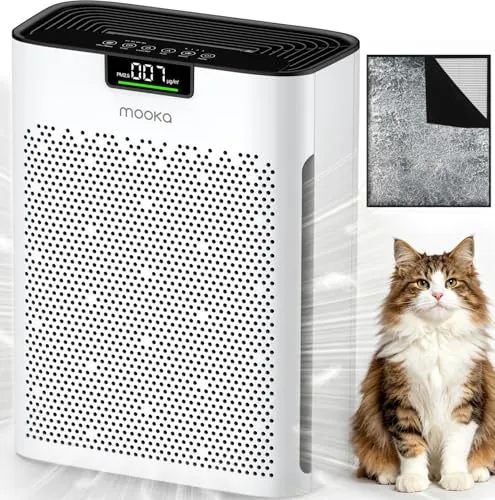
#1 Overall Winner
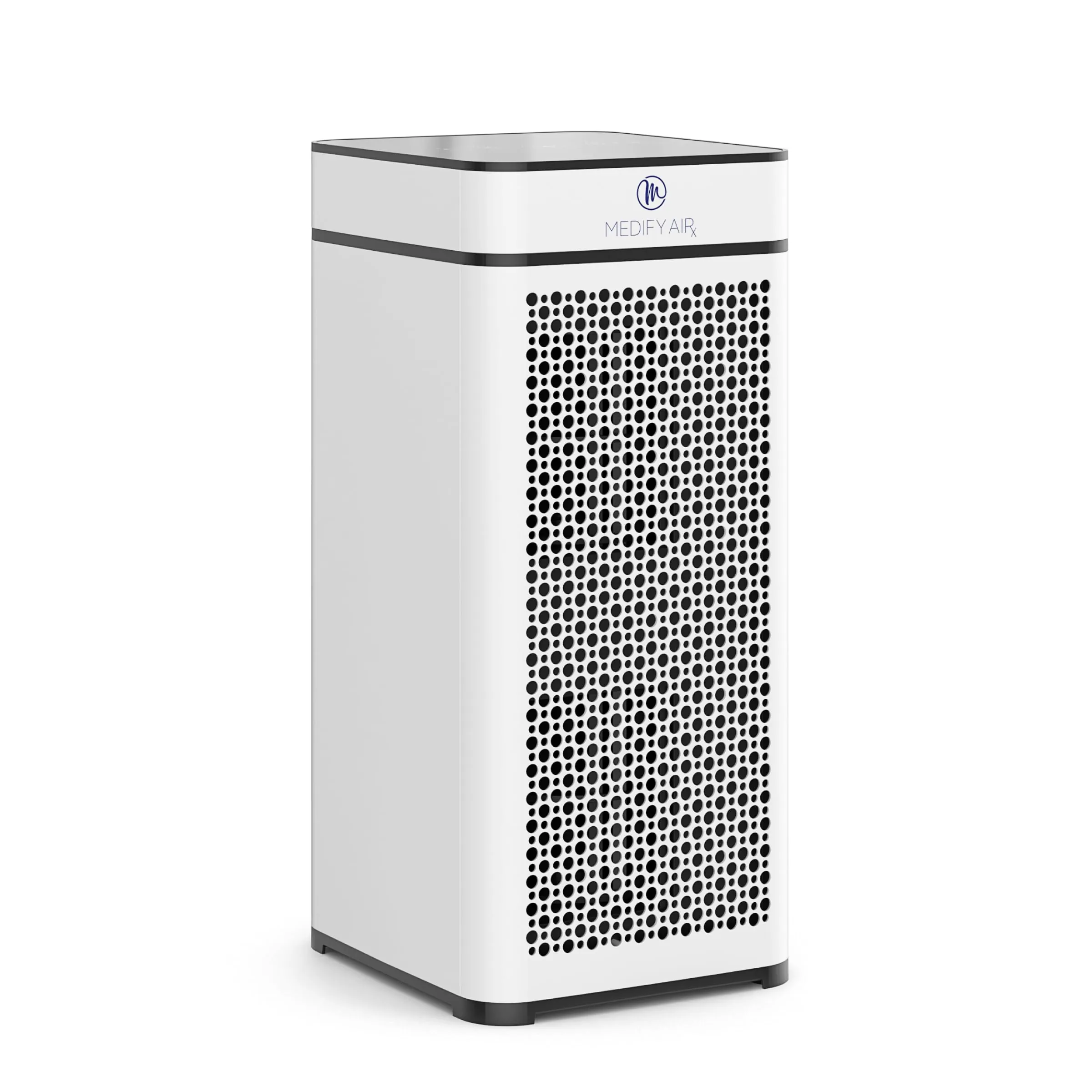
Medify MA-40 Air Purifier
- Listed coverage of up to 1,793 sq ft in one hour and a CADR of 406.
Comparison
The Medify MA-40 and MA-50 are H13 HEPA air purifiers designed for large household spaces affected by dust, pollen, pet dander, odors, and smoke. The MA-50 has substantially higher listed coverage, a higher CADR, an extra fan speed, and lower stated noise figures, while the MA-40 costs less and has a longer listed filter interval.
#1 Overall Winner
Contender
Choose the Medify MA-50 for the largest rooms, lower stated noise levels, and more airflow control. Choose the Medify MA-40 if you want strong large-room coverage at a lower initial price and prefer the longer listed filter interval. Both suit homes managing dust, pets, pollen, odors, and smoke.
Overall winner
Depends on your needs
| Feature | Medify MA-40 Air Purifier | Medify MA-50 Air Purifier V3.0 | Winner |
|---|---|---|---|
| Primary category | Large-room air purifier | Very-large-room air purifier | Depends |
| Listed one-hour coverage | Up to 1,793 sq ft | Up to 2,640 sq ft | Medify MA-50 Air Purifier V3.0 |
| CADR | 406 | 598 | Medify MA-50 Air Purifier V3.0 |
| Filtration class | H13 HEPA | H13 HEPA | Tie |
| Particle retention claim | Down to 0.1 microns | Down to 0.1 microns | Tie |
| Fan speeds | 3 | 4 | Medify MA-50 Air Purifier V3.0 |
| Stated noise range | 46dB to 66dB | 22dB to 59dB | Medify MA-50 Air Purifier V3.0 |
| Stated wattage | 95 watts | 70 watts | Medify MA-50 Air Purifier V3.0 |
| Listed filter interval | 3,000 hours / about 6 months | 2,500 hours / about 3–4 months | Medify MA-40 Air Purifier |
| Controls | Touch controls, timer, sleep mode, child lock | Touch controls, timer, sleep mode, child lock | Tie |
| Certifications stated | CARB and ETL | CARB, ETL, and Energy Star | Medify MA-50 Air Purifier V3.0 |
| Dimensions | 20 x 15.2 x 11 in | 20 x 10 x 18 in | Depends |
| Purchase price | $249.99 | $299.99 | Medify MA-40 Air Purifier |
| Buyer rating | 4.6/5 from 13,900 reviews | 4.6/5 from 11,280 reviews | Tie |
Both models fit homes where indoor air concerns come from pets, cooking, pollen, dust, odors, or periodic smoke. The MA-40 is well suited to a sizeable individual room or moderately open living area within its listed coverage. The MA-50 is the more practical one-unit choice for a larger open living, dining, and kitchen zone. Neither replaces ventilation, source control, or routine cleaning, but both provide a dedicated filtration option for everyday household air management.
For home hygiene, both purifiers are intended to filter airborne dust, pet dander, odors, smoke, and pollen rather than clean surfaces. Reviews for each model mention perceived odor reduction and less dust, although these are user experiences rather than controlled measurements. The MA-50's higher listed airflow capacity makes it the stronger option for a large shared area where cooking odors and pet-related particles move between rooms. The MA-40 remains suitable for a smaller living area, bedroom, or dedicated pet zone.
Neither unit heats, cools, or controls humidity, but both can contribute to indoor comfort by filtering listed airborne contaminants. Reviews for both models include comments about fresher-feeling rooms and reduced allergy or sinus discomfort; these experiences will vary by person and environment. The MA-50 has the advantage for a broad shared space because of its higher listed coverage and lower stated minimum noise. The MA-40 can be a good fit where a large but less expansive room needs regular filtration.
Both Medify models have strong stated air-cleaning credentials, using H13 HEPA filtration and claiming retention down to 0.1 microns. Their buyer feedback frequently describes improved perceived air freshness, odor reduction, and help with dust, pets, pollen, or allergy-related comfort. The MA-50 takes the performance lead because its listed CADR of 598 and one-hour coverage of 2,640 sq ft exceed the MA-40's CADR of 406 and 1,793 sq ft claim. Results will depend on room layout, the pollutant source, fan setting, and unobstructed airflow around the unit.
The MA-50 has the stronger reliability profile in the supplied scoring and reviews. Buyers describe long-term operation and, in one case, responsive support after an LED fault. The MA-40 is widely praised when functioning as expected, but a minority of reviews report defective arrivals, internal rattling, misaligned seams, or concerns about fragile filter-cover parts. Neither model offers connected functions, so app failures and connection dropouts are not relevant. Check operation, fan noise, and fit of panels promptly after delivery.
These products provide air cleaning rather than floor or surface cleaning. Both are listed to filter dust, pollen, pet dander, odors, smoke, and related airborne contaminants using H13 HEPA filters. The MA-40 has stronger supplied cleaning-performance evidence, while the MA-50 has higher airflow capacity for larger spaces. In practical terms, choose the MA-50 for a broad open room and the MA-40 where its stated coverage matches the space. Regular filter changes are essential to maintain either model's performance.
Neither purifier is a heating, cooling, or humidity-control appliance. Their climate-comfort role is limited to filtration of the listed airborne contaminants. Both can be useful during pollen periods, smoky outdoor conditions, or when household odors are a concern. The MA-50 has more headroom for a large room due to its higher listed coverage and CADR, whereas the MA-40 is an effective alternative for a smaller large-room application. Keep windows, doors, and pollutant sources in mind when judging results.
Both units include a child lock, which can help prevent unintended changes to touch controls in homes with children or pets. Both are listed as CARB certified, and both are plug-in devices, so placement should keep cables out of walkways and the unit should be used according to its instructions. Keep air vents clear to support normal operation. The MA-40 has some buyer comments about thin plastic cover releases and potential vulnerability if dropped, so use extra care when moving it. No additional safety certifications or protections should be assumed beyond the supplied information.
Both units can improve perceived room comfort where dust, pet dander, pollen, odors, or smoke are a concern. Reviewers for each model report fresher-feeling air and, in some cases, fewer allergy or sinus-related symptoms; individual health outcomes should not be assumed. The MA-50 is better suited to maintaining filtration across a larger common area, while the MA-40 offers similar everyday convenience in a somewhat smaller space. Sleep mode on both helps reduce light distraction.
Both are designed for simple plug-in use with touch controls and maintenance reminders. Reviews commonly describe each as easy to operate, and the filter access is generally regarded as manageable. The MA-40 has the edge in supplied usability scoring, while the MA-50 has more placement considerations: reviews note that its intake areas and rear power connection require clearance from walls. The MA-50's top-mounted controls and standby light behavior may also be less convenient for some bedroom users.
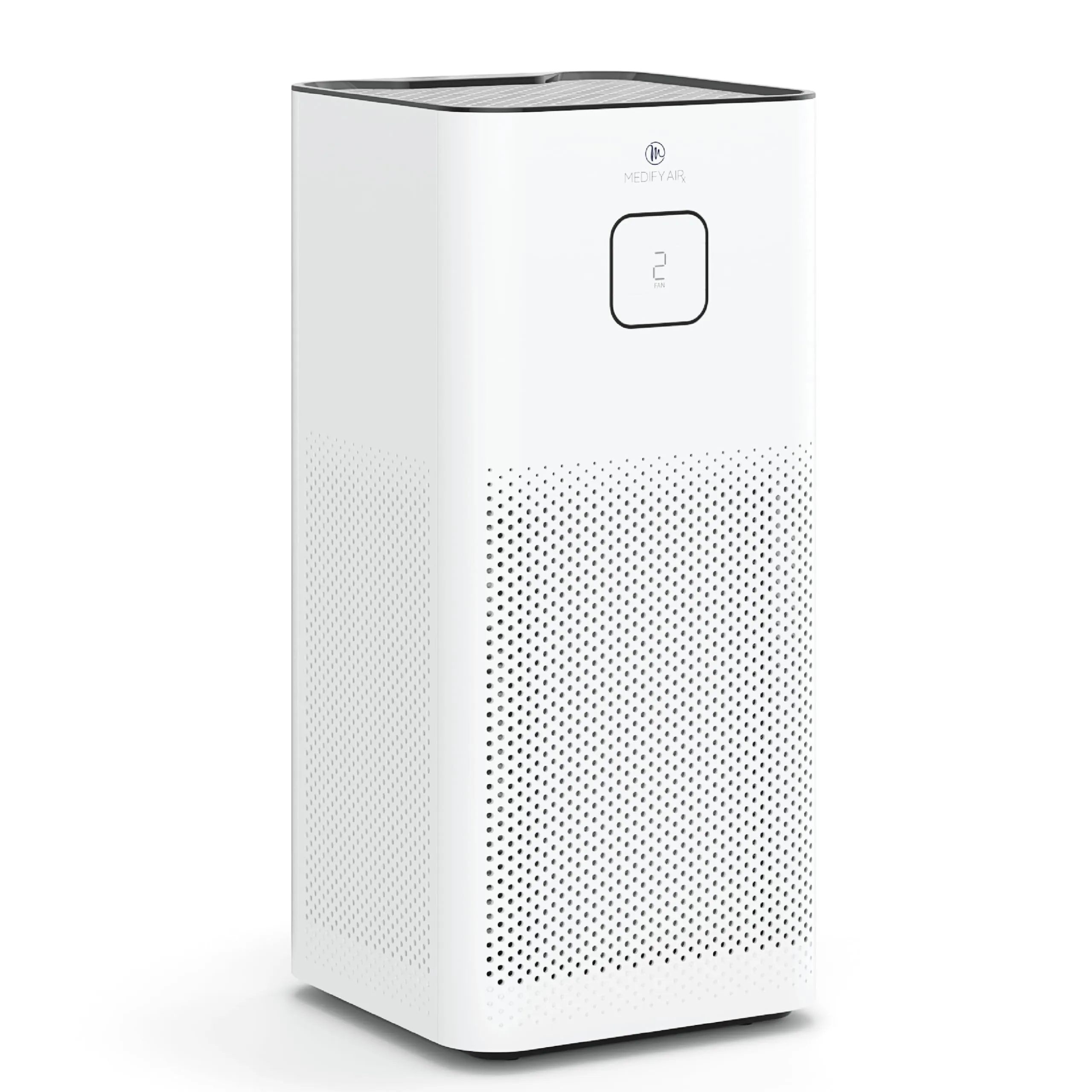
The MA-40 measures 20 by 15.2 by 11 inches, making it the shorter and wider design. The MA-50 measures 20 by 10 by 18 inches, so it uses a narrower floor footprint but stands taller. Both use a clean white finish and touch panel. The MA-50 may fit more easily beside furniture where width is limited, but its vents and rear cord need open space. The better design depends on whether the home has more vertical clearance or more floor-width constraints.
The MA-50 is the clear capacity choice. It is listed to clean up to 2,640 sq ft in one hour and 1,320 sq ft in 30 minutes, compared with the MA-40's 1,793 sq ft in one hour and 896 sq ft in 30 minutes. Its CADR is also higher. For a large open-plan room, the extra capacity can provide more margin. For smaller rooms, the MA-40's stated capacity may already be more than adequate.
The better choice depends on the available footprint. The MA-50 is narrower at 10 inches wide, which may be useful beside furniture or in a constrained room, but it is taller at 18 inches and needs vent clearance. The MA-40 is lower at 11 inches tall but wider at 15.2 inches. For a small flat or bedroom, select the model whose dimensions and required airflow space fit the intended location without blocking the intake or outlet.
The MA-50 has lower published noise figures, with a stated range of 22dB to 59dB versus 46dB to 66dB for the MA-40. It is therefore the better starting point for bedrooms and offices where lower-speed operation matters. Still, buyers give mixed noise feedback for both units. Sleep or low settings are commonly described as unobtrusive, while medium and maximum settings can be clearly audible during quiet activities or overnight use.
Neither model requires permanent installation: both are plug-in appliances with touch controls. The MA-40 has the easier supplied installation profile. With the MA-50, allow room around the front and side vents and account for the rear power-cord connection; reviews suggest that close wall placement can restrict options. For either purifier, use a stable, unobstructed location with clear airflow rather than tucking it behind furniture or against soft furnishings.
The MA-50 has the stronger build-quality picture overall, supported by more favorable long-term and support-related feedback. One review describes a replacement being provided after an LED issue, though this is an individual experience rather than a guarantee. The MA-40 has positive feedback for its appearance and controls, but a minority of reviews report rattling, crooked seams, thin plastic filter-cover releases, or concern about damage if dropped. Inspect either unit on arrival and retain purchase and warranty information.
Both purifiers use replaceable filters, which are central to long-term ownership. The MA-50 has a somewhat stronger durability picture from the available data, including positive feedback about replacement support after a component issue. The MA-40's overall construction is less consistently received, with some reports of rattling and concern about thin plastic cover releases. Neither listing provides detailed information about replacement structural parts. Careful handling, especially when moving the unit, is sensible for either model.
Routine maintenance for both models centers on replacing the dedicated H13 HEPA filter when indicated or when the operating interval is reached. The MA-40 filter is listed for 3,000 hours or about six months, while the MA-50 filter is listed for 2,500 hours or around three to four months. Both have filter replacement indicators. Buyers regularly mention filter cost for both, and one MA-50 review raises filter availability concerns in the Netherlands, so confirm local supply before purchase.
The MA-40 has the stronger portability profile in the supplied comparison data. Its shorter design may be easier to reposition between rooms, and some reviews describe Medify units as easy to move. The MA-50's narrower body can help in tight floor layouts, but its taller form and clearance requirements can make placement more deliberate. Neither product is battery powered, so each must remain within reach of a mains outlet.
The core feature set is closely matched. Both models offer touch operation, a zero-to-eight-hour timer, sleep mode with dimmed panel lighting, a filter replacement indicator, and a child lock. The MA-50 adds a fourth fan speed, giving users an extra airflow choice between low and maximum operation. Neither listing provides app control, Wi-Fi, voice-assistant support, air-quality readouts, or smart-home integrations, so these are straightforward manually operated appliances rather than connected purifiers.
The MA-50 has the stronger efficiency case in the supplied information: it is listed at 70 watts rather than 95 watts and includes Energy Star certification. It also has higher listed airflow capacity, although electricity use in practice will depend on the fan speed and how long the unit operates. The MA-40's longer listed filter life may partly offset its higher stated wattage by reducing filter replacement frequency. Filter pricing and availability should be considered alongside electricity use.
Value depends on how much coverage the household actually needs. The MA-40 costs less upfront and has a longer listed filter interval, making it compelling for a large room that falls within its stated capacity. The MA-50 costs more, but its higher CADR, much greater listed coverage, lower stated wattage, additional fan speed, and Energy Star listing can justify the difference for a truly large open area. Both have mixed value feedback because replacement filters are considered expensive by some buyers. Compare local filter availability and price before deciding.
Both products come from Medify Air and have similar stated warranty positioning: a USA registered lifetime warranty. Buyer feedback for both is largely positive, and the MA-50 has particularly favorable comments about support in a replacement case. The MA-40 also has strong satisfaction overall, though some reviews recommend inspecting a new unit carefully and registering promptly. Brand confidence should therefore be balanced against practical checks such as warranty registration requirements, local support, and replacement-filter availability.
Customer sentiment is strong and closely matched: both products have a supplied 4.6 out of 5 rating from more than ten thousand reviews. MA-40 buyers frequently praise ease of use, odor control, and perceived air-quality improvement, but opinions on noise and filter value vary and a small number report quality-control issues. MA-50 buyers often praise dust collection, allergy-related comfort, appearance, and low-speed operation. Its recurring complaints concern high-speed noise, filter expense, placement quirks, and local filter availability.
Both listings state that a USA registered lifetime warranty is available. The MA-50 has favorable individual feedback about a replacement unit after an LED problem, while MA-40 reviews include advice to inspect units quickly and complete registration on time. The supplied information does not establish how coverage applies in every country or situation. Confirm the registration process, local support route, and replacement-filter supply before ordering.
The Medify MA-50 is the overall winner because it offers more listed coverage, a higher CADR, four fan speeds, lower stated noise figures, and listed Energy Star certification. Its key limitation is the shorter listed filter interval, along with the higher purchase price and recurring filter expense. It is the better choice for a large open living space where capacity matters most.
The Medify MA-40 remains a strong alternative for a large room that does not require the MA-50's additional output. Its main strengths are its lower price, H13 HEPA filtration, practical controls, and longer listed filter life. Its main limitations are more mixed noise feedback and isolated build-quality concerns. Select by actual room size and local replacement-filter costs rather than coverage claims alone.

Overall winner
Depends on your needs
The MA-50 is the stronger choice for the largest spaces because it has higher listed coverage, a higher CADR, four fan speeds, and lower stated noise levels. The MA-40 remains a practical alternative for large rooms, especially for buyers who prefer its longer listed filter interval and lower purchase price.
The MA-50 has the larger listed coverage: up to 2,640 sq ft in one hour, compared with up to 1,793 sq ft for the MA-40. Actual results can vary with room layout, open doorways, pollutant source, fan setting, and whether the unit has adequate clearance around its air inlets.
Based on the published figures, the MA-50 has lower stated noise levels, from 22dB to 59dB, versus 46dB to 66dB for the MA-40. However, reviews for both models are mixed: low and sleep settings are often considered unobtrusive, while higher settings can be noticeable.
Yes. Both listings specify H13 HEPA filtration and state particle retention down to 0.1 microns. They are marketed for household airborne contaminants such as dust, pollen, pet dander, odors, smoke, and VOCs. Each model requires its own listed replacement filter, so filters are not interchangeable based on the provided information.
The MA-40 has the longer listed filter life, at around 3,000 hours or about six months. The MA-50 filter is listed for around 2,500 hours or three to four months. Filter condition will still depend on fan speed, pollutant levels, pets, smoke exposure, and how continuously the purifier runs.
Both include sleep mode to dim the panel lights, and reviews indicate that lower settings can work well near sleeping areas. The MA-50 has a lower stated minimum noise level, which may help bedroom users. Buyers sensitive to sound should expect higher settings to be more audible on either model.
Leave sufficient clearance for air intake and output. Reviews of the MA-50 specifically note that its side and front vents, plus the rear power connection, limit close wall placement. The MA-40 should also be positioned so its air path is not obstructed, particularly when used to clean a larger shared space.
No app, Wi-Fi, voice assistant, or smart-home integration is provided in the supplied product data for either purifier. Their control approach is direct touch operation, with fan-speed selection, a timer, sleep mode, filter replacement indication, and a child lock rather than connected automation.
Check our rankings and expert guides to find the best home lifestyle products for your goals.