#1 Overall Winner
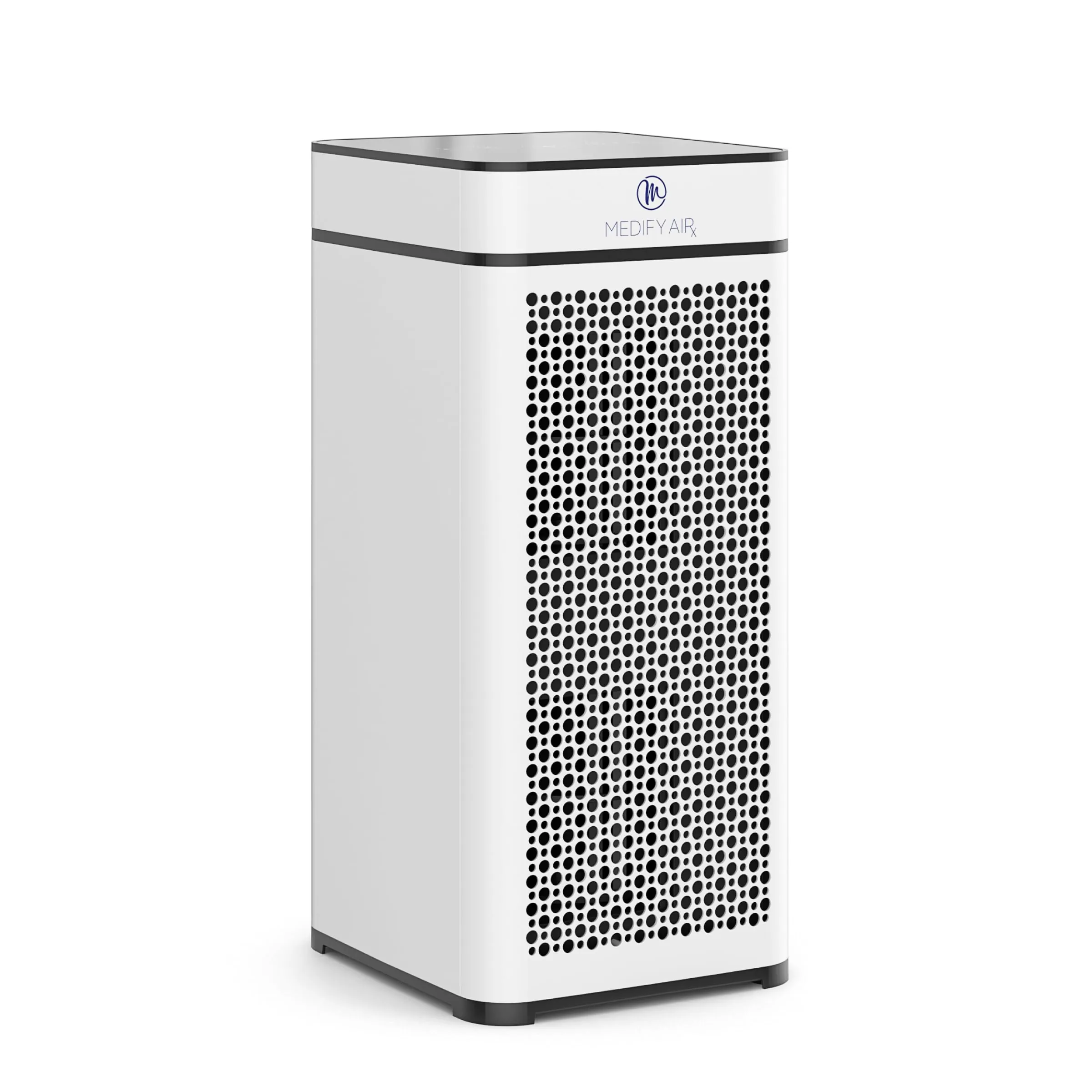
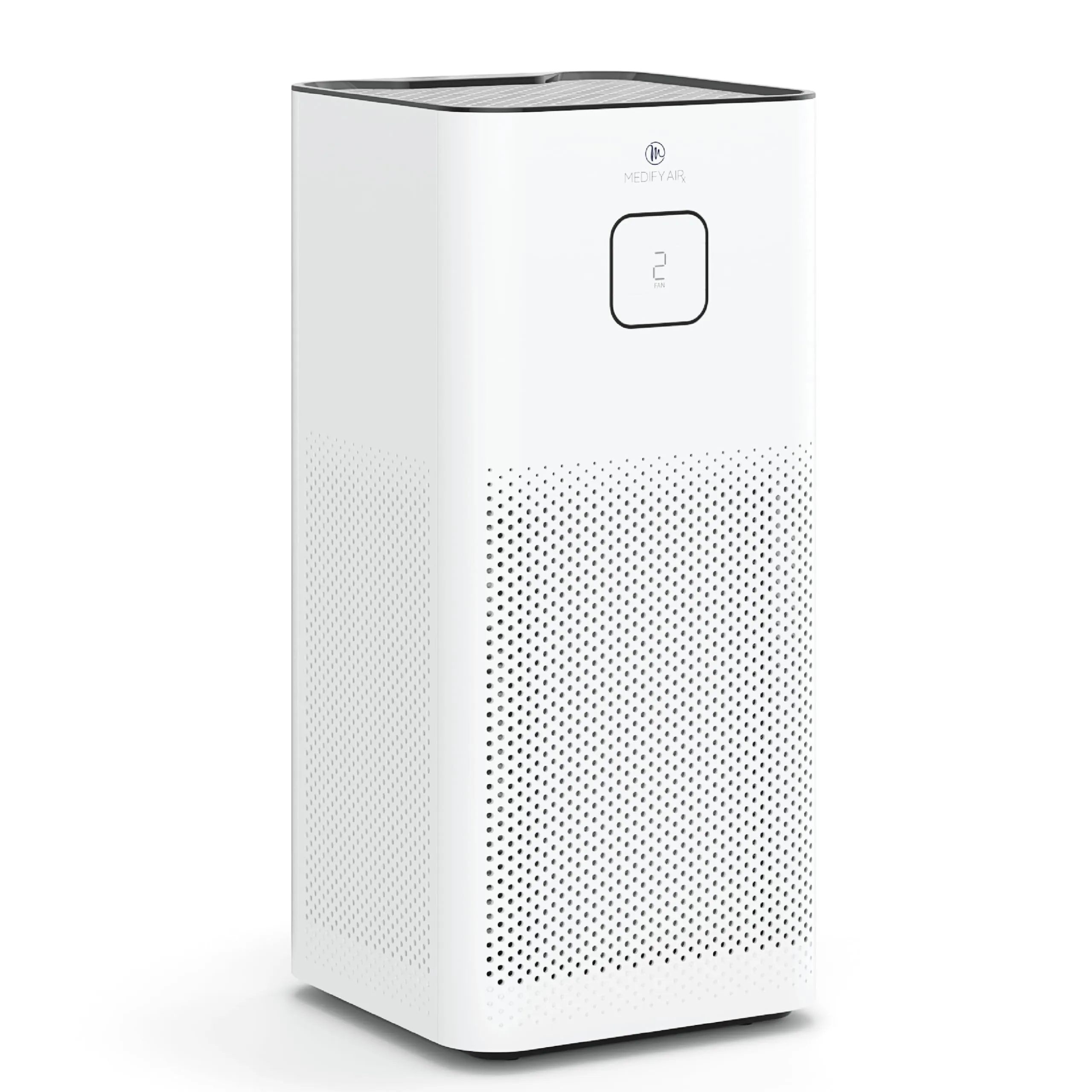
Medify MA-40 Air Purifier
- Published CADR of 406 and stated coverage of up to 1,793 sq ft in one hour.
Comparison
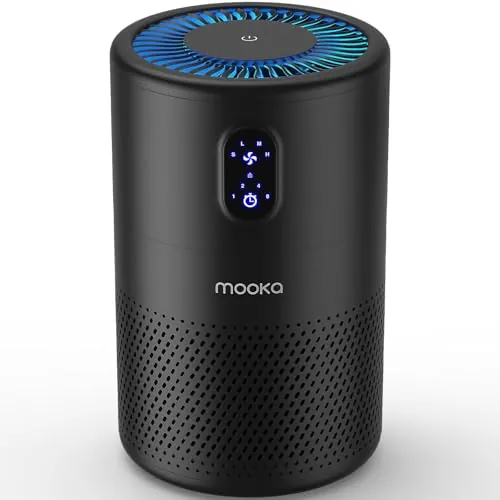
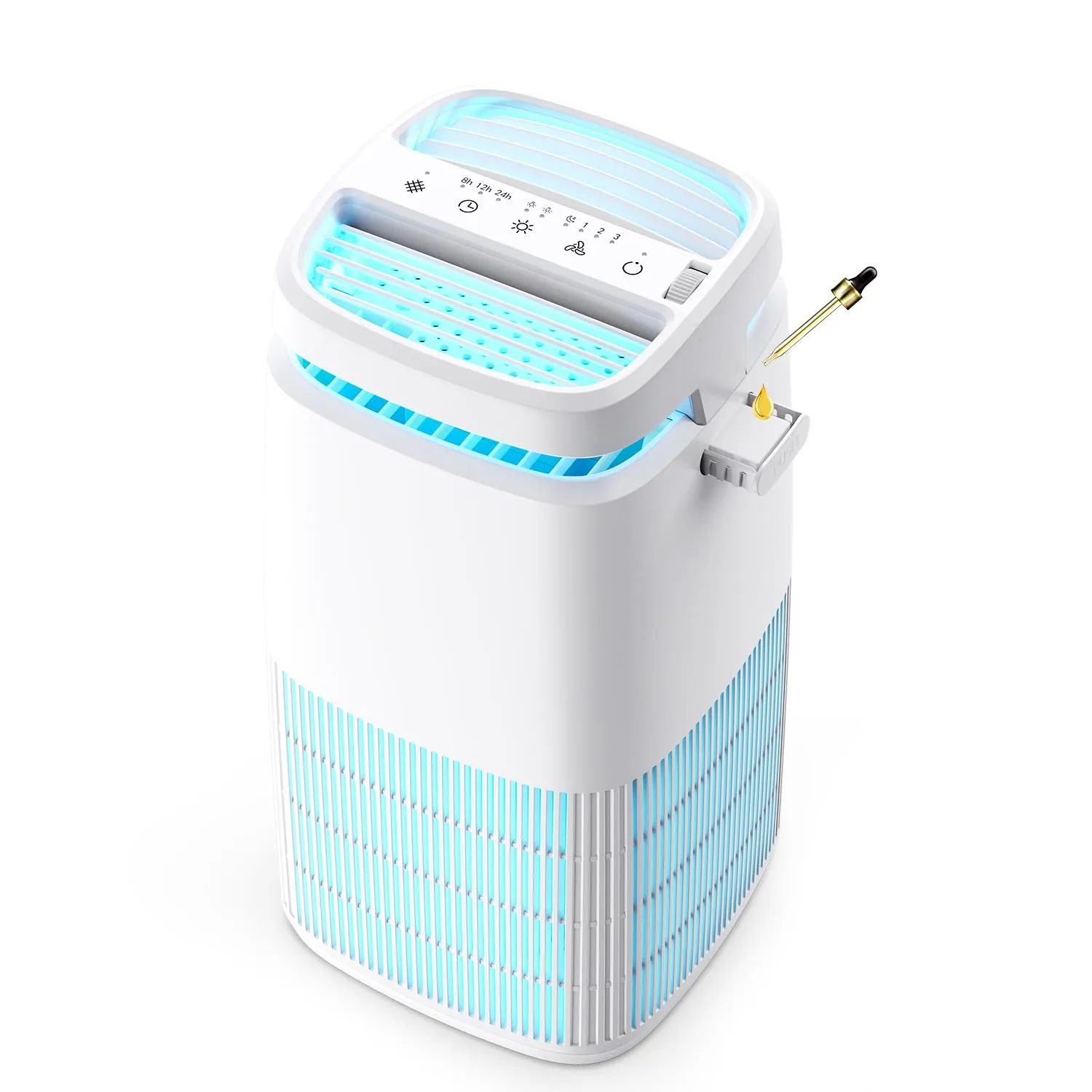
The Medify MA-40 and MOOKA KJ190 are HEPA air purifiers aimed at homes managing dust, pollen, pet dander, odors, and smoke. Medify has stronger published coverage evidence and a finer stated particle-retention claim, while MOOKA costs less and adds air-quality monitoring, auto mode, and a washable pre-filter.
#1 Overall Winner
Contender
Choose the Medify MA-40 if you want stronger published large-room performance evidence and the finer stated filtration claim. Choose the MOOKA KJ190 if you want automatic air-quality response, simpler routine maintenance, portability, and lower upfront cost. Both can suit pet, dust, pollen, and odor concerns, but their higher fan settings may be too audible for some sleepers.
Overall winner
Depends on your needs
| Feature | Medify MA-40 Air Purifier | MOOKA KJ190 Air Purifier | Winner |
|---|---|---|---|
| Primary filtration claim | H13 HEPA; stated removal down to 0.1 microns | H13 HEPA system; stated retention down to 0.3 microns | Medify MA-40 Air Purifier |
| Published coverage evidence | Up to 1,793 sq ft in one hour; CADR 406 | Up to 2,200 sq ft in one hour; no CADR provided | Medify MA-40 Air Purifier |
| Air-quality monitoring | Not listed | PM2.5 display and sensor | MOOKA KJ190 Air Purifier |
| Automatic fan control | Not listed | Auto mode adjusts speed | MOOKA KJ190 Air Purifier |
| Fan speeds | 3 speeds | 4 speeds | MOOKA KJ190 Air Purifier |
| Sleep operation | Sleep mode dims panel lights | Sleep mode stated as low as 20 dB with lights off | MOOKA KJ190 Air Purifier |
| Maintenance | Filter indicator; stated 3,000-hour filter life | Washable pre-filter and 2,000-hour reminder | MOOKA KJ190 Air Purifier |
| Portability | 15 lb; 20 x 15.2 x 11 in | 6.7 lb; 6.1 x 12.2 x 15.75 in | MOOKA KJ190 Air Purifier |
| Power draw | 95 watts | 22 watts | MOOKA KJ190 Air Purifier |
| Listed price | $249.99 | $67.59 | MOOKA KJ190 Air Purifier |
| Warranty and support | Stated USA-registered lifetime warranty | 60-day return, 2-year exchange, lifetime technical support | Depends |
| Buyer feedback | 4.6/5 from 13,900 reviews | 4.5/5 from 5,408 reviews | Medify MA-40 Air Purifier |
For general home use, both units can serve bedrooms, living areas, and pet zones. Medify is better suited to a fixed position in a larger common room, where its published CADR and higher stated airflow are more relevant. MOOKA is easier to relocate because it weighs 6.7 lb and has a much smaller footprint. Its air-quality display and auto mode also make it more hands-off for daily use, whereas Medify requires manual speed selection.
Both purifiers are relevant to home hygiene because they are intended to reduce airborne dust, pollen, pet dander, and odors. Medify has especially strong user reports from litter-box, cooking, and dusty living-space use. MOOKA is a practical option for pet homes because its washable pre-filter can be cleaned regularly and reviewers report good dust and hair handling. Neither replaces source control, vacuuming, or ventilation, but each can complement those routines.
Neither product controls temperature or humidity, but both can contribute to a more comfortable indoor environment by addressing airborne particles and odors. Medify’s higher airflow credentials favor larger shared rooms and smoky outdoor periods, while MOOKA’s sleep mode, compact format, and auto response are convenient for a bedroom. Noise is the main comfort trade-off: low settings are generally well received, but higher speeds receive mixed feedback for both models.
The Medify MA-40 has the stronger performance case on the supplied specifications. Its CADR of 406 gives useful context for the stated 1,793 sq ft hourly coverage, and its H13 filter is claimed to capture particles down to 0.1 microns. Buyers often report less dust and fewer lingering odors. MOOKA also receives strong reports for dust, pet hair, pollen, odors, and smoke response, particularly in bedrooms and moderate-sized rooms. However, its 2,200 sq ft claim is harder to assess without a supplied CADR. For larger spaces, Medify is the more evidence-backed choice.
Both products have generally positive satisfaction signals, but their reliability considerations differ. Medify’s large review base includes many long-running positive reports, yet a small number of buyers report defective units with rattling, poor assembly, or communication concerns. MOOKA receives favorable reports for automatic response and routine operation, but there is less long-term evidence in the provided reviews. For either model, inspect for unusual noise at delivery, confirm controls work, and keep proof of purchase for possible support needs.
Medify has an edge for air-cleaning confidence because of its published CADR and stated H13 filtration down to 0.1 microns. Its reviews often mention less dust, cooking odor, smoke smell, and litter-box odor. MOOKA also receives convincing reports for reducing dust, pet hair, odors, and smoke, and its washable pre-filter is useful where hair and larger debris are common. MOOKA’s air-cleaning results are encouraging, but its maximum-room claim lacks the CADR context supplied for Medify.
These are air-quality appliances rather than temperature or humidity controllers. Both are intended to address airborne dust, pollen, smoke, and odors that can affect room comfort. Medify has the clearer specification base for moving air through a large room, while MOOKA can automatically increase airflow when its sensor detects particulate changes. Neither should be selected for heating, cooling, or dehumidification.
Both units include child-lock functions, which can help prevent accidental control changes in homes with children or pets. Medify is listed as CARB and ETL certified, while MOOKA is listed as CARB, ETL, and DOE certified and states that it does not release ozone or use UV light. These statements do not remove the need for normal appliance care: use a suitable outlet, keep vents unobstructed, follow filter instructions, and stop use if a unit develops unusual rattling, damage, or odor. MOOKA’s aromatherapy pad should be used only as instructed.
Both products can improve everyday comfort by helping reduce dust, odors, pollen, and pet-related particles. Medify is better matched to a larger living area where stronger airflow is needed, while MOOKA is more convenient for bedrooms thanks to its compact form, quiet stated sleep mode, and automatic response. In either case, comfort depends on selecting a fan speed that balances cleaning needs with acceptable sound levels.
Both models are straightforward plug-in purifiers with touch controls, and buyer feedback for setup is positive. MOOKA is easier for users who want the unit to react automatically because its PM2.5 display and auto mode reduce the need to choose a fan speed. Its washable pre-filter also supports simple routine care. Medify’s controls are uncomplicated, but the absence of an air-quality display means users must decide when to raise or lower the fan manually.
Medify has a larger, modern cabinet-style design intended to sit in a more permanent place in a room. Its 20 x 15.2 x 11 in dimensions and 15 lb weight make it less suited to frequent relocation, although its low profile may work beside furniture. MOOKA is taller but far narrower and lighter at 6.7 lb. That makes it easier to place in a bedroom, office, or smaller flat without using much floor space.
Medify has the more credible large-area capacity claim because it states both a CADR of 406 and coverage up to 1,793 sq ft in one hour. MOOKA claims up to 2,200 sq ft per hour, but no CADR data is provided, so the figures should not be treated as directly comparable. For a large open-plan area, Medify is the safer data-led choice. For a bedroom or smaller enclosed room, MOOKA’s compact size and automatic controls may be sufficient.
MOOKA is the better choice for compact rooms, flats, and flexible placement because its narrow 6.1-inch depth and light weight reduce floor-space demands. Medify has a larger footprint, but its low 11-inch height may still work alongside a wall or furniture in a larger room. Allow clearance around either unit’s air intakes and outlet rather than pushing it tightly into a corner.
MOOKA has the stronger stated low-noise specification, with sleep mode listed as low as 20 dB. Medify lists a 46–66 dB range and offers a sleep mode that turns off panel lights. In buyer feedback, both can be quiet enough at low settings, but higher settings are commonly described as fan-like or loud. MOOKA is the better bedroom choice for light sleepers, provided it can be run at a low setting.
Neither purifier requires permanent installation. Setup consists of placing the unit where air can circulate, removing any protective filter packaging, installing the filter if needed, and plugging it into a suitable outlet. MOOKA buyers frequently describe this process as quick. Medify is also simple to start, although its larger 15 lb body is best placed carefully before use. One MOOKA review flags plug compatibility concerns outside its intended outlet region.
MOOKA has the advantage on the supplied build-quality assessment and reviewers often describe it as a compact, capable unit. Medify has a modern glass-covered control area and positive feedback for its appearance, but its physical construction receives more mixed signals. A minority of Medify buyers describe crooked seams, internal rattling, thin plastic filter-cover releases, and a single handhold that can make carrying less secure. Check either unit on arrival and retain documentation for support.
Medify’s stated lifetime warranty is reassuring, but the supplied review evidence includes concerns about thin plastic filter-cover releases, a single carry handhold, and a minority of units with rattling or assembly defects. MOOKA has a stronger supplied build-quality assessment and its washable pre-filter may reduce wear on the main filter, although the available information provides less long-term ownership evidence. Neither listing provides detailed replacement-part availability, so careful filter access and regular cleaning matter.
MOOKA is easier to maintain. Its washable pre-filter can be cleaned to remove collected hair and dust, and the unit gives a 2,000-hour filter reminder. Medify also provides a filter replacement indicator, with its replacement filter stated to last around 3,000 hours or six months. However, Medify buyers often mention filter expense. Both require removing packaging from filters before first use and keeping the intake and exterior free from dust.
MOOKA is substantially more portable. At 6.7 lb and 6.1 x 12.2 x 15.75 in, it is easier to move from a bedroom to an office or pet area. Medify weighs 15 lb and is wider, making it more suitable as a fixed-room purifier. One Medify reviewer also notes that its single handhold can cause the unit to tip while being carried.
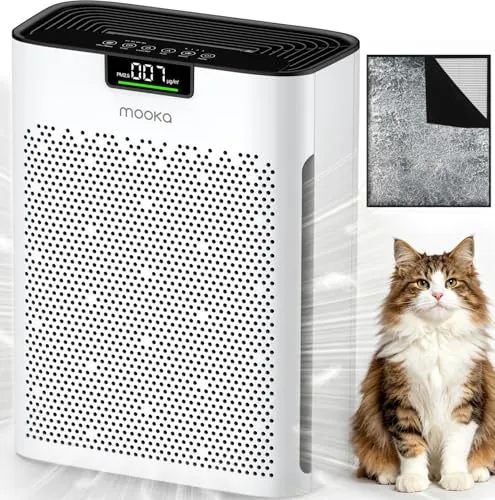
MOOKA offers the broader day-to-day feature set. It has four fan speeds, a PM2.5 display, automatic speed adjustment, 2/4/6/8-hour timers, a washable pre-filter, sleep mode, child lock, filter reminder, and an aromatherapy pad. Medify has three speeds, an 0–8-hour timer, sleep mode, child lock, and filter indicator, but no listed particle display or auto mode. Medify’s strengths are more focused on airflow and filtration specifications; MOOKA provides more monitoring and convenience controls.
MOOKA is the clear choice for automation within this pair. Its PM2.5 sensor, air-quality display, and auto mode can adjust fan speed when conditions change, and its timers support scheduled shutoff. Medify has timer settings and a filter indicator but no listed sensor-driven mode or connectivity. MOOKA’s automation is local appliance control rather than a smart-home platform feature.
MOOKA is the more efficient option on the listed electrical data. It is rated at 22 watts and claims 0.63 kWh of consumption over 24 hours at maximum speed, compared with Medify’s listed 95 watts. Its washable pre-filter may also reduce how quickly the main filter loads with visible debris. Medify’s filter is stated to last about 3,000 hours, but replacement filters are a recurring buyer concern. Actual energy use will vary with speed and operating time.
MOOKA provides the stronger value proposition at the listed price. It costs much less than Medify while including a washable pre-filter, PM2.5 display, auto mode, more fan speeds, and a much lower stated wattage. Those features can make it attractive for bedrooms and pet households. Medify costs more, and its replacement filters are often considered expensive, but the higher upfront cost buys a published CADR, a finer stated filtration claim, large-room evidence, and a stated lifetime warranty. Value therefore depends on room size and confidence in coverage data.
Both brands have positive customer satisfaction data in the supplied information, but Medify has a larger review base for this model and a stated USA-registered lifetime warranty. Its buyer feedback still includes isolated quality-control and communication concerns. MOOKA lists a 60-day return period, two-year exchange coverage, and lifetime technical support, which gives clearer short- and medium-term support detail. The available data does not establish a decisive difference in broader brand reputation.
Customer sentiment is strong for both models. Medify has a 4.6/5 rating from 13,900 reviews, with repeated praise for noticeable odor reduction, dust control, easy operation, and perceived breathing comfort. Its common complaints concern filter cost, variable noise, and a minority of defective or rattling units. MOOKA has a 4.5/5 rating from 5,408 reviews. Buyers often praise low-price value, easy setup, dust and pet-odor reduction, and useful auto mode. Its main recurring drawback is audible higher-speed fan noise.
Medify states that the MA-40 is backed by a USA-registered lifetime warranty, although one review advises registering promptly and mentions communication concerns. MOOKA lists a 60-day no-reason return, a two-year exchange, and lifetime technical support. Medify offers the longer stated warranty term, while MOOKA gives more detail on its initial return and exchange process. Confirm eligibility and registration conditions before purchase.
The Medify MA-40 narrowly wins for evidence-backed large-room air cleaning. Its published CADR, stated 1,793 sq ft hourly coverage, and finer 0.1-micron filtration claim make it the more confidence-inspiring choice for bigger shared spaces, smoke concerns, and buyers who value its stated lifetime warranty. Its limitations are higher purchase and operating costs, expensive filters, and some isolated build-quality complaints.
The MOOKA KJ190 is the better practical-value alternative. It is less expensive, lighter, more efficient on its listed wattage, and more convenient through PM2.5 monitoring, auto mode, and a washable pre-filter. Its coverage claim is less verifiable without CADR data, so it is best approached as a compact room purifier rather than chosen solely for its advertised maximum coverage.

Overall winner
Depends on your needs
The Medify MA-40 is the stronger choice for shoppers who prioritize a published CADR, H13 filtration claims down to 0.1 microns, and larger-room use supported by its stated coverage data. The MOOKA KJ190 is the better fit for lower upfront cost, automatic air-quality response, and easier routine maintenance. The right choice depends on whether verified coverage information or convenience features matter more.
The Medify MA-40 has the clearer case for a large living room because it provides a CADR of 406 and states coverage up to 1,793 sq ft in one hour. MOOKA advertises higher coverage, but the supplied information does not include a CADR figure. Actual results will still depend on room layout, outdoor-air leakage, pollutant levels, and fan speed.
The MOOKA KJ190 lists a 20 dB sleep mode, while Medify lists a minimum noise level of 46 dB and includes a sleep mode that dims the panel. Buyers of both models report quiet low-speed operation, but high speeds can be audible. For a noise-sensitive bedroom, MOOKA has the stronger stated low-noise specification.
The MOOKA KJ190 includes a PM2.5 air-quality display and auto mode that adjusts fan speed according to surrounding air quality. The provided Medify MA-40 information lists manual fan speeds, timer settings, sleep mode, a filter indicator, and child lock, but does not list an air-quality sensor or automatic fan control.
The MOOKA KJ190 is more maintenance-friendly on the available information because it has a washable pre-filter and a filter reminder. Medify also has a filter replacement indicator, but its replacement filter is stated to last about 3,000 hours or six months, and buyers commonly note the cost of replacements. Both units need regular exterior and intake-area care.
Both models are intended for pet-related dust, dander, and odors. MOOKA specifically uses a large front intake, dual-side intake, washable pre-filter, and activated carbon pellets, making it practical for frequent pet-hair upkeep. Medify has particularly strong buyer feedback for litter-box and cooking odors, alongside its H13 filtration claim. Room size and placement remain important.
No. Both are plug-in units with touch controls, and reviewers generally describe setup as straightforward. MOOKA buyers mention removing the filter packaging, fitting the filter, and plugging it in. Medify is also described as easy to set up and operate. Before first use, check that all packaging has been removed and place the purifier where air can circulate around it.
MOOKA offers stronger value for many households because its listed price is far lower while adding auto mode, a PM2.5 display, a washable pre-filter, and low stated electricity use. Medify costs more, but it supplies a published CADR, finer stated particle retention, and a lifetime warranty. Buyers should also compare future filter costs before deciding.
Check our rankings and expert guides to find the best home lifestyle products for your goals.