#1 Overall Winner
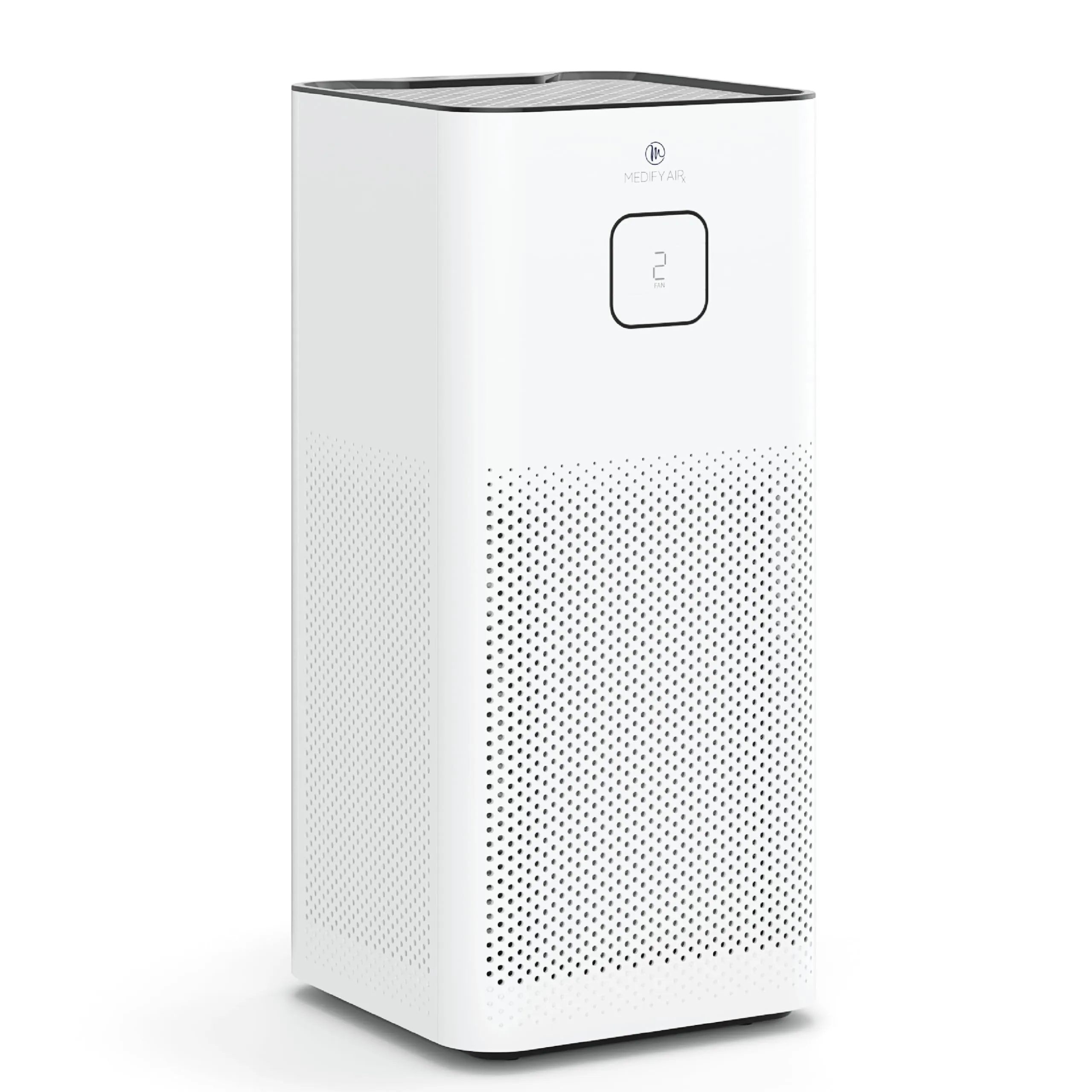
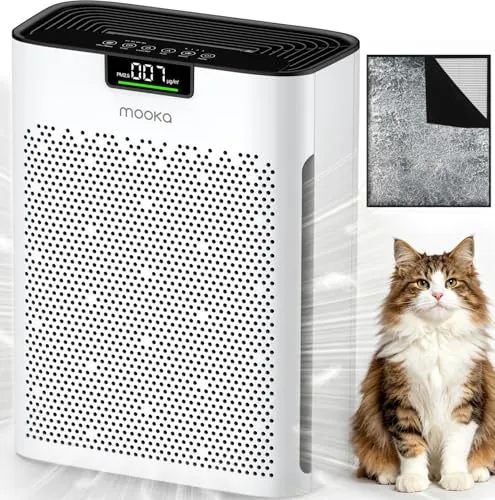
Medify MA-50 Air Purifier V3.0
- Listed coverage is substantially larger, with a CADR of 598 and up to 2,640 sq ft in one hour.
Comparison
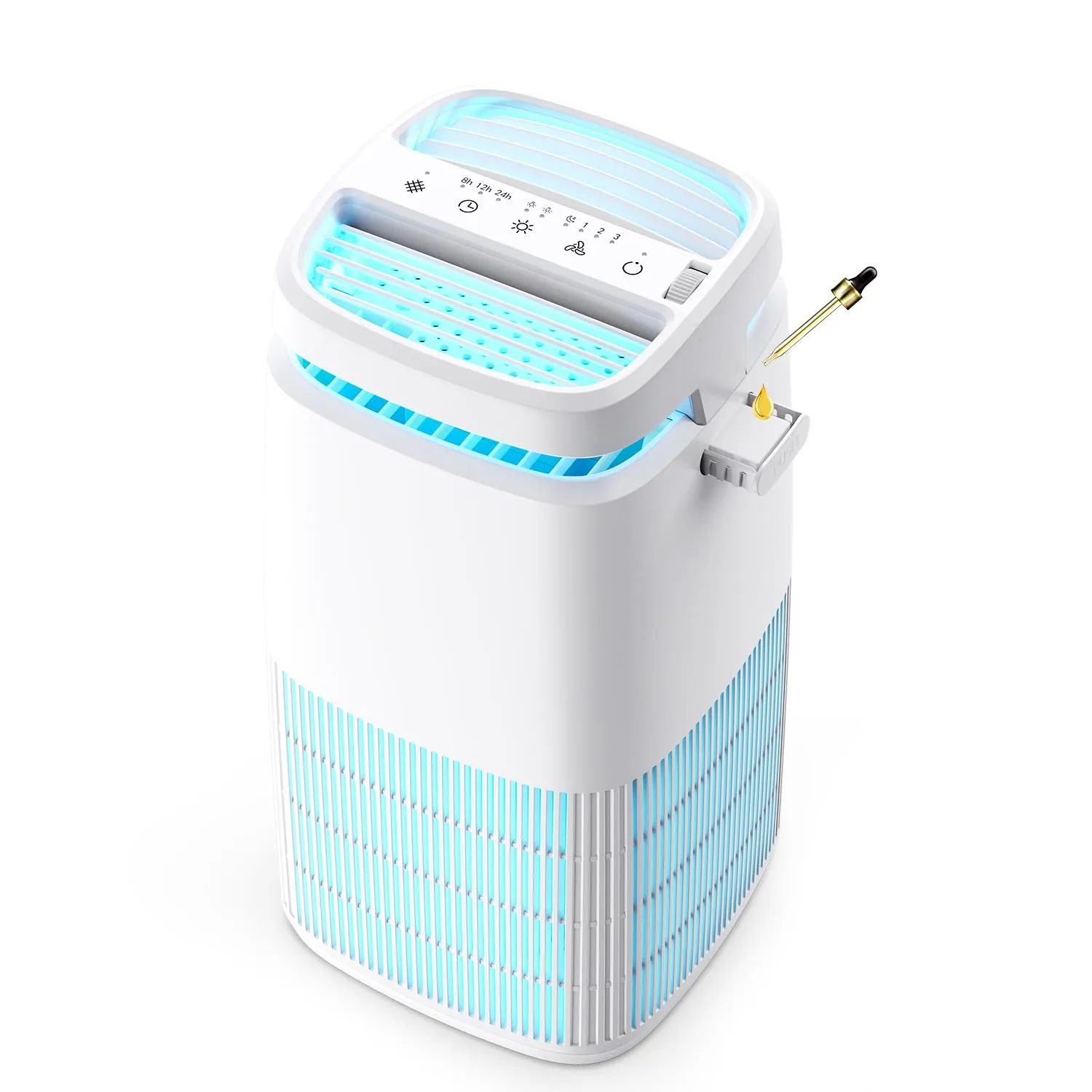
The Medify MA-50 and POMORON MJ002H are H13-filter air purifiers aimed at different home setups. Medify prioritizes very large listed coverage, high airflow, and household controls, while POMORON focuses on compact placement, lower upfront cost, and added functions such as UV, ionizer, and essential-oil use. For a large shared room, the Medify is the more capable fit. For a bedroom, office, or budget-led purchase, the POMORON is usually the more practical option.
#1 Overall Winner
Contender
Choose the Medify MA-50 for a large living area, stronger listed airflow, and clearer warranty support. Choose the POMORON MJ002H for a bedroom, office, or small flat where compact size, lower upfront cost, and quieter lower-speed operation matter more. Neither offers supplied app or smart-home controls.
Overall winner
Depends on your needs
| Feature | Medify MA-50 Air Purifier V3.0 | POMORON MJ002H 4-in-1 Air Purifier | Winner |
|---|---|---|---|
| Primary fit | Large rooms and open areas | Bedrooms, offices, and smaller spaces | Depends |
| Listed coverage | Up to 2,640 sq ft in 1 hour | Up to 1,250 sq ft | Medify MA-50 Air Purifier V3.0 |
| Filtration claim | H13; down to 0.1 microns | H13; 99.97% at 0.3 microns | Medify MA-50 Air Purifier V3.0 |
| Fan speeds | 4 speeds | 4 speeds | Tie |
| Timer | 0–8 hours | 8, 12, or 24 hours | Depends |
| Extra functions | Sleep mode, filter indicator, child lock | Ionizer, UV light, essential-oil tray | Depends |
| Listed wattage | 70 watts | 17 watts | POMORON MJ002H 4-in-1 Air Purifier |
| Noise use | 22–59 dB listed; louder at high speed | Quiet lower modes; high modes can distract | POMORON MJ002H 4-in-1 Air Purifier |
| Dimensions | 20 x 10 x 18 in | 6.34 x 6.34 x 11.81 in | POMORON MJ002H 4-in-1 Air Purifier |
| Portability | Large floor-standing format | 3.5 lb compact unit | POMORON MJ002H 4-in-1 Air Purifier |
| Maintenance | Filter lasts about 2,500 hours; replacements can be costly | Requires MJ002H-RF filters | Depends |
| Certifications listed | CARB, ETL, Energy Star | UL, FCC | Depends |
| Warranty and support | Stated lifetime warranty; favorable support review | No comparable warranty detail supplied | Medify MA-50 Air Purifier V3.0 |
| Upfront price | $299.99 | $44.99 | POMORON MJ002H 4-in-1 Air Purifier |
| Buyer feedback | Strong feedback for allergies, dust, and large-area use | Strong feedback for compact value and quiet use | Depends |
For everyday home use, the Medify MA-50 suits a household that wants one purifier to serve a large shared area. Its coverage claim and CADR make it more appropriate for an open living room or combined living and dining space. The POMORON is easier to position close to where people sleep or work, and its compact body can be moved without much effort. A multi-room home may use several compact units, but the supplied data supports the Medify as the more direct single-unit solution for a larger central room.
Both products are relevant to home hygiene because they are marketed for airborne dust, pollen, pet dander, smoke, and odors. The Medify has stronger large-space credentials and more consistent supplied feedback for allergy, dust, and odor-related use. The POMORON receives positive reports for dust capture and making smaller rooms feel fresher, but its smoke-odor performance is less consistent. Neither replaces source control or ordinary cleaning; their role is filtering airborne material while they run.
Neither product heats, cools, or changes humidity, but each can contribute to perceived room comfort through particulate filtration. The Medify is better suited to improving air conditions across a large occupied space, especially where pollen or pet dander are concerns. The POMORON is more naturally suited to bedside or desk placement, where quiet lower-speed airflow can be useful. Buyers who are sensitive to lights at night should note reports of illuminated controls on both models.
The Medify MA-50 has the clearer advantage in published air-cleaning scale. Its stated CADR of 598 and up-to-2,640-sq-ft one-hour coverage make it the better candidate for a large, open room, and its H13 claim extends to 0.1 microns. Buyer feedback also repeatedly mentions dust, allergy, and pet-dander benefits. The POMORON performs well in supplied reviews for smaller rooms, with buyers noting dust capture and fresher air. However, its listed coverage is lower, and feedback on odor removal, particularly smoke, is mixed. It is effective as a smaller-space purifier, not a like-for-like replacement for the Medify in large areas.
The Medify has a modest advantage in reliability based on the supplied data. It has strong buyer satisfaction, a stated lifetime warranty, and an example of responsive replacement support after an LED issue. That does not eliminate the possibility of faults, but it gives buyers clearer recourse. POMORON feedback is largely positive, yet one owner reported touch controls that could be difficult to activate and another described an automatic shutoff after extended use. These reports are not enough to define every unit, but they are relevant when choosing for unattended daily operation.
For airborne-cleaning performance, the Medify has the stronger overall case in larger spaces due to its higher listed CADR, broader coverage claim, and favorable reviews relating to dust, pet dander, and allergy comfort. The POMORON also earns positive feedback for visible dust collection and improved air in bedrooms and smaller rooms. Its stated H13 filter and carbon layer target common household particles and smells, but odor feedback is inconsistent. For smoke or odors in a larger open area, the supplied data favors Medify; for compact-room dust control, POMORON remains competitive.
These are air-cleaning products rather than temperature or humidity appliances. Medify is the stronger option for improving the air environment in a large living space, with smoke, pollen, dust, and pet dander among its listed targets. POMORON is appropriate for localized comfort in smaller rooms and includes an essential-oil tray, although one review found scent distribution limited. Neither should be selected for heating, cooling, or humidity control because no such function is provided in the supplied data.
Both are mains-powered appliances, so they should be placed on a stable surface with vents unobstructed and used according to their instructions. The Medify lists CARB and ETL certifications, and its child lock can help prevent settings from being changed by children or pets. The POMORON lists UL and FCC certifications. POMORON also includes an ionizer and UV light, but the supplied information does not provide details that allow a broader safety comparison of those functions. Neither product should be positioned where water exposure, blocked airflow, or unstable placement is likely.
The Medify is better for whole-room comfort when a large shared area feels dusty, smoky, or pollen-heavy, because it is built around higher stated coverage. The POMORON can improve personal comfort in a bedroom or office without taking much surface space and may suit users who like low fan sound at night. Both have reports of lighted controls that can bother very light-sensitive sleepers. Comfort therefore depends on matching the purifier's capacity and fan setting to the room rather than relying on the highest setting overnight.
Both models use simple local controls and timers. The Medify adds a filter-replacement indicator, which can make routine upkeep easier, while its sleep mode helps reduce panel brightness. Its size and need for airflow clearance make placement more deliberate. The POMORON is easier to carry and place, but buyer feedback includes occasional touch-button reliability concerns and reports that control lights remain visible at night. For straightforward day-to-day control, it depends on whether you prioritize the Medify's maintenance prompts or POMORON's physical simplicity.
The designs suit different placements. The Medify is a tall, large floor-standing unit with a clean appearance, but its rear cable connection and air vents require clearance from walls. Its top-mounted controls also mean the top should remain unobstructed. The POMORON's narrow 6.34-inch-square footprint is markedly more flexible for a bedside table, counter, or desk. Its blue controls can be a drawback for light-sensitive sleepers. Choose Medify for a dedicated purifier location and POMORON where unobtrusive placement is the priority.
Coverage is the largest practical difference. Medify lists up to 2,640 sq ft in one hour and 1,320 sq ft in 30 minutes, backed by a stated CADR of 598. POMORON lists coverage up to 1,250 sq ft. Published maximum-area figures can vary with room layout, doors, pollution source, and desired cleaning speed, but Medify has the clear advantage for a large open area. POMORON is more sensible where the purifier will stay near the people using a bedroom, office, or smaller living room.
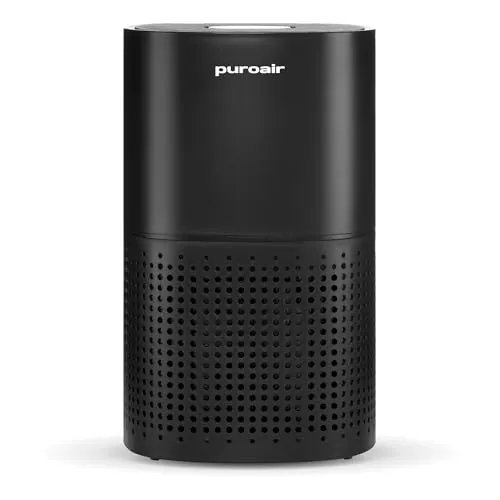
The POMORON is considerably more space-efficient, with a 6.34-inch-square footprint and 11.81-inch height. It can suit crowded bedrooms, desks, counters, and small flats without dominating the room. The Medify needs far more floor or furniture space and clearance around its air inlets and rear cable, though that larger format supports much higher stated coverage. For a small room, POMORON is easier to accommodate; for a large room, the Medify's footprint is more justifiable.
The POMORON has the advantage for low-noise, small-room use in the supplied assessment, and buyers often describe the lower settings as quiet or like gentle white noise. Its upper speeds can still interfere with calls, television, or quiet work. The Medify lists 22 dB at its lowest setting and has a sleep mode, with buyers finding low-speed overnight operation manageable. At high speed, however, Medify noise is a more consistent trade-off. For maximum cleaning power, expect either unit to be more audible.
Neither unit requires permanent installation, wiring, or mounting. The POMORON is the easier setup for most people because of its small size and low weight: it can readily move between a side table, desk, or floor. The Medify is also plug-in simple, but users should plan a dedicated spot with open airflow around the front and sides and clearance at the rear for the power connection. For either model, placing it away from blocked vents is more important than complicated setup.
The Medify has the stronger build-quality position in the supplied comparison data, supported by favorable long-term ownership and customer-service feedback. One owner reported continued operation despite an LED issue and received a replacement unit. The POMORON is intentionally lightweight and compact, which helps portability but does not suggest the same substantial room-appliance format. Its touch-control complaints are a practical quality concern. The supplied information does not provide enough detail to compare internal components, filter construction, or long-term parts availability directly.
Long-term durability is difficult to verify from the available specifications, but Medify has a better-supported case. Its stated lifetime warranty and a positive replacement experience give buyers more confidence if a fault develops. POMORON's lightweight body is convenient to move, but the supplied data offers less warranty detail and includes a touch-control complaint after ownership. Both products depend on regular filter changes, and continued availability of the specified filter is important to keeping either purifier useful over time.
Each purifier needs periodic filter replacement. Medify states that its replacement filter lasts about 2,500 hours, or roughly three to four months, and the filter indicator helps signal maintenance; the downside is that buyers often consider replacement filters expensive. POMORON also needs a dedicated official MJ002H-RF filter, and off-brand filters are not guaranteed by the manufacturer. Its compact size may make physical handling easier, but there is no supplied filter-life interval or maintenance alert to match Medify's clear guidance.
The POMORON is the clear portability choice. It weighs 3.5 pounds and has a compact, narrow body that buyers describe as easy to move. The Medify's 20-by-10-by-18-inch format is better treated as a semi-permanent room appliance, even though it can be repositioned when needed. Choose POMORON if you plan to move one purifier between a bedroom, office, and living area; choose Medify if it will stay in a larger central location.
The Medify's features are focused on straightforward household control: four fan speeds, sleep mode, a 0–8-hour timer, panel dimming, a filter-replacement indicator, and a child lock. The POMORON also provides four speeds and touch operation, but its 8-, 12-, and 24-hour timers are longer and it adds an ionizer, UV light, and essential-oil tray. The POMORON offers more supplementary functions, while the Medify offers the more practical filter-status and child-safety controls. Neither has supplied connectivity, app control, or voice-assistant support.
The POMORON lists a 17-watt draw, substantially below the Medify's 70 watts, so it has the lower published operating-power requirement. That can matter for a purifier used continuously in a bedroom or office. The Medify's higher draw accompanies much greater listed coverage and airflow, so efficiency should be judged against the size of the area being cleaned rather than wattage alone. Medify also lists Energy Star certification. Filter costs are part of ownership efficiency: Medify buyers frequently flag expensive replacements, while POMORON requires its dedicated MJ002H-RF filter.
The POMORON is the clear upfront-value winner at $44.99 versus $299.99 for the Medify, and it adds compact design, timers, UV, an ionizer, and an essential-oil tray. It is a strong value when the room is modest in size and its listed 1,250-sq-ft coverage is appropriate. Medify costs much more, and owners may face higher filter costs, but its larger capacity, CADR, household controls, stated certifications, and lifetime-warranty information can justify the premium for a large shared space. Value depends on avoiding overbuying capacity or underbuying for the room.
Medify has the stronger trust case in the supplied data. The listing provides CARB, ETL, and Energy Star information, a stated USA-registered lifetime warranty, a named replacement filter, and reviews that describe responsive customer support. POMORON lists UL and FCC certifications and has a large base of generally positive reviews, but its support and warranty terms are less detailed here. This does not establish poor POMORON support; it means buyers have less supplied information to evaluate it before purchase.
Both products have strong aggregate buyer feedback, with Medify holding the higher star rating across more reviews in the supplied data. Medify owners often praise noticeable dust capture, allergy comfort, quiet low-speed use, and support, while recurring complaints concern filter expense, high-speed noise, placement clearance, and lights. POMORON buyers frequently value its compact size, quiet lower modes, airflow, and low price. Its recurring reservations are mixed odor removal, visible control lights, specific filter needs, and occasional touch-control problems. Overall sentiment is positive for both, but their praise reflects different use cases.
Medify provides clearer support information: the listing states a USA-registered lifetime warranty, and a supplied review describes a replacement unit being sent after an LED fault. POMORON's supplied details do not state a comparable warranty term or replacement process. Both require model-specific replacement filters, but Medify also provides an estimated filter interval. Buyers should confirm current filter availability and warranty terms for their region before ordering.
There is no single winner for every home, but the products are not equally suited to the same task. The Medify MA-50 is the better overall choice for a large room because it combines much higher listed coverage and airflow with H13 filtration, household-focused controls, documented certifications, and clearer warranty support. Its main limitations are its price, footprint, high-speed noise, and replacement-filter cost.
The POMORON MJ002H is the better compact and budget-focused choice. It is inexpensive, portable, quiet on lower settings, and unusually feature-rich for its size. Its limitations are lower coverage, mixed odor results, dedicated-filter dependence, and less clear support information. Match the model to room size first, then weigh noise, placement, and filter costs.

Overall winner
Depends on your needs
The Medify MA-50 is the stronger choice for large rooms because it has much higher listed coverage and a stated CADR of 598. The POMORON MJ002H is more compelling for smaller rooms and tight budgets, with a compact body, low listed wattage, and extra functions such as an ionizer, UV light, and an essential-oil tray.
The Medify MA-50 is the more suitable option for large open rooms. Its listing states coverage up to 2,640 sq ft in one hour and 1,320 sq ft in 30 minutes. The POMORON is listed for up to 1,250 sq ft, so it is better aligned with bedrooms, offices, or more contained spaces.
The POMORON MJ002H is easier to place in small rooms because it measures 6.34 by 6.34 by 11.81 inches and weighs 3.5 pounds. The Medify MA-50 has a much larger 20-by-10-by-18-inch footprint and needs clearance around its vents, according to buyer feedback.
Both have lower-speed modes intended for quieter use, but the POMORON has the edge for bedroom-oriented compact use based on its stronger noise assessment and frequent buyer praise for quiet lower settings. The Medify can also be discreet on low and has a sleep mode, though high-speed noise is a repeated trade-off.
Both products list odor reduction among their intended uses, and some buyers report fresher rooms or reduced cooking and pet smells. Results are less consistent for the POMORON with smoke odors, while the Medify has more favorable supplied feedback on odors. Neither result should be assumed to be identical in every room or source condition.
The POMORON lists a 17-watt power draw, compared with 70 watts for the Medify MA-50. That makes the POMORON the lower-power option on the published specifications. Actual electricity use will still depend on fan speed, timer use, and how long the purifier runs each day.
Both need replacement filters, so neither is maintenance-free. Medify states a filter life of about 2,500 hours, or roughly three to four months, but buyers often consider replacements costly. POMORON specifies the MJ002H-RF replacement filter; using a dedicated filter can be less convenient if local availability is limited.
No app, Wi-Fi, voice-assistant, or smart-home integration is provided in the supplied product information for either model. Controls are local: the Medify uses a touch panel with sleep, timer, speed, filter-indicator, and child-lock functions, while the POMORON has local touch controls, speed settings, and timers.
Check our rankings and expert guides to find the best home lifestyle products for your goals.