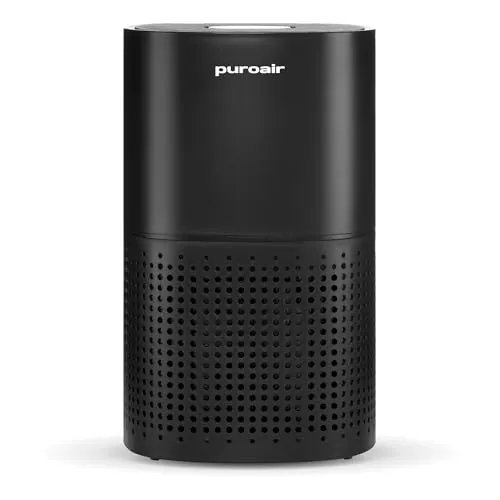
#1 Overall Winner
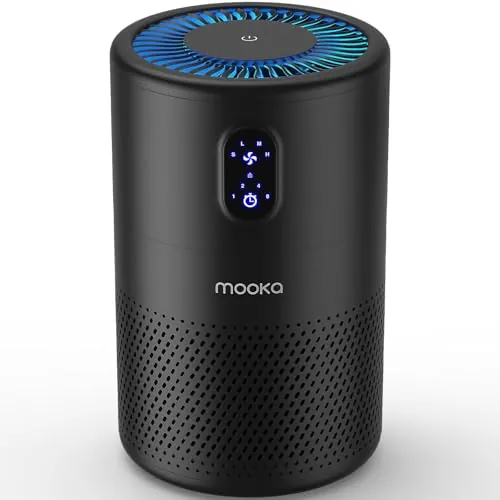
MOOKA B-D02L Air Purifier
- Compact 3.6-pound design that is easy to move between rooms.
Comparison
The MOOKA B-D02L and MOOKA KJ190 are HEPA air purifiers designed for dust, pollen, pet dander, smoke and household odors. The B-D02L is the smaller, lower-cost manual model, while the KJ190 adds air-quality monitoring, auto mode and a washable pre-filter. Both have strong buyer feedback, but the best pick depends on room size, need for automation and tolerance for a larger unit.
#1 Overall Winner
Contender
Choose the MOOKA B-D02L for a smaller, lighter and less expensive purifier with straightforward controls and strong feedback for bedrooms and everyday air cleaning. Choose the MOOKA KJ190 if auto mode, visible air-quality monitoring, washable pre-filtration and a higher stated coverage claim are worth the extra cost and size.
Overall winner
Depends on your needs
| Feature | MOOKA B-D02L Air Purifier | MOOKA KJ190 Air Purifier | Winner |
|---|---|---|---|
| Primary filtration | Pre-filter, H13 HEPA and activated carbon | Three-stage HEPA filtration with washable pre-filter | MOOKA KJ190 Air Purifier |
| Stated coverage | Up to 1,076 sq ft; one air change per hour at maximum stated area | Up to 2,200 sq ft per hour claimed | MOOKA KJ190 Air Purifier |
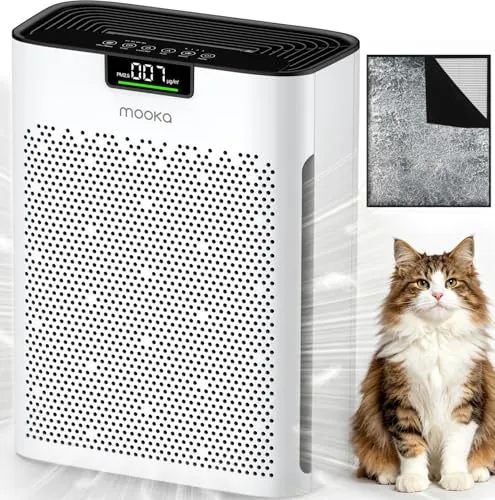
| Air-quality monitoring | Not listed | PM2.5 sensor and digital air-quality display | MOOKA KJ190 Air Purifier |
| Automatic operation | Manual modes and timers | Auto mode adjusts fan speed to air quality | MOOKA KJ190 Air Purifier |
| Noise | 20 dB listed; sleep mode | 20 dB listed in sleep mode | Tie |
| Fan and timer controls | Four modes; 1/2/4/8-hour timers | Four speeds; 2/4/6/8-hour timers | Tie |
| Maintenance | Replace filter every 3–6 months as needed | Washable pre-filter and filter reminder | MOOKA KJ190 Air Purifier |
| Portability | 3.6 lb; 7.1 x 7.1 x 11.1 in | 6.7 lb; 6.1 x 12.2 x 15.75 in | MOOKA B-D02L Air Purifier |
| Extra features | Night light and child lock | Air-quality display, auto mode, aromatherapy pad, child lock and filter reminder | MOOKA KJ190 Air Purifier |
| Safety and compliance information | Child lock listed | Child lock; CARB, ETL and DOE certifications stated | MOOKA KJ190 Air Purifier |
| Price at supplied listing | $37.54 | $67.59 | MOOKA B-D02L Air Purifier |
| Buyer sentiment | 4.5/5 from 8,964 reviews | 4.5/5 from 5,408 reviews | MOOKA B-D02L Air Purifier |
For general household use, the B-D02L is the easier unit to place and move: it is smaller, lighter and less expensive, while still offering manual speed and timer choices. The KJ190 is better suited to a more fixed location where its air-quality display and auto mode can respond to changes from cooking, pets or outdoor particles. Both are intended for bedrooms, living spaces and offices, but neither is a substitute for addressing the source of heavy smoke, mold or ventilation problems.
Both purifiers are relevant to home hygiene because they are intended to filter airborne dust, pollen, pet dander and smoke rather than clean surfaces. Reviews for both models mention less visible dust and fresher-smelling rooms. The KJ190 has an advantage around pet hair because of its larger multi-side intake and washable pre-filter. The B-D02L remains a useful compact choice for routine particle and odor management in a bedroom or smaller shared space.
Neither product heats, cools or controls humidity, but both can contribute to perceived room comfort by reducing airborne particles and odors. The B-D02L's small size and quiet sleep mode make it convenient near a bed. The KJ190 adds air-quality monitoring and automatic fan changes, which can be helpful when cooking smells, smoke or pet-related particles cause short-term changes. At higher fan speeds, either model may be more audible, so sleep mode is the better setting for noise-sensitive users.
Both models have strong reported performance for their intended task: filtering household particles and reducing odors. B-D02L buyers frequently mention improvements with dust, allergies, pet dander and smoke smells, and its stated filtration combines H13 HEPA with activated carbon. KJ190 reviews similarly report noticeable dust, pet-hair, odor and smoke reduction; its sensor can also increase fan speed when particles rise. The KJ190's larger coverage claim suggests a better fit for bigger spaces, but it cannot be independently compared from the supplied data because no CADR rating is provided. For compact-room use, the B-D02L has particularly consistent feedback.
Both models have largely positive buyer feedback for routine operation, with repeated reports of effective dust and odor reduction. The B-D02L has the larger review base and many reports of repeat purchases, but one review describes a high-pitched sound when a unit was left plugged in while not running. The KJ190's reviews support responsive auto mode and straightforward setup, although evidence of multi-year ownership is limited. There are also recurring comments that both become noticeably louder at stronger fan settings, which is expected behavior rather than necessarily a fault.
For airborne cleaning, the B-D02L has the edge in customer feedback for dust reduction and everyday allergy- and pet-related use. Its filter system is also designed to capture particles down to the listed 0.3-micron size. The KJ190 is particularly compelling for pet homes because its larger intake design and washable pre-filter are intended to catch pet hair before it reaches the main filter. Both are reported to reduce dust and odors, but neither replaces routine surface cleaning or source control.
These are air-cleaning products rather than climate-control devices: neither provides heating, cooling or humidity adjustment. Their practical climate-comfort role is reducing particles and odors that may make a room feel stale. The KJ190 has the more useful reactive setup for cooking smoke and short-term particle spikes because its air-quality sensor can trigger auto mode. The B-D02L offers manual control and a compact form that is easier to position near, but not directly beside, a problem area.
Both models list a child lock intended to prevent accidental changes by children or pets, and both require the filter packaging to be removed before operation. The KJ190 supplies more detailed safety and compliance information: MOOKA states CARB, ETL and DOE certification, no ozone release and no UV light. The B-D02L listing describes a low-power brushless motor but does not provide comparable certification details. For either unit, use the supplied power arrangement, keep air openings unobstructed and avoid relying on a purifier to make an active smoke or burning event safe.
The B-D02L is better for uncomplicated comfort in a small room: it is compact, quiet on low and includes an optional soft night light. The KJ190 is more responsive to fluctuating conditions because its PM2.5 sensor and auto mode can raise fan speed after smoke or cooking particles are detected. Both receive reports of fresher rooms and easier breathing, but these are individual buyer experiences rather than medical outcomes. The KJ190's higher-speed noise can be a trade-off for its more active response.
Both purifiers are described as easy to set up and operate, provided the filter's protective plastic is removed before use. The B-D02L has simple controls and a quick filter-change process, making it the more straightforward option. The KJ190 is also easy to take apart according to reviews, and its auto mode reduces the need for manual adjustments. Its added display and functions create slightly more to learn, but they can simplify everyday use once configured.
The B-D02L prioritizes a minimal, highly compact design. Its 7.1-inch square footprint and 11.1-inch height make it easier to place on a small floor area, shelf or stool, and it is available in black in this listing. The KJ190 is taller and wider but remains fairly compact for its stated room-coverage class. Its front and dual-side air intakes, display and top controls are more functional for a fixed room position, while the B-D02L is more flexible for frequent relocation.
The B-D02L is rated by MOOKA for up to 1,076 square feet, with the listing specifying six air changes per hour in 215 square feet and one air change per hour at its maximum stated area. MOOKA claims the KJ190 can clean up to 2,200 square feet per hour. That makes the KJ190 the apparent large-room option, but the lack of supplied CADR data means its real-world fit should be assessed conservatively, especially where frequent air changes are needed.
The B-D02L is the better choice for small flats, bedrooms and crowded rooms because of its narrow 7.1-by-7.1-inch footprint and short height. The KJ190 is still compact relative to its stated coverage claim, but its 12.2-inch width and 15.75-inch height require more floor or tabletop clearance. Choose the KJ190 where a larger fixed purifier is practical; choose the B-D02L when limited room and easy relocation are priorities.
Both models list a 20 dB sleep or low-noise setting and receive positive comments for quiet overnight operation. The B-D02L has more consistent feedback for near-bed use at low speed, although some owners find it loud at higher settings. KJ190 reviews describe low settings as quiet, but middle and high settings can sound like a small portable fan or box fan. For a quiet bedroom, either should be run in sleep or low mode.
Neither purifier requires mounting or permanent installation. Both need the filter unwrapped before first use and a suitable AC outlet. The B-D02L has an adapter stored beneath its bottom base cover, which buyers need to locate during setup. KJ190 buyers should verify regional plug compatibility before purchasing, since one review reported that a European adapter was not included. Allow clear space around each unit's intake and outlet rather than placing it tightly against furniture.
The KJ190 has the stronger build-quality case from the supplied information: it is a larger, heavier unit and reviews describe it as comparable in build quality to a more expensive purifier. Its washable foam pre-filter also adds a reusable component. The B-D02L's lightweight construction supports portability and receives generally positive feedback, but its physical quality evidence is more limited. One B-D02L review notes a high-pitched sound from a particular unit when powered but not running, which is worth monitoring.
Neither listing supplies long-term component-life data, so durability cannot be confirmed beyond buyer experiences. The B-D02L has reviews from owners using it for around a year and reports of regular filter changes, but its lightweight design provides less evidence of robust long-term construction. The KJ190's washable pre-filter may reduce wear on the primary filter, and reviews are favorable about its construction. Still, long-term reliability and replacement-part availability beyond filters are not established by the provided information.
The KJ190 is easier to maintain because its pre-filter can be washed and its filter reminder indicates when attention is due. Its listing says the indicator activates after 2,000 hours and can be reset after cleaning or replacement. The B-D02L is also low-effort: reviews say filter changes take little time, and the recommended replacement interval is three to six months depending on use. In both cases, filter condition will vary with pets, smoke, dust and runtime.
The B-D02L is the more portable purifier. At 3.6 pounds and with a smaller overall body, it is easier to carry from a bedroom to an office, laundry area or living space. The KJ190 remains manageable at 6.7 pounds and is described as lightweight by one reviewer, but its taller and wider design makes it better suited to staying in one main location. Neither listing mentions wheels or a carrying handle.
The B-D02L covers the essentials with four modes, 1/2/4/8-hour timers, a child lock and an optional night light. The KJ190 has four speeds and timers too, then adds a PM2.5 display, auto mode, washable pre-filter, filter reminder and aromatherapy pad. These additions make the KJ190 more adaptable when air conditions change, while the B-D02L is simpler for users who prefer selecting a speed and timer themselves. Neither model lists app control, remote control or smart-home integration.
The KJ190 is clearly better for local automation. Its PM2.5 sensor, air-quality display and auto mode allow the fan speed to change with surrounding air conditions, and timers provide scheduled shutoff. The B-D02L has timer-based convenience but no sensor-driven response, so its speed must be selected manually. Neither model has listed app-based routines, remote scheduling or smart-home ecosystem controls.
The B-D02L is rated at 13 watts, compared with 22 watts for the KJ190, so it has the lower listed power draw. The KJ190 listing states that 24 hours at maximum speed consumes 0.63 kWh, and its auto mode can avoid running at a high setting continuously when air conditions are better. The B-D02L's lower-power motor and timers also support restrained operation. Actual electricity use will depend on fan speed, room conditions and operating hours.
The B-D02L delivers the stronger value proposition for buyers who only need dependable manual filtration in a smaller or moderate-size room. Its listed price is much lower, and owners praise the affordability and availability of replacement filters. The KJ190 costs more but adds features that may justify the difference for pet homes or users who value automatic response: a washable pre-filter, monitor, auto mode and filter reminder. Its stated support terms also add value. The KJ190 is not automatically the better buy for all rooms, particularly when its maximum coverage claim lacks supplied CADR data.
Both products are made by MOOKA, so there is no brand-versus-brand distinction. The B-D02L benefits from a larger pool of buyer feedback and many repeat-purchase comments, which offers useful evidence of broad customer acceptance. The KJ190 provides clearer stated certification and post-purchase terms, including a return period, exchange coverage and lifetime technical support. Neither supplied listing offers detailed information on long-term spare-parts support beyond replacement filters.
Both purifiers hold a 4.5-star average, with the B-D02L supported by the larger review count. B-D02L customers commonly praise compactness, quiet low-speed operation, easy filter changes, odor reduction and value; isolated concerns include loudness at stronger settings and a high-pitched standby noise in one unit. KJ190 buyers frequently like the air-quality display, auto mode, washable pre-filter and effectiveness against dust, pet odors and smoke. Its recurring drawback is fan noise at medium or high speeds, while one review flags plug compatibility for European use.
Only the KJ190 listing provides specific support terms: a 60-day no-reason return period, two-year exchange and lifetime technical support. The B-D02L listing promises customer service but does not state a warranty duration, return policy or replacement process. Buyers who prioritize documented after-sales coverage have clearer information with the KJ190, while both models appear to have replacement-filter options.
Neither model is universally better, but the MOOKA B-D02L is the clearer all-round choice for budget-conscious households seeking compact, simple and well-reviewed air cleaning. Its main strengths are portability, low listed wattage, straightforward controls and strong reported dust and odor reduction. Its limitation is the lack of sensing or automatic response.
The MOOKA KJ190 is the more capable choice for buyers who value features over the lowest price. Its air-quality display, auto mode, washable pre-filter and documented support terms make it more convenient for changing conditions and pet homes. Its main trade-offs are larger size, higher cost, louder high-speed operation and an unverified maximum coverage claim without supplied CADR data.

Overall winner
Depends on your needs
The B-D02L is the stronger fit for buyers who want a compact, lower-cost purifier with simple manual controls. The KJ190 is the more feature-rich option, adding an air-quality display, auto mode, washable pre-filter and a larger stated coverage claim. The better choice depends on whether simplicity and portability or monitoring and automation matter more.
Either model can suit a bedroom because both list a 20 dB sleep or low-noise mode. The B-D02L is smaller and lighter, making it especially convenient beside a bed or in a compact room. The KJ190 adds a lights-off sleep mode and auto operation, but reviews indicate it becomes more noticeable at higher speeds.
MOOKA states that the KJ190 can clean up to 2,200 square feet per hour. However, the supplied information does not include a CADR rating or independent coverage testing. Treat that figure as a manufacturer claim, and consider the room layout, pollution source and desired air-change rate when deciding whether it is sufficient.
The KJ190 has the clearer maintenance advantage. Its washable pre-filter can be cleaned to help extend the main filter's life, and its filter reminder signals after the stated usage interval. The B-D02L is also described as simple to change, but its replacement filter is recommended every three to six months depending on conditions and use.
Both models list a 20 dB low-noise setting and receive favorable feedback for sleep-mode operation. The B-D02L has the slight practical edge for quiet-focused buyers because it is simpler and has particularly positive feedback for low-speed bedroom use. For both units, reviews suggest higher fan settings can be clearly audible.
The KJ190 is the more targeted choice for pet households because it has larger front and side intakes, a washable pre-filter and an activated-carbon stage intended for odors. The B-D02L also receives strong buyer feedback for pet dander, litter-area smells and general odor reduction, making it a capable lower-cost alternative.
No app, Wi-Fi, voice-assistant, hub or smart-home integration is listed for either purifier. The KJ190 has automatic operation based on its built-in PM2.5 sensor, but that is local device automation rather than connected smart-home control. The B-D02L relies on manual speed and timer selections.
Match the purifier to the size of the room where it will run most often, rather than relying only on maximum coverage claims. Also consider replacement-filter availability and cost, desired noise level at higher speeds, and whether you need auto mode. For the KJ190, confirm plug compatibility if purchasing outside its intended market.
Check our rankings and expert guides to find the best home lifestyle products for your goals.