HouseholdRanker
Menu
MOOKA KJ190 vs PuroAir 240: Large Room Air Purifiers

Comparison

MOOKA KJ190 vs PuroAir 240: Large Room Air Purifiers

The MOOKA KJ190 and PuroAir 240 are HEPA air purifiers for bedrooms and larger living spaces, with automatic air-quality sensing and sleep modes. MOOKA offers a lower price, washable pre-filter and higher listed coverage, while PuroAir has stronger reported filtration credentials, a slightly higher buyer rating and a much larger review base. For most households, MOOKA is the more feature-rich value option; PuroAir suits buyers willing to pay more for its established review history and stated filtration focus.

Expert tested Data driven Unbiased reviews Updated 2 August 2026
MOOKA KJ190

#1 Overall Winner

MOOKA KJ190

86/100
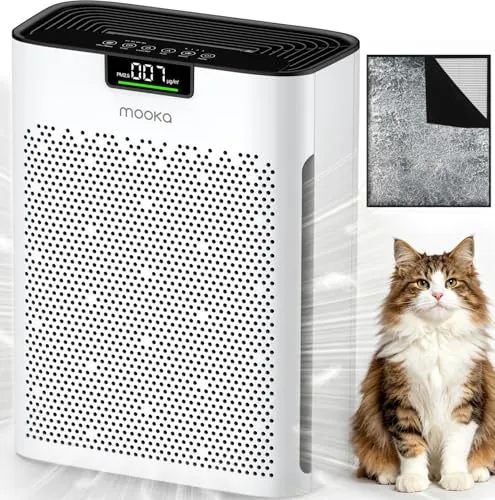
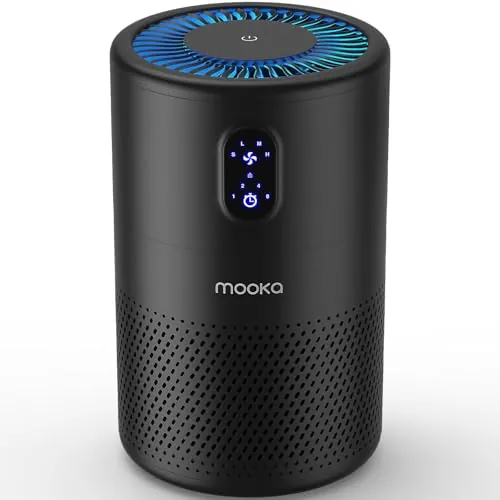
  • Listed coverage of up to 2,200 square feet per hour, although no CADR figure is provided.
View review
PuroAir 240

Contender

PuroAir 240

83/100
  • Strong reported filtration performance for dust, pollen, smoke, pet dander, odors and VOCs.
View review

Quick verdict

Choose the MOOKA KJ190 for lower-cost, feature-rich air cleaning, washable pre-filter care and compact placement. Choose the PuroAir 240 if its broad review history, stated filtration focus and listed two-year risk-free warranty matter more than upfront cost. Neither is a smart-home purifier, and both should be checked carefully for regional voltage compatibility.

Overall winner

Depends on your needs

At-a-glance comparison

Feature MOOKA KJ190 PuroAir 240 Winner
Listed room coverage Up to 2,200 sq ft per hour; no CADR supplied Up to 1,000 sq ft in one hour Depends
Listed price $67.59 $120.16 MOOKA KJ190
Filtration system 3-stage system with washable pre-filter, HEPA and carbon Pre-filter, HEPA and activated carbon Depends
Air-quality automation PM2.5 display and auto fan adjustment Particle sensor and auto power adjustment Tie
Sleep-mode noise claim 20 dB 22 dB MOOKA KJ190
Fan controls 4 speeds; 2/4/6/8-hour timer Timer and sleep mode; speed count not supplied MOOKA KJ190
Maintenance Washable pre-filter and 2,000-hour reminder Filter indicator; replacement filters required MOOKA KJ190
Size and weight 6.1 x 12.2 x 15.75 in; 6.7 lb 10.63 x 10.63 x 28 in; 7.3 lb MOOKA KJ190
Customer feedback 4.5/5 from 5,408 reviews 4.6/5 from 17,944 reviews PuroAir 240
Reliability evidence Limited long-term evidence Some reports of cut-outs MOOKA KJ190
Warranty and support 60-day return, 2-year exchange, lifetime technical support 2-year risk-free warranty Depends
Regional compatibility 110V specification; EU adapter complaint US plug and voltage concerns in UK reviews Tie

Detailed comparison

Home Use

Both models are suited to everyday indoor-air maintenance in bedrooms, living rooms and pet households. MOOKA is more flexible for homes that may move a purifier between rooms because it is lighter, shorter and less expensive. Its display also gives a direct view of measured particulate conditions. PuroAir is a sensible stationary-room choice for buyers who value its extensive review record and reported filtration testing. Neither unit is presented as connected, so daily operation happens through onboard controls and automatic sensor behavior rather than remote management.

Cleaning Use

As air-cleaning appliances, both models are intended to reduce airborne dust, pollen, pet dander and smoke rather than clean surfaces. Reviews for both describe less visible dust and improved odor control, including responses to cooking smoke. MOOKA's wider intake design is marketed for pet hair and its washable pre-filter may be helpful where larger debris accumulates. PuroAir lists VOCs among the contaminants it filters and receives positive feedback for dust and pet dander. Neither replaces source control, surface cleaning or ventilation when smoke is produced.

Climate Comfort

Neither purifier heats, cools or changes humidity, but each may improve perceived room comfort by reducing airborne particles and odors. MOOKA is particularly practical for bedrooms because it lists a 20 dB sleep mode with lights off, while PuroAir also receives favorable low-speed noise feedback. Both auto modes can raise airflow when particles are detected, which is useful after cooking or around pets, but higher speeds are more audible and may be less comfortable during sleep or quiet work.

Performance

Both purifiers show strong reported performance for their intended role. MOOKA buyers frequently mention reduced dust, pet hair, odors and smoke, with several describing the auto mode responding quickly to cooking or smoking. PuroAir has similarly positive reports for dust, pollen, pet dander and odor reduction, and its listing cites laboratory testing for filtration. PuroAir has the slight edge in the supplied performance assessment, while MOOKA's broader stated coverage may appeal to larger spaces. That coverage figure should be treated cautiously because no CADR data is supplied. Neither product's claims remove the need to address the source of persistent smoke or mold.

Reliability

MOOKA has the stronger supplied reliability assessment, and its buyer feedback is mostly consistent about straightforward setup, automatic responses and effective daily operation. Its long-term durability evidence remains limited, so this should not be taken as proof of exceptional longevity. PuroAir's broad positive review base supports confidence in normal operation, but the supplied reviews include a report that a unit repeatedly cut out after initially working well. There are also regional compatibility complaints for both products. Verify voltage, plug type and local replacement-filter access before buying, especially outside North America.

Cleaning Performance

PuroAir has the slight advantage in the supplied cleaning-performance assessment, supported by positive feedback for dust, pet dander and smoke reduction. Its listing also includes VOCs among its stated filtration targets. MOOKA is close behind and receives particularly strong feedback for visible dust, pet hair, odors and smoke, with a washable pre-filter that can capture larger debris before the main filter. These devices clean airborne particles only; pet hair on furniture and settled dust still require regular vacuuming and surface cleaning.

Climate Control

For air-quality comfort, both units use sensors that can increase fan speed when cooking smoke or other particles are detected. Buyer feedback describes this behavior on both models, with users noticing improved odor control after cooking or smoke exposure. MOOKA lists a broader claimed coverage area and offers a PM2.5 display, which can be useful for observing changes in indoor particulate conditions. PuroAir's stated coverage is smaller but its filtration claims include smoke and VOCs. Neither is a substitute for ventilation or an extractor fan when cooking.

MOOKA KJ190

Pros

  • Listed coverage of up to 2,200 square feet per hour, although no CADR figure is provided.
  • Air-quality display and automatic fan-speed adjustment.
  • Washable pre-filter can reduce routine filter-care costs.
  • Four fan speeds, sleep mode, timer, child lock and filter reminder.
  • Low listed power draw and a 20 dB sleep-mode claim.
  • Strong buyer feedback for dust, pet hair, odors and smoke.
  • Compact, lightweight design for moving between rooms.

Cons

  • The large coverage claim is not supported by CADR data in the supplied listing.
  • Reviews indicate that higher fan settings can sound similar to a box fan.
  • Long-term durability evidence is limited.
  • Replacement filters should be purchased from the official MOOKA listing according to the product instructions.
  • An international review reports that no European plug adapter was supplied.
MOOKA KJ190

PuroAir 240

Pros

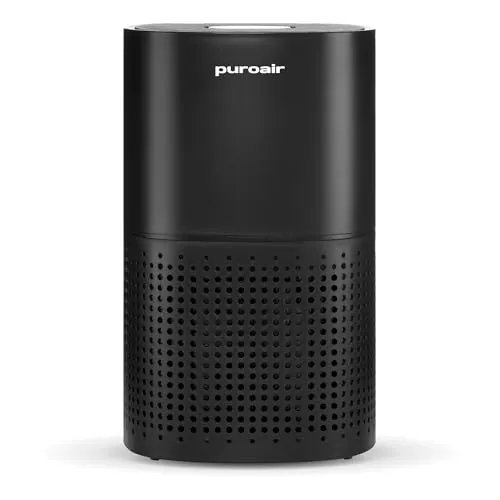
  • Strong reported filtration performance for dust, pollen, smoke, pet dander, odors and VOCs.
  • Automatic particle sensing, sleep mode, timer, child lock and filter indicator.
  • Positive buyer feedback for quiet low-speed operation and dust reduction.
  • Listed coverage of up to 1,000 square feet in one hour.
  • Very large review base with consistently high average feedback.
  • Two-year risk-free warranty is listed.
  • Three-layer filter includes a pre-filter, HEPA filter and activated carbon.

Cons

  • Its listed coverage is lower than the MOOKA's stated coverage.
  • Replacement-filter expense is raised in buyer feedback.
  • Some reviews report cut-outs or concerns about lightweight plastic construction.
  • UK buyers report potential plug, voltage and replacement-filter availability issues.
  • It costs substantially more at the supplied listed price.
  • It is not listed as smart-home compatible.
PuroAir 240

Final verdict

MOOKA KJ190 wins this comparison for most households. It offers a stronger blend of price, features, maintenance convenience and compact placement, while buyer feedback supports useful dust, pet-hair, odor and smoke reduction. Its main limitations are higher-speed noise, limited long-term durability evidence and an unverified large-room coverage claim without CADR information.

The PuroAir 240 is a credible alternative with strong reported air-cleaning results, quiet low-speed performance, extensive customer feedback and a listed two-year risk-free warranty. Its main drawbacks are the higher cost, replacement-filter concerns and isolated reliability and regional power complaints. Pick MOOKA for feature-led value; pick PuroAir when its filtration positioning and broader buyer record are the deciding factors.

Overall winner

Depends on your needs

Frequently asked questions

Which is better, the MOOKA KJ190 or PuroAir 240?

The MOOKA KJ190 is the stronger overall choice on the supplied data because it costs less, has more listed controls, includes a washable pre-filter and receives strong feedback for dust, pet hair and odor control. The PuroAir 240 remains a good option for buyers who prioritize its reported filtration performance, quiet low-speed use and large customer-review base.

Which purifier is better for larger rooms?

MOOKA lists coverage of up to 2,200 square feet per hour, compared with PuroAir's stated 1,000 square feet in one hour. However, MOOKA does not provide CADR data in the supplied information, so its larger figure should be treated as a listing claim rather than a directly comparable verified airflow rating.

Which air purifier is quieter for a bedroom?

Both models are intended for bedroom use and have sleep modes. MOOKA lists 20 dB in sleep mode, while PuroAir lists 22 dB. Buyers commonly describe both as quiet at low settings, but reviews for each model note that higher fan speeds become more noticeable; MOOKA's upper settings are compared with a box fan.

Which purifier is easier to maintain?

MOOKA has an advantage for routine care because its pre-filter is washable and the unit includes a filter reminder. PuroAir uses a three-layer filter and buyers describe filter changes as straightforward, but replacement-filter cost is a recurring consideration. In either case, follow the supplied replacement guidance and clean the pre-filter where applicable.

Do both purifiers have automatic air-quality control?

Yes. The MOOKA KJ190 has a PM2.5 air-quality display and an auto mode that adjusts fan speed. The PuroAir 240 also has a particle sensor and automatic operation. Reviews for both models describe the fan responding to cooking smoke or other airborne particles, though these are user experiences rather than controlled performance results.

Which model offers better value?

At the supplied prices, the MOOKA KJ190 offers better value for buyers who want auto sensing, timers, sleep mode, child lock and washable pre-filter care at a lower purchase price. PuroAir costs more but brings strong customer feedback, reported filtration credentials and a listed two-year risk-free warranty. Filter costs and regional compatibility can change the long-term equation.

Are either of these air purifiers smart-home compatible?

No smart-home compatibility is listed for either comparison model. PuroAir explicitly states that the 240 is not smart-home compatible. MOOKA's supplied data describes touch controls, an air-quality display and auto mode, but does not mention Wi-Fi, an app, voice assistants or smart-home integrations.

What should UK or European buyers check before buying?

Check plug type, voltage compatibility and local filter availability before ordering. MOOKA specifications list AC 110V, and one review says an EU adapter was not supplied. PuroAir reviews also raise concerns about a US plug, 110V requirements and obtaining replacement filters in the UK. These issues can add cost or prevent straightforward use.

Related comparisons

Still not sure which one to choose?

Check our rankings and expert guides to find the best home lifestyle products for your goals.

View all rankings