HouseholdRanker
Menu
MOOKA B-D02L vs PuroAir 240 Air Purifier

Comparison

MOOKA B-D02L vs PuroAir 240 Air Purifier

The MOOKA B-D02L and PuroAir 240 are large-room HEPA air purifiers designed to reduce dust, pollen, pet dander, smoke, and odors. MOOKA is the smaller, lower-cost manual option, while PuroAir adds a particle sensor and automatic adjustment at a much higher price. Both receive positive feedback for quieter low-speed operation and fresher indoor air, but their practical strengths suit different households.

Expert tested Data driven Unbiased reviews Updated 2 August 2026
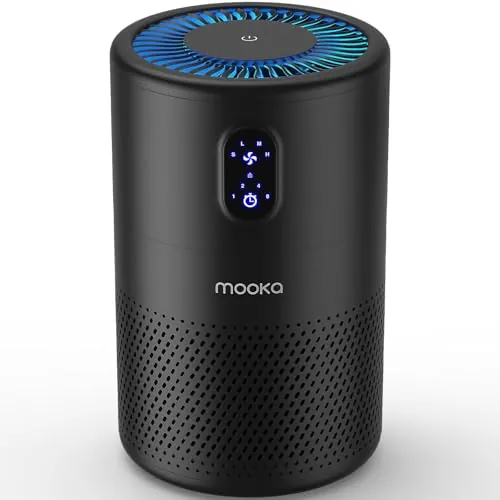
MOOKA B-D02L Air Purifier

#1 Overall Winner

MOOKA B-D02L Air Purifier

88/100
  • Compact 3.6-pound design is easy to move between rooms.
View review
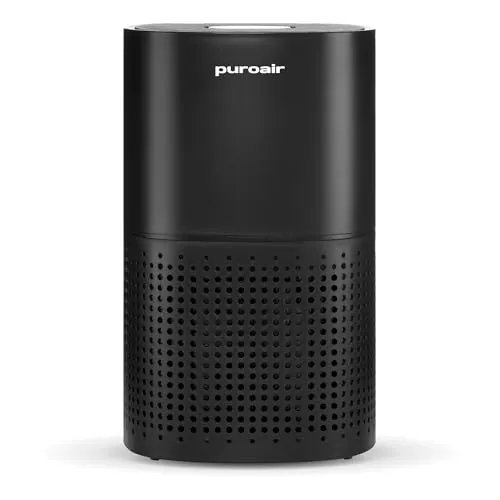
PuroAir 240 HEPA Air Purifier

Contender

PuroAir 240 HEPA Air Purifier

83/100
  • Three-layer filtration combines a pre-filter, HEPA filter, and activated carbon.
View review

Quick verdict

Choose the MOOKA B-D02L for compact, affordable, manually controlled air cleaning with strong feedback on dust, pets, and odors. Choose the PuroAir 240 if automatic air-quality sensing and a filter reminder are worth the higher price, and only after confirming compatible voltage, plug type, and replacement filters for your region.

Overall winner

Depends on your needs

At-a-glance comparison

Feature MOOKA B-D02L Air Purifier PuroAir 240 HEPA Air Purifier Winner
Primary filtration Pre-filter, H13 True HEPA, activated carbon Pre-filter, HEPA, activated carbon Tie
Listed room coverage Up to 1,076 sq ft Up to 1,000 sq ft in one hour Depends
Automatic operation Manual fan modes and timers Particle sensor with automatic adjustment PuroAir 240 HEPA Air Purifier
Controls and reminders Buttons, timer, night light Buttons, timer, filter indicator PuroAir 240 HEPA Air Purifier
Listed noise level 20 dB 22 dB MOOKA B-D02L Air Purifier
Listed wattage 13 watts 22 watts MOOKA B-D02L Air Purifier
Size and weight 7.1 x 7.1 x 11.1 in; 3.6 lb 10.63 x 10.63 x 28 in; 7.3 lb MOOKA B-D02L Air Purifier
Child lock Included Included Tie
Smart-home support Not listed Not smart-home compatible Tie
Warranty information No term provided Stated two-year warranty PuroAir 240 HEPA Air Purifier
Upfront price 37.54 120.16 MOOKA B-D02L Air Purifier
Review feedback Strong value, compactness, quiet use, odor control Strong quiet-use and cleaning feedback; some cut-out and UK compatibility concerns MOOKA B-D02L Air Purifier

Detailed comparison

Home Use

For everyday home use, MOOKA is the more flexible option because its compact, lightweight form makes it easy to place beside a bed, in a home office, or in a smaller living area. Its controls are simple and it has a low purchase price, making multiple-unit setups more attainable. PuroAir is better suited to a fixed central location where automatic sensing can respond to cooking, smoke, or changing particle levels without repeated manual adjustments. Both can serve bedrooms and shared rooms, but neither offers smart-home integration.

Cleaning Use

Both purifiers are relevant to home hygiene because their filter systems are intended to capture airborne dust, pollen, pet-related particles, smoke, and odors. MOOKA owners repeatedly mention less dust and better odor control around pet areas, laundry rooms, and cooking odors. PuroAir reviews similarly describe reduced dust and automatic increases in fan speed around smoky cooking. Neither replaces source cleaning, ventilation, or remediation of visible mold; they are air-cleaning appliances rather than complete cleaning solutions.

Climate Comfort

Neither unit controls temperature or humidity, but both may improve room comfort by reducing airborne particles and odors. MOOKA is particularly appealing for sleep spaces because of its low listed noise level, compact placement, sleep mode, and optional night light. PuroAir adds automatic sensing, which may be useful in a living room or open area where air conditions change during the day. Reviews for both describe fresher air and fewer allergy-related discomforts, though individual results will vary.

Performance

Both models appear capable of their main task: reducing common airborne particles and household odors. MOOKA has especially strong feedback for reducing visible dust, pet dander, smoke smells, and stuffiness, supported by its H13 True HEPA and carbon filter design. PuroAir also receives consistent praise for dust, pet-dander, and odor reduction, and its sensor can raise output when conditions worsen. MOOKA has a slight practical edge because buyer feedback is more consistently positive and it has fewer reported operating faults. PuroAir's reported cut-outs mean its performance advantage from automatic mode is not guaranteed for every unit.

Reliability

MOOKA has the stronger reliability outlook in the supplied data. Most reviews report ongoing quiet operation and repeat purchases, although one owner described a high-pitched sound from a unit when it was powered on but not running. PuroAir reviews are largely positive, but there is a more significant report of a unit repeatedly cutting out after initially working well. A UK review also raises a regional voltage concern. These isolated reports do not establish a universal fault, but they make it important to confirm seller, plug type, and return options for PuroAir.

Cleaning Performance

MOOKA has a slight edge for reported air-cleaning performance, with repeated buyer comments about reduced dust, smoke smells, pet odors, and allergy-related discomfort. Its H13 True HEPA and activated-carbon filtration are designed to address particles and odors. PuroAir also earns strong feedback for dust and pet-dander reduction, and its sensor is useful when pollution rises. However, its performance record is tempered by isolated reliability reports. Neither unit should be expected to remove settled dirt or replace vacuuming and cleaning surfaces.

Climate Control

These are air-cleaning products rather than climate-control devices: neither provides cooling, heating, humidification, or dehumidification. Both may make a room feel fresher by filtering airborne dust, smoke, odors, pollen, and pet dander. PuroAir's auto sensor may be particularly useful when cooking or smoke causes a temporary change in air quality. MOOKA offers manual fan settings, so it relies on the user to increase output during those events.

MOOKA B-D02L Air Purifier

Pros

  • Compact 3.6-pound design is easy to move between rooms.
  • Listed coverage reaches up to 1,076 sq ft, with higher air-change rates in smaller rooms.
  • Uses a pre-filter, H13 True HEPA filter, and activated-carbon filter.
  • Low listed noise level and a dedicated sleep mode suit bedroom use.
  • Includes four fan modes, four timer choices, a night light, and a child lock.
  • Buyer feedback is particularly positive about dust, pet-dander, and odor reduction.
  • Lower upfront price and reportedly affordable replacement filters support its value case.

Cons

  • It has no air-quality sensor or automatic fan adjustment.
  • There is no remote control, app, or smart-home compatibility listed.
  • Replacement filters are expected every three to six months, depending on conditions and use.
  • Some buyers find higher settings louder than expected.
  • One review reported a high-pitched sound from a unit when switched on but not running.
  • Its basic controls offer less hands-off operation than the PuroAir 240.
MOOKA B-D02L Air Purifier

PuroAir 240 HEPA Air Purifier

Pros

  • Three-layer filtration combines a pre-filter, HEPA filter, and activated carbon.
  • Built-in particle sensor can adjust power automatically when air quality changes.
  • Includes a filter-replacement indicator, timer, sleep mode, and child safety lock.
  • Listed for rooms up to 1,000 sq ft in one hour.
  • Reviews frequently praise quiet low-speed operation and noticeable reductions in dust and pet dander.
  • Has a larger review base and slightly stronger average buyer rating.
  • Includes a stated two-year manufacturer warranty.

Cons

  • The upfront price is substantially higher than the MOOKA B-D02L.
  • Its listed 22-watt draw is higher than the MOOKA's listed 13 watts.
  • It is taller, heavier, and less convenient to reposition.
  • Some buyers report that it can be noticeable at night outside sleep mode.
  • Reviews include reports of units cutting out and concerns about lightweight plastic construction.
  • UK buyers should verify plug, voltage, and replacement-filter availability before purchasing.
  • It is listed as not smart-home compatible.
PuroAir 240 HEPA Air Purifier

Final verdict

The MOOKA B-D02L is the clearer overall recommendation for shoppers seeking strong everyday air cleaning without a high purchase price. Its main strengths are compact portability, lower listed power use, simple controls, and consistently positive feedback about dust, pet, and odor reduction. Its main limitation is the lack of automatic sensing or a filter-change indicator.

The PuroAir 240 is a worthwhile alternative for households that value its particle sensor, automatic fan response, filter reminder, and stated two-year warranty. Its main drawbacks are its substantially higher price, larger body, and isolated feedback about reliability and regional power compatibility. Pick MOOKA for value and flexibility; pick PuroAir for hands-off operation after confirming local suitability.

Overall winner

Depends on your needs

Frequently asked questions

Which is better, the MOOKA B-D02L or PuroAir 240?

The MOOKA B-D02L is the stronger overall choice for shoppers focused on compact size, simple controls, low listed power use, and upfront value. The PuroAir 240 is better suited to buyers who want an air-quality sensor, automatic fan changes, and a filter-replacement reminder. Check local power compatibility before choosing the PuroAir.

Which purifier is better for small spaces?

The MOOKA B-D02L is more practical for small spaces. It measures 7.1 by 7.1 by 11.1 inches and weighs 3.6 pounds, so it is easier to fit on a stable surface or move around a flat, bedroom, or office. The PuroAir 240 has a narrow footprint but stands 28 inches tall.

Does the PuroAir 240 have automatic air-quality control?

Yes. The supplied specifications list a smart particle sensor and air-quality indicator that can increase power when pollution is detected. This gives the PuroAir 240 a more hands-off approach than the MOOKA B-D02L, which provides manual speed selection and timer settings but no listed sensor-based automatic mode.

Which model is quieter for sleeping?

Both are designed with sleep use in mind and have low listed noise figures: 20 dB for MOOKA and 22 dB for PuroAir. Reviews are generally positive about low-speed operation for both. However, some owners find either unit more noticeable at higher speeds, so sleep or low mode is the safer choice for noise-sensitive rooms.

Which air purifier is easier to move between rooms?

The MOOKA B-D02L is easier to relocate. At 3.6 pounds and only 11.1 inches tall, it is considerably lighter and shorter than the 7.3-pound, 28-inch PuroAir 240. The PuroAir is better treated as a fixed floor unit, while the MOOKA is more convenient for occasional room-to-room use.

Are replacement filters needed for both air purifiers?

Yes. Both models use replaceable filters. MOOKA advises replacing its filter every three to six months depending on the environment and usage. The PuroAir includes a filter-replacement indicator, which can make maintenance easier. Before buying, confirm the price and local availability of compatible filters for the model you choose.

Which purifier offers better value?

MOOKA offers stronger value for many households because it costs much less, has a lower listed wattage, and receives positive feedback about affordable replacement filters. PuroAir costs more but adds automatic sensing, a filter indicator, and a stated two-year warranty. Its value is strongest if those convenience features matter to your routine.

Is either air purifier smart-home compatible?

No smart-home compatibility is listed for the MOOKA B-D02L, and the PuroAir 240 specifications explicitly state that it is not smart-home compatible. Neither product should be chosen for voice-assistant control, app-led routines, or smart-home integrations based on the supplied information.

Related comparisons

Still not sure which one to choose?

Check our rankings and expert guides to find the best home lifestyle products for your goals.

View all rankings