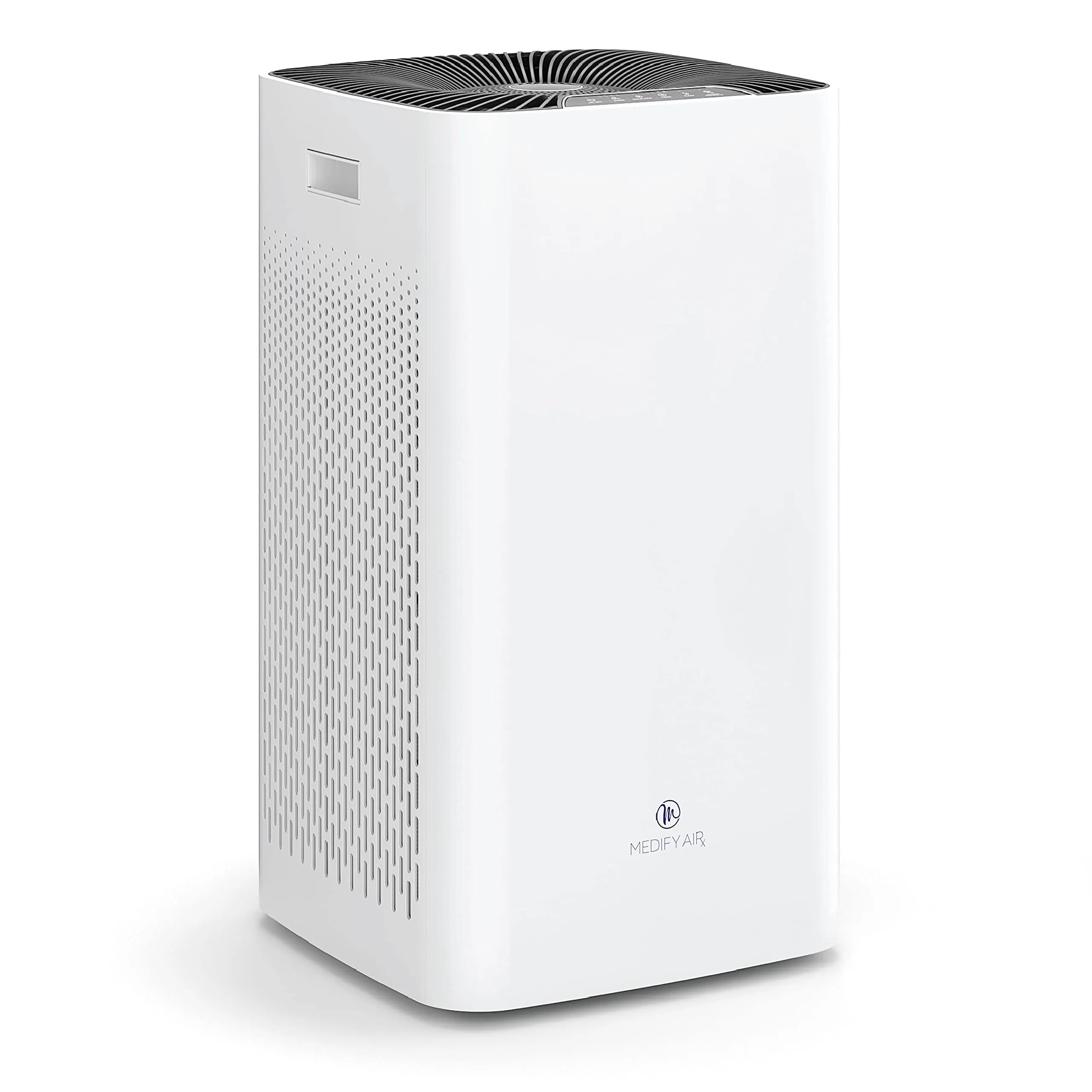
#1 Overall Winner
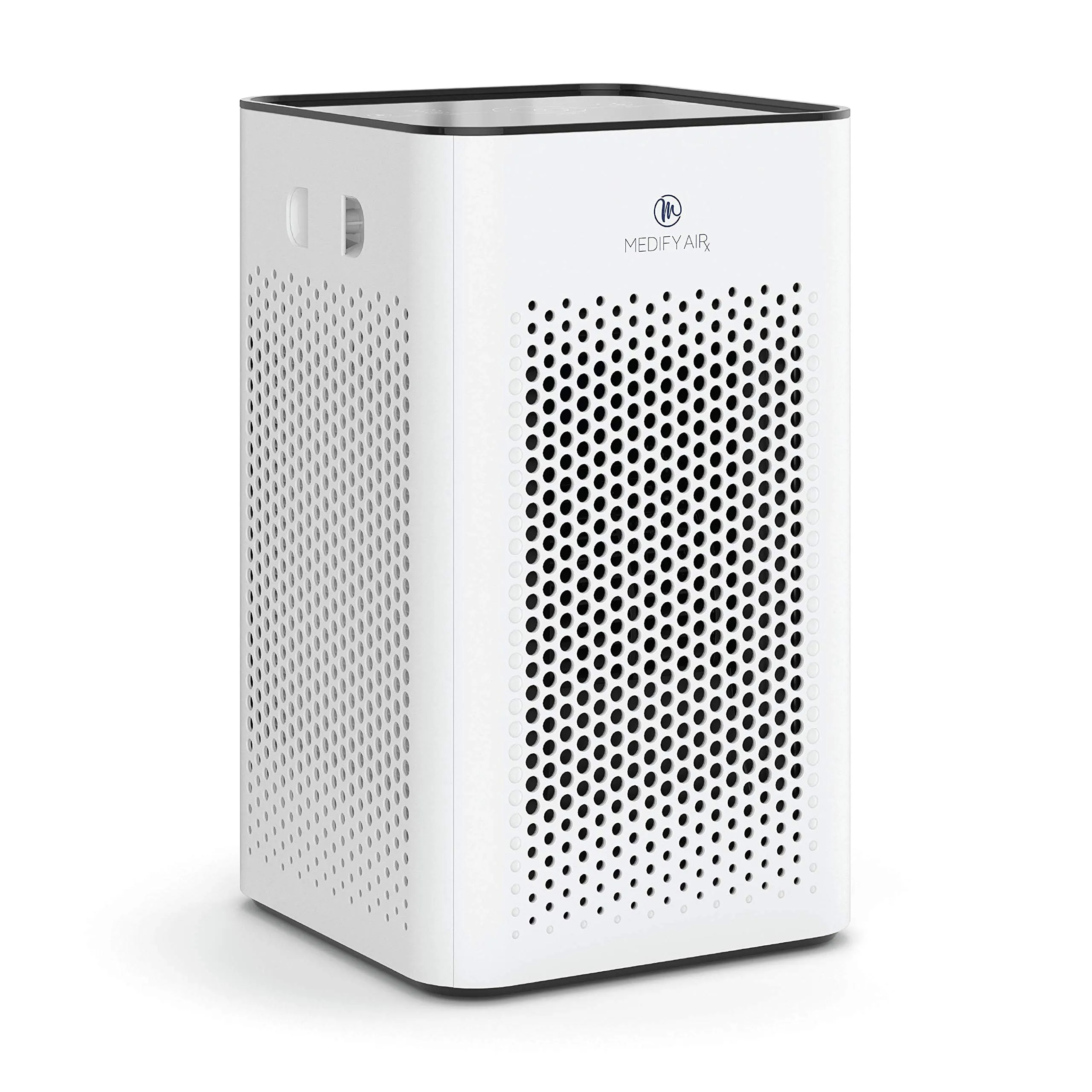
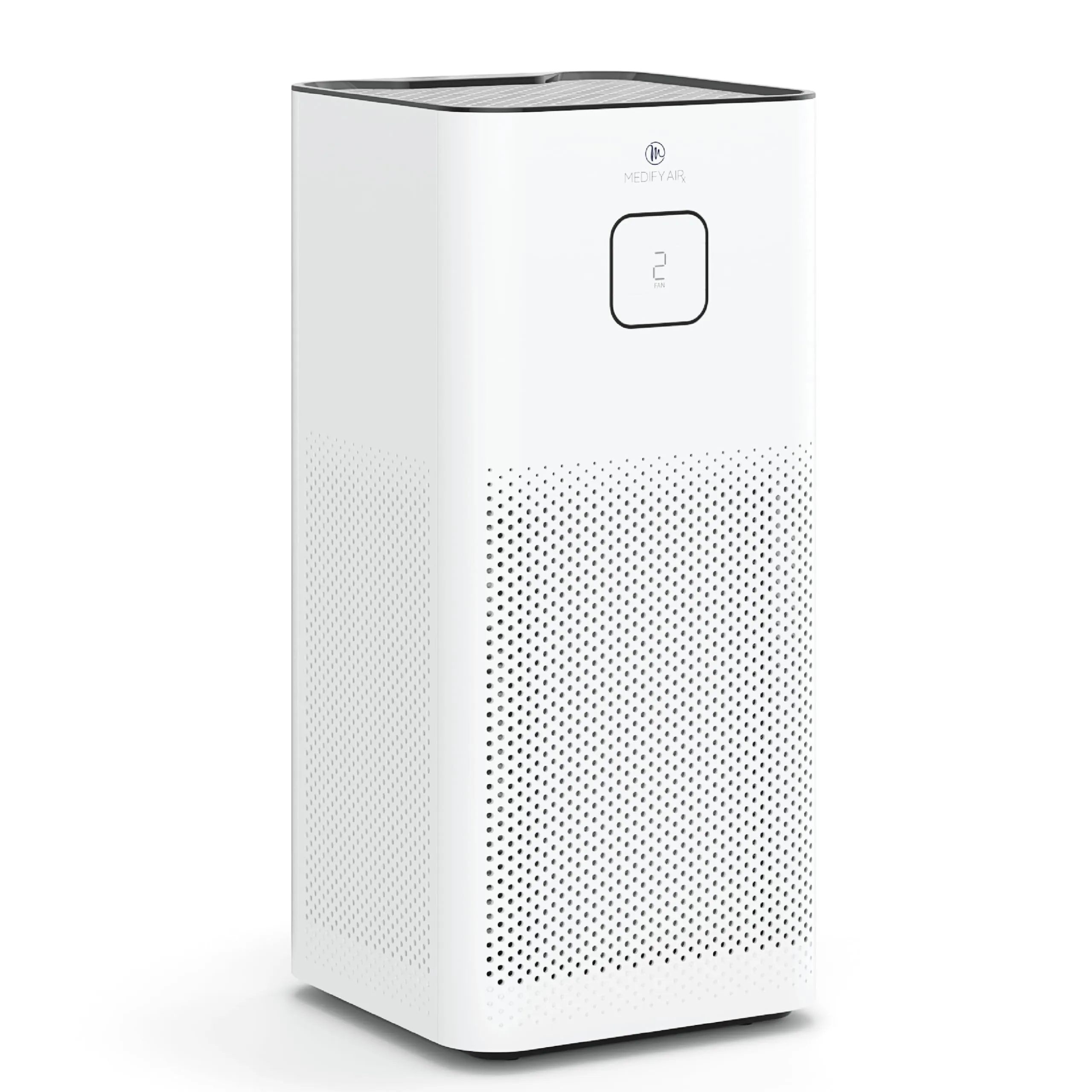
Medify MA-112 Air Purifier V3.0
- Very large stated coverage of up to 4,455 sq ft in one hour, with a CADR of 1009.
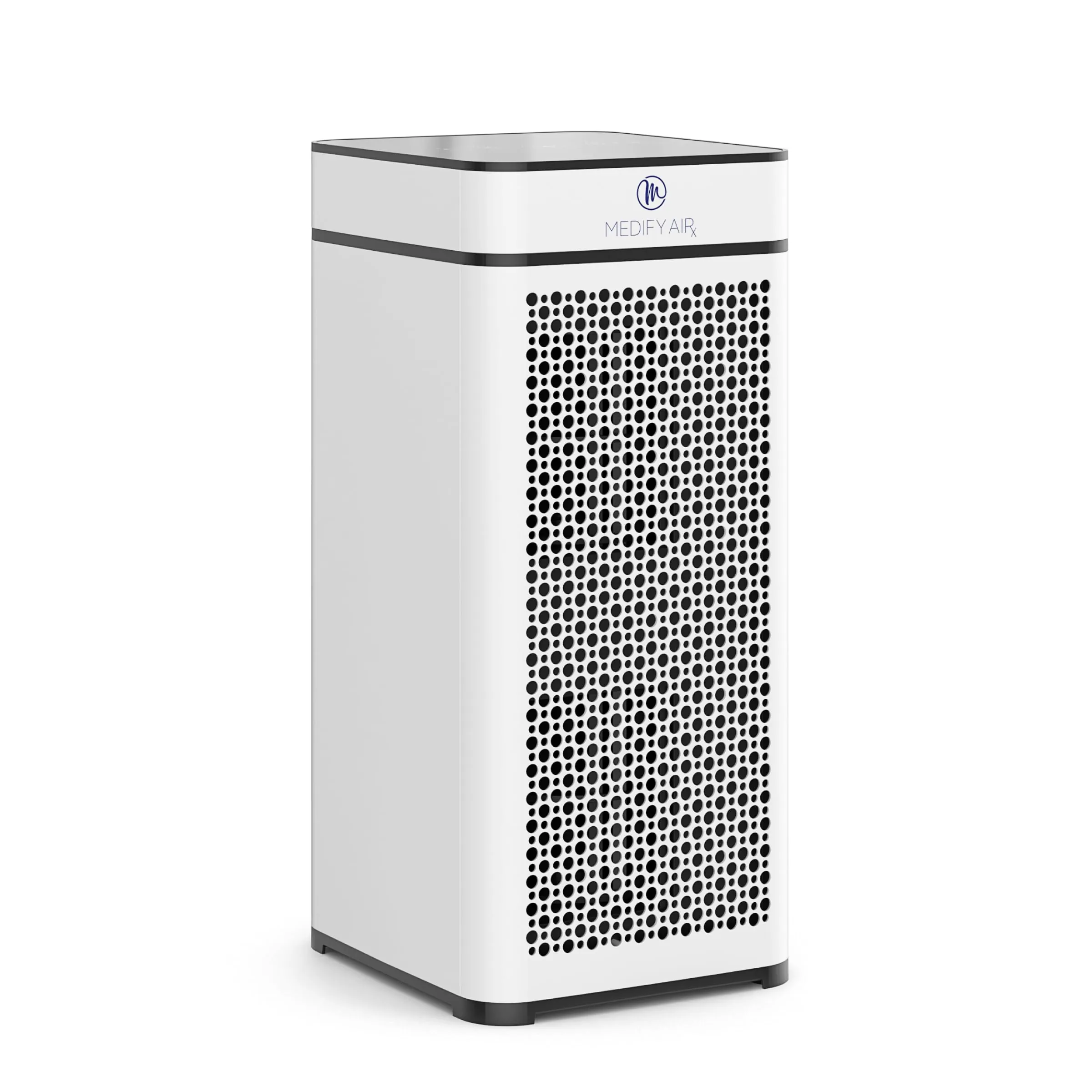
Comparison
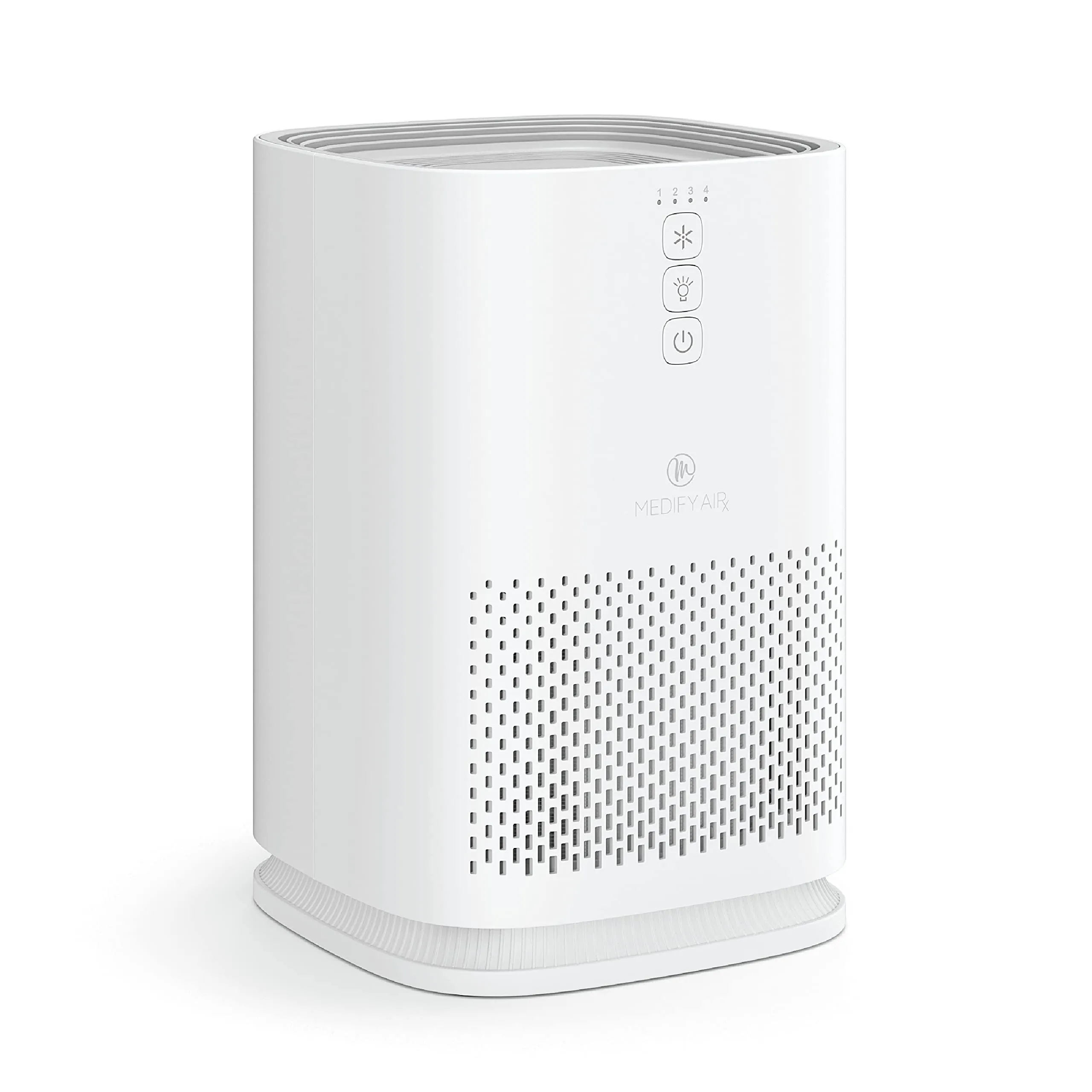
The Medify MA-112 and MA-40 are H13 HEPA air purifiers designed for homes dealing with dust, pollen, pet dander, odors and smoke. The MA-112 prioritizes very large stated coverage and sensor-led controls, while the MA-40 is the more affordable, lighter option for smaller spaces.
#1 Overall Winner
Contender
Choose the MA-112 for a large open-plan home area where its much higher stated coverage, auto mode and PM2.5 display matter. Choose the MA-40 for bedrooms, apartments and typical living rooms where lower cost, lighter weight and a lower listed maximum noise level are more useful. Both need planned filter replacements.
Overall winner
Depends on your needs
| Feature | Medify MA-112 Air Purifier V3.0 | Medify MA-40 Air Purifier | Winner |
|---|---|---|---|
| Stated one-hour coverage | Up to 4,455 sq ft |
Up to 1,793 sq ft |
Medify MA-112 Air Purifier V3.0 |
| CADR | 1009 |
406 |
Medify MA-112 Air Purifier V3.0 |
| Filtration | Dual H13 HEPA plus activated carbon |
H13 HEPA |
Medify MA-112 Air Purifier V3.0 |
| Controls | Touch panel; four speeds |
Touch panel; three speeds |
Medify MA-112 Air Purifier V3.0 |
| Automatic sensing | Dust sensor, auto mode and PM2.5 indicator listed |
Not listed |
Medify MA-112 Air Purifier V3.0 |
| Listed maximum noise | 70 dB |
66 dB |
Medify MA-40 Air Purifier |
| Weight | 32 lb |
15 lb |
Medify MA-40 Air Purifier |
| Purchase price | $594.99 |
$249.99 |
Medify MA-40 Air Purifier |
| Timer and sleep mode | 0–8 hour timer and sleep mode |
0–8 hour timer and sleep mode |
Tie |
| Filter-life guidance | About 3,000 hours or six months |
About 3,000 hours or six months |
Tie |
| Warranty | Registered lifetime warranty |
Registered lifetime warranty |
Tie |
For fixed placement in a main living area, the MA-112 offers more headroom through its much higher stated coverage and automatic sensing features. It is best treated as a large-room appliance rather than something to carry regularly. The MA-40 is more adaptable for everyday home use because it is less than half the weight and significantly cheaper. It is a sensible fit for households that want to shift one purifier between a bedroom, study and living room, provided each space is within its stated capacity.
Both purifiers are relevant to household hygiene because their listings identify dust, pollen, smoke, odors and pet dander as target contaminants. Reviews include users who perceived less cooking odor and litter-box dust, but results will depend on room layout, pollutant source and operating speed. The MA-112's greater stated airflow capacity gives it the advantage for an open kitchen-living area or a larger pet zone. The MA-40 is better suited to a contained room or a smaller shared living space.
Neither product heats, cools or controls humidity, but both can contribute to indoor comfort through air filtration. The MA-112's dust sensor and auto mode may be useful when conditions vary through the day, while its stated capacity suits a large shared space. The MA-40 is easier to position near where people sleep or work and has a lower listed maximum noise level. For either model, sleep mode is the most appropriate starting point for bedrooms.
The MA-112 has the clearer performance advantage for large-space purification based on its stated 4,455 sq ft one-hour coverage and CADR of 1009, compared with 1,793 sq ft and CADR 406 for the MA-40. Both use H13 HEPA filtration and are listed for smoke, odors, pollen, dust and pet dander. Customer feedback commonly describes noticeable odor and dust reduction, but some reports say smoke results were incomplete or difficult to verify without testing. For a room within its range, the MA-40 remains a strong option; it simply has less stated airflow capacity.
Both products have strong aggregate ratings and many positive accounts of regular use, but neither is free from reported concerns. A minority of reviews describe units with rattling, crooked seams or suspected assembly defects, and buyer noise perceptions vary. The MA-40 has a modest advantage in the available reliability assessment, though the supplied review set overlaps heavily between the listings and does not establish a clear model-specific fault pattern. In either case, test all speeds promptly and complete registration if seeking warranty coverage.
For airborne dust, odors, smoke, pollen and pet dander, both models use H13 HEPA filtration and receive broadly favorable buyer feedback. The MA-112 is the better choice for higher-demand cleaning scenarios in a large open area because it has the larger stated CADR, dual filters and automatic dust sensing. The MA-40 should perform more appropriately in smaller spaces. Neither is a replacement for removing the source of odors, smoke or dust, and isolated reviews report only partial success with smoke odor.
Both units address air quality rather than temperature or humidity. The MA-112's high stated coverage and dust sensor make it more suitable for a large living area affected by seasonal pollen, smoke or general dust. The MA-40 is a practical choice for smaller rooms where local air-cleaning support is wanted. Their stated filtration capabilities are similar; the meaningful distinction is how much air each model is designed to process.
Both models are plug-in appliances listed as CARB and ETL compliant and include a child lock, which can help prevent unintended control changes. Their sleep modes can dim panel lights for overnight use. The main practical safety consideration is handling: the MA-112 weighs 32 pounds, so it should be lifted and placed carefully; one review specifically raised concern about handling a large unit with a single handhold. Do not use either unit in conditions or locations not supported by its instructions, and keep airflow paths clear.
The MA-112 is more compelling for comfort in a large shared space because its stated airflow capacity is far greater and it can adjust through auto mode. The MA-40 is more convenient for personal comfort in a bedroom, study or smaller living room because it is easier to relocate and has a lower listed maximum noise level. Users in reviews report fresher-feeling air and less noticeable odor, but individual experiences will vary with the pollutant source and room conditions.
Both models are plug-in units with touch controls and filter-change reminders, so daily operation should be straightforward. The MA-40 is easier to handle physically at 15 pounds, particularly if it will be moved between rooms. The MA-112's auto mode can reduce manual adjustment, but its 32-pound weight makes repositioning less convenient. Reviews generally praise simple setup and use, while advising buyers to check the physical condition of any unit when it arrives.
The MA-112 is designed around high airflow and capacity, but that comes with a 32-pound form factor that is better left in one location. The MA-40's 15-pound weight makes it notably more flexible for rooms that change use during the day. Both listings provide the same stated dimensions, despite their different stated weights and coverage; buyers should verify current retailer measurements before planning a placement. The MA-112's PM2.5 display and additional controls provide more at-a-glance information.
Capacity is the most important difference. The MA-112 is listed to clean up to 4,455 sq ft in one hour and 2,228 sq ft in 30 minutes, with CADR 1009. The MA-40 is listed for up to 1,793 sq ft in one hour and 896 sq ft in 30 minutes, with CADR 406. The MA-112 is therefore the better fit for a very large open layout, while the MA-40 should be matched carefully to the intended room rather than chosen solely for a whole-home claim.
The MA-40 is the more space-efficient practical choice because its lighter body is easier to store or reposition, although both listings show the same stated dimensions. The MA-112 makes more sense when a larger appliance can remain in a central open area and replace the need for several smaller units. Buyers should confirm retailer dimensions, leave clearance around the air intake and outlet, and avoid blocking the purifier with furniture.
The MA-40 has the lower listed maximum noise level at 66 dB, compared with 70 dB for the MA-112. Both offer sleep modes and are described as quiet by some users on low settings. However, reviews for both models are mixed, with higher speeds attracting complaints about disruption. The MA-40 has a modest specification advantage for bedroom use, but either purifier may be audible when run at maximum output.
Installation is simple for both: they are plug-in air purifiers rather than fixed appliances. Place the unit where airflow is not blocked, connect it to power and select the desired fan mode or timer. The MA-112's 32-pound weight makes choosing its location before setup more important, while the MA-40 is easier to reposition after use. No app, hub, wiring or wall mounting is listed for either model.
Neither model has a decisive build-quality advantage from the available data. Both have positive owner feedback, but isolated reviews describe crooked seams, internal rattling and thin plastic parts or filter-cover releases. One review also notes that a large unit could be awkward to lift safely using a single handhold. The MA-40's lighter weight reduces the strain of moving it, while the MA-112's weight makes careful placement more important. Inspect fit, panel alignment and fan noise before the return period ends.
Long-term durability is difficult to separate from the available information. Both models require periodic filter replacement, which is a normal maintenance cost, and both have isolated reports of rattling or fragile-looking plastic elements. The MA-40's lower weight may reduce the risk associated with frequent moves. The MA-112's larger, heavier body should be placed carefully and not lifted by an insecure grip. The stated registered lifetime warranty is useful, but buyers should confirm registration requirements and keep purchase records.
Maintenance is similar in principle: both use a replacement-filter indicator and list a filter life of about 3,000 hours or six months. The filters are model-specific, so MA-112 owners need B07MTQKJ14 and MA-40 owners need B07MTQFFNT. Buyers report that filter access is straightforward, but some consider replacement filters costly. The MA-40 has a slight practical advantage because its lighter body is easier to shift if access is needed around the unit.
The MA-40 is the clear portability winner at 15 pounds. It is better suited to households that want one unit to serve multiple rooms. At 32 pounds, the MA-112 is more than twice as heavy and is best positioned as a main-area purifier. Its greater capacity is useful once placed, but it is not the convenient choice for frequent carrying or quick room-to-room changes.
Both models offer touch controls, a 0–8 hour timer, sleep mode, filter replacement indicator and child lock. The MA-112 is more fully equipped, adding four fan speeds, auto mode, a dust sensor, PM2.5 pollution indicator and an optional ionizer. The MA-40 has three fan speeds and focuses on direct manual operation. The MA-112 is preferable for buyers who want the unit to respond to detected particles, while the MA-40 will suit users who prefer a simpler set of controls and do not need air-quality feedback.
The MA-112 offers meaningful hands-off operation through its listed dust sensor and auto mode, allowing fan behavior to respond to detected airborne particles. The MA-40 has a timer but does not list sensor-based automation or auto mode. Both can be scheduled for a set period with the 0–8 hour timer. Choose the MA-112 if automatic response is important; choose the MA-40 if manual speed selection is sufficient.
Both listings specify 95 watts and filter replacement after approximately 3,000 hours or six months, so neither has a clear documented power-use advantage. The MA-112 may clear a very large space more quickly because of its much higher stated CADR, which can be operationally efficient in that setting. The MA-40 is the more proportionate option when only a smaller room needs treatment. Filter purchases remain an important running cost for both models, with some buyers describing replacements as expensive.
The MA-40 provides better value for many households because it costs $249.99, is much lighter and still offers H13 HEPA filtration, sleep mode, a timer, child lock and substantial stated room coverage. The MA-112 costs $594.99 but delivers far greater stated coverage, a higher CADR and useful sensor-led features that can be worthwhile in a very large space. Neither should be judged only by the purchase price: both require model-specific replacement filters about every six months, and buyers describe those ongoing costs as potentially high.
Both products come from Medify Air and list the same CARB and ETL compliance information and registered lifetime warranty, so there is no meaningful brand distinction. Aggregate ratings are strong, and many buyers report easy use and perceived benefits. However, isolated accounts of defective or rattling units and concerns about communication mean buyers should not rely on brand name alone. Check the delivered product carefully, retain documentation and register promptly if the warranty terms are important.
The two listings show the same strong aggregate rating and review count, with recurring praise for simple setup, odor reduction and perceived improvements in air freshness. Owners also value sleep mode and the availability of replacement filters. Satisfaction is not universal: noise is a frequent mixed point, especially at higher speeds, while filter cost is a recurring value concern. A small number of reviews describe quality-control problems such as rattling or poor fit. Because the supplied review content overlaps between listings, it does not establish a clear satisfaction winner.
Both listings state a USA registered lifetime warranty and approximately six months of filter life. The available reviews suggest registering promptly and checking the requirements, as one buyer noted a missed registration window while dealing with defective units. Some feedback also mentions unsatisfactory communication or complicated returns. Keep the order details, verify the registration process and inspect the unit immediately after delivery.
Neither purifier is universally better, but the MA-112 wins on capacity and control. Its stated 4,455 sq ft one-hour coverage, CADR of 1009, dual H13 HEPA filtration and sensor-based auto operation make it the stronger choice for a very large shared space. Its limitations are the high upfront price, heavy 32-pound body and mixed noise and quality-control feedback. The MA-40 is the more sensible choice for most smaller homes and individual rooms. It offers the same core H13 filtration approach, a lower listed maximum noise level and much better portability at a lower price. Its main limitation is lower stated coverage and fewer automatic features. Match the model to room size rather than buying extra capacity by default.
Overall winner
Depends on your needs
The MA-112 is the stronger choice for very large areas and buyers who want auto mode, a dust sensor and a PM2.5 indicator. The MA-40 is the more practical choice when its stated coverage is sufficient, because it costs less and weighs far less. Both offer H13 HEPA filtration and similar core convenience features.
The MA-112 is better suited to a very large open-plan area based on its stated 4,455 sq ft one-hour coverage and CADR of 1009. The MA-40 is rated for up to 1,793 sq ft in one hour, which may suit many living rooms but is a lower-capacity option.
Yes. The MA-40 is listed at 15 pounds, while the MA-112 weighs 32 pounds. That difference makes the MA-40 more convenient for moving between a bedroom, office and living room. The MA-112 is better treated as a more permanent purifier for a main area.
The MA-112 has the broader set of automatic features. Its listing includes a dust sensor, auto mode and a PM2.5 pollution indicator, in addition to a timer and sleep mode. The MA-40 includes a timer, sleep mode, fan-speed control, filter indicator and child lock, but does not list those sensor-led controls.
Both have sleep modes intended to dim the control-panel lights and operate at low speed. The MA-40 has a lower listed maximum noise level, but buyer feedback for both models is mixed: some find low settings unobtrusive while others find higher settings too loud for sleep. Consider using low or sleep mode overnight.
No. The MA-112 uses replacement filter B07MTQKJ14, while the MA-40 uses B07MTQFFNT. Each listing states approximately 3,000 hours, or about six months, of filter life. Check the correct model number before ordering, and include replacement-filter costs in your ownership budget.
The MA-40 offers the stronger value proposition for households that do not need the MA-112's much larger stated coverage or sensor-based features. Its lower purchase price and lighter design are meaningful advantages. The MA-112 can justify its higher cost when its greater airflow capacity and extra controls will be used in a large space.
Run the purifier at several speeds, check that the panels and filter covers fit correctly, and listen for unusual rattling. Although many buyers are satisfied, some reviews describe assembly or rattling issues on individual units. Buyers should also register the product promptly if they intend to use the stated lifetime warranty.
Check our rankings and expert guides to find the best home lifestyle products for your goals.