#1 Overall Winner
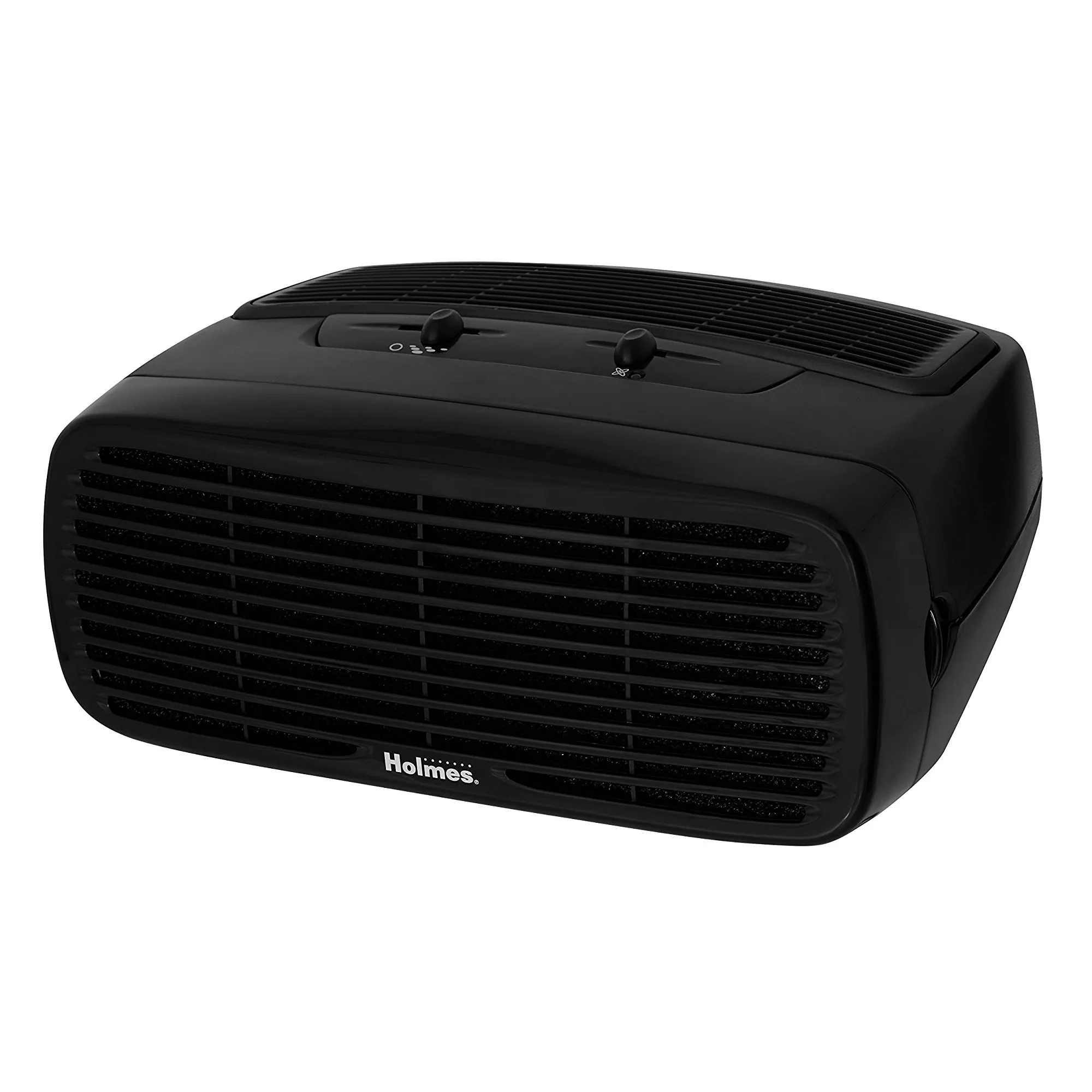
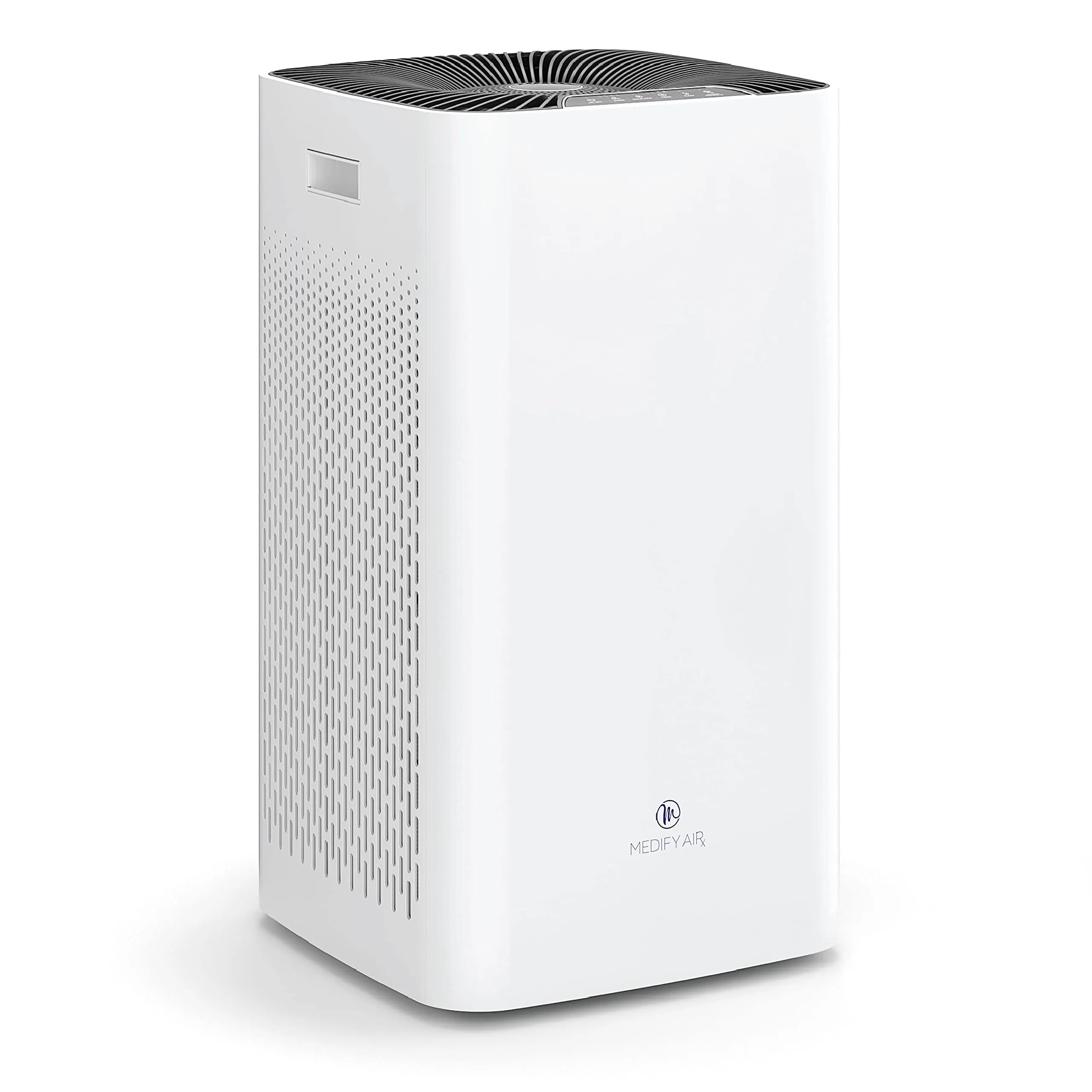
Holmes Desktop HEPA-Type Air Purifier (HAP242B-U)
- Compact desktop format with vertical or horizontal placement.
Comparison
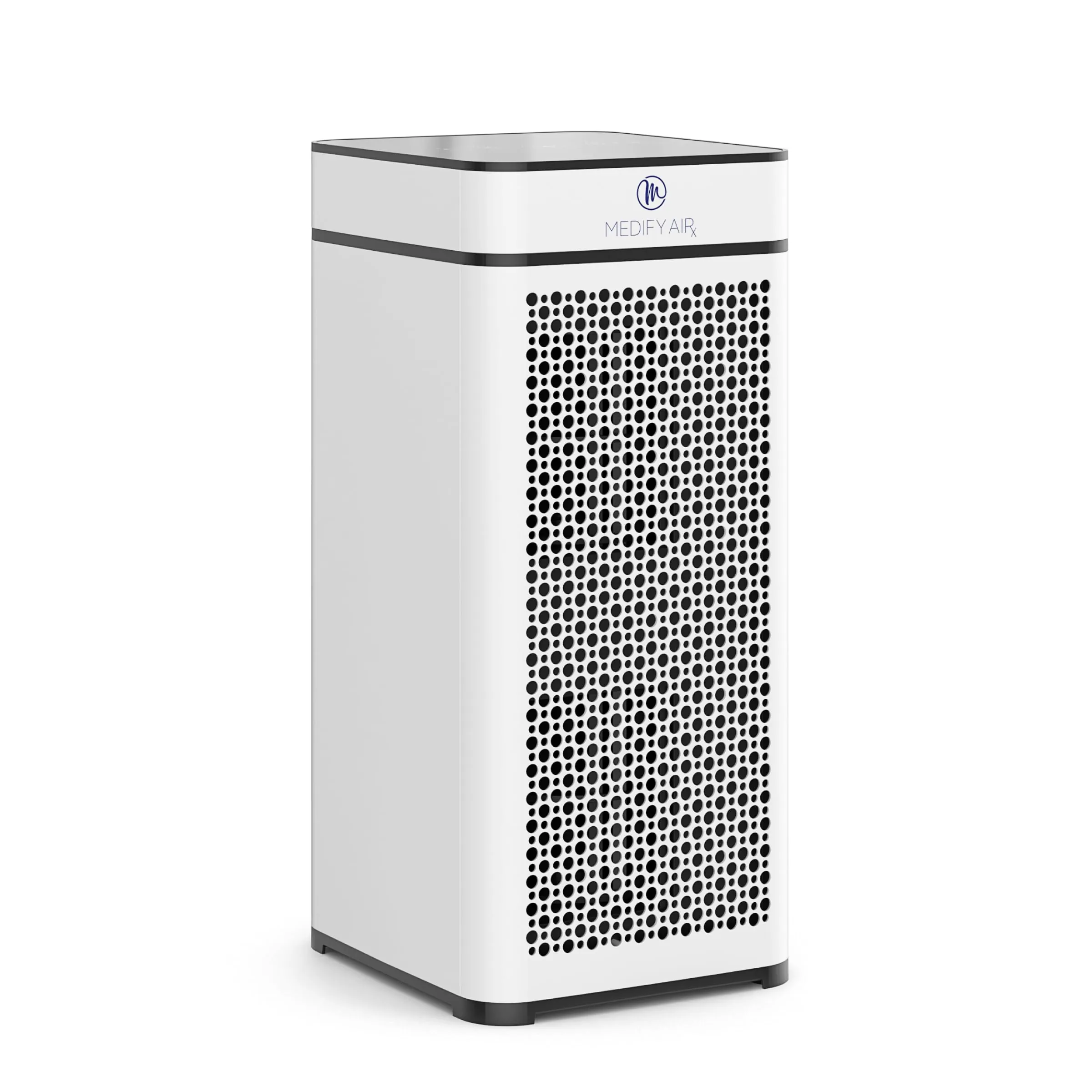
The Holmes HAP242B-U is a compact, lower-cost HEPA-Type purifier aimed at desks and small rooms, while the Medify MA-14 is designed for larger spaces with a listed H13 True HEPA filter and higher CADR. Medify offers more coverage and nighttime features, whereas Holmes is the more budget-friendly choice for focused small-room use.
#1 Overall Winner
Contender
Choose the Holmes HAP242B-U for affordable, compact filtration close to where you work or sleep in a small room. Choose the Medify MA-14 for larger stated coverage, a listed H13 filter, and more useful nighttime controls. For most homes needing one purifier for a full bedroom or living area, Medify is the stronger option.
Overall winner
Depends on your needs
| Feature | Holmes Desktop HEPA-Type Air Purifier (HAP242B-U) | Medify MA-14 Air Purifier | Winner |
|---|---|---|---|
| Filtration specification | HEPA-Type; listed capture as small as 2 microns | True HEPA H13; listed down to 0.1 microns | Medify MA-14 Air Purifier |
| Listed CADR | 70 | 120 | Medify MA-14 Air Purifier |
| Stated coverage | Up to 109 sq. ft. | Up to 470 sq. ft. in one hour | Medify MA-14 Air Purifier |
| Fan speeds | 3 speeds | 3 speeds | Tie |
| Night features | No dedicated sleep mode listed | Sleep mode and dimmable panel lights | Medify MA-14 Air Purifier |
| Placement flexibility | Vertical or horizontal placement | Lightweight portable tabletop design | Depends |
| Noise | 70 dB listed; feedback varies | Up to 55 dB listed; feedback varies | Medify MA-14 Air Purifier |
| Filter maintenance | Replacement frequency rises with frequent use | Indicator; filter listed for 2,500 hours | Medify MA-14 Air Purifier |
| Upfront price | $45.05 | $99.99 | Holmes Desktop HEPA-Type Air Purifier (HAP242B-U) |
| Replacement-filter cost feedback | Often described as inexpensive | Some buyers describe filters as expensive | Holmes Desktop HEPA-Type Air Purifier (HAP242B-U) |
| Warranty | 3-year limited warranty | Lifetime warranty listed | Medify MA-14 Air Purifier |
| Reliability feedback | Generally positive long-term comments | Strong results but some rattling and assembly complaints | Holmes Desktop HEPA-Type Air Purifier (HAP242B-U) |
For everyday home use, the Holmes is most practical as a personal or single-room purifier: on a desk, near a bed, or in a small office. Its slim format is useful where surface space is limited. The Medify is the more flexible whole-room choice because its stated coverage reaches beyond a compact bedroom and its controls better support day and night use. Neither is a whole-home system, and both work best when placed in an appropriately sized enclosed room rather than expected to clean several open areas equally.
Both products are relevant to home hygiene because they are intended to reduce airborne dust, pollen, smoke, pet dander, and some odor-related particles. The Medify has the stronger listed filtration and air-delivery specifications, making it more suitable for a larger shared area affected by pet litter, cooking smells, or dust. The Holmes is better treated as a focused small-room unit. Neither replaces source control, cleaning surfaces, or ventilation where those are needed.
Neither purifier heats or cools a room, but both can improve perceived comfort by circulating air and reducing airborne particles in their intended spaces. Holmes buyers often describe easier breathing and less dust in compact rooms, although fan airflow may make a room feel cooler. Medify buyers similarly report fresher air and less stuffiness, with sleep mode offering a more discreet overnight setting. Medify is the stronger comfort choice for a larger bedroom or living space; Holmes is well suited to close-range use.
Medify has the stronger stated air-cleaning capability, combining a listed CADR of 120, coverage up to 470 sq. ft. in one hour, and an H13 True HEPA filter specified down to 0.1 microns. Reviews often report a noticeable difference in air freshness, odors, and allergy-related comfort, though one buyer found smoke treatment only partly effective. Holmes performs well within its smaller brief: its 70 CADR and up-to-109-sq.-ft. recommendation align with reports of reduced dust and improved air in small bedrooms and offices. It should not be expected to deliver the same results in larger rooms.
Holmes has stronger reliability signals in the supplied material. Multiple buyers describe using units for months or years, and one reviewer reported continuous operation without rattling or unusual sounds. Medify's working units are often praised for effective cleaning, but several reviews flag quality-control issues, including rattling, loose internal parts, and uneven assembly. These reports do not establish a universal fault pattern, yet they make it sensible to inspect a Medify unit immediately after delivery and retain purchase documentation for warranty use.
For airborne-particle cleaning, Medify is better specified: its H13 True HEPA filter is listed to remove particles down to 0.1 microns, and its higher CADR supports faster air turnover in a larger room. Holmes is described as capturing particles as small as 2 microns and has strong small-room reports for dust and allergens. Its performance is more dependent on close placement and realistic room sizing. Both have mixed odor feedback, so neither should be bought solely for difficult odor sources.
These are air-cleaning rather than temperature-control appliances. Their contribution to climate comfort is indirect, through filtration and fan-driven air circulation. The Holmes is better matched to a compact office or bedroom where its lower capacity is enough. Medify is the stronger choice for improving perceived air freshness over a larger room. Some users note that purifier airflow can make a room feel cooler, so placement should avoid directing airflow at a sleeping or seated person if that is uncomfortable.
Both are corded electrical appliances and should be used according to their instructions, on a stable surface with unobstructed air intake and outlet. Holmes includes an optional ionizer, so users who do not want to use that function can leave it switched off; its core filtration does not require the ionizer. Medify lists CARB and ETL status and provides a filter indicator that can help prevent extended use of an overdue filter. The supplied reviews do not establish a broad overheating issue for either product, though Medify buyers should inspect for rattling or loose parts on arrival.
Both models receive feedback describing more comfortable indoor air, including less dust, fresher-feeling rooms, and relief from stuffiness or allergy-related symptoms. Holmes is effective where the user is near the unit in a small enclosed space. Medify offers more comfort potential across a larger room and adds sleep mode with dimmed lights, which is useful in bedrooms and nurseries. Comfort gains are dependent on correct room sizing and are not a substitute for addressing the source of smoke, dampness, or allergens.
Both purifiers are straightforward plug-in appliances with simple speed controls. The Holmes is easy to place because it can stand in either orientation, although users need to monitor filter condition themselves. Medify adds a filter indicator and dedicated sleep and lighting controls, which reduce guesswork in daily use. Reviews describe Medify as quick to set up and simple to operate. For basic operation they are closely matched, but Medify offers more guidance for upkeep.
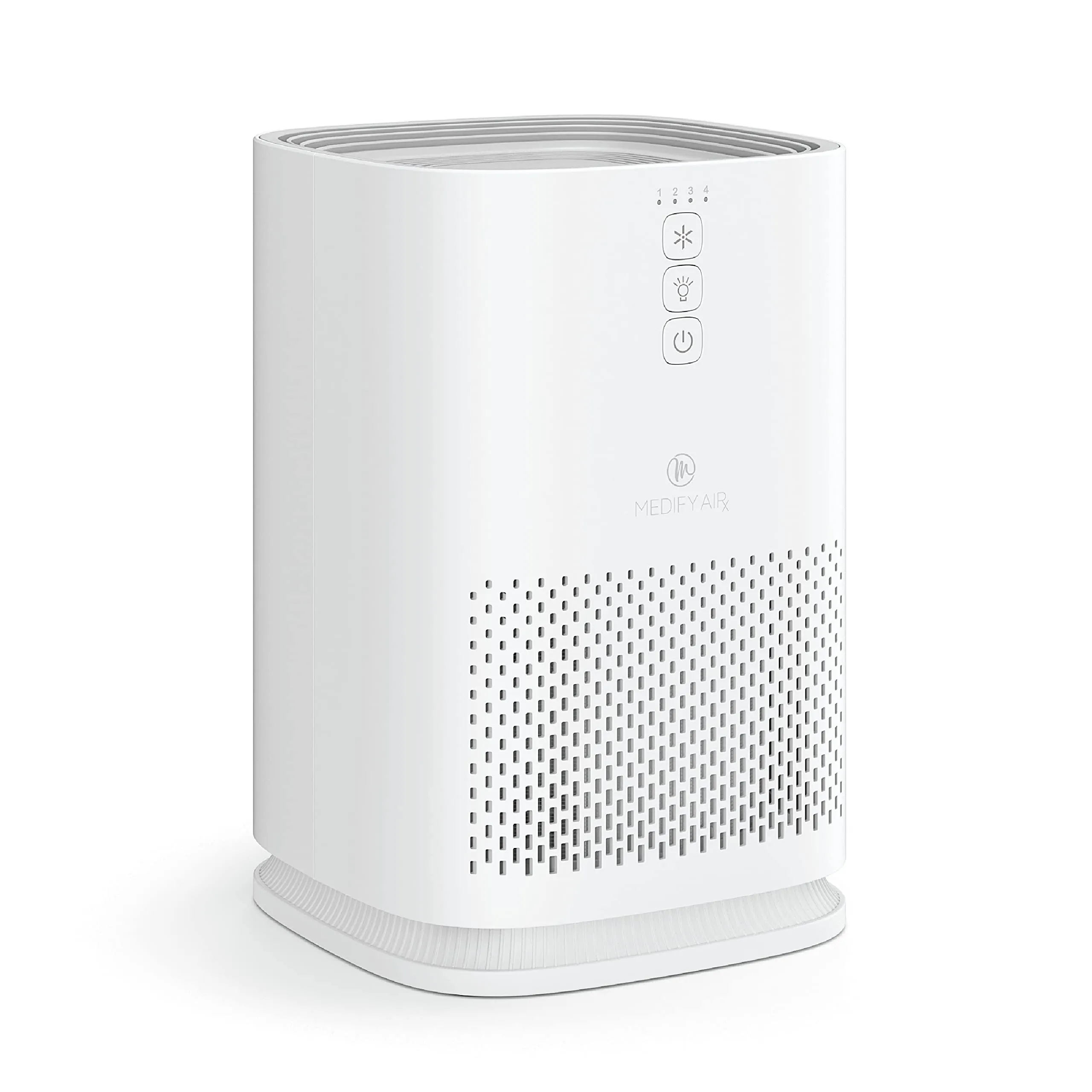
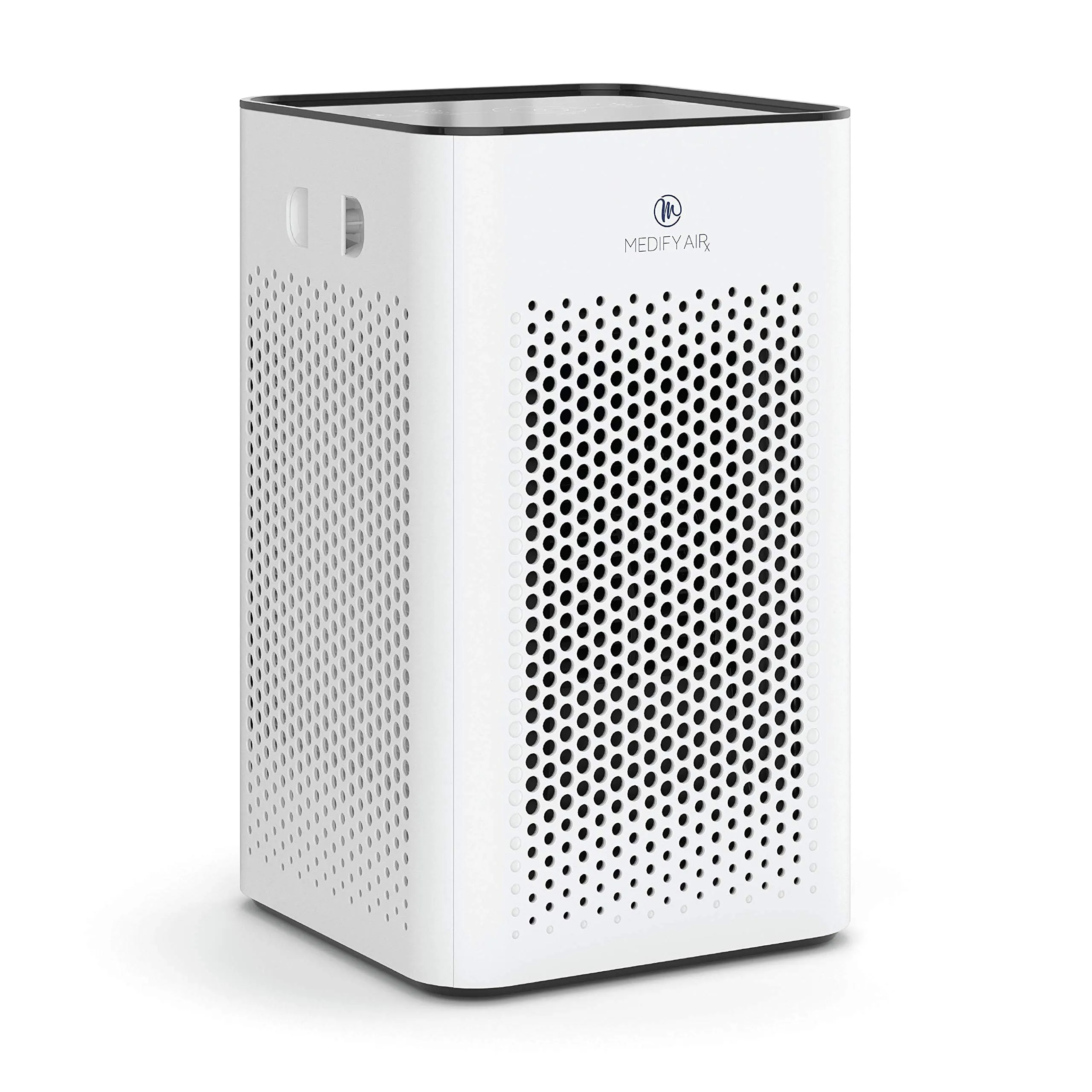
Holmes prioritizes compact placement, with a slim body that can be positioned vertically or horizontally on a desk or table. This is useful in crowded offices and small bedrooms. Medify is also light enough to carry between rooms and has a more polished control-panel design, plus dimmable lights for nighttime use. Its reported dimensions are larger, so it is less suited to a narrow desktop. Choose Holmes for placement flexibility and Medify for a room-facing design with more night-use controls.
Coverage is a decisive difference. Holmes is recommended for rooms up to 109 sq. ft., making it appropriate for a small bedroom, office, or close-to-source placement. Medify claims to clean up to 470 sq. ft. in one hour, so it has more capacity for a typical bedroom, nursery, office, or modest shared room. Real-world results will depend on room layout, doors, pollution sources, and placement, but Medify has considerably more stated headroom.
Both score well for space efficiency, but Holmes is the better option for a tight desktop, bedside table, or small office because of its slim format and flexible orientation. Medify remains compact enough for tabletop use and offers far more stated room coverage, which can reduce the need for multiple small purifiers. In a very small space, choose based on available surface area; in a larger bedroom, Medify makes better use of its footprint.
Medify lists a lower maximum noise figure and provides sleep mode, which gives it an advantage for low-distraction use. However, reviews for both models are mixed: some users find each quiet at lower settings, while higher speeds can be clearly audible. Holmes reviewers commonly treat low as suitable overnight, but one compared high-speed sound to a box fan. Medify users similarly report that maximum speed can be loud. Either is best run on a lower setting while sleeping.
Neither purifier needs permanent installation. Both are plug-in units with direct onboard controls, so initial setup is limited to choosing a stable position with airflow around the unit and fitting the supplied filter as directed. Holmes has an advantage where placement is awkward because it can be used vertically or horizontally. Medify is lightweight and easy to relocate, but a review notes that its single handhold can make carrying it less balanced. No app or network setup is required.
Holmes has generally favorable durability feedback, including reports of units running continuously without rattling or unusual noises. Its three-year limited warranty also provides defined coverage. Medify has a modern glass-topped control area and many satisfied users, but the supplied reviews include isolated reports of crooked seams, internal rattling, and thin plastic filter-cover releases. The Medify lifetime warranty is a notable support advantage, but its quality-control feedback makes Holmes the more reassuring choice for physical consistency.
Holmes buyers include longer-term comments from users who run several units, suggesting reasonable durability for a basic small-room purifier. Its filter needs can rise with heavy use, but replacement filters are reported as accessible in cost. Medify has a listed lifetime warranty, but durability confidence is moderated by reports of fragile filter-cover releases and received units with rattling. The Medify may be the more fully featured appliance, while Holmes has the cleaner record in the supplied reviews for uneventful sustained operation.
Both models need recurring filter changes, particularly in dusty homes or rooms with pets or smoke. Medify is easier to manage because it has a filter-replacement indicator and specifies a filter life of around 2,500 hours, though replacement filters add a notable recurring expense. Holmes requires more owner attention to usage and filter condition; users say frequent operation can mean frequent changes. Its lower reported filter cost can make that trade-off easier to accept for a small-room setup.
Both are portable, but they excel in different ways. Holmes is compact and can be placed in two orientations, making it easy to fit on a desk, tabletop, or shelf. Medify is listed at 2.4 pounds and is frequently described as light enough to move room to room. Its wider coverage makes moving it between bedrooms or shared areas more practical, although its larger stated footprint and single handhold may be less convenient than the weight suggests.
Both models use touch controls and three fan speeds. Holmes keeps the feature set simple with an optional ionizer and the unusual benefit of vertical or horizontal placement. Medify adds a sleep mode, dimmable control-panel lights, a night light, and a filter-replacement indicator. These additions make Medify easier to tailor for bedroom use and planned maintenance. Neither product provides app control, Wi-Fi connectivity, voice control, or smart-home integration in the supplied details.
Holmes uses 45 watts, while Medify is listed at 95 watts. Holmes therefore has the lower stated power draw, which may matter for continuous use in a small room. Medify uses more power but also has a higher listed CADR and wider coverage, so its greater consumption accompanies a more capable stated airflow role. Filter running costs are also important: Holmes buyers often call replacements inexpensive, whereas Medify filters are regularly described as costly.
Holmes is the stronger value choice when the intended area is genuinely small. Its lower purchase price, compact design, strong buyer satisfaction, and reportedly inexpensive filters make it economical for a desk, office, or small bedroom. Medify costs more upfront and has more expensive replacement filters, so it is not automatically the better bargain. However, it provides a higher listed CADR, much broader stated coverage, H13 filtration, sleep mode, and a lifetime warranty. For a larger room, those additions can make Medify the more cost-effective single-unit purchase.
Both products have substantial review volumes and the same strong average star rating in the supplied data. Holmes benefits from repeated buyer comments about owning multiple units over time and has a clear three-year limited warranty. Medify provides more detailed filtration, certification, and warranty information, including listed CARB and ETL status and a lifetime warranty. However, the reported assembly and shipment-quality issues mean buyers should verify the condition of a Medify unit promptly after it arrives.
Customer sentiment is very positive for both, with each product showing a 4.6 out of 5 average rating. Holmes buyers especially praise small-room effectiveness, portability, allergy comfort, dust reduction, and low replacement-filter cost. Criticism centers on variable noise and inconsistent odor results. Medify buyers frequently praise its noticeable air-quality effect, simple controls, nighttime operation, and room-to-room portability. Its recurring concerns are higher filter expense, noise at stronger settings, and a small number of rattling or defective-unit reports. Medify has slightly broader satisfaction signals, but Holmes feedback is more consistent on build reliability.
Holmes includes a three-year limited warranty, providing defined coverage for a budget-oriented purifier. Medify lists a lifetime warranty, which is a significant advantage on paper, but one reviewer stressed the importance of registering promptly and described communication concerns around an order. Medify buyers should check registration requirements and inspect the purifier immediately. Holmes is simpler from a lower-cost perspective, while Medify offers the more extensive stated warranty.
The Medify MA-14 clearly wins for most buyers seeking a primary air purifier for a bedroom or small-to-medium room. Its main strengths are its higher listed CADR, substantially broader stated coverage, H13 True HEPA specification, and useful sleep and maintenance features. Its main limitations are the higher price, ongoing filter expense, and some reported build-quality inconsistencies.
The Holmes HAP242B-U is not a direct replacement for Medify in a larger room, but it is a sensible small-space alternative. Its strengths are low cost, compact flexible placement, and favorable small-room feedback. Its limitations are its smaller coverage claim and HEPA-Type filtration. Pick Holmes for focused budget use; pick Medify for wider everyday coverage.

Overall winner
Depends on your needs
The Medify MA-14 is the stronger overall choice for buyers who need broader listed coverage, a higher listed CADR, and H13 True HEPA filtration. The Holmes HAP242B-U remains a sensible lower-cost option for a desk, small bedroom, or other compact space where its smaller coverage is sufficient.
Either can suit a small bedroom, but the decision depends on priorities. The Holmes is designed for rooms up to 109 sq. ft. and has a slim, flexible orientation. The Medify adds sleep mode and dimmable lights, while its stated capacity gives more headroom if the bedroom is larger.
Medify lists a lower maximum noise figure and includes a sleep mode, so it has the more bedroom-focused control set. However, buyer feedback for both models is mixed at higher speeds. The Holmes is often described as quiet on low, while Medify users also report that its stronger settings can be noticeable.
The Holmes is described as a HEPA-Type purifier that captures particles as small as 2 microns. Medify lists a True HEPA H13 filter tested to remove particles down to 0.1 microns. These stated specifications make Medify the more suitable choice when finer-particle filtration is the priority.
Both require periodic filter replacement. Medify provides a filter-replacement indicator and states a filter life of about 2,500 hours, or roughly three to four months. Holmes buyers report that filters need changing more often with continuous use, although they also commonly describe replacements as inexpensive.
The Holmes offers better value for a small area because it costs less initially, has strong small-room feedback, and has reportedly affordable filters. The Medify costs more and may require pricier filters, but its broader stated coverage, H13 filter specification, and additional nighttime controls can justify the extra cost for larger rooms.
Both products are marketed for smoke and odor-related use, and reviews include reports of fresher air. Results are not uniform: Holmes buyers have mixed odor-removal feedback, and some Medify feedback says smoke odor removal was only partial. Placement near the source and matching the purifier to room size matter.
No. The Medify is specifically listed as not smart-home compatible, and no app, Wi-Fi, or voice-assistant features are provided for either model. Their controls are designed for direct use on the unit, with selectable fan speeds and basic operating functions.
Check our rankings and expert guides to find the best home lifestyle products for your goals.