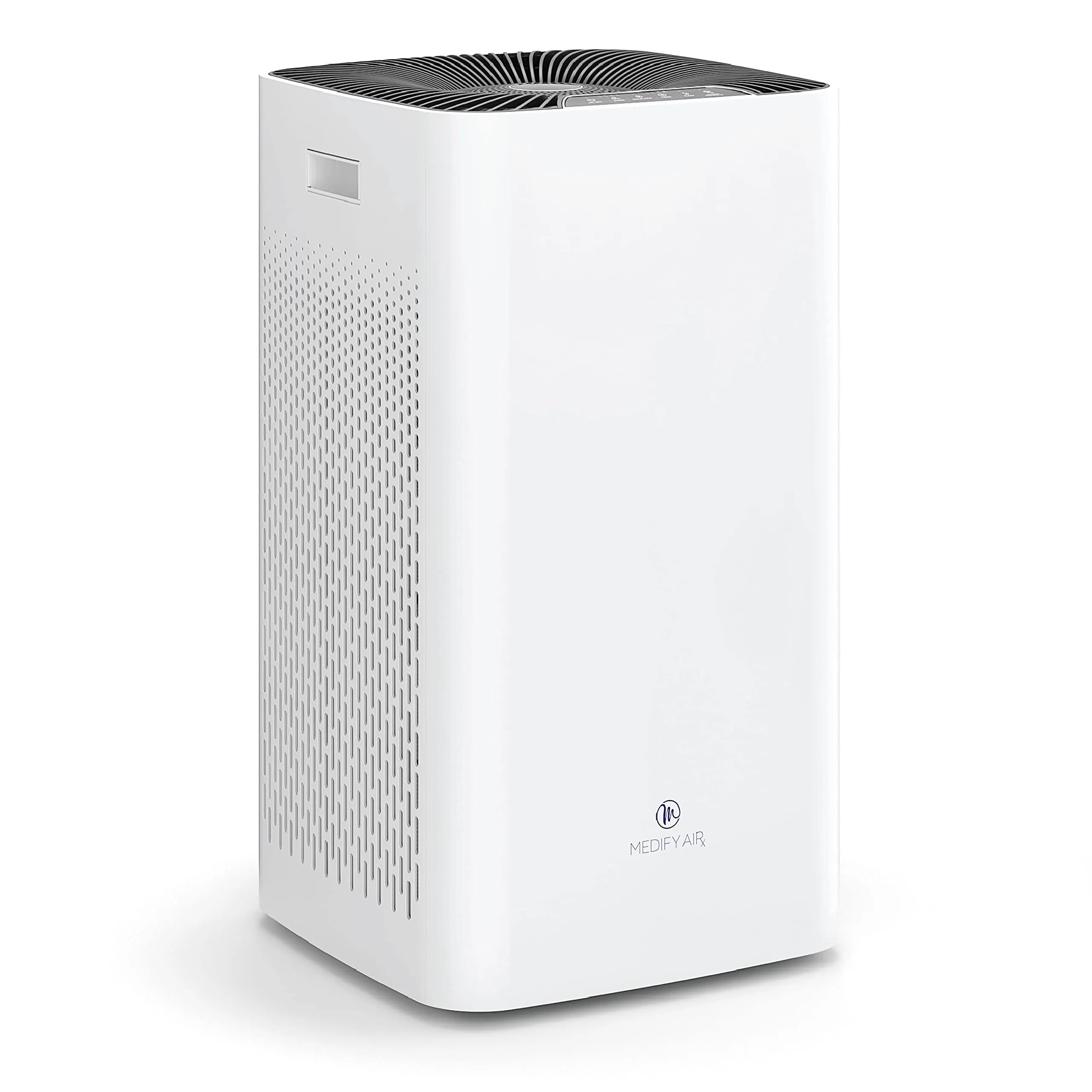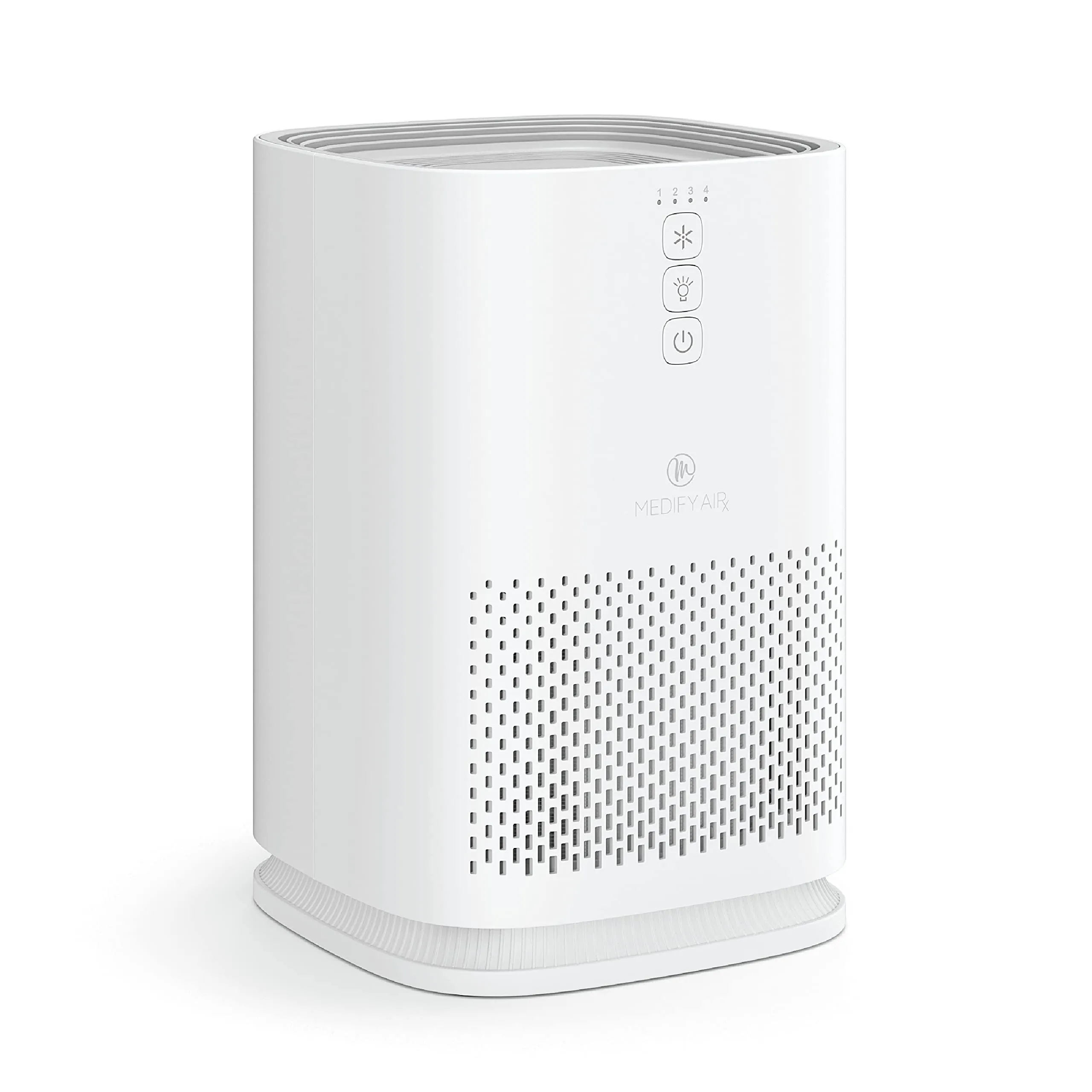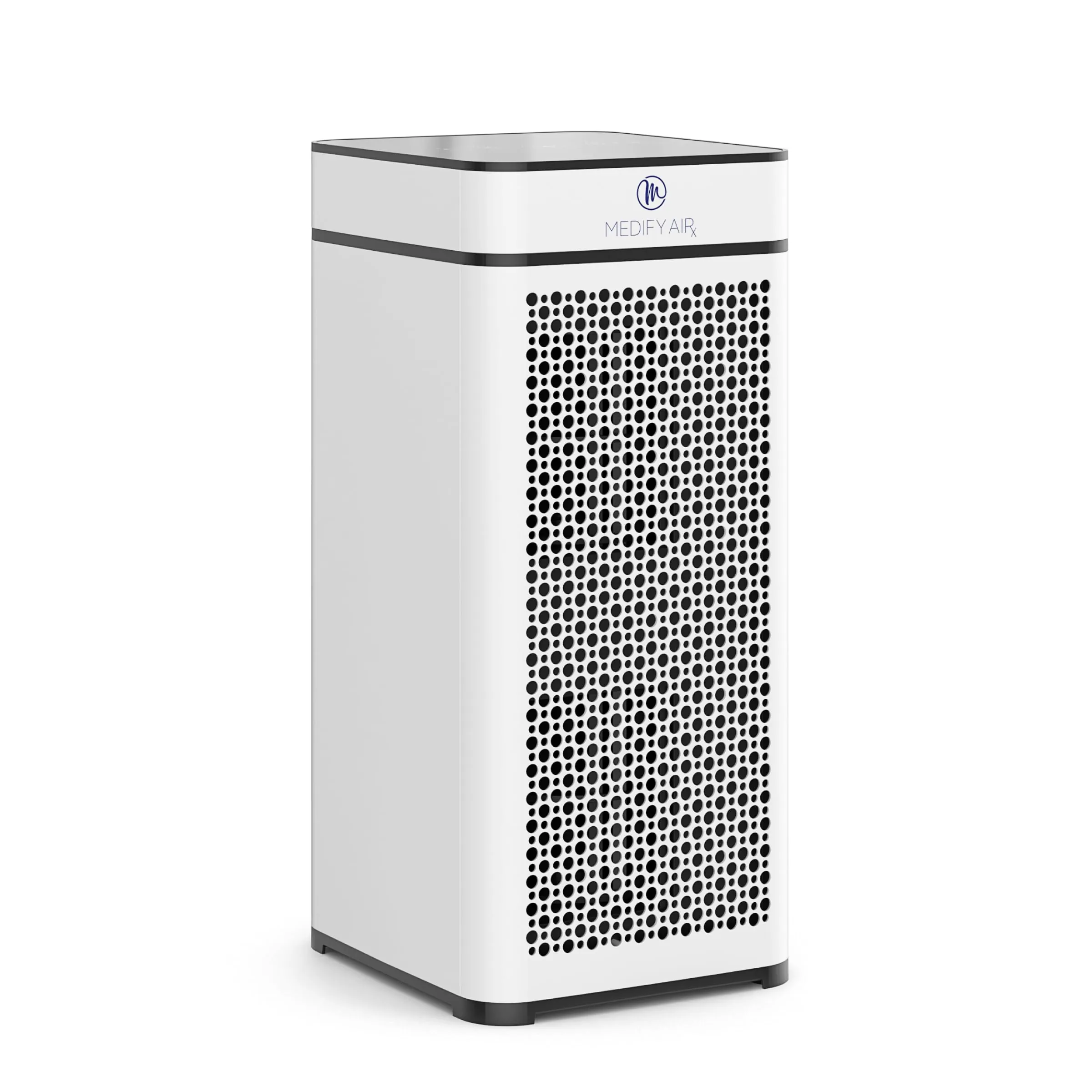
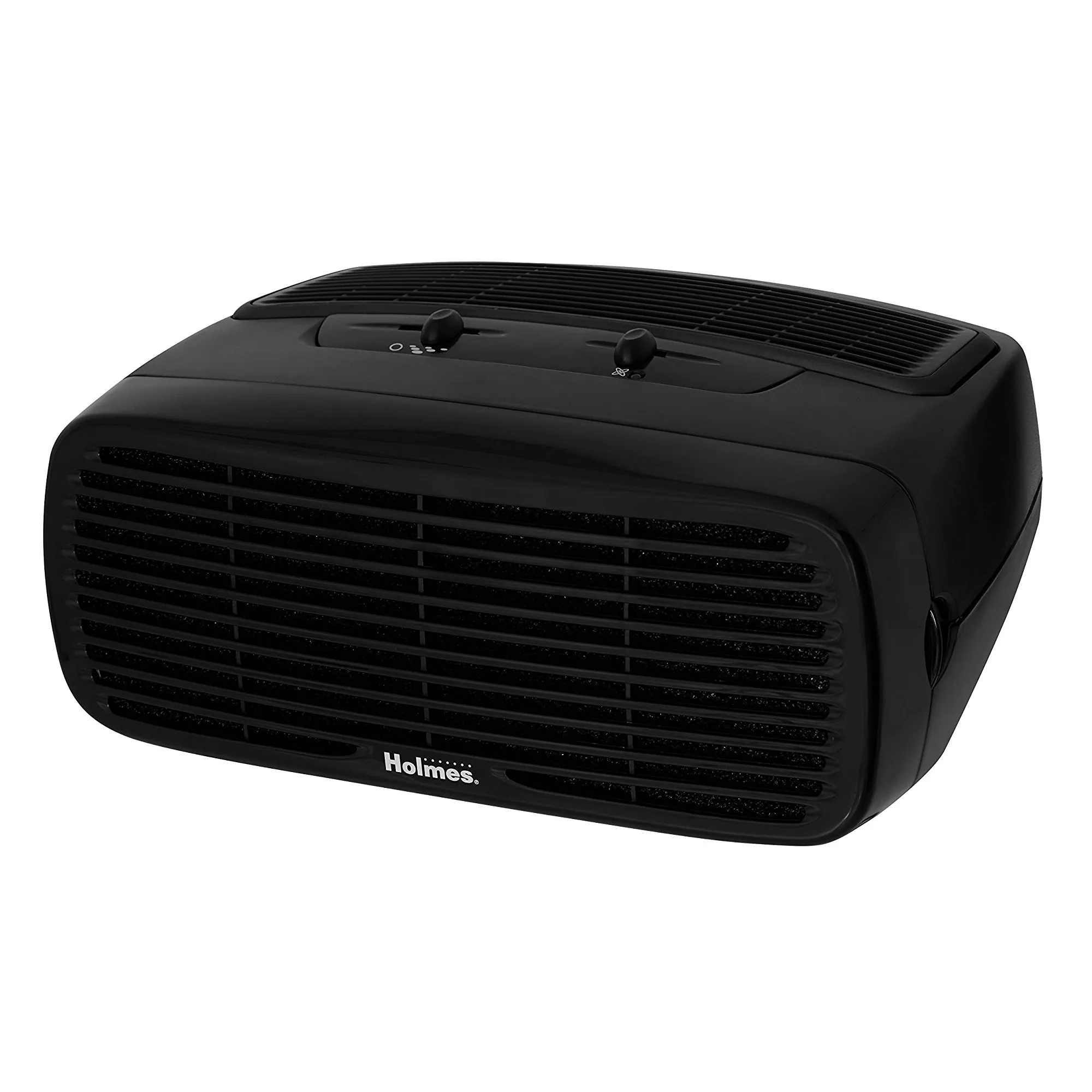
#1 Overall Winner
Holmes Desktop HEPA-Type Air Purifier with Optional Ionizer (HAP242B-U)
- Compact desktop format with vertical or horizontal placement.
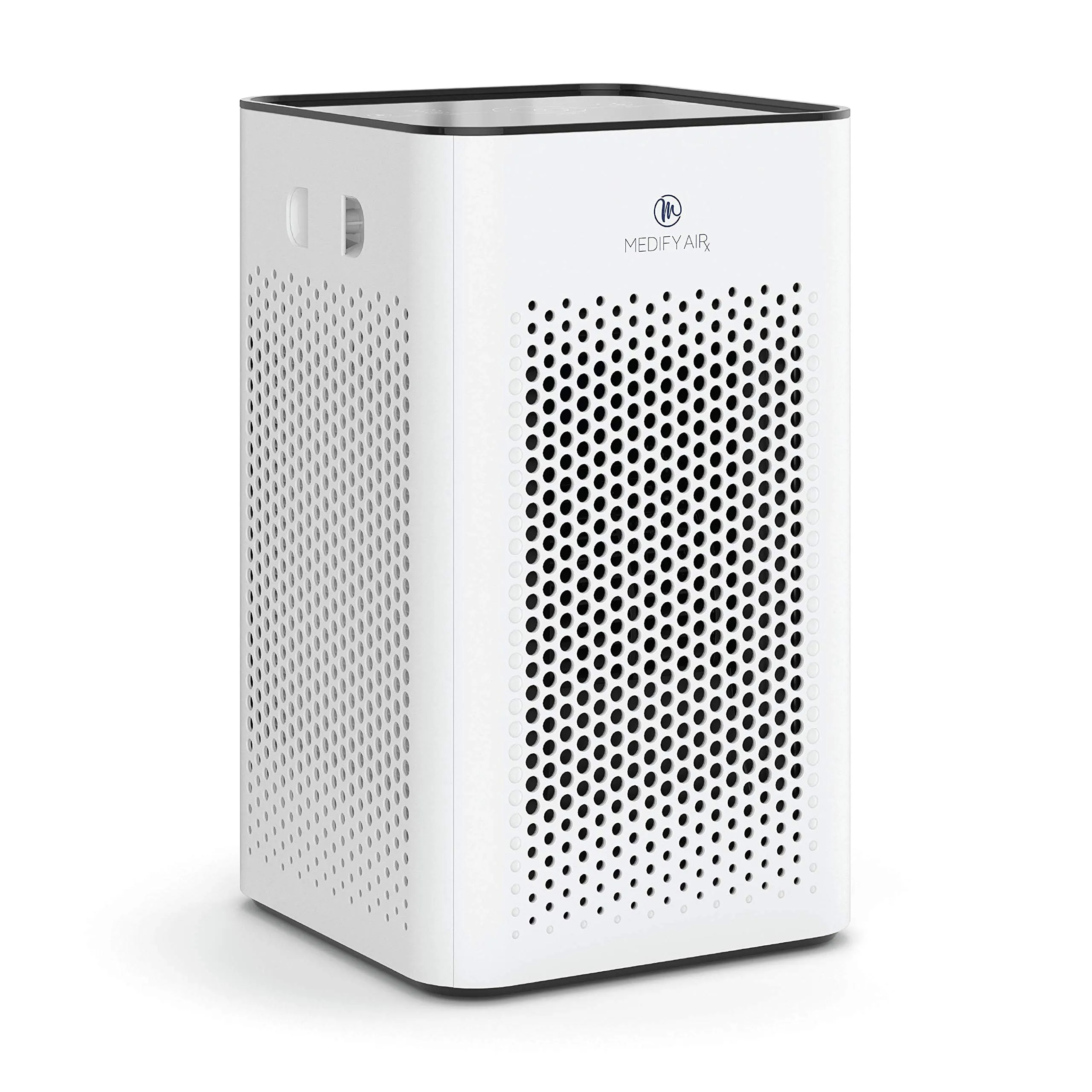
Comparison
The Holmes HAP242B-U is a compact, lower-cost HEPA-type purifier aimed at desks and small rooms, while the Medify MA-25 is built for far larger spaces with specified True HEPA H13 filtration. Choose Holmes for flexible personal-space placement and lower filter costs; choose Medify for wider stated coverage, finer stated filtration and more control features.
#1 Overall Winner
Contender
Buy the Holmes HAP242B-U for a compact small-room purifier with a lower upfront price and flexible placement. Choose the Medify MA-25 if you need much wider stated coverage, specified True HEPA H13 filtration and features such as sleep mode and a filter indicator. Account for Medify replacement-filter costs before buying.
Overall winner
Depends on your needs
| Feature | Holmes Desktop HEPA-Type Air Purifier with Optional Ionizer (HAP242B-U) | Medify MA-25 Air Purifier with True HEPA H13 Filter | Winner |
|---|---|---|---|
| Primary room fit | Up to 109 sq. ft. | Up to 825 sq. ft. in one hour | Medify MA-25 Air Purifier with True HEPA H13 Filter |
| Filter specification | HEPA-type; captures particles as small as 2 microns | True HEPA H13; specified to 0.1 microns | Medify MA-25 Air Purifier with True HEPA H13 Filter |
| Fan speeds | 3 speeds | 3 speeds | Tie |
| Extra controls | Optional ionizer | Timer, sleep mode, filter indicator, child lock | Medify MA-25 Air Purifier with True HEPA H13 Filter |
| Noise | Listed at 70 dB; feedback is mixed | Stated range of 19.8 to 49.3 dB; high speed can be noticeable | Medify MA-25 Air Purifier with True HEPA H13 Filter |
| Power draw | 45 watts | 28 watts | Medify MA-25 Air Purifier with True HEPA H13 Filter |
| Placement | Vertical or horizontal desktop placement | Requires clearance around vents and rear cord | Holmes Desktop HEPA-Type Air Purifier with Optional Ionizer (HAP242B-U) |
| Portability | Compact desktop design | 7.3 lb unit | Holmes Desktop HEPA-Type Air Purifier with Optional Ionizer (HAP242B-U) |
| Upfront price | $45.05 | $148.99 | Holmes Desktop HEPA-Type Air Purifier with Optional Ionizer (HAP242B-U) |
| Filter ownership costs | Buyers describe filters as inexpensive | Filters last about 3–4 months; buyers often call them expensive | Holmes Desktop HEPA-Type Air Purifier with Optional Ionizer (HAP242B-U) |
| Warranty | 3-year limited warranty | USA registered Lifetime Warranty | Medify MA-25 Air Purifier with True HEPA H13 Filter |
| Buyer rating | 4.6/5 from 6,093 reviews | 4.6/5 from 11,280 reviews | Tie |
For general home use, the choice begins with room size. Holmes is a practical single-room purifier for a desk area, small bedroom or enclosed office, where its compact shape and flexible orientation are useful. Medify better fits larger bedrooms, living areas, nurseries and shared rooms because of its much higher stated coverage. Neither is a connected appliance, so operation is handled at the unit. For homes with multiple room sizes, Holmes makes sense as a targeted personal-space unit, while Medify is better positioned as the main purifier for a larger occupied room.
Both models are intended to reduce airborne dust, pollen, smoke and pet dander rather than replace surface cleaning. The Holmes is best used close to the source in a small enclosed area, and reviews suggest it may need time to make a noticeable difference. The Medify has the stronger stated filtration and coverage specification, making it the more appropriate choice for a larger area affected by airborne dust, pet dander or cooking-related particles. Keep expectations measured for persistent odors and continue normal ventilation and cleaning routines.
Neither product heats, cools or controls humidity, but both can contribute to perceived room comfort by filtering airborne particles. Holmes buyers often report a fresher-feeling small room and improved allergy comfort, while Medify feedback frequently mentions fewer allergy and sinus symptoms. Fan airflow may make a room feel cooler, and noise can affect sleep or work comfort. Medify has sleep mode and a low stated noise level, whereas Holmes can provide low-speed background airflow in a smaller room.
The Medify MA-25 has the stronger performance case from the supplied specifications. It states up to 825 sq. ft. of coverage in one hour and True HEPA H13 filtration down to 0.1 microns, compared with Holmes' 109 sq. ft. recommendation and HEPA-type filter claim for particles as small as 2 microns. Reviews for both products point to reduced dust and improved allergy comfort. Holmes can work well in a correctly sized small room, but it is not the right match for a larger bedroom or open living area. Odor results are less consistent for Holmes.
Both products have generally positive reliability signals from large review histories, with many buyers reporting continued useful operation and repeat purchases. Holmes reviews include users running units continuously without rattling or unusual noise, although the evidence is primarily anecdotal. Medify has slightly stronger support evidence: one buyer reported an LED failure while confirming that the purifier still operated, followed by a replacement through customer support. No recurring product-wide failure pattern is provided for either model. Filter availability is a practical reliability concern for Medify buyers outside supported markets.
For airborne-particle cleaning, Medify is the stronger option based on its stated True HEPA H13 filtration to 0.1 microns and much larger coverage claim. Its reviews commonly describe visible filter dust accumulation and cleaner-feeling air. Holmes is effective within its intended small-room role, with buyers noting reduced dust and allergy-related comfort, but its HEPA-type designation and 2-micron particle claim call for more conservative expectations. Neither device cleans floors or surfaces; both work alongside regular household cleaning.
Neither purifier provides temperature or humidity control. Their climate-comfort role is limited to air cleaning and airflow circulation. Holmes is intended to improve air conditions immediately around a person in a small room, while Medify has the capacity to address a much larger area. Buyers report that both can make air feel less stuffy, but perceived cooling may result from fan circulation rather than active cooling. Select the model by room size and filtration needs, not as a substitute for ventilation or climate-control equipment.
Both are corded electrical appliances and should be used with their air inlets and outlets unobstructed. Medify adds a child lock, which may be useful in homes with children or pets, and it lists CARB and ETL compliance. Holmes has an optional ionizer that can be left off; buyers who do not want to use that mode can operate the purifier without it. No specific overheating, tip-over or electrical-fault pattern is provided in the supplied review data. Follow the product instructions for placement, filter changes and power use.
Both purifiers can improve day-to-day comfort when used in an appropriately sized room. Holmes receives positive reports for less dust, fresher air and relief in small bedrooms or offices, while Medify buyers often mention fewer sneezes, sniffles and sinus symptoms. Medify is the better choice where the purifier needs to influence a larger shared room. Holmes is more suitable for personal proximity, such as beside a desk or bed. Noise tolerance and filter costs remain important comfort considerations for continuous use.
Holmes is simple to set up: place it in a suitable small room, plug it in and select one of three speeds. Its flexible orientation helps where tabletop space is limited. Medify also has straightforward touch controls and adds a filter indicator, timer and sleep mode. However, reviews note that its rear cord and side/front vents require clearance from walls, and some users dislike the top-mounted panel. Both require periodic filter changes, but Medify's indicator gives clearer replacement guidance.
Holmes is the more space-conscious design. Its slim desktop form can be used vertically or horizontally, helping it fit on a table, desk or other small surface. Medify has a clean, compact-looking design for its capacity, but its 20-inch depth specification and airflow requirements make placement more restrictive. Reviewers specifically note that its cord, side and front vents should not be placed directly against a wall. Holmes is better for tight layouts; Medify is better when the room allows open placement.
Capacity is the clearest dividing line. Holmes is recommended for rooms up to 109 sq. ft., making it a personal-space or small-room purifier. Medify states that it can clean spaces up to 825 sq. ft. in one hour, which gives it a far broader potential role in bedrooms, living rooms, offices and other shared areas. The actual result for either model will depend on room layout, pollutant source, airflow and whether doors or windows are open. Avoid using Holmes as the sole purifier in a large room.
Holmes is the stronger choice for small flats, bedside tables, workstations and compact offices. Its slim body and dual orientation provide useful placement flexibility, while its modest coverage suits a personal area. Medify can clean a much larger stated area, but it occupies more physical space and cannot be pressed against walls because of its vents and rear cord. In a larger room with adequate open floor or furniture space, Medify's capacity may justify the larger footprint.
Medify has the more favourable stated noise range and offers sleep mode for low-disruption operation. Buyers often find it quiet at lower speeds, though high speed can be loud in a quiet room. Holmes feedback is similarly split: low speed is described as nearly inaudible by some users, but others find higher settings loud or fan-like. For overnight use, either should be tested on its lower setting, with Medify providing the more bedroom-focused control set.
Neither unit needs permanent installation, wiring or a hub. Holmes is the simpler option for a tight space because it can sit vertically or horizontally on a tabletop and only needs a nearby outlet. Medify is also plug-in, but placement matters more: reviews say its side and front vents, plus the rear cord, need clearance from walls. For either model, keep airflow paths unobstructed and choose a location that matches the purifier's intended room coverage.
The supplied data supports a modest build-quality advantage for Medify. It includes dual filters, a child lock and a lifetime warranty claim, while buyers generally describe the unit as lightweight and well finished. One long-term review mentions an LED issue but reports that the purifier continued operating and support arranged a replacement. Holmes has a simpler compact housing and a three-year limited warranty. Its reviews include long-running units without rattling, but there is less evidence of premium construction or long-term service support.
Holmes has a three-year limited warranty and reviews from users who have owned multiple units over time, supporting reasonable expectations for a small, simple appliance. Medify has a stated lifetime warranty and a positive support report after an LED issue, giving it the edge in long-term ownership reassurance. Both depend on regular filter replacement to continue operating as intended. The supplied data does not establish motor lifespan, replacement-part availability or durability beyond the reported experiences, so warranty terms and local filter supply should be checked.
Both purifiers require ongoing filter maintenance. Holmes users note that filters may need changing often when the unit runs heavily, though replacement filters are generally described as inexpensive. Medify specifies a filter life of about 2,500 hours, or three to four months, and its indicator helps prompt replacement. Its dual filter design and front access are described as easy to manage, but replacements can cost more. Before purchasing Medify, confirm original filter availability in your region, as one buyer reported difficulty sourcing them in the Netherlands.
Holmes has the portability advantage due to its compact desktop role and flexible vertical or horizontal placement. It is designed to move between a desk, bedside table and small office without taking much room. Medify is still described as lightweight at 7.3 pounds, but it is a larger appliance and works best when positioned with clearance around its vents. Choose Holmes for frequent repositioning and Medify for a more permanent room location.
Both purifiers use touch controls and offer three fan speeds. Holmes keeps its feature set simple, adding an optional ionizer and allowing vertical or horizontal placement. Medify has the more useful day-to-day controls: a zero-to-eight-hour timer, sleep mode, dimmed panel lights, a filter replacement indicator and a child lock. The Medify does not list app control, automated air-quality sensing or smart-home integration, so its advantage is in local controls rather than connected features. Buyers who prefer straightforward operation may find the Holmes sufficient.
The Medify lists a lower 28-watt draw than the Holmes' 45 watts, so it has the advantage on stated operating power. It also offers a timer and sleep mode, which can help users tailor running time and fan level. Holmes has no supplied timer details, though its small-room focus may make it sufficient for targeted use rather than whole-home operation. Filter replacement is also part of practical efficiency: Holmes buyers describe filters as inexpensive, while Medify filters are reported to be more costly and need replacement about every three to four months.
Holmes provides the better value for a small, targeted space. Its listed price is much lower, reviews are very positive and buyers report inexpensive replacement filters. That value diminishes if it is used in a room beyond its 109 sq. ft. recommendation, where it may not deliver the desired result. Medify costs more upfront and brings higher filter costs, but its broader stated coverage, True HEPA H13 claim and added controls can justify the expense for a larger room or buyers prioritising more specific filtration. Value depends on matching capacity to the room.
Both brands have extensive buyer feedback and similarly high listed star ratings. Medify has the stronger evidence for warranty and support, with a stated lifetime warranty, listed CARB and ETL compliance, and a review describing a responsive replacement process. Holmes offers a three-year limited warranty and has positive feedback from repeat users, but less supplied detail on service or certification. Brand trust may therefore lean Medify for support coverage, while Holmes remains credible as a widely reviewed budget-focused small-room option.
Both purifiers have a listed 4.6 out of 5 rating, with Holmes drawing more than six thousand reviews and Medify more than eleven thousand. Holmes buyers commonly praise its compact form, reduced dust and allergy comfort, while noise and odor control receive mixed feedback. Medify buyers frequently praise filtration, allergy and sinus relief, low-speed quietness and ease of filter access. Its recurring complaints are expensive filters, audible high-speed operation and a few placement or panel-light quirks. Overall satisfaction is strong for both when each is used in an appropriately sized room.
Holmes includes a three-year limited warranty. Medify states a USA registered Lifetime Warranty and has a favourable review describing a replacement after an LED problem. Medify therefore offers the stronger supplied warranty and support proposition. However, warranty coverage may be region-specific, and one international buyer reported difficulty obtaining original replacement filters. Confirm local warranty eligibility and filter availability before ordering.
The Medify MA-25 wins this comparison for performance-focused households. Its major strengths are far larger stated coverage, a True HEPA H13 specification down to 0.1 microns and a more complete feature set. Its limitations are the higher purchase price, recurring filter expense and more demanding placement needs.
The Holmes HAP242B-U is not a direct large-room substitute, but it is the more sensible buy for a desk, compact bedroom or small office. Its main strengths are affordability, portability and flexible placement; its main limits are small coverage, HEPA-type rather than specified True HEPA H13 filtration, and mixed high-speed noise and odor feedback. Match the purifier to room size first, then budget for filters.
Overall winner
Depends on your needs
The Medify MA-25 is the stronger overall option when larger coverage, specified True HEPA H13 filtration and extra controls matter. The Holmes HAP242B-U is the more practical choice for a small personal room, desktop placement and a lower initial cost. The right choice mainly depends on room size and ongoing filter budget.
The Holmes is especially well suited to a small bedroom, desk area or office because it is designed for rooms up to 109 sq. ft. and can be used vertically or horizontally. The Medify can also be used in a bedroom, but its larger coverage and need for ventilation clearance may be more than a compact personal space requires.
Based on the supplied specifications, the Medify has the more clearly defined filtration claim: True HEPA H13 down to 0.1 microns. The Holmes is described as HEPA-type, capturing particles as small as 2 microns. These labels and stated particle sizes make the Medify the more suitable choice for buyers prioritising specified fine-particle filtration.
The Medify lists a lower stated operating noise range and includes sleep mode with dimmed panel lights, giving it an advantage for low-speed bedroom use. However, buyers report that its highest speed can still be loud. Holmes feedback is also mixed: low speed is often described as quiet, while high speed can be more noticeable.
The Holmes is likely the easier fit for a lower ongoing budget because its buyers describe replacement filters as inexpensive. Medify states its filters last about 2,500 hours, or roughly three to four months, but reviews frequently identify replacement-filter cost as a drawback. Check local filter availability and pricing before choosing either model.
Both products are marketed for smoke and odors, but expectations should be realistic. Holmes reviews are mixed on odor control and suggest it works best in smaller enclosed areas or closer to the source. Medify buyers report positive odor results, while outcomes will still depend on room size, airflow, source strength and operating speed.
Neither requires complex installation, but both need regular filter attention. The Holmes may need filter changes more often when run heavily, according to buyers. The Medify has a filter replacement indicator and front-access filters, but its replacement filters add to ownership costs. Keep intake and outlet areas clear and follow each product's supplied filter guidance.
No smart-home integration, Wi-Fi connection, mobile app or voice-assistant support is provided for either product. Both use onboard touch controls. The Medify offers more local convenience features, including a timer, sleep mode, child lock and filter indicator, while the Holmes provides three speeds and an optional ionizer.
Check our rankings and expert guides to find the best home lifestyle products for your goals.