#1 Overall Winner
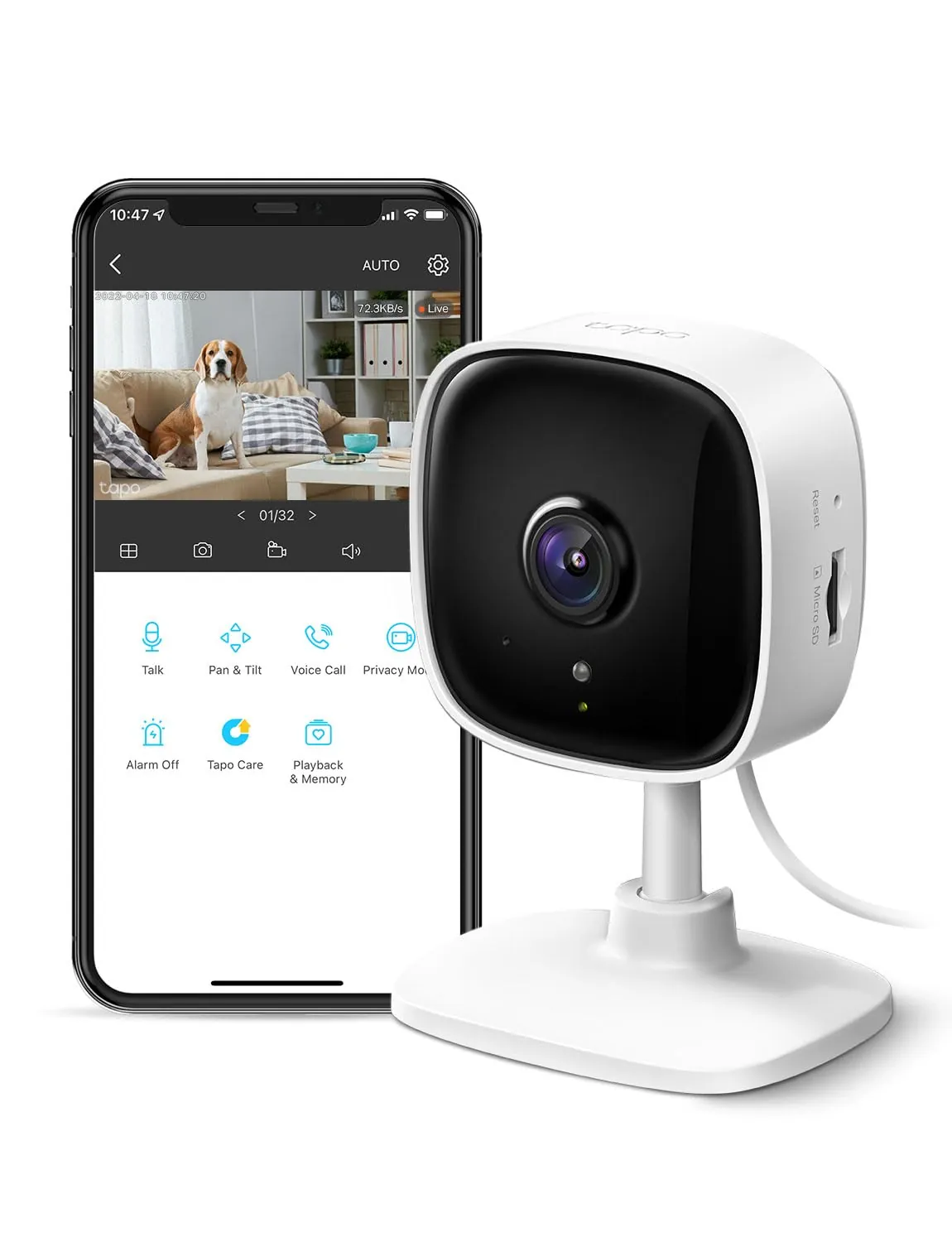
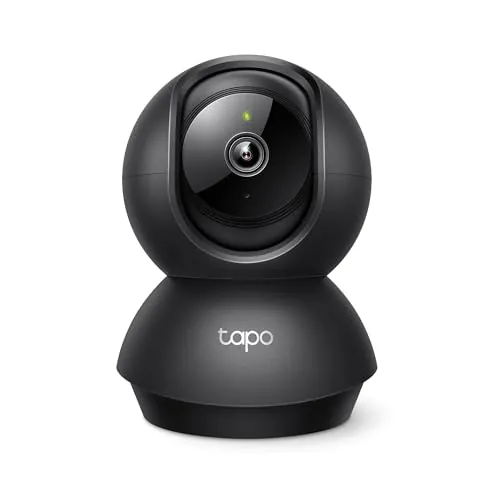
Tapo 1080P Indoor Pan/Tilt Wired Security Camera (C201)
- Pan/tilt coverage designed to scan most of a room (360° horizontal, 114° vertical).
Comparison
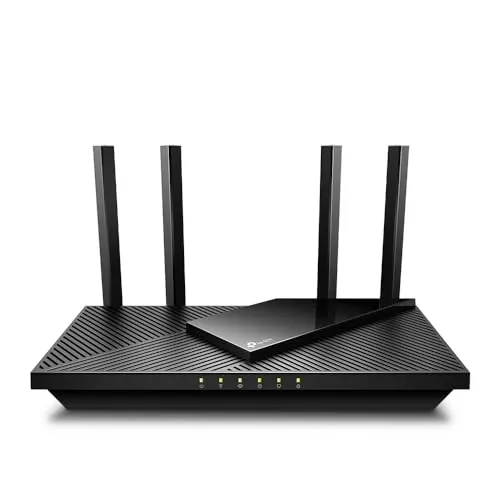
The Tapo C201 and TP-Link Archer AX21 solve different smart-home needs: the C201 is an indoor pan/tilt security camera for monitoring and alerts, while the AX21 is a Wi‑Fi 6 router focused on faster, more reliable home connectivity. If you want room coverage, local recording, and baby/pet monitoring features, the Tapo makes sense. If your priority is stronger whole-home Wi‑Fi and wired networking for multiple devices, the Archer AX21 is the more relevant upgrade.
#1 Overall Winner
Contender
Buy the Tapo C201 if you want an affordable indoor pan/tilt camera with local recording, night vision, and helpful alerts for pets or babies. Buy the TP-Link Archer AX21 if you want to upgrade your home Wi‑Fi with Wi‑Fi 6, better device handling, and Gigabit wired ports—especially if you’re replacing an ISP rental router.
Overall winner
Depends on your needs
| Feature | Tapo 1080P Indoor Pan/Tilt Wired Security Camera (C201) | TP-Link AX1800 WiFi 6 Router (Archer AX21 V5) | Winner |
|---|---|---|---|
| Product type | Indoor pan/tilt security camera | Wi‑Fi 6 dual-band router | Depends |
| Primary use case | Indoor monitoring, alerts, recording | Home Wi‑Fi coverage, capacity, wired networking | Depends |
| Video capability | 1080p, night vision up to 30 ft | Not applicable | Tapo 1080P Indoor Pan/Tilt Wired Security Camera (C201) |
| Pan/tilt coverage | 360° horizontal / 114° vertical pan/tilt | Not applicable | Tapo 1080P Indoor Pan/Tilt Wired Security Camera (C201) |
| Local storage | microSD up to 512 GB (not included) | Not applicable | Tapo 1080P Indoor Pan/Tilt Wired Security Camera (C201) |
| Optional cloud features | Optional Tapo Care with 30-day history (per listing) | No cloud subscription mentioned | Depends |
| Smart assistant support | Works with Alexa and Google Assistant (per listing) | Works with Alexa (per listing) | Depends |
| Wi‑Fi standard | 2.4 GHz Wi‑Fi (camera connection) | Wi‑Fi 6 (802.11ax) dual-band | TP-Link AX1800 WiFi 6 Router (Archer AX21 V5) |
| Wired ports | Not stated | 5 ports (Gigabit LAN bandwidth stated) | TP-Link AX1800 WiFi 6 Router (Archer AX21 V5) |
| Security protocols | Not stated | WPA/WPA2/WPA3 (per specs) | TP-Link AX1800 WiFi 6 Router (Archer AX21 V5) |
| Connectivity feedback | Mixed; some report frequent disconnections | Mixed; some report internet disconnections | Tie |
| Ease of setup (buyer sentiment) | Often described as easy setup | Often described as easy setup | Tie |
| Typical placement | Shelf/table or wall/ceiling mount (indoor) | Central location near modem/power | Depends |
| Value perception (buyer sentiment) | Very strong value feedback at low price | Strong value feedback vs ISP rental routers | Tie |
In everyday home use, these products play different roles. The Tapo C201 is something you interact with when you need visibility—checking live video, responding to alerts, or using two-way talk for pets or family members. The Archer AX21 works more in the background, aiming to keep phones, TVs, smart speakers, and devices (including cameras) connected reliably.
If your goal is “see what’s happening inside,” the camera matters most. If your goal is “keep everything connected smoothly,” the router upgrade is the more relevant tool.
Performance depends on what you’re trying to accomplish. The Tapo C201 is designed to perform as an indoor monitor: 1080p video, a wide pan/tilt range for room coverage, and IR night vision for after-dark checks. Reviews frequently praise image quality and motion tracking, though some mention lag in two-way audio and occasional dropouts.
The Archer AX21 is meant to perform as a home network hub, using Wi‑Fi 6 features to handle more devices with less congestion and offering Gigabit ports for stable wired connections. Many buyers report strong range and speed, but a minority still experience disconnects.
Reliability is mixed for both, mainly around connectivity. For the Tapo C201, reviews and the aggregated summary indicate that while many users find it dependable, some report frequent disconnections or that it can stop working, and there can be lag in two-way audio. For the Archer AX21, most buyers describe stable performance and good uptime, but there are still reports of internet disconnections from a minority of users (which may also be influenced by ISP service or home wiring). If reliability is critical, plan for strong Wi‑Fi placement and keep firmware up to date where applicable.
For security and monitoring, the Tapo C201 is the clear choice because it provides video, night vision, alerts, and recording (microSD or optional cloud). The Archer AX21 doesn’t monitor your home directly, but it can indirectly improve monitoring by providing better Wi‑Fi coverage and stability for connected devices like cameras and smart displays.
The Tapo C201 is purpose-built for indoor monitoring: 1080p video, pan/tilt coverage to watch a whole room, night vision for low-light situations, and push alerts for motion/person/baby crying. It also adds two-way audio and a siren, which can be useful for checking in or deterring unwanted activity. The Archer AX21 doesn’t add detection or video monitoring, but a stronger home network can improve camera responsiveness and reduce missed alerts caused by weak Wi‑Fi.
Neither product presents unusual safety claims in the provided data, but there are practical considerations. The Tapo C201 is a corded indoor device; safe placement includes keeping the cable out of reach of pets/children and avoiding locations where it can be knocked over easily if not mounted. For the Archer AX21, safe operation is mainly about stable power, ventilation, and keeping it dust-free and not enclosed in a tight cabinet to reduce heat buildup (a common router best practice echoed by user advice). Neither listing provides specific safety certifications, so it’s best to follow the manufacturer’s setup guidance.
Comfort here is about day-to-day peace of mind. The Tapo C201 can improve comfort by letting you check on a baby, pet, or family member remotely and get alerts when something happens, which can reduce the need to physically check every time you hear a noise. The Archer AX21 improves comfort more indirectly by supporting smoother streaming and more stable connections for devices around the home. If your stress comes from “not knowing what’s happening,” the camera helps more; if it comes from “Wi‑Fi issues,” the router helps more.
Both products are commonly described as easy to set up, but day-to-day effort differs. The Tapo C201 is straightforward once connected, with app-based viewing and controls, though some users mention initial Wi‑Fi pairing being a bit finicky and two-way talk having delay. The Archer AX21 is typically “set and forget” once installed, but its interface and options can feel more involved if you want to tweak advanced settings.
Design priorities differ. The Tapo C201 is designed to fit unobtrusively on a shelf or be mounted, with pan/tilt mechanics that help you cover more of a room without repositioning the camera. The Archer AX21 is designed for open placement to maximize signal, with visible antennas and a flat router body that fits on a TV stand or shelf near the modem. If you need something that blends into a living space, the camera’s small footprint is easier to hide; the router benefits from being placed out in the open.
“Capacity” applies differently here. The Tapo C201 capacity is mainly recording storage, supporting microSD cards up to 512 GB (not included), plus an optional cloud plan with 30-day video history. The Archer AX21 capacity is network capacity: Wi‑Fi 6 features intended to support more devices and reduce congestion, along with wired Gigabit ports for high-stability connections.
Both are relatively space-efficient, but in different contexts. The Tapo C201 has a small footprint and can be tucked on a shelf or mounted, which helps in flats and smaller rooms. The Archer AX21 is also compact for a router, but to get the best coverage it often needs to sit in a more open, central location, which can take up visible shelf/TV-stand space and add cable clutter near the modem.
Noise is generally not a deciding factor for either product in the provided data. The Tapo C201 can be used in quiet spaces like nurseries, and reviews focus more on audio delay than mechanical noise. The Archer AX21 is a router with no typical “operating noise” concerns mentioned. For bedroom placement, the bigger consideration is usually indicator lights and placement rather than sound.
Installation is simpler for the Tapo C201 if you plan to place it on a shelf and plug it in, but it can also be wall/ceiling mounted using the included hardware, which takes more effort and planning for the viewing angle. The Archer AX21 installation requires positioning near your modem, connecting cables, and completing a setup process (app or web). Neither typically needs professional installation, but both benefit from thoughtful placement: camera for coverage and privacy, router for signal strength and reach.
Based on the provided context, both products land in a similar middle-ground for build quality rather than being standout “premium” hardware. The Tapo C201 is compact and light, with included mounting hardware; at least one reviewer noted it can be easier to knock out of position when simply placed on a surface instead of mounted. The Archer AX21 is also relatively light and uses external antennas; buyers often describe it as sturdy, but physical build is not the main decision point compared with coverage and stability.
Long-term durability signals are modest but generally positive in the available data. The Tapo C201 gets praise for hardware quality from some owners, but there are also reports of the unit stopping working, which can be an early warning sign for a subset of buyers. The Archer AX21 has many users describing stable performance over time and a typical router form factor with external antennas. For either product, heat, placement, and stable power can influence lifespan.
The Tapo C201 maintenance mainly involves keeping the lens area clean, managing storage (choosing a compatible microSD card if you want local recording), and handling updates through the app. The Archer AX21 maintenance is typically minimal once set up, but it benefits from occasional firmware checks and keeping the unit dust-free and well ventilated. If you prefer to avoid recurring tasks like managing recorded video or storage choices, the router is generally lower-touch than a camera.
Neither product is “portable” in the travel-gadget sense, but the Tapo C201 is easier to move room to room because it’s compact and only needs power plus a 2.4 GHz Wi‑Fi connection. The Archer AX21 can be moved if you change homes or reorganize your setup, but it’s more anchored to the modem location and your home network wiring. For temporary monitoring (pet-sitting, checking a room while away), the camera is the more practical item to relocate.
The Tapo C201 focuses on monitoring features: pan/tilt control, motion/person/baby-cry notifications, two-way audio, a siren, night vision, and recording to microSD (with optional cloud features and longer video history). The Archer AX21 focuses on networking features: Wi‑Fi 6 dual-band operation, beamforming, multiple antennas, Gigabit Ethernet ports, Easy Mesh support, security protocol options (including WPA3), and VPN server support.
If you want alerts and video evidence, the camera’s feature set is the match. If you want better connectivity for many devices, the router’s feature set is the match.
App experience matters more for the Tapo C201 because live view, alerts, playback, and settings are managed through the phone app; reviews frequently describe the app as easy to navigate, with a recurring complaint about two-way talk delay rather than interface problems. The Archer AX21 can be managed by app and web interface; at least one reviewer explicitly preferred configuring through the router’s IP/web interface rather than downloading the app, and the provided scoring context suggests app experience is not the router’s strongest area.
Both products can support a smarter home, but in different ways. The Tapo C201 adds smart monitoring features—pan/tilt viewing, notifications for motion/person/baby crying, and voice-assistant viewing on supported screens. The Archer AX21 improves the foundation that smart devices rely on, with Wi‑Fi 6 capacity and coverage-oriented features that can benefit multiple connected devices at once.
If you already have smart devices and they feel unreliable, the router can have a bigger “whole-home” impact. If you want smart alerts and indoor visibility, the camera provides the direct functionality.
For smart home use, the Tapo C201 contributes a “sensor-like” role—detecting motion/person/crying and letting you view a live feed, including via Alexa/Google Assistant on supported screens. The Archer AX21 contributes more as infrastructure: Wi‑Fi 6 features for handling multiple devices, plus options like guest networking and wired Ethernet for hubs or TVs. If you’re building out a smart home, the router can prevent bottlenecks, while the camera adds direct monitoring capability.
The Tapo C201 supports practical “automation-like” behavior through detection and alerts (motion/person/baby crying) and can react with features like a siren. The Archer AX21 is less about automations and more about network management, though it can support smart homes by keeping many devices connected reliably. If you want action triggered by events in a room, the camera is the more relevant choice.
The Tapo C201 connects over 2.4 GHz Wi‑Fi, which is common for smart home devices, but buyer feedback includes reports of occasional disconnections. The Archer AX21 provides dual-band Wi‑Fi 6 and wired Ethernet, and is often praised for range and stability, though some users still see internet dropouts. In practice, the router is the product that most directly affects connectivity for the entire home, including cameras.
With the available data, efficiency is clearer for networking than for power use. The Archer AX21 is designed to improve operating efficiency on busy networks (less congestion and better handling of multiple devices), which can reduce the “friction” of streaming and smart home responsiveness. The Tapo C201 can be efficient in a practical sense by using local microSD recording to avoid cloud dependence, but the listing doesn’t provide energy-use details for either product, so real running-cost comparisons are limited.
Privacy and security matter more for the Tapo C201 because it captures indoor video and audio. A key advantage is that you can choose local microSD recording instead of cloud storage, which may reduce reliance on online accounts and recurring cloud services (microSD card sold separately). The Archer AX21 lists Wi‑Fi security protocol options including WPA3 and positions security as a focus; stronger router security can also help protect smart home devices on your network. For either product, use strong passwords and keep firmware updated.
Value is strong for both, but measured differently. The Tapo C201 is priced very low for a pan/tilt indoor camera with 1080p, night vision, alerts, two-way audio, and microSD recording support, and buyer feedback repeatedly calls it good value—especially if you avoid optional cloud fees by using local storage. The Archer AX21 is also widely seen as good value because it adds Wi‑Fi 6 capability, range-focused hardware, and Gigabit ports at a mid-range price, and some buyers compare it favorably against renting an ISP router. If your goal is home monitoring, the camera offers more “feature per dollar”; if your goal is whole-home connectivity, the router can be the more impactful spend.
Both products come from the TP‑Link family (Tapo as the smart-home line and TP‑Link for networking). Trust signals in the provided data are stronger for the Archer AX21 listing because it clearly states support availability and warranty length, and emphasizes a security commitment. The Tapo C201 earns trust mainly through a very large volume of positive buyer feedback and consistent comments about picture quality and value, though there are still reliability/connectivity complaints from a subset of owners.
Both products have high star ratings with very large review counts, suggesting broad adoption. The Tapo C201 stands out for especially strong satisfaction: customers frequently highlight clear picture quality, useful motion detection, easy setup, and excellent value, with recurring negatives around occasional disconnections and talk/audio lag. The Archer AX21 also earns strong satisfaction for speed, range, and ease of setup, and many consider it a meaningful upgrade over ISP routers; however, there are still reports of disconnections from a minority of users. Overall, sentiment is positive for both, with connectivity being the most common shared complaint.
Warranty/support details are clearer for the TP-Link Archer AX21, which lists free expert support and a 2-year warranty for most home products. For the Tapo C201, warranty/support specifics are not provided in the supplied data, so it’s harder to compare beyond general customer experience. If support clarity is a priority, the router listing provides more explicit information up front.
This is a comparison of two smart-home essentials with different purposes rather than direct rivals. The Tapo C201 is the better pick when you need an affordable indoor camera with pan/tilt coverage, useful detection alerts, night vision, and the flexibility of local microSD recording (with optional cloud). Its main limitations are mixed reports of Wi‑Fi stability and some delay in two-way talk.
The TP-Link Archer AX21 is the better pick when you need to upgrade your home network with Wi‑Fi 6 capacity, range-oriented hardware, and Gigabit wired connections. Its main limitation is that a minority of users still report disconnections, and it typically requires a separate modem.
If you want better monitoring, choose the camera. If you want better connectivity for everything in the home, choose the router.
Overall winner
Depends on your needs
They are designed for different jobs. The Tapo C201 is an indoor pan/tilt camera for monitoring and alerts (motion/person/baby crying) with local microSD recording or optional cloud. The Archer AX21 is a Wi‑Fi 6 router meant to improve coverage, capacity, and wired connectivity. Choose based on whether you need video monitoring or better home networking.
No specific router is required, but the Tapo C201 relies on a stable 2.4 GHz Wi‑Fi connection. If your current Wi‑Fi is weak or frequently drops, a better router placement or a router upgrade like the Archer AX21 can help overall network stability. The camera still needs internet/Wi‑Fi to send notifications and provide remote viewing.
Both are commonly described as straightforward to set up, but they involve different steps. The Tapo C201 setup is mainly pairing the camera to 2.4 GHz Wi‑Fi and configuring alerts and storage. The Archer AX21 setup includes connecting to a modem, configuring Wi‑Fi names/settings, and optionally managing features like guest networks or security settings.
No. The Tapo C201 supports subscription-free local recording to a microSD card (not included). There is also an optional Tapo Care cloud plan that adds 30-day video history and additional benefits mentioned in the listing. If you only want local continuous recording and live viewing, you can typically avoid an ongoing subscription.
It can, depending on the cause. Some owners report disconnections with both products in general. If the camera drops due to weak signal, congestion, or poor coverage, a Wi‑Fi 6 router with better range features (like beamforming and multiple antennas) may improve stability. If the issue is ISP outages or interference, a new router may not fully resolve it.
For small spaces, the Tapo C201 is easy to place and can cover a room with pan/tilt, making it practical for monitoring a nursery or pets. The Archer AX21 can still be a strong fit for apartments if you want reliable Wi‑Fi and wired ports, but it won’t replace a camera. The better choice depends on whether your priority is monitoring or connectivity.
Yes, both listings mention Alexa compatibility. The Tapo C201 can be used to view a live stream on Alexa-enabled screens via voice command. The Archer AX21 is listed as working with Alexa and can be controlled by app/voice as described. Exact capabilities can vary by setup, but Alexa support is a stated feature for both.
The Archer AX21 has no subscription mentioned for normal operation, though you still pay your ISP for internet service and may need a separate modem. The Tapo C201 can be used without a subscription if you use microSD local storage, but optional cloud storage adds a recurring cost. Also factor in the cost of a compatible microSD card.
Both have strong star ratings and large review counts, but the Tapo C201 stands out for very high satisfaction around value, picture quality, and easy setup. The Archer AX21 is also widely praised for speed, range, and value, though a minority report disconnections. In both cases, connectivity reliability can vary by home layout and network conditions.
Check our rankings and expert guides to find the best home lifestyle products for your goals.