#1 Overall Winner
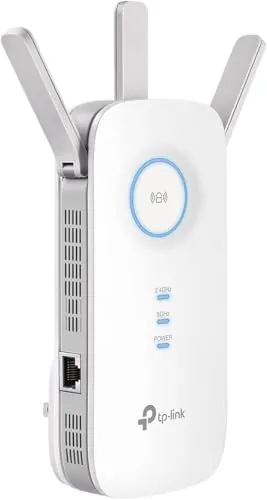
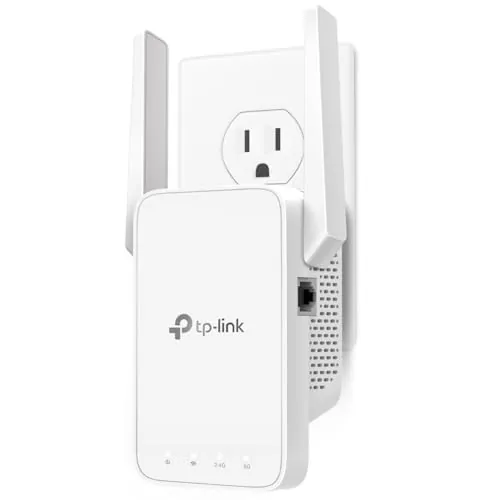
TP-Link AC1200 WiFi Extender (RE315)
- Very affordable way to extend Wi‑Fi coverage into dead zones.
Comparison
The TP-Link RE315 and TP-Link Tapo C100 target different home needs: the RE315 is a budget Wi‑Fi range extender for reducing dead zones, while the C100 is an indoor 1080p security camera for monitoring rooms, pets, or a nursery. The RE315 stands out for easy setup and strong value in coverage expansion, while the C100 adds motion alerts, night vision, and two-way audio but has more mixed connectivity feedback.
#1 Overall Winner
Contender
Pick the TP-Link RE315 if you want a low-cost way to reduce Wi‑Fi dead zones for work, streaming, or smart devices, and you like the option of a nearby Ethernet port. Choose the Tapo C100 if you need indoor video monitoring for a nursery, pets, or a room, and want local microSD recording or optional cloud storage—just be prepared for some mixed Wi‑Fi reliability feedback.
Overall winner
Depends on your needs
| Feature | TP-Link AC1200 WiFi Extender (RE315) | TP-Link Tapo 1080P Indoor Security Camera (Tapo C100) | Winner |
|---|---|---|---|
| Product type | Wi‑Fi range extender | Indoor security camera | Depends |
| Primary job | Expand Wi‑Fi coverage | Record/monitor a room | Depends |
| Wireless bands | 2.4GHz + 5GHz (dual band) | 2.4GHz Wi‑Fi | TP-Link AC1200 WiFi Extender (RE315) |
| Ethernet option | 1 Ethernet port (100 Mbps) | Not listed | TP-Link AC1200 WiFi Extender (RE315) |
| Video / night vision | Not applicable | 1080p video + night vision (up to 30 ft) | TP-Link Tapo 1080P Indoor Security Camera (Tapo C100) |
| Two-way audio / siren | Not applicable | Two-way audio + siren | TP-Link Tapo 1080P Indoor Security Camera (Tapo C100) |
| Smart assistant support | Not smart-home compatible (listed) | Works with Alexa & Google Assistant | TP-Link Tapo 1080P Indoor Security Camera (Tapo C100) |
| App and controls | TP‑Link Tether app (cloud management, LED control, access control) | Tapo app (alerts, controls; cloud option) | Tie |
| Coverage / field of view | Covers up to ~1500–1600 sq ft (listed) | 110° field of view | Depends |
| Storage | Not applicable | microSD (up to 512GB) or cloud subscription | TP-Link Tapo 1080P Indoor Security Camera (Tapo C100) |
| Reliability feedback trend | Mostly stable; some drops/slowdowns reported | Mixed; some Wi‑Fi dropouts and occasional clip interruptions reported | TP-Link AC1200 WiFi Extender (RE315) |
| Ease of setup (buyer sentiment) | Often “easy in minutes” with placement help | Often “easy in minutes” | Tie |
| Best for renters/budget upgrades | Very low-cost network improvement | Very low-cost indoor monitoring | Tie |
| Indoor/outdoor suitability | Indoor networking device | Indoor camera (not water resistant) | Tie |
For everyday home use, the RE315 is about making your existing network more usable in “problem rooms,” such as bedrooms, basements, garages, or home offices. The Tapo C100 is more about awareness and peace of mind—checking on a sleeping baby, a pet at home, or activity in a room while you’re away. If you’re deciding based on daily impact, the RE315 improves how your devices connect, while the C100 improves what you can see and respond to inside the home.
In core performance, the RE315 tends to deliver what most buyers want from a budget extender: stronger coverage and fewer dead zones, with generally positive feedback on stability for streaming, studying, and multi-device households. Results still depend heavily on placement, and some users report drops or slowdowns, especially when used in access point mode.
The Tapo C100 performs well when connected, with strong feedback on sharp video, useful motion alerts, and effective night vision. Its performance is more likely to feel inconsistent if your Wi‑Fi is crowded or if the camera struggles to stay connected, as some reviewers note.
Both products have generally positive overall sentiment, but with specific reliability caveats. With the RE315, many users report stable day-to-day operation after setup, yet there are recurring mentions of connection drops, slow performance in some environments, and occasional inconsistency—particularly when used in access point mode with Ethernet involved.
With the Tapo C100, many buyers report solid performance, clear video, and dependable monitoring, but the aggregated feedback includes users who find it unreliable or unable to stay connected to Wi‑Fi. A few reviews also mention brief recording interruptions during playback, which can matter if you need continuous coverage.
Only the Tapo C100 is a true security/monitoring product, with 1080p video, night vision, motion alerts, and two-way audio plus a siren. The RE315 doesn’t monitor anything directly, but it can indirectly support monitoring by improving Wi‑Fi coverage in areas where indoor cameras or other connected devices struggle to stay online. If you’re trying to secure or supervise a room, the camera is the functional choice; if your cameras drop offline due to weak signal, the extender may be the missing piece.
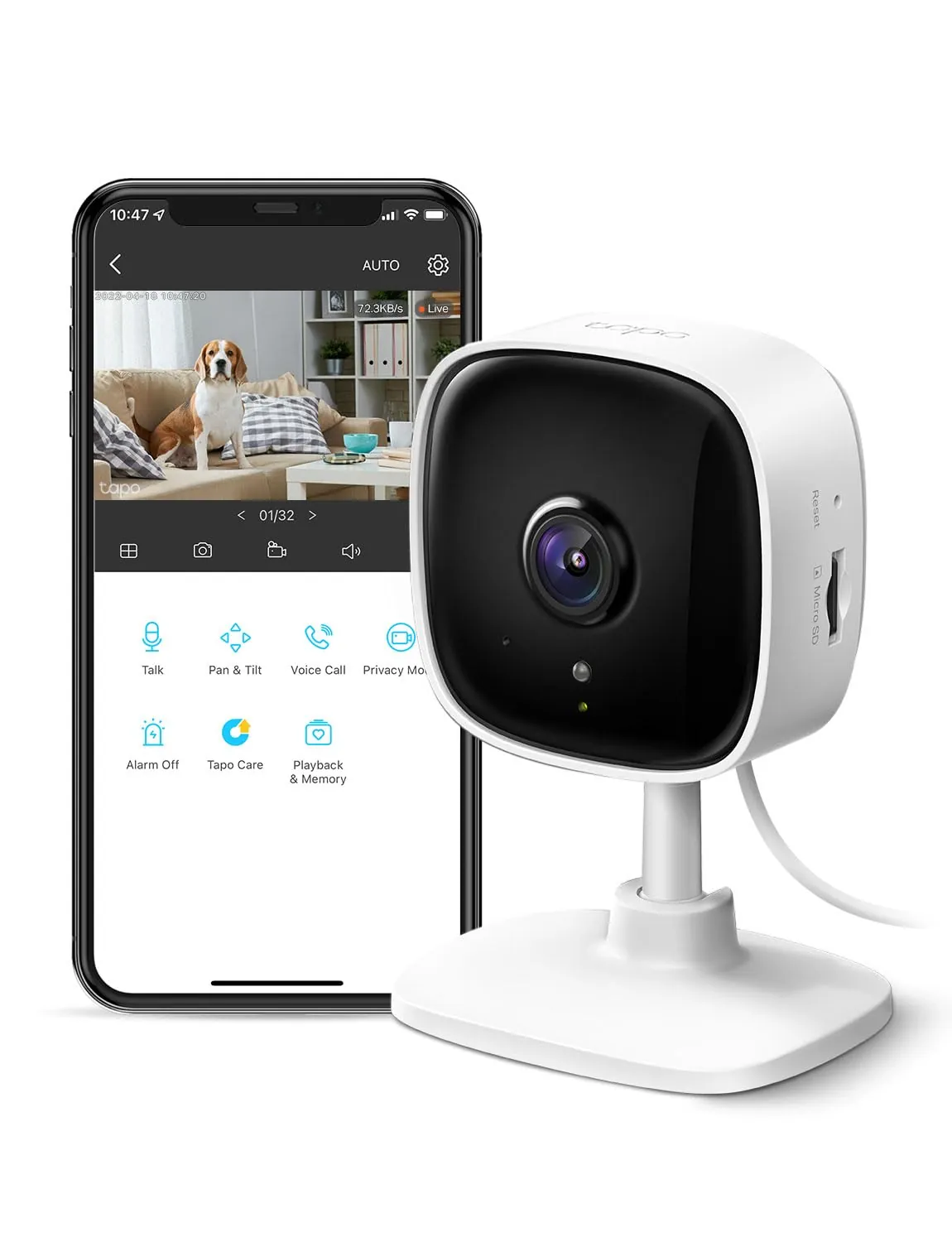
The Tapo C100 is purpose-built for indoor monitoring, combining 1080p video, night vision, motion alerts, and two-way audio. Reviews frequently praise clear picture quality and useful detection, making it suitable for a nursery, pet area, or general room coverage. The main security downside in the provided feedback is inconsistency: some buyers report Wi‑Fi dropouts or brief recording interruptions, which can undermine trust if you rely on it for continuous monitoring.
The RE315 isn’t a monitoring device, but it can support security gear by improving Wi‑Fi reach where cameras or smart devices otherwise struggle.
Neither product comes with unusual safety risks in the provided data, but there are practical considerations. For the RE315, safe use is mainly about proper indoor placement, ventilation around the wall-plug device, and avoiding overloaded power strips—especially if its size blocks neighboring sockets or encourages awkward plug arrangements. For the Tapo C100, safety is about secure placement and cable management, particularly in nurseries (keeping cords out of reach) and ensuring the camera is used indoors as intended. Both are corded devices, so stable power and tidy cabling matter.
Comfort here is about daily convenience. The RE315 can improve “digital comfort” by reducing dropouts for streaming, calls, and work in rooms that previously had weak coverage. The Tapo C100 improves peace of mind for families and pet owners by enabling quick check-ins, motion alerts, and night viewing. If your comfort issue is frustration with Wi‑Fi dead zones, the extender helps most; if it’s wanting visibility and reassurance, the camera matters more.
Both products are widely described as easy to set up in minutes. The RE315 benefits from a clear setup flow and placement guidance via the Tether app, though finding the best outlet location can take a little trial and error. The Tapo C100 also gets strong ease-of-use feedback, with an app that most users find straightforward for live viewing, alerts, and basic settings. The main “ease” downside for the camera is troubleshooting if it drops off Wi‑Fi.
The RE315 is designed to disappear into a wall socket, with external antennas you can angle for coverage and indicator lights that help with placement. Its main design compromise is socket crowding in tight outlet areas. The Tapo C100 uses a small “bullet” style camera body that can sit on a surface or be wall-mounted, making it easier to aim at a crib, doorway, or living space. Both are small-space friendly.
Capacity depends on what you mean: the RE315 is rated for covering up to about 1500–1600 sq ft and supporting a household’s connected devices (the listing mentions up to around 30–32 devices). The Tapo C100’s “capacity” is more about what it can see and store—its 110° field of view and microSD support (up to 512GB) matter more than square footage. For whole-home connectivity, the extender is the relevant capacity choice; for recording and viewing, the camera is.
Both are space-efficient, but the RE315 is the most “invisible” once installed since it lives on a wall outlet and doesn’t take counter or shelf space. The trade-off is that it can crowd neighboring sockets on some outlet layouts. The Tapo C100 has a small footprint and can be wall-mounted to free up surfaces, making it a good fit for bedrooms and nurseries where space is limited.
Noise is not a major factor for the RE315 because it has no fan or moving parts in normal use. The Tapo C100 can be used in quiet spaces like bedrooms and nurseries; while many users focus on video quality, there are occasional mentions of audio lag, and any alert/siren use is intentionally audible. If silence is critical, both are generally suitable, but the camera’s audio features can add occasional sound events.
The RE315 installation is mostly plug-and-play: connect it to your router network and place it where it still gets a strong signal. The main “installation” work is choosing the right outlet location and ensuring it doesn’t block adjacent sockets. The Tapo C100 installs as a camera: it can be placed on a surface or mounted using the included template and screws, then connected to power and set up in the app. Camera placement is about viewing angles and Wi‑Fi stability.
Neither product is positioned as premium hardware based on the provided data, but both are compact and practical. The RE315 is a wall-plug extender with external antennas; buyers often like the clean look, though its physical width can interfere with neighboring outlets on some power splitters. The Tapo C100 uses a plastic enclosure and includes mounting hardware; it’s designed for indoor placement and light handling, rather than rugged use.
Long-term durability is hard to guarantee from listings alone, but there are some signals in the feedback. The RE315 is a simple wall-powered networking device with minimal moving parts, which can help over time, though it may be more sensitive to heat/placement and power conditions. The Tapo C100 is also a simple indoor, corded device; one reviewer mentions years of continued use, but there are also isolated reports of a unit arriving broken. In both cases, careful placement and stable power can help reduce issues.
The RE315 is relatively low maintenance: once placed and configured, upkeep is mostly occasional reboots, firmware/app checks, and adjusting placement if your router changes. The Tether app management reduces the need for manual troubleshooting, though some users may revisit settings for access control or access point mode.
The Tapo C100 requires more ongoing attention if you use recording: managing microSD capacity, reviewing clips, and deciding between local storage and a cloud plan. If you depend on alerts, you may also spend time fine-tuning motion sensitivity to reduce unnecessary notifications.
Both products are easy to move, but in different ways. The RE315 is very portable for travel or temporary setups because it plugs into a wall outlet and can be reconfigured quickly; some users even mention using it in different locations like RV-style scenarios. The Tapo C100 is small and light for relocating between rooms, but it’s corded and may be more dependent on finding a good power outlet and Wi‑Fi coverage wherever you place it.
The RE315 focuses on network features: dual-band Wi‑Fi extension, an Ethernet port for a wired device, access point mode, and app controls like LED control and access control. It also supports EasyMesh-style expansion with compatible equipment for more seamless roaming.
The Tapo C100 is feature-rich for indoor monitoring: 1080p video, night vision, motion detection and notifications, two-way audio, a siren, and choices between microSD and cloud storage. It also supports Alexa/Google Assistant viewing and mentions RTSP/ONVIF for NVR integration.
The RE315 uses the TP‑Link Tether app, with features such as cloud management, LED control, and access control, and reviewers frequently describe setup and management as straightforward. One limitation mentioned is that device labeling can be less intuitive when devices appear as anonymous.
The Tapo C100’s app experience is often described as user-friendly with lots of options, including alerts and recording controls. Some users note playback quirks (like short interruptions), and subscription choices can add complexity if you manage multiple cameras.
The Tapo C100 is the clear smart-home-oriented device here: it works with Alexa and Google Assistant for viewing the live feed on compatible screens, and it relies on app notifications and settings for motion detection and monitoring. The RE315 is more of a network infrastructure tool—while it has app management features, it’s not listed as smart-home compatible and doesn’t offer voice assistant integrations. If your goal is routines and voice-driven monitoring, the camera fits better; if your goal is simply better Wi‑Fi reach for all devices, the extender matters more.
The Tapo C100 fits better into a smart-home setup because it supports Alexa and Google Assistant for viewing the live feed on compatible screens and relies on app-based alerts and settings. It can also be part of a broader monitoring routine (check-ins, notifications, and recordings).
The RE315 is more of a “foundation” device: it helps your existing smart devices stay connected by improving Wi‑Fi coverage. It has app management tools, but it’s not listed as smart-home compatible and doesn’t provide voice assistant features or automations in the way a camera can.
The RE315 has limited “automation” in the smart-home sense; its main automated behavior is choosing or maintaining a stronger connection path as you move around the home (as described in the listing). The Tapo C100 offers more automation-like functionality through motion-based alerts and monitoring behaviors that trigger notifications and recordings. If you want device behavior that reacts to events, the camera is the more automation-relevant product.
The RE315 is designed around connectivity, supporting dual-band Wi‑Fi to link back to your router and extend coverage outward. It also provides an Ethernet port for a wired endpoint, which can be useful for stability in a home office or media corner. Some reviews still mention occasional drops or slower performance, which is common when placement is suboptimal.
The Tapo C100 connects over 2.4GHz Wi‑Fi and tends to work well when the connection is stable, but buyer feedback is mixed about staying connected. If your Wi‑Fi is already weak where the camera will sit, addressing coverage first can reduce frustration.
With the RE315, “efficiency” is mainly about how effectively it extends coverage without creating a frustrating experience. As with most extenders, real-world throughput can vary and may drop compared to being close to the router, so placement is key to getting an efficient result.
The Tapo C100 is corded and continuously available for monitoring; efficiency considerations are more about whether you rely on local recording (microSD) or cloud storage, and whether your Wi‑Fi connection is stable enough to avoid gaps that reduce the usefulness of recordings and alerts.
The Tapo C100 is the more privacy-sensitive device because it captures video and audio inside your home and can store footage locally (microSD) or in the cloud via an optional subscription. If privacy is a concern, local recording can reduce reliance on cloud storage, and you should review app permissions and account security settings.
The RE315 doesn’t record media, but it is part of your home network. The listing references a security-focused design commitment; regardless, good practice is to use a strong Wi‑Fi password and keep networking firmware updated.
Both products are priced to be budget-friendly, but value depends on your goal. The RE315 offers strong value if it solves a real coverage problem—buyers frequently report meaningful improvements for streaming and work, and the Ethernet port adds practical flexibility. The key value risk is that extenders can disappoint if placed poorly or if you expect them to “create” faster internet.
The Tapo C100 is strong value for indoor monitoring, thanks to clear video, night vision, two-way audio, and the option to use a microSD card instead of paying monthly. If you want cloud storage across several cameras, subscription costs can reduce the value advantage.
Both products come from TP-Link, so the brand context is broadly similar, but the expectations differ by category. The RE315 benefits from very high review volume and consistent “does the job” feedback for budget networking, which can build confidence. The Tapo C100 also has strong buyer sentiment and a clear value proposition, but the mixed connectivity reliability feedback is worth weighing if you’re depending on it for continuous monitoring. In both cases, clear app setup and the availability of guides help support day-to-day use.
Both items have strong average ratings and very large review counts, with a lot of “easy setup” and “good value” comments. For the RE315, repeated praise centers on extending coverage, simple installation, and better stability for streaming and work, while the most common complaints are connection drops or slow performance in certain setups and some inconsistency in access point mode.
For the Tapo C100, customers often praise clear picture quality, useful motion alerts, night vision, and a user-friendly app, with common negatives including Wi‑Fi connectivity problems for some households and occasional recording/playback interruptions.
The better choice depends on what you’re trying to improve at home, but the TP-Link RE315 is the more broadly useful pick for most households dealing with Wi‑Fi dead zones. Its main strength is straightforward coverage expansion with strong value and easy setup, while its main limitation is that performance can vary by placement and some users report drops or access point mode inconsistency.
The Tapo C100 is the clear winner for indoor monitoring, thanks to 1080p video, night vision, motion alerts, and two-way audio with flexible storage options. Its main limitation is mixed reliability/connectivity feedback, plus occasional recording interruptions for some users. If monitoring matters most, pick the camera; if connectivity is the root issue, start with the extender.
Overall winner
Depends on your needs
They solve different problems. The TP-Link RE315 is for extending Wi‑Fi coverage into weak-signal areas and adding a nearby Ethernet option. The Tapo C100 is for indoor monitoring with 1080p video, motion alerts, night vision, and two-way audio. Choose based on whether your priority is better Wi‑Fi reach or indoor security/baby/pet monitoring.
Not necessarily. The RE315 is designed to improve coverage and signal reliability in areas your router can’t reach well. In some setups, a stronger signal can feel faster or more stable, but extenders can also reduce throughput depending on placement and network conditions. Real-world results vary, so placement and distance from the router matter.
No. The Tapo C100 can record continuously to a microSD card (not included) as an alternative to cloud storage. TP-Link also offers an optional Tapo Care cloud subscription for added benefits and video history, but it’s not required for basic monitoring. If you buy multiple cameras, subscription costs can increase per device.
Both are commonly described as quick to set up. The RE315 is often praised for one-touch style setup and guided placement indicators in the Tether app. The Tapo C100 is also frequently described as set up in minutes with a user-friendly app. If you’re adding it to an existing network, the extender’s placement can take extra trial and error.
The RE315 is typically the more direct home-office upgrade if your problem is unstable Wi‑Fi in the workspace. It can improve coverage and also provides an Ethernet port for a more consistent wired connection to a PC or dock. The Tapo C100 can be useful for monitoring a room, but it won’t improve your internet connection.
Yes. The Tapo C100 is listed as compatible with Amazon Alexa and Google Assistant, allowing you to view the live stream on supported smart displays or casting devices with a screen. Voice assistant compatibility is a key difference versus the RE315, which is not listed as smart-home compatible.
For the RE315, buyer feedback is mostly positive, but some users mention connection drops, slower performance, or inconsistency in access point mode. For the Tapo C100, reviews are also largely positive, but there are mixed reports about Wi‑Fi stability and occasional recording interruptions during playback. Your router quality and device placement can influence both.
Both are compact and budget-friendly. The RE315 fits well for apartments with a bedroom or office dead zone where the router signal fades. The Tapo C100 is a straightforward indoor camera for a living room, nursery, or entry area. If you’re choosing only one, decide whether you need better connectivity or indoor monitoring.
Check our rankings and expert guides to find the best home lifestyle products for your goals.