#1 Overall Winner
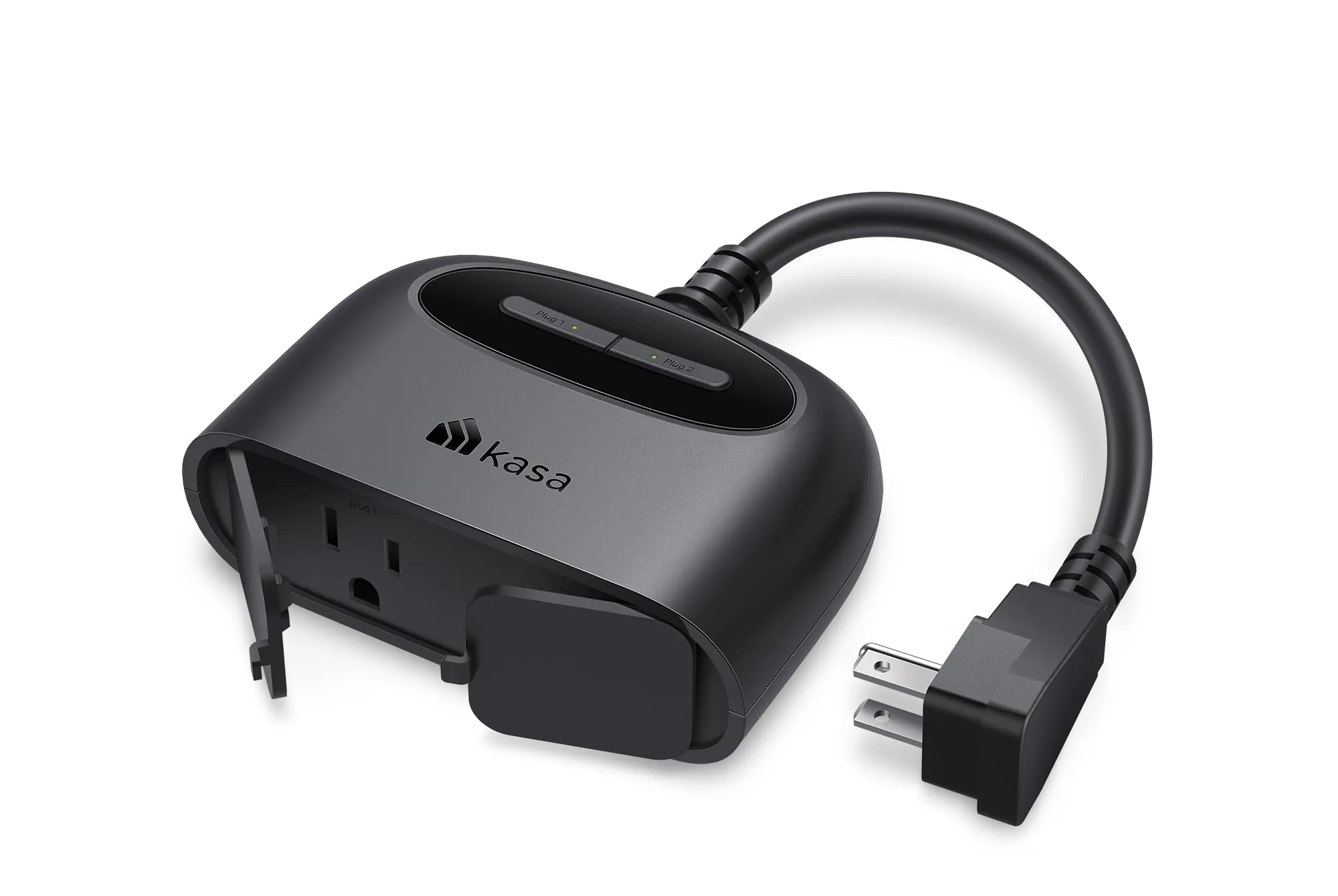
Kasa Outdoor Smart Plug EP40
- Built for outdoor use with IP64 weather resistance and an attached protective cover
Comparison
The Kasa EP40 is an outdoor smart plug with two independently controlled sockets and an IP64 weather-resistance rating, while the Kasa HS103P2 is a compact indoor smart plug sold as a 2-pack. Both work over 2.4GHz Wi‑Fi with the Kasa app, plus Alexa/Google voice control and scheduling. The deciding factor is usually where you’ll use it: outdoors at one outlet location (EP40) or across multiple indoor outlets (HS103P2).
#1 Overall Winner
Contender
Choose the Kasa EP40 if you need a weather-resistant outdoor smart plug and want two independently controlled sockets at one location. Choose the Kasa HS103P2 if you want compact indoor plugs for lamps and small appliances, especially if you want to cover two outlets at a lower overall cost. Both offer Kasa app control, schedules, and Alexa/Google voice commands, but Wi‑Fi strength will heavily influence day-to-day reliability.
Overall winner
Depends on your needs
| Feature | Kasa Outdoor Smart Plug EP40 | Kasa Smart Plug HS103P2 (2-Pack) | Winner |
|---|---|---|---|
| Intended use | Outdoor smart plug | Indoor smart plug | Kasa Outdoor Smart Plug EP40 |
| Outlets per purchase | 2 sockets in one unit (independent control) | 2 separate plugs (2-pack) | Depends |
| Weather resistance rating | IP64 listed | Not listed | Kasa Outdoor Smart Plug EP40 |
| Voice assistant support | Alexa, Google Assistant (IFTTT mentioned) | Alexa, Google Assistant (IFTTT mentioned) | Tie |
| Hub requirement | No hub required | No hub required | Tie |
| Scheduling/automation | Schedules, countdown, sunrise/sunset offset | Schedules, timer, countdown | Kasa Outdoor Smart Plug EP40 |
| App control | Kasa app; setup guidance mentioned | Kasa app; setup guidance mentioned | Tie |
| On-device control | Manual switch + LEDs mentioned in reviews | Side button toggles power | Tie |
| Electrical rating (listed) | 15A/1875W max per outlet (listed) | 15A max load (listed) | Tie |
| Safety certification (listed) | ETL listed | UL listed | Tie |
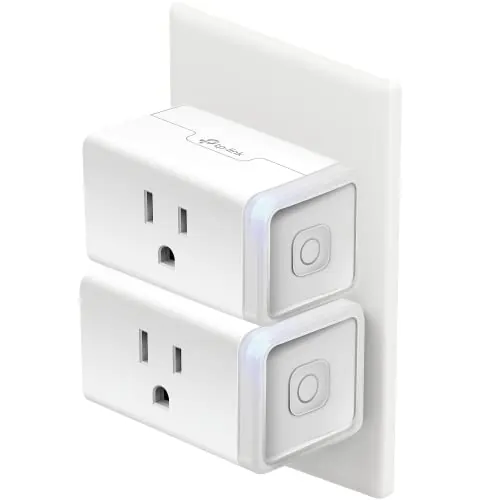
| Size/compactness | Larger outdoor body with short cable | Compact mini plug form factor | Kasa Smart Plug HS103P2 (2-Pack) |
| Price (as provided) | $17.64 | $13.51 | Kasa Smart Plug HS103P2 (2-Pack) |
| Customer rating & volume | High rating; fewer reviews | High rating; very large review count | Kasa Smart Plug HS103P2 (2-Pack) |
| Known complaint themes | Some connectivity issues; some early failures | Some Wi‑Fi issues; some early failures; bright LED/app UI complaints | Depends |
For everyday home use, both plugs handle the basics well: remote on/off, voice control, and schedules for common devices. The HS103P2 fits naturally into indoor routines because it’s compact and sold as a pair, which makes it easy to automate two rooms (or keep a spare). The EP40 is more specialized—ideal when “home use” includes outdoor areas like decks, gardens, or a driveway setup, where the two independently controlled sockets can simplify seasonal lighting and outdoor accessories.
As smart plugs, both models are designed to reliably switch power on/off for supported loads and execute schedules. The HS103P2 generally looks stronger for indoor performance: many reviews describe fast setup, consistent voice control, and dependable routines, though there are also reports of Wi‑Fi issues and a few early failures. The EP40 performs well for outdoor automation, with buyers frequently highlighting independent control of the two sockets and stable scheduling, but outdoor performance is more sensitive to Wi‑Fi reach and placement (and some users report connectivity or early stop-working issues). If your outlet is far from the router, performance may hinge more on your network than the plug itself.
Reliability looks good overall for both, but neither is flawless based on buyer feedback. EP40 reviews frequently describe stable outdoor use and dependable scheduling, yet the aggregated review summary also mentions some units stopping within two months and some network-connection issues for certain users. HS103P2 also has mixed reliability feedback at scale: many report years of dependable switching and reconnects, while others report Wi‑Fi pairing problems or early stop-working issues after a short period. If reliability is critical, prioritize strong 2.4GHz signal and test automations early within the return window.
Both products list safety certifications (EP40: ETL; HS103P2: UL) and are rated for typical smart-plug switching use. Safety in practice is mostly about using them within their stated electrical limits, ensuring a firm plug fit, and avoiding exposure conditions the product isn’t designed for. The EP40 is intended for outdoor environments and includes a weather-resistance rating, but it’s still important to avoid placing it where it can sit in water or face constant direct spray. The HS103P2 is better kept indoors because no weather rating is provided. If you’re controlling higher-draw outdoor equipment, confirm the device load stays within the plug’s listed limits.
For comfort and convenience, both improve day-to-day living by reducing manual switching and enabling voice control. The HS103P2 is particularly good for indoor comfort routines—lamps that turn on before you arrive home, plant lights that follow sunrise/sunset, or devices that shut off on a schedule. The EP40 improves “outdoor comfort” by letting you control exterior lighting or seasonal decor without stepping outside, and its two independently controlled sockets help separate different outdoor zones. Comfort gains depend on reliable Wi‑Fi coverage where the plug is installed.
Both are widely described as straightforward: plug in, connect via the Kasa app on 2.4GHz Wi‑Fi, then link to Alexa/Google for voice control. The HS103P2’s compact size can make it easier to fit on busy indoor outlets, though some users dislike the app’s timer workflow or readability. The EP40 adds outdoor-specific practicality—two independent sockets and clear status LEDs—but setup and daily use can be impacted by outdoor Wi‑Fi strength and where you mount/place it.
Design priorities differ. The EP40 is larger and purpose-shaped for outdoor outlets, with a short cable and cover that can help keep the unused side protected; it’s designed to live outside rather than blend in. The HS103P2 is a compact mini plug intended to sit neatly on indoor wall outlets, which can matter if you’re placing several around the home or using power strips. If visual subtlety and tight spacing are priorities, HS103P2 is typically the easier fit; if outdoor practicality matters, EP40’s design is more appropriate.
The EP40 effectively offers more “capacity at one location” because it provides two independently controlled sockets on a single outdoor plug body. The HS103P2 provides one socket per plug, but you receive two plugs in the box, which can be better if you need to control devices in two different rooms. If your goal is controlling multiple devices from one exterior outlet, EP40 is the cleaner solution; if you want to spread control points across the home, HS103P2 is usually the better match.
HS103P2 is the more space-efficient choice for indoor outlets, with dimensions that suit tight spaces and reduce outlet crowding compared with larger plugs. EP40 is space-efficient in a different way: it gives you two independently controlled sockets from a single outdoor outlet location, which can reduce the need for multiple outdoor adapters. Indoors, HS103P2 is easier to tuck away; outdoors, EP40 can simplify a single messy exterior outlet setup.
Noise generally isn’t a major factor for smart plugs, but some HS103P2 buyers mention a noticeable click when switching on/off, which may matter in quiet bedrooms. The EP40 is usually placed outdoors, where any switching sound is less likely to be noticed indoors. If you’re sensitive to small relay sounds in a sleeping area, HS103P2 placement and use timing can matter more than EP40.
Neither requires hardwiring—setup is plug-in plus app pairing on 2.4GHz Wi‑Fi. HS103P2 is typically simpler indoors because you can place it near the router for first pairing, then move it to the final outlet, and its compact size helps with tight locations. EP40 setup is still straightforward, but outdoor installation tends to be more sensitive to Wi‑Fi strength at the exterior outlet and to placement decisions (for example, using a more protected outlet area when possible). Both rely on following Kasa’s in-app guidance.
The EP40 is built with outdoor use in mind, using a polycarbonate housing and a protective cover, and many buyers describe it as sturdy and weather-resistant in real use. The HS103P2 uses a smaller indoor housing and is generally viewed as solid for typical indoor handling, but it’s not positioned for weather exposure. For physical build expectations, EP40 has the advantage where dust/splashes are a concern, while HS103P2’s main build benefit is its compact, simple plug-in form factor.
EP40 is designed for outdoor exposure and uses a polycarbonate housing, with many buyers describing it as robust and weather-resistant in everyday use. However, some reports of early failure suggest durability can vary by unit or environment. HS103P2 is intended for indoor wear-and-tear and is widely used across many households, but it also has occasional reports of early failure. For long-term durability, EP40’s outdoor placement increases environmental stress, while HS103P2 benefits from gentler indoor conditions but still depends on component consistency.
Maintenance is low for both: there are no filters, bins, or consumables. Day-to-day upkeep is mostly about keeping the plug accessible for occasional manual toggling and ensuring it stays connected to 2.4GHz Wi‑Fi. EP40 may need occasional exterior wipe-down and thoughtful placement so the cover and sockets are not constantly exposed to direct spray or standing water. HS103P2 maintenance is mostly “set and forget,” with the biggest practical issue being LED brightness in bedrooms if that bothers you.
The HS103P2 is more portable in day-to-day use: it’s small, lightweight, and easy to move between rooms or take to another home, and you get two units. The EP40 is still portable, but its outdoor design is bulkier and typically stays near an outdoor outlet for seasonal lighting or equipment. If you expect to reassign plugs to different indoor devices often, HS103P2 is the easier option.
The EP40’s standout feature is two outlets that can be controlled independently in a single outdoor unit, plus sunrise/sunset offset scheduling that’s useful for exterior lights. The HS103P2 focuses on core indoor smart-plug features—remote control, voice control, and scheduling/countdown timers—delivered in a compact plug and bundled as a 2-pack. Both include physical on-device control and Kasa app guidance for setup. If you need multiple controlled locations, the HS103P2 pack is convenient; if you need two controlled sockets at one outdoor outlet, EP40 is more purpose-built.
Both use the Kasa app for setup and control, and many buyers find it intuitive with step-by-step guidance. HS103P2 reviews include some app/UI complaints (such as faint text and timer workflow), even when the plug itself works as expected. EP40 feedback tends to focus more on outdoor convenience and scheduling; one review notes a setup quirk involving using the Kasa app first before it appeared elsewhere. If you prefer minimal apps, note that initial setup typically requires Kasa before voice assistants can control the plugs.
Both products are built for smart-home basics without a hub: Kasa app control, Alexa and Google Assistant voice commands, and IFTTT support as listed. The HS103P2 tends to suit multi-room smart-home growth since you get two plugs and a compact footprint that plays better with crowded outlets. The EP40 is the more practical smart-home option when your “smart zones” extend outside—helpful for automating outdoor lighting or devices that benefit from sunrise/sunset timing. In both cases, reliable automation depends on strong 2.4GHz Wi‑Fi coverage where the plug is installed.
Both plugs support common smart-home control methods: Kasa app remote control, Alexa/Google Assistant voice commands, and scheduling routines. HS103P2 is often the easier building block for whole-home automation because you get two plugs and a compact footprint, making it simpler to add multiple devices into routines. EP40 is the stronger automation tool for outdoor scenes—especially lighting—because it combines two independently controlled outlets with sunrise/sunset offset scheduling in an outdoor-rated body. For either model, stable automation depends on solid 2.4GHz Wi‑Fi coverage.
Automation is a strength for both: schedules, timers, and countdowns can reduce manual switching and support routines. EP40 has an edge for outdoor lighting because sunrise/sunset offset scheduling is explicitly called out and it can run two independent schedules from one outdoor outlet. HS103P2 is strong for indoor routines at scale—two plugs per purchase makes it easier to automate multiple lamps or devices. In either case, automation quality depends on consistent Wi‑Fi and correctly set schedules.
Both models require 2.4GHz Wi‑Fi and do not use a hub. Connectivity feedback is mixed for both: many users report stable connections, while others mention trouble pairing or staying connected. EP40 emphasizes long Wi‑Fi range claims that can help in open space, but outdoor placement can still expose weak spots in your network (walls, distance, and router location). HS103P2 is used widely indoors; if your router is far from a room, you may see the same pairing or drop-off issues some reviewers report.
Neither listing provides detailed energy-use or standby power figures, so efficiency is mostly about practical operation. The HS103P2’s compact design can make it easier to deploy broadly and avoid wasting power by scheduling lights and small appliances more consistently. The EP40’s sunrise/sunset offset scheduling can also reduce unnecessary runtime for outdoor lighting by aligning more closely with daylight changes. In either case, your biggest “efficiency win” is using schedules and routines thoughtfully rather than leaving devices running longer than needed.
Both plugs rely on app-based control and integration with voice assistants, which typically means account-based operation and cloud connectivity for remote access. The provided data does not detail data handling, storage, or encryption specifics, so it’s hard to differentiate them beyond general smart-home hygiene: use strong Wi‑Fi and account passwords, enable app security options if available, and limit permissions to what’s required. If privacy is a priority, consider whether you need remote access or can rely more on local schedules and manual control.
The HS103P2 offers strong value for most indoor households because you get two smart plugs for a lower listed price, with broadly similar core features: app control, voice control, and scheduling. The EP40 can still be good value if you specifically need outdoor capability; its weather-resistant design and two independently controlled sockets can replace more awkward outdoor adapters and simplify seasonal setups. Value also depends on your Wi‑Fi coverage: if the plug’s final location has weak 2.4GHz signal, you may not get consistent automation regardless of the purchase price.
Both products are from Kasa Smart (TP-Link listed as manufacturer) and use the same app ecosystem, which helps consistency if you already own Kasa devices. The provided information also notes large user bases and PCMag Reader’s Choice mentions (as stated in the listings). At the same time, both have some mixed reliability/connectivity feedback, suggesting that real-world experience can vary by home network and environment. If brand trust for you means “one app for everything,” both align well; if it means “zero troubleshooting,” experiences are more mixed.
Both products hold a strong average star rating, but the HS103P2 has a much larger review count, which can make its feedback pattern easier to interpret. Across reviews, people consistently praise easy setup, Kasa app usability, and smooth Alexa/Google integration for both models. The most repeated negative theme for each is mixed Wi‑Fi/reliability: some users report plugs that always stay connected, while others mention pairing trouble or units failing after a short period. HS103P2 also attracts minor comfort complaints like a bright LED and occasional app UI criticism.
Warranty details are only explicitly provided for the EP40, which lists a 2-year warranty. For the HS103P2, the provided data does not state a warranty length, so it’s harder to compare support expectations directly from the information here. If warranty coverage is important, confirm current warranty terms and return options at the point of purchase, especially given the mixed reports of early failures for both models.
The better choice depends on where you’ll use the smart plug. The Kasa HS103P2 is the more practical overall option for indoor households: it’s compact, widely liked for easy setup and routines, and the 2-pack offers strong value for covering multiple rooms. Its main drawbacks are mixed reports of Wi‑Fi/reliability for some users and minor complaints like bright LEDs or app UI preferences.
The Kasa EP40 is the right tool for outdoor automation: it’s designed for exterior outlets, lists IP64 weather resistance, and gives you two independently controlled sockets for separate schedules. The trade-offs are that outdoor placement makes Wi‑Fi strength and exposure more critical, and buyer feedback includes some early failure and connectivity complaints. For outdoor outlets, EP40 wins; for indoor expansion, HS103P2 wins.

Overall winner
Depends on your needs
If you need a plug for outdoor outlets, the Kasa EP40 is the more appropriate choice because it’s designed for outdoor use and lists an IP64 weather-resistance rating plus two independently controlled sockets. For indoor lamps and small appliances, the Kasa HS103P2 is typically the better fit thanks to its compact design and value as a 2-pack. Both support scheduling, app control, and Alexa/Google voice control.
The HS103P2 listing describes it as a home/indoor smart plug and does not provide an outdoor weather-resistance rating. If you need a plug for exposed outdoor outlets or seasonal lighting outside, the EP40 is the safer match on paper because it’s built for outdoor use and includes an IP64 rating. For any outdoor use, placement and a protected outlet box still matter.
Yes. Both the Kasa EP40 and Kasa HS103P2 are designed to connect directly to your 2.4GHz Wi‑Fi network and do not require a separate hub. You control them through the Kasa app, and you can add voice control through Alexa or Google Assistant once they’re linked. If your Wi‑Fi coverage is weak where the plug is installed, reliability can suffer.
Both products are widely described as easy to set up using the Kasa app, with step-by-step guidance. The HS103P2’s compact indoor form factor can make day-to-day placement simpler on wall outlets, while the EP40’s outdoor design includes a cover and two independently controlled sockets, which can be convenient for outdoor lighting zones. Each requires 2.4GHz Wi‑Fi during setup.
For outdoor holiday lights, the EP40 is usually the better match because it’s designed for outdoor conditions and provides two independent sockets for different light sections. For indoor trees, window lights, or indoor decor, the HS103P2 works well and can be economical since it comes as a 2-pack. Both support schedules and remote on/off control for seasonal routines.
Based on customer feedback, local/manual control (using the physical button) still works when the internet is unavailable, while app-based remote control from outside the home depends on connectivity. Some users report schedules continue to run, but behavior can vary by home network conditions and setup. If you rely on automation, it’s worth testing your routine and keeping a manual fallback plan.
Buyer feedback for both models is mixed: many report stable connections, while others mention Wi‑Fi pairing issues or devices dropping offline. The EP40 highlights long-range Wi‑Fi claims that may help in open space, but outdoor placement still depends heavily on your router coverage. The HS103P2 has a very large user base, with some reporting flawless reconnects and others reporting early problems.
The EP40 is an outdoor smart plug with IP64 weather resistance and two independently controlled sockets in one unit, aimed at outdoor lighting and equipment. The HS103P2 is a compact indoor smart plug sold as a 2-pack, aimed at everyday indoor devices like lamps and fans. Both use 2.4GHz Wi‑Fi, work without a hub, and support scheduling and Alexa/Google voice control.
Check our rankings and expert guides to find the best home lifestyle products for your goals.