#1 Overall Winner
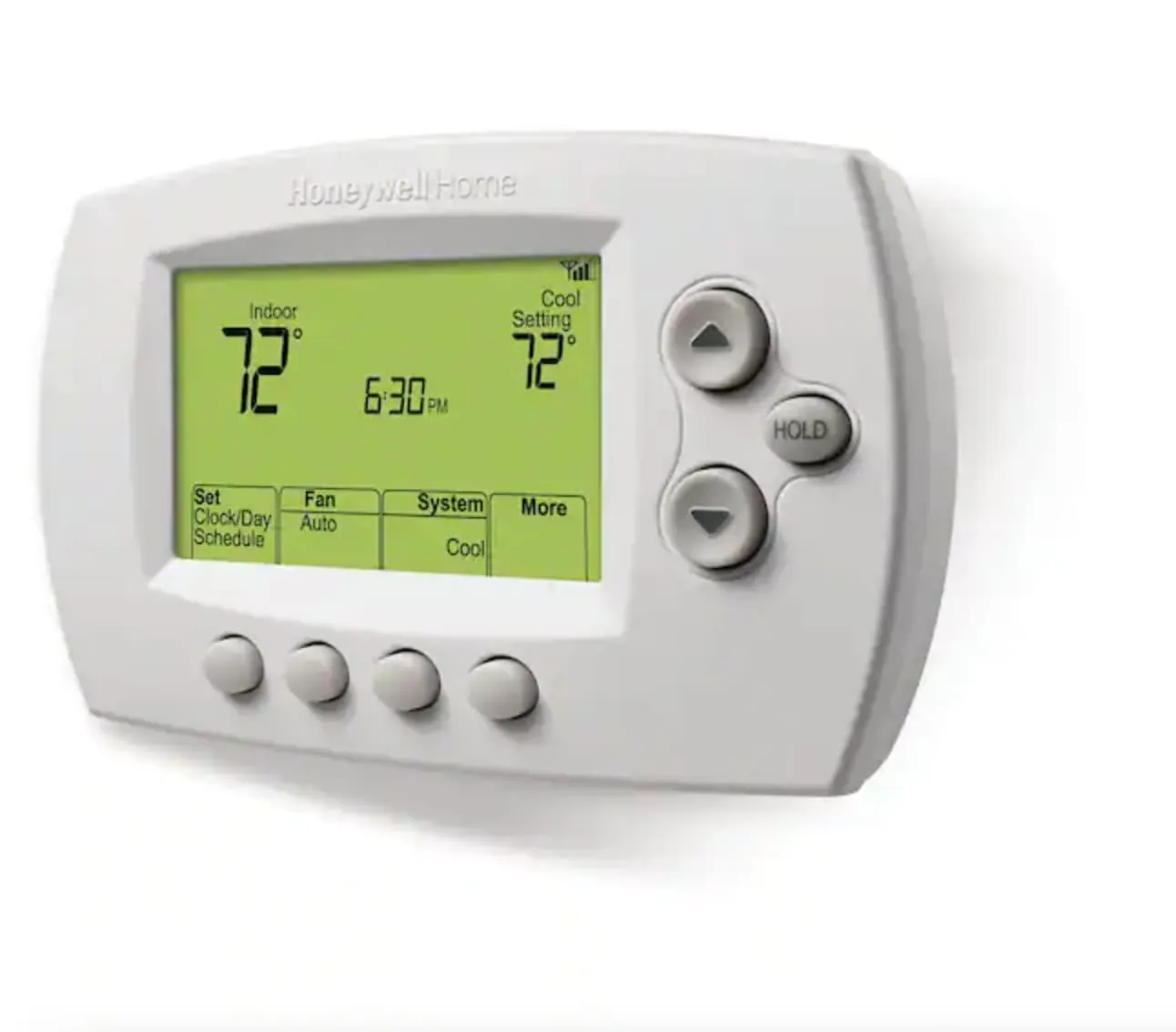
Honeywell Home RTH6580WF Wi-Fi 7-Day Programmable Thermostat, White
- Affordable Wi‑Fi thermostat for remote temperature changes and scheduling
Comparison
The Honeywell Home RTH6580WF and RTH9585WF1004 are Wi‑Fi, 7-day programmable thermostats designed for remote control and scheduling. The RTH6580WF focuses on affordable, practical basics with a backlit button interface, while the RTH9585WF1004 adds a touchscreen, more smart features, and a more modern look. Both require a C-wire and have mixed long-term reliability feedback in reviews.
#1 Overall Winner
Contender
Choose the Honeywell Home RTH6580WF if you want an inexpensive, practical Wi‑Fi thermostat with simple controls and strong day-to-day usability. Choose the Honeywell Home RTH9585WF1004 if you want a touchscreen, more smart features (alerts/reminders), and a more polished connected-home experience—accepting the higher price and potentially fussier installation.
Overall winner
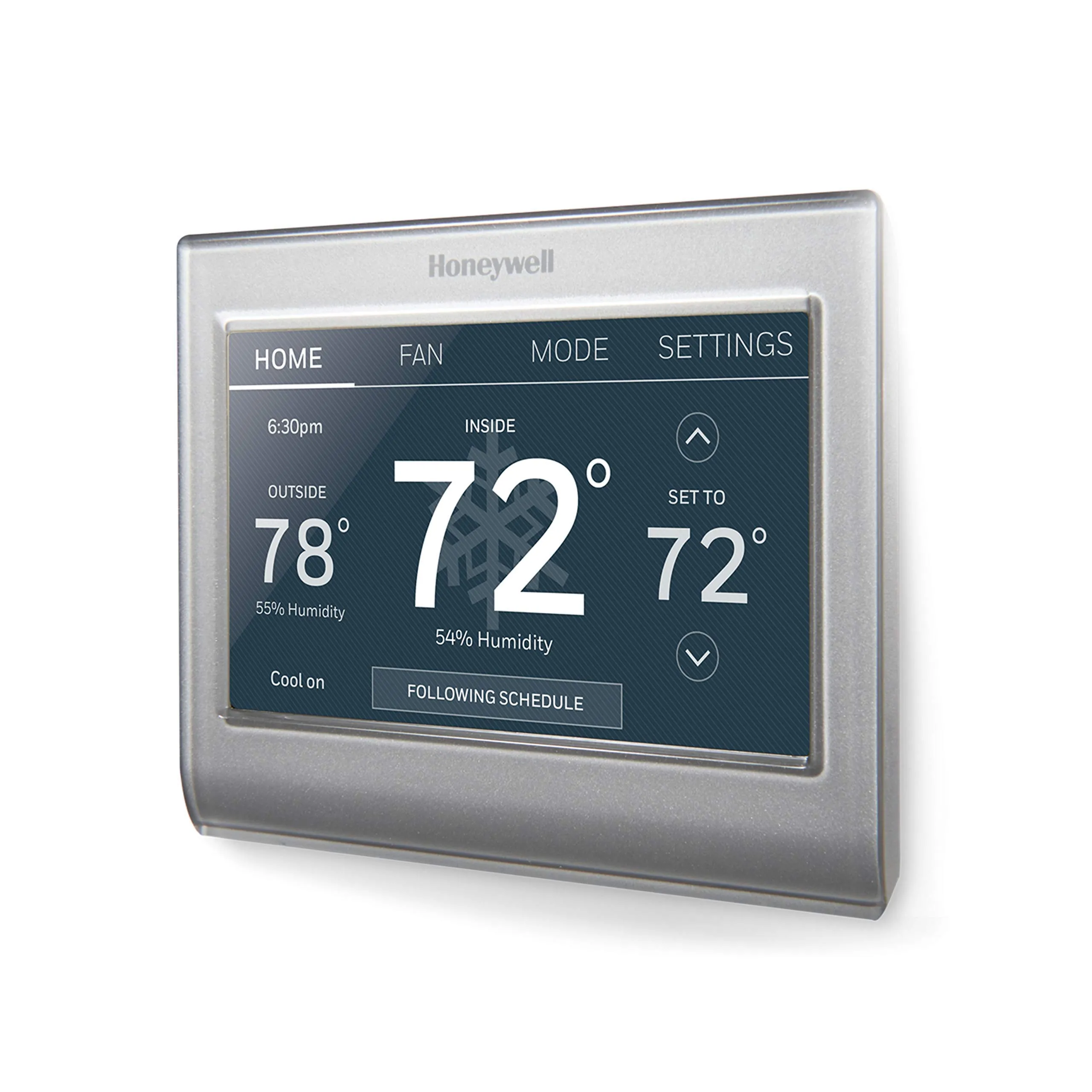
Depends on your needs
| Feature | Honeywell Home RTH6580WF Wi-Fi 7-Day Programmable Thermostat, White | Honeywell Home RTH9585WF1004 Wi-Fi Smart Color Thermostat, 7 Day Programmable, Touch Screen, Energy Star, Alexa Ready, Gray | Winner |
|---|---|---|---|
| Category / use case | Wi‑Fi 7-day programmable thermostat | Wi‑Fi smart color 7-day programmable thermostat | Tie |
| Price (typical listing) | Lower-cost | Higher-cost | Honeywell Home RTH6580WF Wi-Fi 7-Day Programmable Thermostat, White |
| Controls | Buttons + large backlit display | Touchscreen + customizable color display | Depends |
| Voice assistant support (listed) | Alexa / Google Assistant / Cortana listed | Alexa / Google Home listed | Tie |
| Smart features depth | Core scheduling + Smart Response + auto changeover | Adds alerts/reminders, on-screen info, more customization | Honeywell Home RTH9585WF1004 Wi-Fi Smart Color Thermostat, 7 Day Programmable, Touch Screen, Energy Star, Alexa Ready, Gray |
| App & web control | Honeywell Home app or Total Connect Comfort app; web use mentioned | App + web use mentioned; app praised more often | Honeywell Home RTH9585WF1004 Wi-Fi Smart Color Thermostat, 7 Day Programmable, Touch Screen, Energy Star, Alexa Ready, Gray |
| Wi‑Fi setup experience (reviews) | Mixed; some setup hiccups reported | Often positive, but some report it takes a while | Honeywell Home RTH9585WF1004 Wi-Fi Smart Color Thermostat, 7 Day Programmable, Touch Screen, Energy Star, Alexa Ready, Gray |
| Installation difficulty (reviews) | Often described as DIY-friendly | Mixed; wire terminals described as delicate/cramped | Honeywell Home RTH6580WF Wi-Fi 7-Day Programmable Thermostat, White |
| HVAC compatibility (stated) | Forced air, hot water/steam, heat pumps w/ electric backup; not electric baseboard | Forced air, hot water/steam, heat pumps w/ electric backup; not electric baseboard | Tie |
| Reliability (buyer feedback) | Mixed; some reports of failure after months | Mixed; some reports of improper function | Tie |
| Design / footprint | Traditional rectangular body | Slimmer, smaller front footprint | Honeywell Home RTH9585WF1004 Wi-Fi Smart Color Thermostat, 7 Day Programmable, Touch Screen, Energy Star, Alexa Ready, Gray |
| Maintenance & upkeep | Low ongoing maintenance; basic cleaning | Low ongoing maintenance; includes reminder features | Honeywell Home RTH9585WF1004 Wi-Fi Smart Color Thermostat, 7 Day Programmable, Touch Screen, Energy Star, Alexa Ready, Gray |
| Small-space suitability | Wall-mounted; larger face but shallow depth | Wall-mounted; compact face and slim depth | Honeywell Home RTH9585WF1004 Wi-Fi Smart Color Thermostat, 7 Day Programmable, Touch Screen, Energy Star, Alexa Ready, Gray |
| Overall household fit | Practical, budget remote scheduling | Feature-rich connected thermostat experience | Depends |
For everyday home use, both thermostats cover the essentials: set schedules, make quick temperature changes, and adjust settings remotely when you’re away. The RTH6580WF fits homes that want a “set it and forget it” approach with clear physical controls and a backlit screen that’s easy to check at a glance. The RTH9585WF1004 leans more into connected-home convenience with a touchscreen experience, more customization, and the sort of reminders/alerts that can be helpful when you’re managing filters or monitoring unusual indoor conditions.
Both models are designed to improve comfort through scheduling, remote changes, and features like Smart Response (learning how your system reaches a setpoint). The RTH9585WF1004 has an edge for comfort-focused households because it pairs those basics with additional on-screen/app information and alerts/reminders described in the listing, which can make it easier to stay on top of HVAC-related upkeep and unusual temperature/humidity conditions. The RTH6580WF still performs well for typical heating/cooling routines, but it’s more focused on core thermostat control than comfort “extras.”
On core thermostat performance—maintaining set temperatures for heating and cooling—both models appear similarly capable, and both include Smart Response learning to better meet scheduled targets. The main “performance” difference shows up in how confidently they operate as connected devices. The RTH9585WF1004 tends to deliver a more complete smart thermostat experience with stronger connectivity and comfort-related feature depth, while the RTH6580WF focuses on reliable basics at a lower cost.
That said, reviews for both include some reliability complaints. If consistent operation matters more than extra features, it’s worth prioritizing correct wiring (especially the C-wire requirement) and ensuring your HVAC system is fully compatible before choosing either model.
Reliability is a mixed area for both models. The RTH6580WF has many reports of solid day-to-day operation, but the aggregated feedback also mentions units that fail after a few months, and connectivity/setup can be inconsistent. The RTH9585WF1004 also has plenty of satisfied owners, yet reviews and the summary indicate mixed reliability and “doesn’t function properly” complaints for some buyers.
To reduce the risk of issues, the best practical step is verifying HVAC compatibility and wiring (especially the C-wire requirement) before purchase, and taking time during installation to avoid loose or stressed connections. If long-term dependability is your top priority, neither model is a guaranteed win based on the provided feedback.
Both thermostats support heating and cooling control and list compatibility with forced air, hot water/steam systems, and heat pumps with electric backup (with stated exclusions). The RTH9585WF1004 has an edge for climate control convenience thanks to its deeper smart feature set, auto changeover use, and the monitoring tools described (alerts for extreme temperature/humidity and maintenance reminders). The RTH6580WF performs well for the essentials—setpoints, schedules, and remote changes—but is more limited in connected features and receives more mixed feedback on Wi‑Fi setup.
These are low-risk household devices when installed correctly, but most safety considerations come down to proper wiring and correct HVAC compatibility. Both models require a C-wire and are not compatible with electric baseboard heat (120–240V), so using them outside the stated limits could create malfunction or damage risk. During installation, turning off power to the HVAC system and carefully following the wiring guide helps reduce the chance of shorts or loose connections.
Review feedback for the RTH9585WF1004 highlights delicate wire terminals; forcing wires could damage connectors and lead to unreliable operation. Neither listing provides additional safety certifications beyond Energy Star, so it’s best to treat both as standard wired thermostats and prioritize correct installation and secure mounting.
Both thermostats can improve comfort by keeping temperatures aligned with your routine and enabling quick remote adjustments when plans change. The RTH9585WF1004 is better suited to comfort-focused households because it combines Smart Response and auto changeover with additional connected features like alerts/reminders and on-screen/app information (as described), which can help you stay ahead of maintenance and indoor condition swings.
The RTH6580WF still delivers strong everyday comfort for typical homes—especially if you want a simple interface and reliable scheduling—just with fewer “comfort management” extras.
Ease of use is a strength for both, but they achieve it differently. The RTH6580WF is widely described as simple to program and navigate, with a big backlit display and physical buttons that many people find intuitive. The RTH9585WF1004 gets strong ease-of-use feedback too, especially for touchscreen control and app/Alexa integration, though its larger set of options can feel more complex during initial setup.
If you prefer minimal menus and clear buttons, lean RTH6580WF. If you prefer a modern touchscreen interface, lean RTH9585WF1004.
The design choice is straightforward: the RTH6580WF is a traditional rectangular thermostat with a large, backlit display and dedicated buttons, which suits users who want quick, glanceable information and tactile controls. The RTH9585WF1004 looks more modern and compact from the front, uses a touchscreen, and adds display customization (including color) to better match décor.
If you want the cleanest wall look and a thinner device, the RTH9585WF1004 is the stronger design pick. If you prioritize readability in low light, the RTH6580WF’s backlit screen is a practical advantage.
Both are space-efficient compared with older, bulky thermostats, but the RTH9585WF1004 is the better option if wall space is tight. It has a slimmer depth and a smaller front footprint, which can look cleaner in hallways or narrow wall sections. The RTH6580WF takes up more face area but offers a larger, backlit display that’s easy to read from a distance, which can be helpful in busy household areas.
Both thermostats are designed for DIY installation and require a C-wire, so verifying your wiring is the first step. The RTH6580WF is often described as easy to install with clear guidance, though some users mention a small Wi‑Fi setup hiccup during onboarding. The RTH9585WF1004 can be more demanding physically at the wall: reviewers mention delicate wire terminals, tight space on the wall plate, and needing a bit of finesse to get all conductors seated securely.
If you’re comfortable working slowly and carefully with small terminals, either can be installed at home. If you want the smoother wiring experience, the RTH6580WF has the advantage based on reviews.
Both thermostats use plastic housings and are wall-mounted, and neither listing provides premium material details beyond that. Review feedback suggests the RTH9585WF1004 can feel well-finished, but its installation hardware (notably wire terminals) is a recurring weak point—some users describe them as delicate or easy to mishandle. The RTH6580WF receives generally positive “quality” feedback, though there are also reports of failures after a few months that can affect perceived build confidence.
Overall, build quality looks comparable on paper, with the RTH9585WF1004’s terminals and both models’ long-term reliability being the main watch-outs.
Neither product listing provides detailed durability claims beyond normal thermostat use, so the best signals come from review patterns. The RTH6580WF has reports of early failures from some owners, which can limit confidence in long-term durability even though many others report stable performance. The RTH9585WF1004 scores better for durability overall, but it still has mixed reliability feedback and installation hardware that some reviewers describe as delicate, which could affect long-term stability if wires aren’t seated well.
If durability matters most, careful installation and avoiding repeated rewiring/handling may matter as much as the model choice.
Both thermostats are generally low maintenance: once installed, most upkeep is digital (adjusting schedules, checking temperatures, and occasional setting changes). The RTH6580WF keeps things simple—fewer advanced features can mean fewer settings to revisit. The RTH9585WF1004 adds maintenance-friendly reminders and alerts (as described), which can help you keep up with filter and humidifier pad changes and spot unusual indoor conditions earlier.
If you want the thermostat to prompt upkeep tasks, the RTH9585WF1004 is better aligned. If you prefer minimal prompts and a basic interface, the RTH6580WF is simpler to live with.
Neither thermostat is designed to be portable in the way a plug-in appliance is; both are wall-mounted and tied into HVAC wiring. Between the two, the RTH9585WF1004 is smaller and lighter, which can make it a bit easier to handle during installation or replacement. The RTH6580WF is larger and heavier, but once mounted, portability isn’t a meaningful factor for either model.
The RTH6580WF covers the key features most households need: 7-day scheduling, remote control via Honeywell apps, Smart Response, and auto changeover. The RTH9585WF1004 adds a more advanced feature set, including a customizable color touchscreen and monitoring-style tools like alerts and reminders (filter/humidifier pad and extreme indoor conditions as described). It also emphasizes flexible programming options and presents more information via the screen/app experience.
If you want straightforward scheduling with fewer extras to manage, the RTH6580WF is the simpler feature match. If you want more visibility and customization, the RTH9585WF1004 offers more.
The RTH6580WF supports control through the Total Connect Comfort app or the Honeywell Home app, and users describe the experience as functional and “no frills,” though app/Wi‑Fi feedback is mixed and some reviews raise region-availability concerns. The RTH9585WF1004’s app experience is more consistently praised, with customers highlighting easy checking/programming via phone and good Alexa compatibility.
Both may require account/registration steps. If you want the smoother, more feature-forward app experience, the RTH9585WF1004 is the better bet from the data provided.
Both thermostats are positioned for smart-home use with Wi‑Fi connectivity and voice assistant support. In practice, the RTH9585WF1004 is the stronger smart-home fit: reviews frequently mention smooth Alexa integration and a more capable connected experience. The RTH6580WF also supports voice control and remote adjustments, but buyer feedback is more mixed on Wi‑Fi setup and ongoing connectivity, which can affect how seamless smart-home control feels.
In a smart-home setup, both can be controlled remotely and support voice assistants, but the RTH9585WF1004 is the more complete “connected home” choice. Reviews regularly highlight smooth Alexa integration and solid Wi‑Fi performance, and the feature set supports a more interactive experience (touchscreen, reminders, alerts). The RTH6580WF can still work well for smart-home basics, but it has more mixed feedback on connectivity and app experience, which can make smart routines feel less consistent if your network or setup is finicky.
Both thermostats support schedule-based automation (7-day programming) and include Smart Response learning to better meet scheduled temperatures. The RTH9585WF1004 has an advantage for hands-off ownership because it adds alerts and reminders (as described), which act like “automation around maintenance” by prompting filter or humidifier pad changes and flagging extreme indoor conditions.
If your definition of automation is mainly dependable scheduling and predictable routines, both will work. If you want more proactive notifications and monitoring-style automation, the RTH9585WF1004 offers more.
Both models rely on Wi‑Fi for remote control. The RTH9585WF1004 generally shows a stronger connectivity experience, with many reviewers reporting easy Wi‑Fi setup and stable integration with Alexa and phones. The RTH6580WF has a more mixed story: some buyers report quick setup and stable operation, while others struggle with initial connection or pairing steps.
For either thermostat, plan to follow the setup steps carefully and ensure your Wi‑Fi environment supports the required connection process. If stable app control is your top priority, the RTH9585WF1004 has the clearer edge based on provided feedback.
Both models are Energy Star certified (per listings) and designed to reduce waste through scheduling and more consistent temperature control. The RTH9585WF1004 goes further in the listing by highlighting monthly energy reports and personalized tips, and it supports utility-related programs where available. The RTH6580WF also mentions utility programs and focuses on straightforward schedule-based savings.
In real-world use, efficiency gains will depend heavily on your HVAC system, wiring, and how well your schedule is set up. If you want more reporting/feedback tools, the RTH9585WF1004 has the advantage based on provided details.
Both thermostats use Wi‑Fi, apps, and account/registration (mentioned in reviews) to enable remote control, which means some household data and control actions may pass through online services. Several reviews mention region limitations and account-related setup, which is a practical privacy/security consideration if you’re outside the intended market. Neither listing provides clear details about encryption, local-only control, or data retention.
If privacy is a concern, consider limiting voice assistant use, using strong account passwords, and confirming app availability and login requirements before purchase. For the most privacy-conscious households, relying more on local scheduling and less on cloud features may be preferable.
Value depends on what you’ll actually use. The RTH6580WF is the clear value leader on price while still delivering the main benefits of a Wi‑Fi thermostat: remote control, 7-day scheduling, and a readable backlit display. Many buyers also call it good value, though reliability and connectivity experiences are not universally positive.
The RTH9585WF1004 costs much more, and value sentiment is mixed. It can justify the premium if you want the touchscreen experience, customization, and the additional alert/reminder features described. If you won’t use those extras, the price gap can be hard to justify versus the RTH6580WF.
This is effectively a tie: both thermostats come from Honeywell Home and share similar positioning and compatibility requirements. Across reviews, buyers often describe both as coming from a “reliable company,” but they also report occasional defective units and setup friction, which can happen with connected electronics. What differs more than brand trust is the product’s complexity—RTH9585WF1004’s richer feature set can introduce more setup points, while RTH6580WF keeps things simpler.
Both models have the same star rating and very large review counts, suggesting broad adoption and generally positive experiences overall. For the RTH6580WF, satisfaction is driven by ease of installation, straightforward programming, and strong value; the most common negatives relate to Wi‑Fi setup/connectivity and mixed long-term reliability. For the RTH9585WF1004, customers frequently praise ease of use, app/Alexa compatibility, and perceived quality, while negatives include installation friction (wire terminals), mixed reliability, and mixed views on whether it’s worth the higher price.
If you want the simplest “happy path,” product B tends to have stronger connected-home satisfaction, while product A tends to win on budget satisfaction.
The better choice depends on whether you value price or features. The Honeywell Home RTH9585WF1004 is the stronger overall smart thermostat option, with a touchscreen interface, deeper feature set (including alerts/reminders described in the listing), and stronger connectivity/app performance. Its main limitations are the much higher cost, more installation friction for some users, and mixed reliability/value feedback.
The Honeywell Home RTH6580WF remains a compelling budget pick: it delivers the core benefits—remote control, 7-day scheduling, and a readable backlit display—with strong ease-of-use and value sentiment. Its main drawbacks are mixed Wi‑Fi setup experiences and some reports of early failures. If you want the simplest low-cost upgrade, pick RTH6580WF; if you want the more complete connected-home experience, pick RTH9585WF1004.
Overall winner
Depends on your needs
The RTH9585WF1004 is the stronger pick if you want a touchscreen, more smart features (like alerts/reminders), and better-connected app/voice control. The RTH6580WF is better if you want the essentials—7-day scheduling and remote control—at a much lower cost. Both require a C-wire and similar HVAC compatibility checks.
Yes. Both products state a C-wire is required to power the thermostat. Before buying, it’s worth checking your existing thermostat wiring and HVAC control board. If you don’t have a C-wire, you may need an adapter or a different thermostat designed for C-wire-free installs, depending on your system.
The RTH6580WF is more often described as straightforward to install, though Wi‑Fi setup can take patience. The RTH9585WF1004 can also be installed by DIYers, but reviews mention the wall-plate wire terminals can be delicate and cramped, which can slow down installation if you’re not careful with wire insertion.
Both offer remote control via Honeywell apps and web access, but the RTH9585WF1004 has stronger feedback overall for connectivity and app use. With the RTH6580WF, Wi‑Fi setup and connectivity are more mixed in reviews—some users find it smooth, while others report pairing or connection hassles.
Several reviews for both models mention issues registering the thermostat or using the app in certain countries (for example, Italy, UAE, and Saudi Arabia). If you’re buying outside the US, it’s a good idea to confirm app availability and account/registration support for your region before purchasing.
Both list voice assistant compatibility, but the RTH9585WF1004 is more consistently praised in reviews for Alexa integration and smart-home use. The RTH6580WF also supports voice control, but its overall connectivity experience is more mixed, so voice control may depend more on how smoothly it connects to your Wi‑Fi.
The RTH9585WF1004 focuses on a more modern experience: touchscreen control, customizable color display, and additional alerts/reminders. The RTH6580WF is more “basic but practical,” with physical buttons, a large backlit display, and a simpler feature set that still covers core scheduling and remote adjustments.
The RTH6580WF is typically the better value if you mainly want reliable scheduling and remote control at a low price. The RTH9585WF1004 can be worth it if you’ll use the added features—touchscreen interface, more smart-home polish, and monitoring alerts—but some buyers do consider it expensive for what it adds.
Check our rankings and expert guides to find the best home lifestyle products for your goals.