#1 Overall Winner
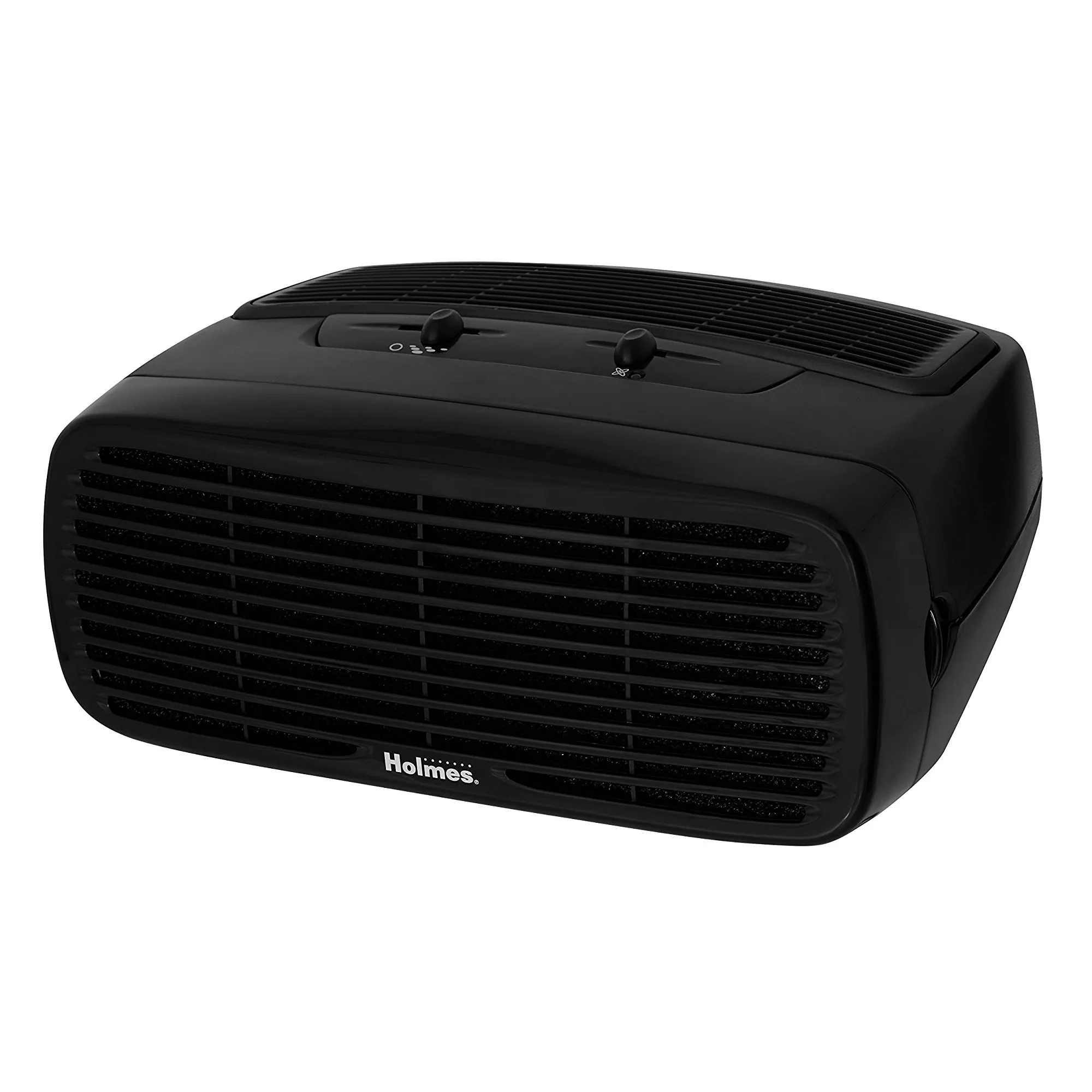
Holmes Desktop HEPA-Type Air Purifier HAP242B-U
- Compact format suits desktops, tables, and small rooms.
Comparison
The Holmes HAP242B-U is a compact HEPA-Type purifier for small rooms, desks, and close-range air cleaning. The Medify MA-112 is a far larger, higher-capacity purifier with stated H13 filtration, sensors, and automatic modes for bigger living spaces. Choose based primarily on room size, desired controls, and budget: Holmes is the simpler small-space option, while Medify is built for substantially more airflow and coverage.
#1 Overall Winner
Contender
Choose the Holmes HAP242B-U for a small bedroom, office, or desktop location where simple controls, compact size, and lower ownership cost matter. Choose the Medify MA-112 for a large room or open area where high airflow, stated H13 filtration, air-quality sensing, and auto operation justify the larger investment.
Overall winner
Depends on your needs
| Feature | Holmes Desktop HEPA-Type Air Purifier HAP242B-U | Medify MA-112 Air Purifier V3.0 | Winner |
|---|---|---|---|
| Intended room size | Up to 109 sq. ft. | Listed for very large spaces; figures vary in supplied details | Medify MA-112 Air Purifier V3.0 |
| Filtration specification | HEPA-Type; particles as small as 2 microns | Dual True HEPA H13; stated down to 0.1 microns | Medify MA-112 Air Purifier V3.0 |
| CADR | 70 CADR | 1009 CADR | Medify MA-112 Air Purifier V3.0 |
| Fan settings | 3 speeds | 4 speeds plus auto and sleep modes | Medify MA-112 Air Purifier V3.0 |
| Air-quality sensing | Not specified | Dust sensor and PM2.5 indicator | Medify MA-112 Air Purifier V3.0 |
| Placement | Desktop; vertical or horizontal | Large floor unit | Holmes Desktop HEPA-Type Air Purifier HAP242B-U |
| Size and weight | 7.2 x 14.6 x 11.3 in.; weight not provided | 20 x 15.2 x 11 in.; 32 lb. | Holmes Desktop HEPA-Type Air Purifier HAP242B-U |
| Noise | 70 dB listed; mixed review feedback | 70 dB maximum listed; sleep mode; mixed review feedback | Depends |
| Power draw | 45 W | 95 W | Holmes Desktop HEPA-Type Air Purifier HAP242B-U |
| Automation | Programmable feature listed; no sensor-led mode specified | Auto mode, dust sensor, timer, and filter indicator | Medify MA-112 Air Purifier V3.0 |
| Filter upkeep | Regular replacement noted by users; inexpensive filters reported | Filter indicator; stated 3,000-hour filter life; expensive filters reported | Depends |
| Warranty | 3-year limited warranty | Stated lifetime warranty | Medify MA-112 Air Purifier V3.0 |
| Price level | Lower upfront price | Much higher upfront price | Holmes Desktop HEPA-Type Air Purifier HAP242B-U |
| Reported quality concerns | Generally positive reliability feedback | Some reports of rattling or poor assembly | Holmes Desktop HEPA-Type Air Purifier HAP242B-U |
For everyday home use, Holmes works best as a dedicated purifier for one small occupied zone, such as a bedside table, desk, nursery-sized room, or compact office. It is easy to move and position close to the source of dust or allergens. Medify is more suitable as the main purifier for a large shared living area, where its high airflow and automatic monitoring can reduce the need for constant manual adjustment. A small flat may find Holmes more proportionate, while a larger home benefits more from Medify's scale.
Both products support home hygiene by filtering airborne particles, but their scale differs sharply. Holmes is suitable for keeping dust and pet dander under control in a small room, with reviews noting improvements in dusty bedrooms and offices. Medify is better positioned for larger shared areas exposed to pet litter dust, cooking smells, pollen, or general household dust. Its dust sensor and auto mode offer a more responsive approach when particle levels rise, though neither purifier replaces source cleaning or ventilation.
Neither appliance heats or cools a room, but both can contribute to perceived comfort by circulating and filtering air. Holmes users often describe a fresher-feeling small room and reduced allergy-related discomfort; its airflow may also be noticeable in a compact room. Medify is the stronger comfort choice for a larger living area because of its greater listed airflow and sleep mode. Both may be audible at higher settings, so overnight comfort depends on the chosen speed and individual sensitivity to fan noise.
The Medify MA-112 has the clearer performance advantage on the supplied specifications. Its listed CADR of 1009, large-area positioning, and dual H13 HEPA filtration down to 0.1 microns indicate a much higher-throughput design than the Holmes. Buyers commonly report reduced dust, odors, and stuffiness, although one review found smoke odor results only partial. Holmes performs well within its intended small-room role: many owners report less dust and allergy relief, and it has a 70 CADR. Its effectiveness is more dependent on close placement and an appropriately sized room.
Holmes has a stronger reliability picture in the supplied feedback, with many users describing effective operation over extended use and no reported issues in their individual reviews. Its simpler design also has fewer automated components to manage. Medify has many positive reports of effective daily use, but its reliability assessment is held back by some buyer accounts of rattling, loose internal parts, or poor assembly on delivered units. These reports do not mean every unit is affected, but buyers should inspect Medify carefully when it arrives.
For airborne cleaning, Medify has the stronger supplied specification and user-feedback profile for large spaces. Its dual H13 filters, high CADR, dust sensor, and auto mode are useful for homes with pets, litter dust, cooking odors, or recurring outdoor particulates. Holmes is effective for modest small-room particle control, with many users noticing less dust and fewer allergy symptoms. Neither product's reviews provide controlled testing, and odor results are mixed, so placement, airflow, and source control still matter.
These are air-quality products rather than temperature-control appliances. Holmes is most suitable for improving the feel of a small enclosed room by filtering circulating dust and allergens. Medify has the greater potential to influence air quality across a large living area thanks to its much higher listed airflow and automatic dust response. Running either unit can create noticeable air movement, but neither should be selected as a substitute for heating, cooling, or humidity control.
Both are corded electrical appliances and should be used on a stable surface with clear airflow around their intakes and outlets. Holmes and Medify each include an optional ionizer, so buyers who do not want to use that function can leave it off. Medify adds a child lock, which may be useful in homes where controls could be changed by children or pets. The Medify is heavy, and a review notes its single handhold can make lifting awkward; avoid carrying it carelessly or placing it where it can be knocked over. No further safety certification or performance claims beyond the supplied listing should be inferred.
Holmes can improve day-to-day comfort in a small personal area, particularly for people who report sensitivity to dust, pet dander, or pollen. Its compact size allows placement near where a person sleeps or works. Medify is more comfortable for a larger shared space because its high airflow and auto mode can respond to changing conditions without frequent manual adjustment. Its sleep mode also helps minimise light disturbance. The trade-off is that Medify occupies more space and may be more intrusive when operated at high speed.
Both products are plug-in units with physical touch or button controls and no app setup. Holmes is easier to understand immediately because it has fewer functions and a simple three-speed format. Medify is also described by buyers as easy to set up, but its added controls require a little more familiarisation. In return, auto mode and the filter indicator can reduce routine decision-making. Holmes is easier to reposition, while Medify's 32-pound body makes its initial placement more important.
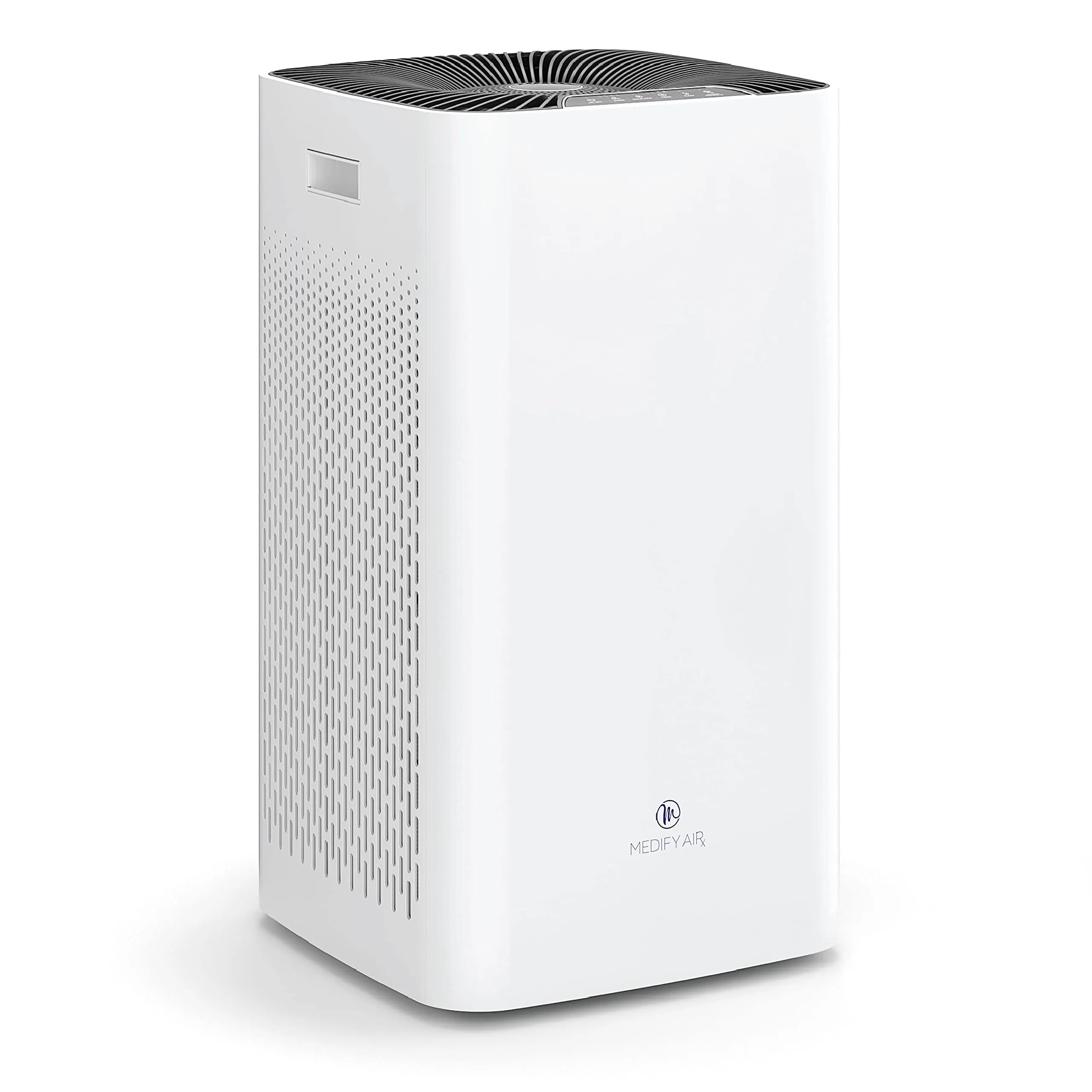
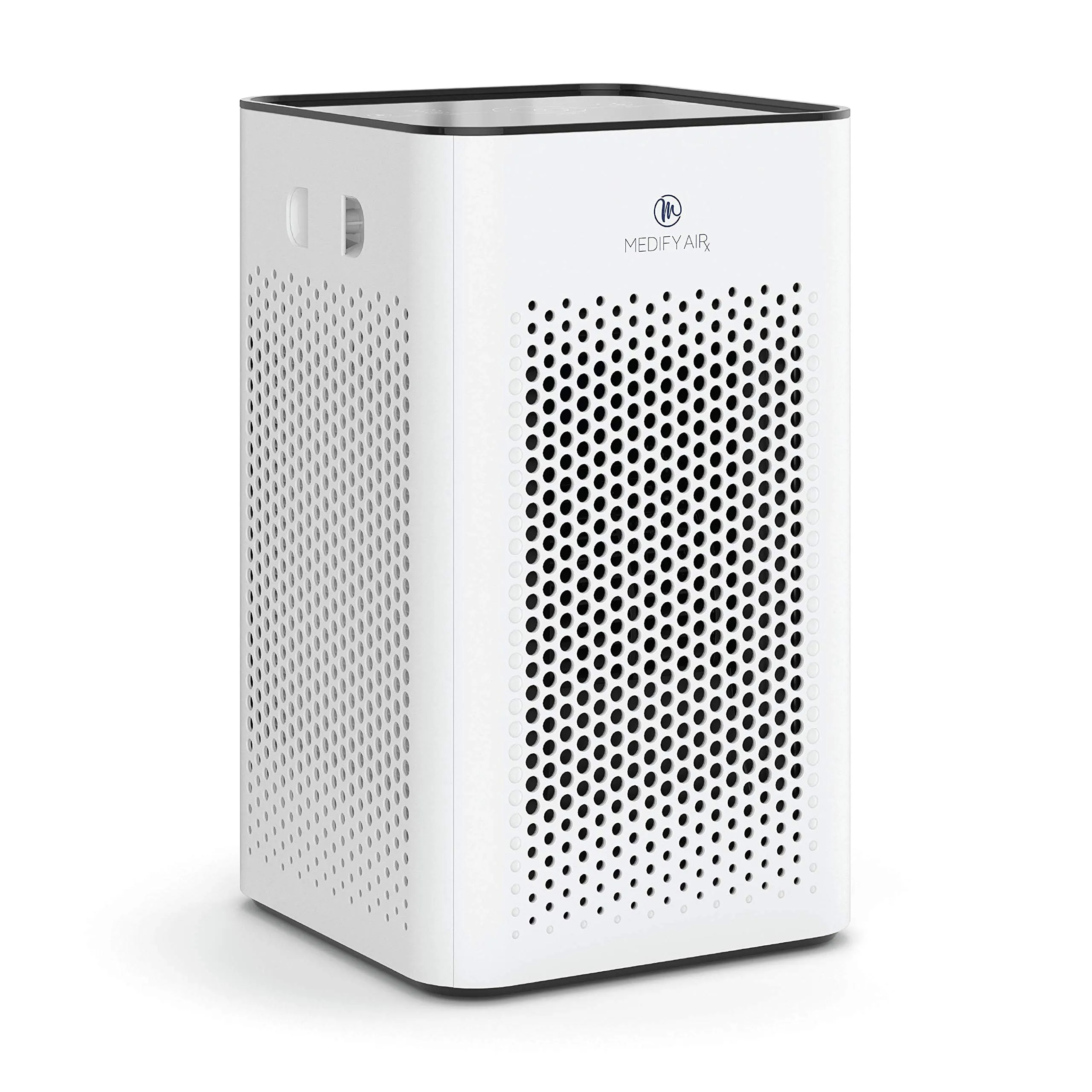
Holmes is designed around placement flexibility. Its 7.2 by 14.6 by 11.3-inch form can stand in either orientation, making it easier to fit on furniture or close to a desk. Medify has a more substantial floor-unit design, with a 20-inch depth and a 32-pound weight. Its glass-topped control panel and white finish may suit a visible living-room position, but it is not the convenient room-to-room option. Holmes wins for discreet, adaptable placement; Medify prioritises airflow capacity.
Capacity is the largest practical difference. Holmes is recommended for rooms up to 109 sq. ft., so it is most credible in compact bedrooms, offices, and other enclosed spaces. Medify is marketed for large rooms and lists very high airflow, with coverage figures that range within the provided details. It is the better option for a large living room, open-plan area, or broad household zone. Buyers should avoid using the Holmes as the only purifier for a large room.
Holmes uses space much more efficiently. It measures 7.2 by 14.6 by 11.3 inches and can be positioned in two orientations, which suits flats, home offices, and crowded bedrooms. Medify is a much larger 20 by 15.2 by 11-inch floor unit and needs more open space for practical airflow. That larger footprint supports far greater capacity, so the appropriate choice depends on whether available space or room coverage is the household's limiting factor.
Both purifiers list a maximum noise level of 70 dB and both attract mixed buyer feedback on sound. Holmes owners often find low speed unobtrusive, but high speed may be noticeable in a quiet room. Medify's sleep mode is designed for quieter nighttime use and is often praised, though faster settings are still reported as loud by some buyers. For sleeping, use lower settings and assess whether airflow needs outweigh the fan sound.
Neither purifier needs permanent installation, mounting, wiring, or an app. Holmes is especially simple to place because it is compact and can sit vertically or horizontally on a desk, table, or other stable surface. Medify also only needs a suitable plug-in location, but its 32-pound weight and 20-inch depth mean it is better treated as a semi-permanent floor placement. Leave appropriate clear space around either unit so intake and output airflow are not obstructed.
The supplied data does not establish a major construction-quality lead. Holmes has generally positive long-term owner comments, including reports of continuous operation without rattling, and it carries a three-year limited warranty. Medify has a sleek glass-covered control panel and positive feedback on its appearance, but some reviews report crooked seams, loose internal parts, rattling, and thin plastic filter-cover releases on certain units. Check a Medify unit promptly after delivery and retain warranty documentation if choosing it.
Holmes has positive owner reports from repeated and continuous use, alongside a three-year limited warranty, although its filters need periodic replacement. Medify's stated lifetime warranty is a notable support advantage, and its filters are specified to last about 3,000 hours. However, buyer concerns about rattling units, thin plastic filter-cover releases, and potentially poor tolerance of a fall add caution around physical durability. Neither model has enough long-term component data here to make a definitive lifespan claim.
Both purifiers require ongoing filter care. Holmes users note that heavy continuous use can mean changing filters regularly, but replacement filters are commonly described as inexpensive. Medify specifies a filter life of around 3,000 hours or six months and includes a replacement indicator, which simplifies tracking. Its filters are reported as expensive, so recurring ownership cost should be considered. Medify's filter access is described as easy, while Holmes benefits from its smaller and easier-to-handle body.
Holmes is the clear portability choice. Its compact desktop design and flexible orientation make it easy to shift between a desk, small bedroom, and office. Medify is a 32-pound large-room purifier, so moving it regularly is less convenient; one review also notes that its single handhold can make lifting awkward. Select Holmes if one purifier needs to travel around the home, and Medify if it will remain in a primary large room.
Holmes keeps the feature set basic, with three speeds, touch or button control, vertical or horizontal placement, and an optional ionizer. Medify offers substantially more day-to-day control: four speeds, a 0–8 hour timer, dust sensor, auto mode, sleep mode, dimmable panel, PM2.5 pollution indicator, filter replacement indicator, child lock, and optional ionizer. Those additions make Medify more adaptable to changing air conditions. Holmes is preferable for users who simply want to select a fan speed and let the purifier run.
Medify is the clear choice for hands-off operation. Its dust sensor, auto mode, PM2.5 indicator, timer, sleep mode, and filter reminder can tailor operation to room conditions and reduce routine monitoring. Holmes offers basic adjustable speeds and is listed as programmable, but the supplied data does not describe comparable sensor-based controls or scheduling. Choose Holmes for manual simplicity and Medify for automated air-management features.
Holmes lists a 45-watt draw, compared with 95 watts for Medify, so it has the lower stated power demand. Medify's greater draw accompanies far higher listed airflow and much wider intended coverage, making direct running-cost comparisons inappropriate without the chosen fan speed and hours of use. The Holmes may be the more proportionate option for continuous small-room use. Medify can be more operationally efficient for a large room because one high-capacity unit may cover an area that would otherwise need multiple small purifiers.
Holmes is the better value for a small room. Its lower purchase price, compact design, adequate small-room CADR, and reportedly inexpensive replacement filters align well for buyers who need targeted particle reduction rather than broad coverage. Medify costs far more, and filter costs receive mixed feedback, but it offers much higher listed airflow, stated H13 filtration, sensors, automatic modes, and a lifetime warranty. It can represent better value when those capabilities will be used in a genuinely large space. Buying Medify for a desktop-sized room would be difficult to justify.
The available data supports a cautious comparison rather than a broad brand-reputation judgment. Holmes has a large base of positive buyer feedback for this compact model and provides a three-year limited warranty. Medify has equally strong overall buyer satisfaction, lists CARB and ETL certification, and states a lifetime warranty. However, some Medify feedback raises concerns about unit-to-unit assembly quality and communication around shipments. Holmes has fewer supplied quality-control concerns, while Medify provides stronger stated warranty coverage.
Both products have a 4.6 out of 5 star rating and a large volume of reviews, indicating broad positive buyer sentiment. Holmes is especially praised for compactness, ease of moving, dust reduction, small-room allergy support, and value. Its recurring criticisms concern higher-speed noise and variable odor performance. Medify receives repeated praise for noticeable air-quality improvement, easy setup, odor reduction, sleep mode, and high-capacity operation. Its negatives are more substantial: higher price, expensive filters, mixed noise feedback, and isolated reports of defective or rattling units.
Holmes includes a three-year limited warranty. Medify states a lifetime warranty and identifies a replacement filter expected to last around six months. The Medify warranty is the stronger stated coverage, but one review advises registering promptly and another describes unsatisfactory communication around shipping. Buyers of either purifier should retain proof of purchase, inspect the unit at arrival, and confirm current warranty terms directly before relying on them.
The Medify MA-112 wins on overall capability. It is designed for much larger rooms and offers stronger stated filtration, far higher listed airflow, and useful automated controls. Its main limitations are the high purchase price, bulk, costly filters, and some reported quality-control concerns.
The Holmes HAP242B-U is not a direct large-room alternative, but it is the more appropriate product for a small bedroom, office, or desktop setting. Its main strengths are low cost, compact flexible placement, and positive small-room feedback; its limitations are narrow coverage, basic controls, and HEPA-Type rather than stated H13 filtration. Match the purifier to the room rather than buying capacity you will not use.

Overall winner
Depends on your needs
The Medify MA-112 is the stronger overall choice for large spaces and buyers who want H13 filtration, sensor-based auto mode, and more controls. The Holmes HAP242B-U is the more practical option for a small bedroom, office, or desktop area where lower cost, compact placement, and simple operation matter more than high coverage.
The Holmes is the more natural fit for a small bedroom or office because it is recommended for rooms up to 109 sq. ft., can sit vertically or horizontally, and takes up much less space. The Medify can still be used in a small room, but its size, weight, and high-capacity design may be unnecessary there.
Yes. The Medify is explicitly positioned for large spaces and has a listed CADR of 1009. Its supplied listing gives more than one coverage figure, including up to 4,455 sq. ft. in one hour, so it is sensible to check the room's layout and use the published CADR and intended air-change needs when sizing it.
The Holmes uses a HEPA-Type filter and is listed as capturing particles as small as 2 microns. The Medify uses dual True HEPA H13 filtration with a stated capture size down to 0.1 microns. These are different stated specifications, so the Medify has the more demanding filtration claim in the supplied data.
Neither model has an unconditional noise advantage. Both list a maximum of 70 dB, and reviews for both contain mixed comments about higher-speed sound. The Holmes has buyers who find low speed nearly inaudible, while the Medify offers a dedicated sleep mode that dims its panel and is often described as quiet.
The Medify provides a filter replacement indicator and states that its replacement filter lasts about 3,000 hours, or roughly six months, which can make timing easier. Holmes owners note that filters may need changing regularly with heavy use, though replacement filters are often described as inexpensive. The better choice depends on whether lower consumable cost or maintenance reminders matter more.
Both are plug-in purifiers and do not require smart-home pairing or an app. The Holmes uses straightforward speed controls, while the Medify adds a touch panel with more settings, including auto mode, sleep mode, timer, and child lock. Medify offers more control, but Holmes has the shorter learning curve for basic use.
The Holmes offers better value for a small, targeted space because its purchase price is much lower and reviews mention affordable replacement filters. The Medify can justify its higher cost for a large home area or for buyers who will use its high airflow and automation features. It is less compelling if used only beside a desk or in a very small room.
Check our rankings and expert guides to find the best home lifestyle products for your goals.