#1 Overall Winner
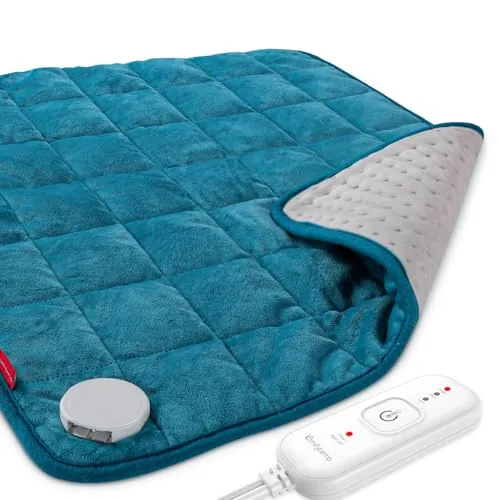
Comfytemp Weighted Heating Pad for Back & Period (20"x24")
- Comfort-focused design: weighted pad conforms well and stays in place for targeted warmth.
Comparison
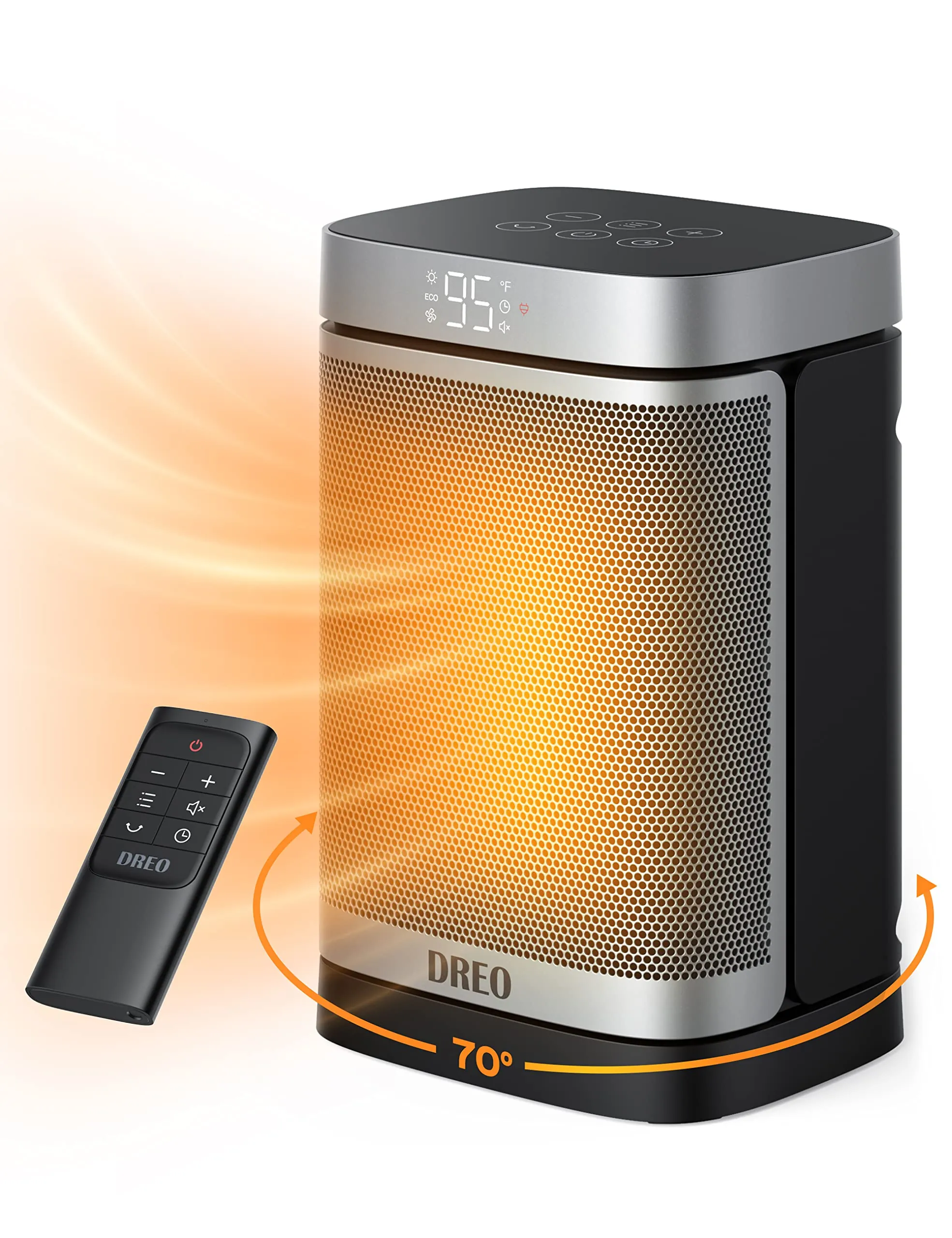
The Comfytemp Weighted Heating Pad and the DREO Atom One Space Heater both add warmth, but they do it in very different ways. Comfytemp is designed for targeted, direct-contact comfort on areas like the back or abdomen, while DREO is built to heat the air in a small room with thermostat control, oscillation, and a remote. The better pick depends on whether you need personal spot relief or whole-room warmth.
#1 Overall Winner
Contender
Pick the DREO Atom One if you want quick, quiet supplemental heat for a bedroom or home office with thermostat control and a remote. Choose the Comfytemp Weighted Heating Pad if your priority is targeted, on-body comfort (back/abdomen/shoulders) and you like the feel of a weighted pad that stays in place. Reliability feedback is mixed for both, so warranty/support and return options matter.
Overall winner
Depends on your needs
| Feature | Comfytemp Weighted Heating Pad for Back & Period (20"x24") | DREO Atom One Space Heater with Remote (1500W) | Winner |
|---|---|---|---|
| Product type | Weighted electric heating pad (direct contact) | PTC ceramic space heater (forced air) | Depends |
| Primary use case | Back/abdomen/neck/legs spot warmth | Small-room warmth (home office/bedroom) | Depends |
| Heating coverage / size fit | Extra-large 20"x24" pad coverage | Listed coverage 200 sq ft | Depends |
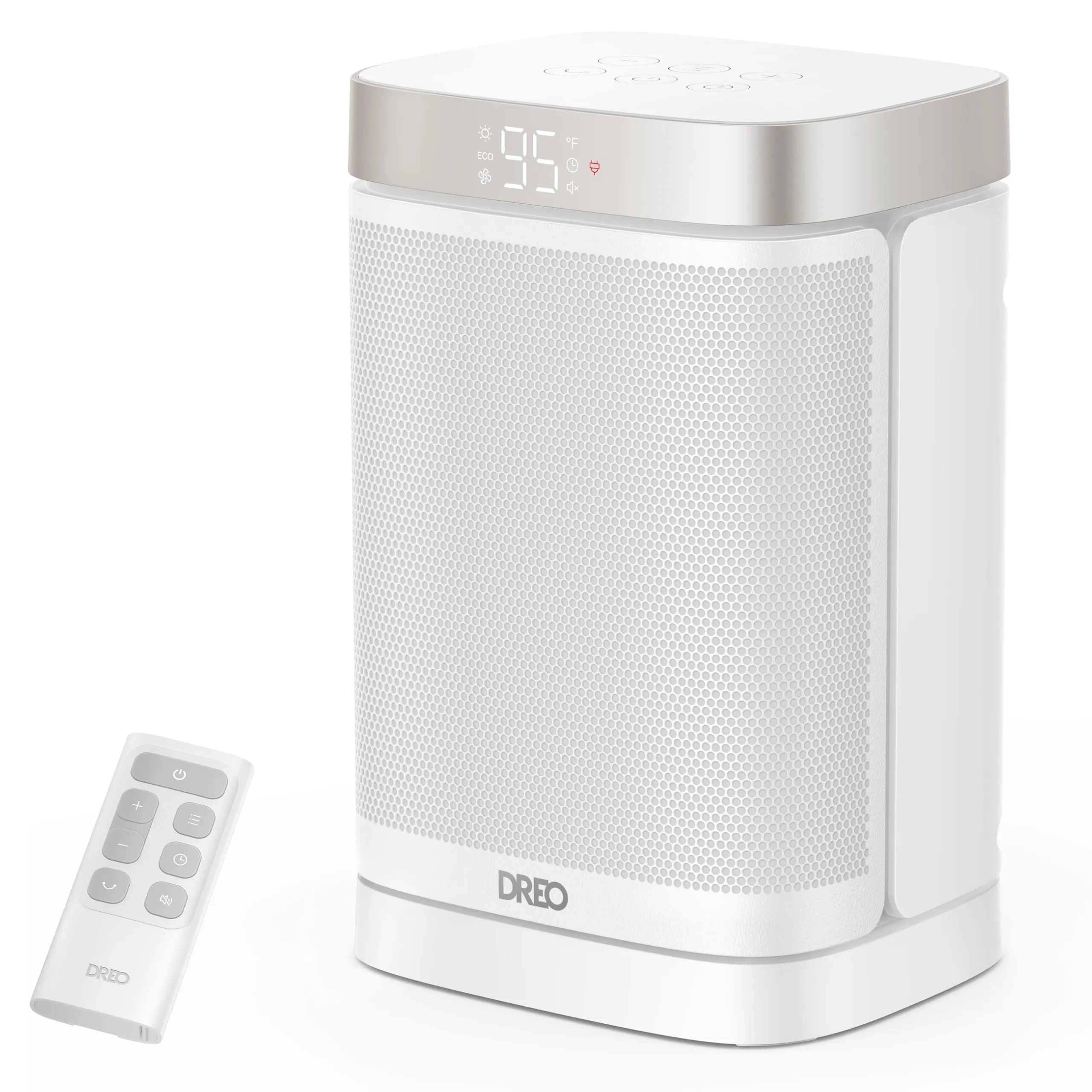
| Heat control style | 3 heat levels | Digital thermostat (41–95°F) + modes | DREO Atom One Space Heater with Remote (1500W) |
| Timer / auto shutoff | 2-hour auto-off | 12-hour timer | DREO Atom One Space Heater with Remote (1500W) |
| Safety features stated | Overheat protection; auto shut off | Tip-over + overheat protection; enhanced plug; flame-retardant materials | DREO Atom One Space Heater with Remote (1500W) |
| Noise expectations | Silent operation (no fan) | Designed to be quiet; fan noise possible | Comfytemp Weighted Heating Pad for Back & Period (20"x24") |
| Portability around the home | Portable for personal use; flexible pad | Compact heater; easy to move room-to-room | DREO Atom One Space Heater with Remote (1500W) |
| Ease of cleaning | Detachable controller; machine/hand washable (no tumble dry) | Keep heater clean; airflow/vents need attention | Comfytemp Weighted Heating Pad for Back & Period (20"x24") |
| Reliability (from review trends) | Mixed; some early failures reported | Mostly positive; some failures after ~1 year reported | DREO Atom One Space Heater with Remote (1500W) |
| Comfort feel | Weighted, conforming “hug” feel | Warm airflow with oscillation | Depends |
| Best for desks and work setups | Good for lap/back spot heating | Good for warming your workspace air | DREO Atom One Space Heater with Remote (1500W) |
For everyday home use, these products fit different routines. The Comfytemp pad is most useful when you’re sitting or lying down and want warmth exactly where you feel tension or discomfort. The DREO heater is more of a “room comfort” tool—useful when your office, bedroom, or a chilly corner of the home needs a quick temperature boost. If your goal is to feel warmer while moving around the room, the DREO is usually the more practical option.
Both products improve comfort, but in different ways. The Comfytemp heating pad provides direct-contact warmth and a weighted feel that many reviewers describe as soothing for back or abdominal comfort. The DREO Atom One improves overall room comfort by heating air quickly, adding oscillation to spread warmth, and using a digital thermostat to maintain a set temperature. If your discomfort is localized, the pad is more targeted; if your whole room feels cold, the space heater is the better match.
In terms of doing their main jobs well, the DREO Atom One shows stronger performance for room heating: reviews repeatedly mention fast warm-up, noticeable heat output for its small size, and effective use in bedrooms and home offices. The Comfytemp pad performs well for spot comfort—especially where size and weight help it cover and stay on the area—but heat output feedback is mixed, with some users saying it doesn’t get as hot as they’d prefer. If you need ambient warmth, DREO is the clearer performer; for localized relief, Comfytemp can be more effective.
Reliability is the biggest shared concern. The Comfytemp heating pad has clearly mixed experiences: some buyers report it lasting months or longer, while others describe it stopping after a few uses or within a short period. There are also positive accounts of customer service providing troubleshooting, replacements, or refunds.
The DREO heater is mostly praised for consistent day-to-day operation, but there are still reports of units failing after about a year. If you’re buying for daily winter use, prioritizing return policy, warranty clarity, and safe operation practices is sensible.
For climate control, the DREO Atom One is clearly more capable: it’s built to maintain a target temperature via a digital thermostat and ECO mode, and it can distribute heat using oscillation. The Comfytemp pad doesn’t control room climate; it offers localized heat levels and can be used as dry or lightly moistened heat for a different feel. If your goal is steady room temperature, DREO wins; if your goal is localized warmth on the body, Comfytemp is the relevant tool.
Both products include important safety features, but safe use still matters. The Comfytemp heating pad lists auto shut-off and overheat protection, which can reduce the risk of leaving it on too long. Because it’s used on the body and often on soft surfaces like beds, following the product’s care and use instructions is especially important.
The DREO space heater lists tip-over and overheat protection, plus an enhanced safety plug and flame-retardant materials. Review advice also highlights basic space-heater precautions: keep clearance from walls and flammables, and plug directly into a wall outlet rather than a surge protector.
Comfort depends on what you find soothing. The Comfytemp stands out for “felt comfort”: the soft flannel surface and added weight can feel calming and help keep heat where you want it. The DREO provides comfort by improving the overall room environment—warming the air and spreading heat via oscillation, with a thermostat to reduce temperature swings. If you want a cozy, weighted sensation for aches or cramps, Comfytemp is stronger; if you want the whole space warmer, DREO is stronger.
The Comfytemp pad is very easy to use: place it, pick one of three heat levels, and let the auto-off handle the rest. The DREO heater is also easy day to day, but has more options (modes, thermostat settings, oscillation, timer) which can take a little familiarization. For “no-fuss” personal heat, Comfytemp is simpler; for convenient room control (especially from bed or a desk), DREO’s remote and thermostat are strong usability wins.
Design priorities differ: Comfytemp is built around coverage and drape, with a weighted feel that helps it sit on the body without sliding. It’s well-suited to couches and beds, and the fabric-first design matters if you’re using it against skin or over clothing. DREO is designed to disappear into a room: a small footprint, top controls, and oscillation help it fit onto a desk, shelf, or bedside area. For visual/space minimalism, DREO is easier to place.
“Capacity” here means either body coverage or room coverage. The Comfytemp pad is extra large (20"x24"), which customers often like for lower-back and abdominal coverage. The DREO heater lists a heating coverage of 200 sq ft, positioning it for smaller rooms rather than whole-home heating. Choose based on whether you need broad body coverage (Comfytemp) or small-room space coverage (DREO).
For space efficiency, DREO has the edge in active use: its small footprint makes it easy to place near a desk or bedside without taking up much room. Comfytemp is space-efficient in storage because it can be folded and put away, but while in use it occupies bed/sofa surface area. In very tight apartments where floor and surface space are limited, DREO is often easier to position neatly.
If noise matters, the Comfytemp heating pad has a natural advantage because it doesn’t use a fan to move air, so it’s typically silent during operation. The DREO Atom One is widely described as quiet for a space heater and is often compared to soft white noise, but it will still generate audible airflow at higher settings. For shared bedrooms or very noise-sensitive sleepers, the pad is the quieter choice.
Build feedback is mixed for both. The Comfytemp pad gets positive comments on softness, thickness, and holding its shape, but there are also reports of early failures which can impact confidence in overall construction. The DREO heater is often described as well-finished and sturdy for its compact size, though some buyers still report units failing after extended use (around a year). If long-term dependability is a priority, it’s worth weighing these reliability patterns alongside return/warranty options.
Long-term durability appears uneven for both products based on the provided feedback. Comfytemp has some strong durability anecdotes (including long-lasting use and washing), but also notable early-failure reports that suggest quality consistency can vary. DREO is often described as solid and well-finished, yet some owners still report failure after extended use. If you need something to run season after season, consider how often you’ll use it and how much you rely on warranty/support.
Comfytemp is low-maintenance: detach the controller and wash the pad (hand or machine) as needed, then air dry (no tumble dry). That said, keeping the cord/controller in good condition matters for any electric pad.
DREO maintenance is more about keeping airflow unobstructed and following safe-use habits. One reviewer specifically notes the importance of keeping the filter clean. If you prefer “wash and go,” Comfytemp is easier; if you’re comfortable with occasional cleaning checks for vents/filters, DREO is manageable.
The DREO Atom One is the more portable choice for whole-home use because it’s compact and designed to move between rooms (bedroom, office, etc.). The Comfytemp pad is also portable in the sense that it can be carried and stored easily, but it’s mainly “portable warmth for one person” rather than a device that changes a room’s temperature. If you want one product to serve multiple rooms, DREO is typically more practical.
The feature sets reflect different product types. Comfytemp keeps it simple with three heat levels, a 2-hour auto-off, and overheat protection, plus the option to use moist heat by lightly spraying the surface. DREO is feature-rich for room heating: multiple modes (including ECO and fan-only), a digital thermostat with fine temperature steps, oscillation, a 12-hour timer, tip-over protection, and a remote. If you want deeper control and room-wide comfort tools, DREO has the advantage.
Efficiency is hard to compare directly because they heat differently. The Comfytemp pad concentrates energy into direct-contact warmth, which can be efficient for personal comfort since you may not need to heat the entire room. The DREO heater includes an ECO mode intended to adjust heat output to maintain a set temperature, and some reviewers report not seeing an obvious spike in energy bills. Your real-world efficiency depends on usage patterns: spot-heating a person often uses less energy than raising a whole room temperature.
On value, the DREO Atom One is compelling: it’s priced lower and offers features that typically matter for daily winter comfort—thermostat control, oscillation, timer, remote, and fast heating. Reviews frequently describe it as a strong purchase for the cost.
The Comfytemp heating pad costs more but provides a different kind of value: a weighted, extra-large, washable pad that many buyers use for targeted comfort. If you need direct-contact warmth for aches or cramps, the pad can justify its price; if you want to heat a room, DREO is usually the better value match.
Based on the provided data, DREO shows strong buyer confidence overall, with high review volume and many comments praising consistent performance and design. Comfytemp also has a large review base and generally positive sentiment, and there are specific examples of responsive customer service handling failures with replacements or refunds. Because both have some reliability complaints, brand trust here is closely tied to how support issues are handled and how comfortable you are relying on warranty/returns.
Customer satisfaction is strong for both, but DREO has the clearer edge in overall sentiment: many buyers emphasize fast heating, quiet running, compact size, and convenience features like the remote and thermostat. The Comfytemp pad earns frequent praise for softness, size, and the weighted feel that keeps it in place, with customers highlighting pain-relief comfort. The biggest drag on Comfytemp satisfaction is inconsistent heat intensity and more frequent early-failure reports, even though support experiences can be positive.
Support experiences are better documented for the Comfytemp pad in the provided reviews, including responsive troubleshooting and replacement/refund outcomes after failures. For the DREO heater, the provided content focuses more on performance than on warranty experiences, while also noting some longer-term failures. If warranty handling is a deciding factor, Comfytemp has clearer evidence of support responsiveness in the included reviews.
The better choice depends on whether you’re heating a person or a space. The DREO Atom One is the stronger overall pick for most households because it warms small rooms quickly, stays relatively quiet, and offers more control with a digital thermostat, multiple modes, oscillation, and a timer. Its main drawback is that some buyers report long-term failures after extended use.
The Comfytemp Weighted Heating Pad is the better tool for targeted comfort—especially if you want a soft, extra-large pad with a weighted feel and easy cleaning. Its main limitation is mixed reliability and mixed feedback on maximum heat output. If localized relief is the goal, Comfytemp makes more sense; for room warmth, DREO wins.
Overall winner
Depends on your needs
They solve different problems. The Comfytemp pad is better for targeted, direct-contact warmth on areas like the back or abdomen, with a weighted feel that helps it stay put. The DREO Atom One is better for warming the air in a small room, offering thermostat control, oscillation, and a remote for easier whole-area comfort.
The Comfytemp Weighted Heating Pad is the more direct choice because it’s designed for on-body use and its large size and weight can help it conform to the abdomen. Reviews also specifically mention menstrual comfort and abdominal pain use. The DREO is a room heater, so it can make the space warmer but won’t deliver localized heat to the abdomen.
The DREO Atom One is better for a bedroom or home office when you want the whole space warmer. It’s rated for smaller rooms (listed heating coverage is 200 sq ft) and includes a digital thermostat, oscillation, and a timer. The Comfytemp pad can still help in bed or on a chair, but it won’t raise the room temperature.
The Comfytemp heating pad is essentially silent in use, aside from any minor controller clicks, because it doesn’t blow air. The DREO is designed to be quiet for a space heater and many reviews describe it as low-noise or white-noise-like, but it still uses a fan to move warm air, so it won’t be as silent as a pad.
Both are straightforward, but in different ways. The Comfytemp pad has simple controls with three heat levels and a 2-hour auto-off, which suits quick, routine sessions. The DREO adds more options (modes, thermostat, oscillation, timer) and a remote, which can be more convenient for room heating but involves more settings to choose from.
Yes, both show some mixed long-term feedback. For the Comfytemp pad, reviews include reports of units failing after a short period, though some customers also report responsive replacements or refunds. For the DREO heater, most feedback is positive, but there are also mentions of some units stopping after about a year.
Neither product should be treated as risk-free, but both include helpful safety features. The Comfytemp pad has auto shut-off and overheat protection, and some users like the peace of mind for bed use. The DREO heater adds tip-over protection, overheat protection, and a timer; safe placement and plugging directly into a wall outlet (per review advice) matters.
It depends on what “small space” means for you. If you want a small room warmer, the DREO’s compact body and high portability make it easy to place on a desk or move between rooms. If you mainly want personal warmth without heating the whole room, the Comfytemp pad can be space-efficient because it stores away easily.
The DREO is typically a lower-cost way to add thermostat-controlled warmth to a small room, and reviews frequently mention strong performance for the price. The Comfytemp costs more but adds a weighted, extra-large pad format and a washable flannel feel that many people buy specifically for targeted comfort. Value depends on whether you need room heat or direct-contact relief.
Check our rankings and expert guides to find the best home lifestyle products for your goals.