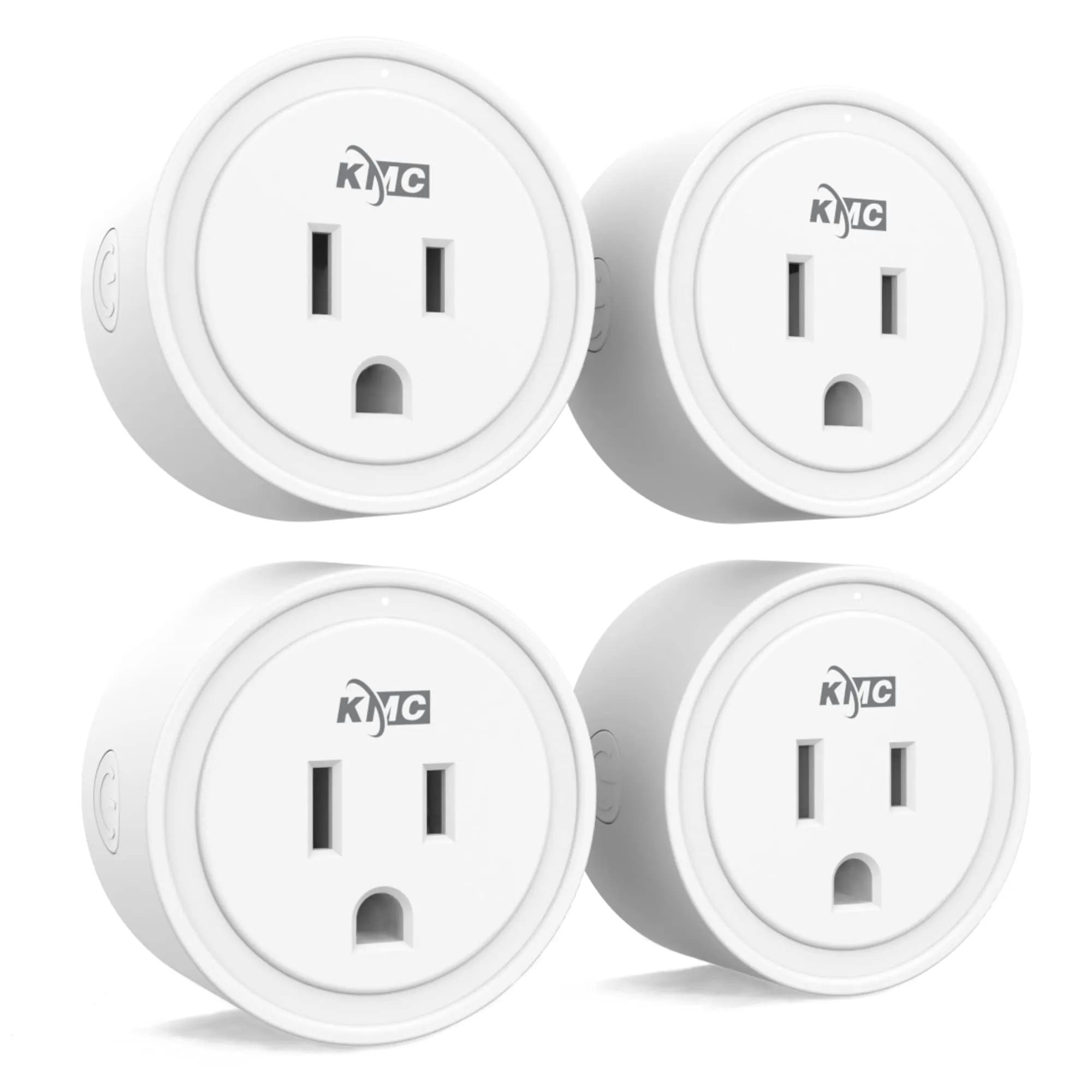
#1 Overall Winner
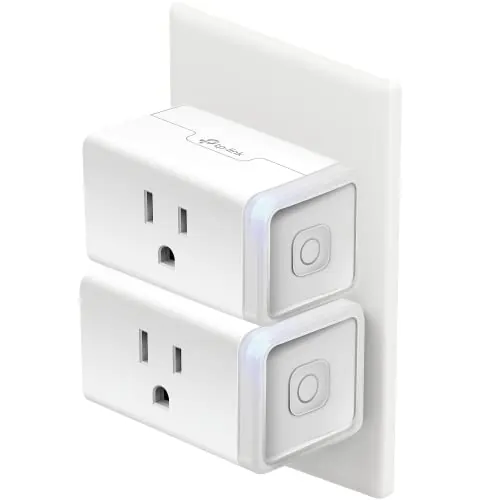
Kasa Smart Plug HS103P2 (2-Pack)
- Very straightforward setup with clear in-app guidance in the Kasa app.
Comparison
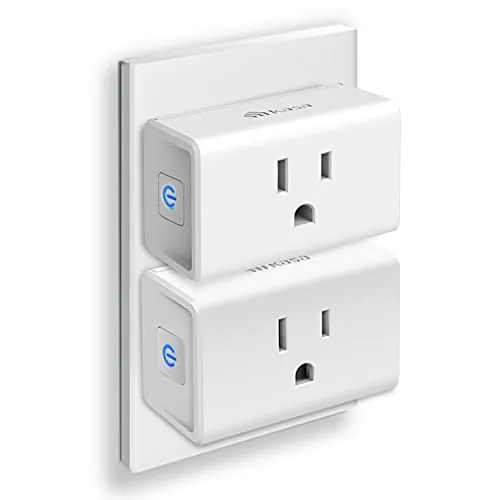
Kasa HS103P2 and Kasa EP10P2 are Wi‑Fi smart plugs designed to add app control, schedules, and Alexa/Google voice commands to everyday devices like lamps and fans. The biggest practical difference is size: EP10P2 is marketed as an ultra-mini plug that’s less likely to block a neighboring outlet. HS103P2 has a longer track record with a very large volume of buyer feedback, alongside a few recurring notes about app UI and mixed Wi‑Fi reliability.
#1 Overall Winner
Contender
Choose the Kasa HS103P2 if you want a widely adopted Kasa plug with easy setup, strong scheduling, and extensive buyer feedback. Choose the Kasa EP10P2 if you need the most compact option to avoid blocking adjacent outlets and you like the added Away Mode and stated 2-year warranty. Both work best on a stable 2.4GHz Wi‑Fi network and support Alexa/Google voice control.
Overall winner
Depends on your needs
| Feature | Kasa Smart Plug HS103P2 (2-Pack) | Kasa Smart Plug Ultra Mini EP10P2 (2-Pack) | Winner |
|---|---|---|---|
| Type | Wi‑Fi smart plug (2-pack) | Wi‑Fi smart plug (2-pack) | Tie |
| Hub required | No hub required | No hub required | Tie |
| Wi‑Fi band requirement | 2.4GHz required | 2.4GHz only | Tie |
| Voice assistants (stated) | Alexa, Google Assistant | Alexa, Google Assistant | Tie |
| Automation tools | Schedules, timer, countdown | Schedules, timers, Away Mode (listed) | Kasa Smart Plug Ultra Mini EP10P2 (2-Pack) |
| Physical size / outlet blocking | Compact plug | Ultra-compact; designed not to block second outlet | Kasa Smart Plug Ultra Mini EP10P2 (2-Pack) |
| Max load (stated) | 15A resistive @ 120VAC (listing) | 15A; also lists 1800W (listing) | Tie |
| Manual on-device control | Side button toggles power | Push button control (listed) | Tie |
| App control | Kasa app | Kasa Smart app (listing also mentions Tapo app) | Kasa Smart Plug Ultra Mini EP10P2 (2-Pack) |
| Setup experience (buyer feedback) | Typically quick; app guidance praised | Typically quick; may require phone Wi‑Fi switching during pairing | Tie |
| Connectivity consistency (buyer feedback) | Mixed; some dropouts/short-lived units reported | Mixed; some connection issues, often resolved with proper reset sequence | Depends |
| Safety certification (stated) | UL certified (listing) | UL certified (listing) | Tie |
| Warranty information (stated) | Not stated in provided listing data | 2-year warranty (listing) | Kasa Smart Plug Ultra Mini EP10P2 (2-Pack) |
| Price (provided) | Higher | Lower | Kasa Smart Plug Ultra Mini EP10P2 (2-Pack) |
| Review volume & rating (provided) | Much larger review count; slightly higher star rating | Lower review count; slightly lower star rating | Kasa Smart Plug HS103P2 (2-Pack) |
For everyday home routines, both plugs cover the essentials: turn devices on/off remotely, set schedules, and use voice commands for hands-free control. HS103P2 is commonly used for widespread in-home deployment (multiple rooms and seasonal setups), with many owners describing it as a “set it and forget it” addition once configured. EP10P2 fits especially well in busy outlets—behind furniture, near entryways, or on shared wall plates—where keeping the second socket usable makes daily life easier.
In kitchens, these plugs are most useful for simple on/off control and timing of non-critical small appliances and lighting (for example, under-cabinet lights or accent lighting). Both support schedules and remote shutoff, which can help reduce forgetfulness. Neither listing describes energy monitoring or variable power control, so they’re best treated as straightforward on/off automation rather than precision cooking controls.
Both smart plugs can improve comfort routines by automating fans, humidifiers, or other simple comfort devices on schedules (for example, running a humidifier during sleep hours or turning a fan on before you get home). HS103P2 is often used for these “background comfort” schedules with voice control convenience. EP10P2 offers similar benefits, with an emphasis on a compact footprint that makes it easier to place near bedsides or living-room outlets without sacrificing the second socket.
In core performance (reliably switching power on/off and following schedules), both plugs are strong overall and generally behave as expected for lights and small appliances. HS103P2 benefits from extensive user feedback that frequently mentions quick response and dependable scheduling, though there are also recurring reports of Wi‑Fi connection hiccups and a small number of short-lived failures. EP10P2 is similarly praised for stable day-to-day control and scheduling, with reviews highlighting practical uses like automated power-cycling; however, it also has mixed connectivity experiences depending on network changes and setup sequence.
Reliability is good overall for both, but not perfectly uniform across all households. HS103P2 has many buyers reporting long-term stable control, yet the aggregated feedback includes mixed notes on Wi‑Fi reliability and some reports of a plug stopping working after a short period. EP10P2 reviews also include mixed connectivity experiences, particularly around router changes and the need to reset/re-add devices in the right order. If reliability is critical (for example, medical-adjacent devices), a smart plug may not be the right control method—these are best for convenience automation.
Neither plug directly controls temperature or humidity with sensors; they simply switch power to whatever device you connect (like a fan or humidifier). Both can improve climate comfort indirectly by running devices on schedules (overnight humidifier windows, pre-cooling with a fan before you arrive, etc.). HS103P2 is frequently used for routine fan/humidifier automation. EP10P2 provides similar control, with the advantage of easier placement near crowded outlets where comfort devices are often plugged in.
Neither device is a security sensor, but both can support basic “security by automation” routines like turning lights on/off while you’re away. EP10P2 explicitly lists an Away Mode to simulate occupancy, making it the more directly security-oriented option on paper. HS103P2 can still achieve similar effects using schedules and voice-assistant routines, but Away Mode is not stated in the provided HS103P2 data.
As smart plugs, these devices don’t detect motion or record video, so “security” here is limited to lighting automation that makes a home look occupied. EP10P2 explicitly includes an Away Mode in its listing, which is purpose-built for occupancy simulation. HS103P2 can still run scheduled lighting patterns and voice-assistant routines while you’re away, but there’s no Away Mode mentioned in the provided HS103P2 data, so it may require more manual routine setup to mimic presence.
Both models are stated as UL certified in the provided data, which is a useful baseline for an in-wall outlet accessory. As with any smart plug, safety depends on using it within its rated limits and avoiding high-draw appliances beyond what the plug is designed for. Both list a 15A rating, and EP10P2 also provides a wattage limit in the specs. Neither is described as weatherproof, so they should be treated as indoor devices unless you purchase a separate outdoor-rated model. If you notice overheating, discoloration, or repeated disconnects under load, discontinue use and reassess the connected device and outlet condition.
Comfort improvements come from convenience: not having to reach behind furniture, remembering to turn devices off, or walking into a dark room. HS103P2 is commonly used for sunrise/sunset style lighting schedules and “goodnight” routines that simplify daily life. EP10P2 offers similar comfort benefits but is easier to place in tight locations without sacrificing the second outlet, which can reduce outlet juggling—especially in bedrooms, living rooms, and entryways.
Ease of use is a strength for both. HS103P2 is frequently described as quick to set up, with the Kasa app guiding users step by step, and the physical side button makes manual control simple. EP10P2 is also widely called easy, but some reviews note the pairing process can involve briefly switching your phone’s Wi‑Fi to the plug during setup—straightforward once you know the sequence. In daily use, both are simple: open the app, tap on/off, or use voice routines.
Design is where EP10P2 most clearly differentiates itself: it’s described as an ultra-mini plug that avoids blocking the second outlet, which matters in older homes, tight wall plates, or shared sockets. HS103P2 is compact enough for many setups, but some buyers still wish for a smaller body in power strips or crowded locations. Both keep controls minimal and practical—intended to disappear into the background once scheduled.
For smart plugs, “capacity” is mainly about electrical load and physical fit. Both are rated for a 15A maximum load in the provided data, making them suitable for many typical household devices within that limit. EP10P2 also lists a maximum wattage figure, and its ultra-compact body effectively increases “capacity” on a wall plate by helping you keep the second outlet available for another plug.
EP10P2 is the clear winner for space efficiency because it’s designed to avoid blocking the second outlet on a standard wall plate. That matters in apartments, dorm-style rooms, and behind furniture where every outlet counts. HS103P2 is generally compact and works well in many homes, but user feedback includes occasional wishes for a smaller footprint. If your outlets are already crowded, EP10P2 is the safer pick.
Noise is rarely a major factor with smart plugs, but some users notice the audible relay “click” when the plug switches on or off. HS103P2 reviews mention a noticeable click for at least one user, which is typical for many smart plugs. EP10P2 feedback in the provided excerpts doesn’t focus on switching noise, so if you’re using a plug in a bedroom, it’s worth assuming either could be faintly audible during switching events.
Installation is simple for both: plug in, add in the app, then link to Alexa/Google if desired. HS103P2 is frequently praised for step-by-step guidance in the Kasa app. EP10P2 is also described as fast to set up, though some users mention a pairing step that involves temporarily connecting your phone to the plug’s Wi‑Fi during setup. Neither requires tools or wiring, but both require a 2.4GHz Wi‑Fi network for setup and operation.
Both are UL-certified plugs with simple housings and an on-device button, and neither listing suggests rugged or outdoor use. EP10P2 provides more material detail in the specs (for example, polycarbonate housing and copper contact material) and is positioned as a compact, space-saving unit. HS103P2’s feedback is mostly positive in day-to-day handling, though long-term consistency is mixed for a minority of buyers who report early failures, which can impact perceived build robustness.
Long-term durability signals are mixed. HS103P2 has a very large user base, and while many report extended use across numerous plugs, there are also mentions of failures after a short period for a minority of owners. EP10P2 feedback in the provided excerpts is mostly positive, and the listing’s 2-year warranty is a helpful sign for support expectations, but durability still depends on usage patterns and electrical load management. In both cases, staying within the rated load is important.
Maintenance is minimal for both: there are no filters, tanks, or consumables. Most “maintenance” is app-based—keeping your device list organized, updating schedules, and occasionally re-pairing after Wi‑Fi changes. HS103P2 owners note it can keep schedules running even when the internet is down, and you can always use the physical button. EP10P2 reviews highlight that after a power outage the plug may need to reconnect to resync timing, so you may occasionally check schedules if your area has frequent outages.
Both are highly portable since they’re plug-in devices you can move from room to room as needs change (holiday lights, guest room lamps, travel between outlets). EP10P2’s smaller size can make it easier to pack or reposition without blocking other sockets, which is helpful in tight spaces. HS103P2 is also easy to relocate, but some users note they’d prefer an even more compact body for certain power-strip layouts.
Both models deliver the essential smart-plug features: remote on/off control, timers, countdown schedules, and voice assistant support through Alexa and Google Assistant. EP10P2’s listing adds a few notable extras: Away Mode for occupancy simulation and compatibility claims that include SmartThings, plus it mentions Kasa Smart or Tapo app control. HS103P2 focuses on the Kasa app experience and simple scheduling workflows, with reviewers commonly using routines like dusk/dawn lighting and grouped voice commands.
The Kasa app is central for both products: it’s where you add devices, set schedules, and manage remote control. HS103P2 feedback is mostly positive for clarity and guidance, but some buyers mention the app’s interface could be easier to read and that timer setup can feel slightly clunky (separate on/off timers). EP10P2 feedback praises an intuitive interface and robust scheduling, though some users note the pairing flow requires switching Wi‑Fi networks during setup, which can be confusing the first time.
Both Kasa plugs are designed for app-based control and voice assistant routines, making them a practical building block for smart home automation. HS103P2 integrates smoothly for many users with Alexa and Google Assistant, and reviewers describe using it in broader routines (including interactions with other smart home platforms in their households). EP10P2 offers similar integration, with the listing also mentioning SmartThings support and Away Mode for simulated occupancy—useful if you want simple security-style automation without adding sensors.
Both plugs work as simple smart home endpoints that can be controlled by voice assistants and grouped into routines for whole-home automation. HS103P2 reviews highlight smooth Alexa integration and use in broader automations once linked. EP10P2 reviews similarly praise quick linking to Alexa/Google, and the listing calls out SmartThings support. If your smart home is primarily Alexa/Google-based, either will fit; EP10P2’s smaller body can make scaling to more outlets easier.
Both plugs are strong for basic automation: scheduled on/off times, countdown timers, and routines through Alexa or Google Assistant. HS103P2 is widely used for consistent lighting schedules (including sunrise/sunset style routines mentioned by buyers) and whole-home “goodnight” commands. EP10P2 adds Away Mode per the listing, which is a convenient shortcut if you want automatic presence-simulation without building multiple custom routines.
Both models rely on 2.4GHz Wi‑Fi and can be sensitive to home network changes. HS103P2 has mixed feedback: many users report stable connections, while others mention difficulty connecting to Wi‑Fi or occasional dropouts. EP10P2 has similar mixed reports, with some users noting issues after router upgrades unless the plugs are removed from the app and re-added in the correct sequence. If you frequently change routers or Wi‑Fi names, expect a bit of re-pairing work with either model.
Neither product listing includes detailed energy monitoring or measured power savings, so efficiency is mostly about using schedules to reduce unnecessary runtime. Both support timers and scheduled shutoffs that can prevent leaving lights or small appliances on longer than needed. EP10P2 reviews explicitly mention saving electricity through better automation habits. In practice, efficiency gains will depend more on how you schedule devices than on a measurable difference between the two plugs.
Both plugs rely on app-based control and cloud-linked smart home integration, which can involve account access and network connectivity. The provided data doesn’t specify local-only control, encryption details, or data-retention policies. Practically, privacy-conscious users should review app permissions, use a strong account password, and consider placing smart devices on a dedicated Wi‑Fi network if that matches their home setup. Since both are Kasa ecosystem devices, privacy expectations are likely similar between them.
Both smart plugs are positioned as affordable ways to add automation to “dumb” devices, and both receive strong value feedback from buyers. With the provided prices, EP10P2 offers a lower cost for a two-pack and adds practical advantages like an ultra-compact design and a clearly stated 2-year warranty in the listing. HS103P2 costs more in the provided pricing, but it’s backed by an exceptionally large review history and strong overall satisfaction, which some buyers may treat as value in the form of reduced uncertainty. Your best value depends on whether outlet space and warranty clarity (EP10P2) outweigh the reassurance of massive adoption (HS103P2).
Both products are from Kasa Smart / TP-Link and are presented as part of the same ecosystem, which helps if you plan to expand with more Kasa devices later. Reviews for both commonly mention the Kasa app as a stable, familiar place to manage multiple devices. HS103P2’s enormous review volume can increase confidence in community troubleshooting and long-term ecosystem familiarity. EP10P2’s listing provides clearer support expectations via a stated 2-year warranty, which can also build trust for cautious buyers.
Customer satisfaction is high for both, with strong average star ratings and many buyers reporting easy setup, useful schedules, and smooth Alexa/Google integration. HS103P2 stands out for sheer review volume, and the most common praise centers on simplicity and “works as expected,” balanced by mixed connectivity feedback and some reports of early failure. EP10P2 also gets consistent praise for its compact design, intuitive app, and value, with mixed feedback around connectivity and assistant integration for some network environments.
Warranty information is clearer for the EP10P2: the listing states a 2-year warranty. For HS103P2, a warranty length is not provided in the supplied product data, so support expectations are harder to compare directly. If warranty coverage is important for your purchase decision, EP10P2 has the advantage on transparency, and you should confirm the exact terms at checkout for whichever model you choose.
Kasa HS103P2 and Kasa EP10P2 are both strong, practical Wi‑Fi smart plugs for voice control and scheduling, and either can be a solid foundation for simple home automation. HS103P2’s biggest strength is its widespread adoption and consistently easy everyday use; its main limitation is mixed connectivity feedback and some reports of early failures for a minority of users, plus minor app/LED complaints.
EP10P2’s biggest strength is its ultra-compact, outlet-friendly design and the added convenience of Away Mode and a stated 2-year warranty in the listing; its main limitation is mixed connectivity for some setups and explicitly no HomeKit support. If outlet space is tight, EP10P2 is the clearer choice; otherwise, HS103P2 is a dependable default.

Overall winner
Depends on your needs
For most homes, it comes down to outlet space and the features you’ll actually use. HS103P2 is widely used for basic voice control and scheduling with generally easy setup, but some buyers mention app UI quirks and mixed Wi‑Fi reliability. EP10P2 stands out for its ultra-compact design and includes features like Away Mode (per the listing), with similarly strong scheduling and app control.
The Kasa EP10P2 is the better fit when space is the main constraint. It’s specifically described as “ultra mini” and designed not to block the second outlet on a standard wall socket. HS103P2 is compact, but several users still wish it were smaller for power bars or crowded setups, so EP10P2 is the safer choice for tight placements.
Yes. Both HS103P2 and EP10P2 are designed to connect directly to your home’s 2.4GHz Wi‑Fi with no separate hub required. You’ll typically plug them in, add them in the Kasa app, and then link to Alexa or Google Assistant for voice control and routines. If your home Wi‑Fi is 5GHz-only, you may need to enable a 2.4GHz network.
Both are generally considered easy to set up, with many reviews describing quick pairing and straightforward scheduling. EP10P2 reviews note that setup can involve briefly switching your phone to the plug’s temporary Wi‑Fi network during pairing, which may feel confusing the first time. HS103P2 gets praise for guided setup, but some buyers mention small app UI readability issues.
Based on buyer feedback, schedules can continue during a Wi‑Fi outage once they’re set, but remote control from the app won’t work while you’re offline. EP10P2 reviews specifically mention schedules can keep running when Wi‑Fi drops, but after a power outage it may need to reconnect to resync timing. HS103P2 reviews similarly note manual button control still works.
EP10P2 reviews explicitly note that it does not support Apple HomeKit. For HS103P2, HomeKit support is not stated in the provided listing details or review excerpts. If HomeKit is a must-have, you should verify compatibility before buying rather than assuming it’s supported, since both are primarily positioned around Kasa app control plus Alexa/Google integration.
Connectivity feedback is mixed for both models. Many owners report stable connections and fast response, but some mention trouble connecting to Wi‑Fi or occasional dropouts. EP10P2 reviews include examples where router changes required removing the device from the app and re-adding it in the right sequence. HS103P2 also has some reports of units stopping working for a minority of users.
Both are priced as budget-friendly smart plugs and get strong “value” feedback overall. EP10P2 is cheaper in the provided pricing and adds a space-saving design plus a stated 2-year warranty, which can improve the value equation if you’re outfitting multiple rooms. HS103P2 has an extremely large review history and strong satisfaction, which some buyers may value as reassurance.
Check our rankings and expert guides to find the best home lifestyle products for your goals.