#1 Overall Winner
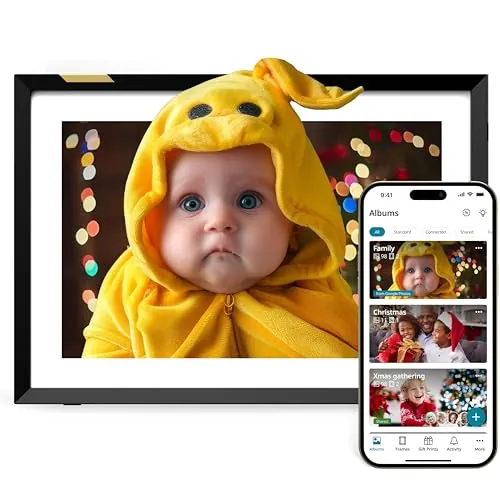
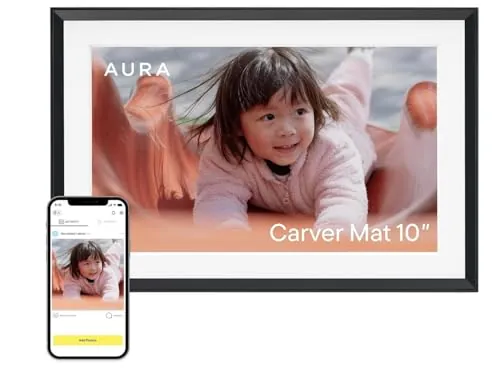
Aura Carver 10" WiFi Digital Picture Frame
- Very easy setup and day-to-day use, especially for non-technical users
Comparison
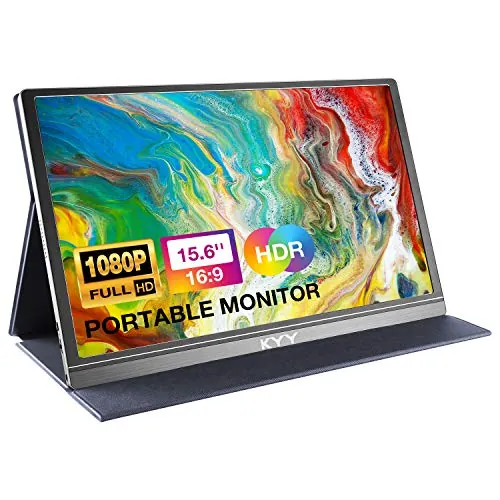
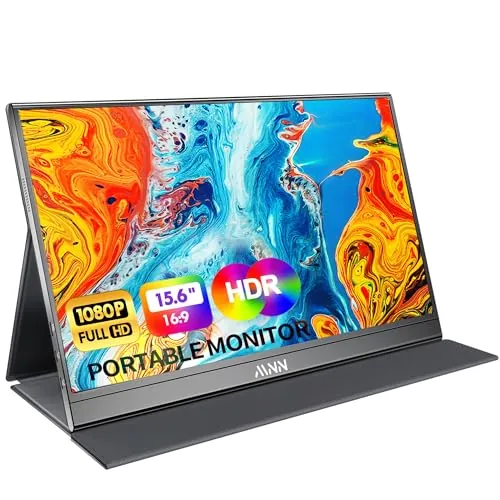
Aura Carver is a Wi‑Fi digital picture frame built for effortless family photo sharing, while the MNN Portable Monitor is a budget-friendly 15.6-inch second screen for laptops and other devices. Both offer 1080p displays and easy setup, but they fit very different home needs: living-room memories versus productivity on the go.
#1 Overall Winner
Contender
Choose Aura Carver if you want a dedicated digital picture frame for sharing family photos (especially as a gift) with app-based uploads and an always-ready slideshow. Choose the MNN Portable Monitor if you need a lightweight, inexpensive second screen for a laptop or phone via USB‑C/HDMI and you’re fine using external speakers and, if needed, upgrading cables.
Overall winner
Depends on your needs
| Feature | Aura Carver 10" WiFi Digital Picture Frame | MNN Portable Monitor 15.6" FHD 1080P | Winner |
|---|---|---|---|
| Primary purpose | Digital photo frame for sharing memories | Portable external monitor for devices | Depends |
| Screen size | 10.1-inch display | 15.6-inch display | MNN Portable Monitor 15.6" FHD 1080P |
| Resolution | 1080p | 1080p (1920×1080) | Tie |
| How content gets to the screen | Wi‑Fi + Aura app/cloud sharing (plus email/text options mentioned) | USB‑C (DP Alt-Mode) or HDMI from a host device | Depends |
| Setup experience | Very fast Wi‑Fi/app setup commonly praised | Plug-and-play cabling commonly praised | Tie |
| Portability | Portable but intended to stay in one spot (corded frame) | Travel-focused, slim, lightweight with cover/stand | MNN Portable Monitor 15.6" FHD 1080P |
| Family sharing | Invite others; remote uploads from anywhere | Not a sharing product; mirrors/extends connected device | Aura Carver 10" WiFi Digital Picture Frame |
| On-device audio | Short videos with sound supported | Built-in speakers (often described as weak) | Depends |
| Power approach | Corded electric | Powered via USB‑C from host; may need extra power in some phone use cases | Depends |
| Controls | App-based management; frame navigation available | Physical controls (dial/menu) on monitor | Depends |
| Reliability signals from reviews | Mixed; some reports of units stopping suddenly | Generally positive; notable issue is occasional faulty included cable | MNN Portable Monitor 15.6" FHD 1080P |
| Value for money | Higher price; often considered worth it for gifting/sharing | Very low price; frequently praised value for a second screen | MNN Portable Monitor 15.6" FHD 1080P |
In everyday home use, Aura Carver functions more like a “set-and-forget” household display: place it in a living room, kitchen nook, or hallway and let photos rotate while family members update it remotely. The MNN monitor behaves like an on-demand tool: it comes out when you need extra workspace for a laptop, budgeting, schoolwork, or travel, then packs away. If your goal is a shared family focal point, Aura fits better; if your goal is more screen real estate for tasks, MNN is the practical pick.
For their intended purposes, both perform well based on specs and buyer feedback. Aura Carver’s performance is largely about how reliably it displays photos and how smoothly it handles uploading and organization; reviews repeatedly call out crisp, clear images and a straightforward sharing experience. The MNN monitor’s performance is about providing a usable second screen: buyers consistently mention clear 1080p output, good brightness for office work, and quick setup via USB‑C or HDMI. Where performance concerns appear, Aura has mixed device reliability reports, while MNN’s most specific issue is accessory/cable quality rather than the panel itself.
Reliability is where the trade-offs become clearer. Aura Carver earns very high satisfaction for day-to-day experience, but the aggregated review summary notes mixed reliability, including some reports of frames suddenly stopping working. For the MNN portable monitor, reviews are mostly positive about immediate usability and stable function, but there are specific concerns about quality control on included accessories (notably a faulty USB‑C cable reported by one reviewer). In practice, Aura’s risk looks more like occasional unit failure, while MNN’s risk looks more like needing better cables or external audio.
Neither product presents unusual safety requirements in the provided data, but basic precautions apply. Aura Carver is corded and intended for stationary placement; keeping the cable tidy reduces trip risk, and placing it securely helps prevent knocks off shelves. The MNN monitor is often used with laptops and phones; cable strain and port stress are common risks for portable setups. One reviewer reported a faulty included USB‑C cable that triggered a device port warning, so it’s sensible to stop using any cable that seems defective and switch to a known good, display-capable USB‑C cable.
Aura Carver can add day-to-day “home comfort” by keeping family photos visible and updated without effort, which is especially meaningful for long-distance families. Its automatic brightness adjustment and auto on/off behavior also support comfortable placement in common areas. The MNN monitor improves comfort differently: it reduces eye strain and frustration from cramped laptop-only work by adding screen space, particularly for remote work and travel. The more “comforting” choice depends on whether your household needs emotional connection or practical productivity.
Aura Carver is typically easier for a mixed-tech household because it’s designed to be controlled from a phone app and set up quickly on Wi‑Fi, with family sending photos remotely. The MNN monitor is also easy in a plug-and-play sense, but you still need to understand cables, device compatibility (USB‑C display support), and operating system display settings. For gifting to someone who doesn’t want to troubleshoot inputs, Aura is the safer bet.
Design priorities differ. Aura Carver is meant to blend into a room like a photo frame, with an HD display tuned for photo viewing and automatic brightness adjustment. The MNN monitor is designed around portability: a thin panel, matte screen, and a folding cover/stand for desk use in landscape or portrait. If you want something that looks natural on a shelf or sideboard, Aura fits better; if you want something that stores flat and travels well, MNN wins.
“Capacity” here is less about storage numbers and more about how much content or workspace you can display at once. Aura Carver’s smaller 10.1-inch panel is well-suited to being viewed across a room as a rotating photo display, and its cloud-based approach is designed for ongoing additions from family. The MNN’s 15.6-inch size provides noticeably more usable workspace for spreadsheets, email, or multitasking, which is typically the point of adding a second monitor.
Both are space-efficient compared with full-size TVs or desktop monitors, but in different ways. Aura Carver uses a small footprint and is designed to live on a shelf or side table without looking like office equipment. The MNN monitor takes more desk surface when in use, but it’s easy to store flat in a drawer or bag afterward, which is helpful in small flats or shared spaces where a permanent monitor would be clutter.
Noise is not a major factor for either product. Aura Carver is a silent display in normal photo viewing, and the MNN monitor is also silent aside from its speakers. If you plan to use audio, buyer feedback suggests the MNN’s built-in speakers are serviceable but not a highlight, so using laptop speakers or external audio may be preferable.
Neither requires true “installation,” but setup differs. Aura Carver needs Wi‑Fi connection and app onboarding; reviews often describe it as extremely quick. The MNN monitor needs device connection and sometimes a small operating-system setting change to extend the display, plus ensuring your USB‑C port supports video if you want one-cable use. Both avoid tools and permanent mounting, but Aura is typically simpler for the end recipient in a gift scenario.
Aura Carver is frequently described as attractive and “quality” looking, with a frame-like presence meant for home décor. The MNN monitor is commonly described as slim and reasonably sturdy for travel, and the included cover helps protect the screen in a bag. That said, the MNN has more explicit buyer commentary about accessory/cable quality, while Aura’s build concerns show up more as reliability reports (units stopping) than day-to-day fit and finish complaints in the provided summaries.
Both products can last with careful use, but the provided feedback points to different durability considerations. Aura Carver is typically kept stationary on a shelf or table, which reduces physical wear, yet there are still some reports of units failing unexpectedly. The MNN monitor is designed to travel, so its long-term durability depends on how well it’s protected in a bag; the included cover helps, but there’s limited long-horizon feedback in the provided reviews beyond general sturdiness impressions.
Aura Carver’s maintenance is mostly digital: keeping the app connected, managing albums, and occasionally deleting or reframing photos. There are no consumables mentioned in the provided data. The MNN monitor’s maintenance is also low, but more physical: keeping ports and cables in good condition, protecting the screen during travel, and possibly replacing the included USB‑C cable if it proves unreliable. Neither has a complex cleaning routine beyond basic screen care.
The MNN monitor is the clear portability winner. It’s thin, lightweight, and designed to slip into a laptop bag, with a cover that doubles as a stand. Aura Carver is more of a “move it room to room if needed” product: it’s corded and meant to sit out as décor, not to be packed frequently. If travel is part of your routine, the MNN is the better fit.
Aura Carver focuses on photo-frame features: app-based uploads, inviting multiple contributors, slideshow controls, auto on/off behavior, portrait pairing, and support for short videos with sound. The MNN focuses on monitor features: multiple display modes (extend/duplicate/portrait), USB‑C and mini HDMI connectivity, HDR mode, and a protective cover that doubles as a stand. If you want family sharing and an always-on photo display, Aura’s feature set is more relevant; if you want flexible device input and work modes, MNN is the better match.
App experience is central to Aura Carver. Buyer feedback repeatedly highlights an intuitive app that makes uploading, deleting, and adjusting photos easy, and it supports inviting others to contribute. The MNN portable monitor does not include an app experience in the provided information; setup and adjustments are handled through the connected device and the monitor’s on-device controls.
Both products have “connected” aspects, but only Aura Carver is truly app-centered for ongoing use. Aura’s core smart feature is remote photo/video sharing through its app and cloud workflow, with convenience features like auto on/off and slideshow controls. The MNN monitor is “smart” mainly in the sense of being plug-and-play with modern devices and supporting multiple display modes; it doesn’t have a comparable app ecosystem for content management or home automations in the provided data.
Aura Carver’s smart experience is centered on remote content delivery: the app lets multiple people add photos/videos, manage albums, and keep the frame updated without physical interaction. The MNN portable monitor doesn’t have a comparable smart platform in the provided information; its “smart” value is compatibility and mode flexibility (extend/duplicate/portrait) rather than automations, routines, or connected-home integrations.
Aura Carver offers practical “automation-like” convenience through features such as automatic on/off behavior and slideshow controls, reducing the need for daily interaction. The MNN monitor is more manual: it typically turns on/off with the connected device and relies on the user to choose display modes and settings. If you want a display that quietly runs in the background, Aura is the more hands-off option.
Aura Carver connects over Wi‑Fi to enable cloud-based photo sharing and updates, and it’s designed to work with iOS and Android through the Aura app. The MNN monitor connects directly to devices via USB‑C or HDMI; the smoothest single-cable setup requires a USB‑C port that supports video (DP Alt-Mode/Thunderbolt as referenced in the listing). If you want remote updates without plugging anything in, Aura wins; if you want a simple physical connection for a second screen, MNN wins.
Neither listing provides detailed power consumption data, so efficiency is mostly about practical operation. Aura Carver includes automatic on/off behavior based on room lighting, which can reduce unnecessary screen-on time in a typical household. The MNN monitor can often run from a single USB‑C connection that carries power and signal, but when powered by a phone, one reviewer noted you may need to reduce brightness or add extra power. Your real-world “efficiency” will depend on usage hours and brightness.
Privacy is more relevant for Aura Carver because it relies on a cloud/app ecosystem for managing and sharing personal photos and videos, often with multiple invited contributors. That can be a benefit for families, but it also means thinking about who has access to the frame and what account/device is used to manage it. The MNN monitor behaves like a standard external display and doesn’t inherently require cloud accounts based on the provided information, so privacy concerns are typically lower.
From a price-to-screen standpoint, the MNN Portable Monitor is the standout value: you get a large 15.6-inch 1080p IPS display with common inputs and a travel-ready cover/stand at a very low cost, and buyers frequently highlight it as a great deal. Aura Carver costs much more, but its value is tied to the experience: easy gifting, remote family sharing, and a frame-like design that lives in your home. If you’re buying for emotional “everyday joy,” Aura can justify its cost; if you’re buying to get work done on the go, MNN is the more economical choice.
Based on the provided data, Aura benefits from strong customer satisfaction and broad mainstream editorial quotes in the listing text, alongside a very large review volume. MNN also has substantial review volume and many positive comments about functionality and value, plus some praise for customer service in reviews. Neither listing provides detailed long-term support policies; the clearest brand signal is that Aura’s ecosystem is central to the product, while MNN’s reputation here is built on affordability and practical compatibility.
Both products are well-liked overall, but Aura Carver shows especially strong satisfaction: a high star rating and many reviews emphasizing ease of setup, clear display, attractive design, and the delight of receiving new photos from family. The main negative theme is mixed reliability, with some reports of frames stopping unexpectedly. The MNN monitor also receives strong feedback for quick setup, portability, and good image quality for the price. Its recurring complaints are weaker speaker audio and occasional issues with included cables rather than widespread dissatisfaction with the screen itself.
Warranty and support details are limited in the provided data. One MNN reviewer mentions being pleased with customer service, and another references warranty in general terms, but no specific warranty length or process is provided. Aura’s reviews and listing focus more on usability and gifting than on warranty specifics. If warranty terms matter, it’s worth checking the seller/manufacturer warranty information before purchase.
Neither product is a direct substitute for the other: Aura Carver is the better “home lifestyle” choice for sharing and displaying family memories, while the MNN Portable Monitor is the better “home office” choice for getting more work done with a second screen. Aura’s biggest strength is its easy, family-friendly sharing experience and frame-like design; its biggest limitation is mixed reliability feedback from buyers. The MNN’s biggest strength is affordability and portability with a crisp 1080p display; its biggest limitations are weak built-in speakers and occasional concerns about included cable quality. Choose based on whether your priority is connection with family or practical productivity.
Overall winner
Depends on your needs
They’re built for different jobs. Aura Carver is better if you want a living-room-friendly digital photo frame with app-based sharing and an always-ready slideshow for family memories. The MNN portable monitor is better if you need a practical second screen for a laptop, phone, or console via USB‑C/HDMI, especially for travel or working away from your desk.
Aura Carver is generally the more senior-friendly option based on buyer feedback, with very quick Wi‑Fi setup and simple photo sharing from family members through the app and links. The MNN monitor is also plug-and-play, but it assumes the user is comfortable connecting cables, choosing display modes, and adjusting monitor settings on a computer or phone.
The MNN portable monitor is the better fit for a home office because it’s designed as a second screen for productivity, supporting common extended-display use over USB‑C or HDMI. Aura Carver can sit nicely on a shelf or desk, but it’s meant for displaying photos and short videos rather than extending a computer workspace.
The Aura Carver listing states there is no subscription fee and includes free unlimited cloud storage for adding photos and videos through the Aura app and other sharing methods. The MNN portable monitor doesn’t use a subscription model; it functions as a standard external display connected by cable to your device.
The MNN portable monitor is designed for travel, with a thin, lightweight build and a cover that also works as a stand—buyers frequently mention it fits easily in laptop bags. Aura Carver is a home décor-style digital frame that’s meant to stay plugged in on a table or shelf, so it’s less suited to frequent packing and moving.
Aura Carver has very strong overall satisfaction, but the aggregated review summary notes mixed reliability, including reports of units stopping unexpectedly. For the MNN monitor, reviews are largely positive about day-one setup and usability, with the most concrete issue being inconsistent included cable quality and modest speakers rather than frequent monitor failures in the provided feedback.
It depends on what you’re trying to accomplish. Aura Carver works well as a compact, stationary display for photos on a nightstand or shelf. The MNN monitor is more space-flexible for work because it can be packed away in a drawer or bag when not needed, which can be useful in small bedrooms or shared workspaces.
Yes. Aura Carver lists a 1080p display for photos and short videos. The MNN monitor is a 15.6-inch 1080p (1920×1080) portable display intended for computer/console output. The difference is less about resolution and more about the use case: memory display versus device-connected productivity.
For Aura Carver, the main downside is that reliability is mixed, with some reports of frames stopping working unexpectedly, even though most feedback praises ease of use and image quality. For the MNN monitor, the most repeated negatives are modest speaker performance and occasional cable quality issues, even though the screen clarity and portability are commonly praised.
Check our rankings and expert guides to find the best home lifestyle products for your goals.