#1 Overall Winner
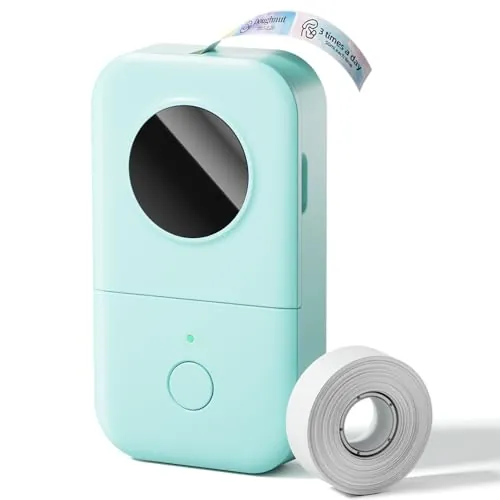
Phomemo D30 Portable Bluetooth Label Maker
- Highly portable, pocket-sized design that’s easy to store and carry
Comparison
Phomemo D30 and Schlage Encode solve very different home problems: D30 is a portable Bluetooth label maker for organizing and tagging, while Encode is a Wi‑Fi smart deadbolt for keyless entry and remote access control. The D30 stands out for portability, low running costs, and strong value, whereas the Encode focuses on security features like access codes, auto-lock, and activity history. Your best pick depends on whether you need better organization or better entry management.
#1 Overall Winner
Contender
Choose the Phomemo D30 if you want an inexpensive, ultra-portable label maker for home and small-business labeling with low ongoing costs and generally clear prints. Choose the Schlage Encode if you need a Wi‑Fi smart deadbolt with remote control, codes, and activity history—just be prepared to manage batteries and ensure your Wi‑Fi and door fit are solid.
Overall winner
Depends on your needs
| Feature | Phomemo D30 Portable Bluetooth Label Maker | Schlage Encode Smart Wi-Fi Deadbolt (BE489WB CEN 622) | Winner |
|---|---|---|---|
| Product type | Portable thermal label maker | Wi‑Fi smart deadbolt lock | Depends |
| Primary use case | Printing labels for organization/tagging | Keyless entry + remote lock management | Depends |
| Upfront price | Budget-priced | Premium-priced | Phomemo D30 Portable Bluetooth Label Maker |
| Portability | Pocket-sized, lightweight | Door-mounted, not portable | Phomemo D30 Portable Bluetooth Label Maker |
| Connectivity | Bluetooth 4.0 to phone/tablet | Wi‑Fi + Bluetooth; remote access | Schlage Encode Smart Wi-Fi Deadbolt (BE489WB CEN 622) |
| App dependence | App required for creating/printing labels | App used for remote control, codes, history | Tie |
| Feature depth | Templates, icons, barcode/QR, image import, OCR (app tools) | Codes (up to 100), auto-lock, alerts, history, alarm features | Depends |
| Ease of setup | Bluetooth pairing; load tape and print | Screwdriver install; Wi‑Fi pairing; door fit matters | Depends |
| Reliability signals from reviews | Generally solid; some app glitches and occasional long-term print issues | Mixed: disconnections, battery concerns, some early failures | Phomemo D30 Portable Bluetooth Label Maker |
| Ongoing running costs | Label tape refills; no ink/toner | AA battery replacements | Depends |
| Noise in use | Quiet printing often noted | Generally quiet operation | Tie |
| Best fit for small spaces | Stores in a drawer; minimal footprint | No floor/counter space; requires door compatibility | Depends |
| Safety/security role | General household tool (not a security device) | Security/entry device with alarm features | Schlage Encode Smart Wi-Fi Deadbolt (BE489WB CEN 622) |
| Customer satisfaction trend | Strong overall satisfaction; value and ease frequently praised | Strong overall satisfaction; mixed reliability/connectivity feedback | Phomemo D30 Portable Bluetooth Label Maker |
In everyday home use, the Phomemo D30 is about small, frequent tasks: labeling cables, bins, pantry items, cosmetics dates, classroom supplies, and office files. It’s easiest to appreciate in homes that want a consistent organization system without taking up space.
Schlage Encode affects fewer tasks per day, but the impact can be bigger: it changes how your household gets in and out, how you share access, and how you confirm the door is locked. If you host guests or manage a property remotely, the lock’s code management and remote control can matter more than any convenience tool.
Phomemo D30 fits naturally into kitchen routines for labeling containers, shelves, and food dates (including expiration reminders) and tends to be used often once it’s in a drawer nearby. Schlage Encode isn’t a kitchen product, but it can still support kitchen-adjacent routines (for example, granting access for deliveries or helpers) if your home uses smart entry as part of daily logistics.
Neither product is a cleaning appliance, but Phomemo D30 can support cleaner routines by labeling storage, laundry supplies, and bins so items go back where they belong. Schlage Encode doesn’t change cleaning performance, though remote lock control can help when coordinating access for cleaners or household help.
Neither product directly manages temperature, humidity, or air quality. Indirectly, Phomemo D30 can improve “home comfort” by reducing clutter through better organization. Schlage Encode can reduce worry about whether the door is locked by providing status checks, auto-lock options, and notifications, which some households find reassuring.
For its core job—printing labels—Phomemo D30 is generally reported to produce clear, clean labels at a practical speed, and its portability makes it easy to use wherever you’re organizing. However, a minority of users report print quality degrading over time or friction with label sizing/QR recognition in the app.
Schlage Encode performs strongly when installed and connected well: users commonly describe quick remote responses and dependable code-based entry. The main performance risk is inconsistency across homes—reports of disconnections, fast battery drain, or units failing early can undermine what should be a “set and forget” security device.
Phomemo D30 reliability looks generally good for a low-cost device, with many users reporting consistent printing and easy Bluetooth connection. The repeated reliability friction points are app glitches (templates not loading, assets not appearing) and occasional reports of print quality worsening after months, though at least one reviewer described responsive support and a replacement.
Schlage Encode reliability is more mixed and higher-stakes: some users report it works flawlessly for months, while others cite frequent disconnections, fast battery drain, or units failing within a short time. Because it’s an entry device, those inconsistencies matter more than minor app annoyances.
Schlage Encode is the only true security product here, built for controlling entry with a keypad, remote locking/unlocking, alerts, and a built-in alarm feature for door movement and forced entry attempts (per product description). Phomemo D30 doesn’t provide security monitoring; its role is organization and identification (for example, labeling personal items and cables), which is helpful but not protective in the same way.
Schlage Encode is the only product in this comparison that actively supports security monitoring. Through the app, it can provide lock history and customizable notifications, and it includes a built-in alarm feature for door movement and forced entry attempts (as stated in the product details). The main trade-off is that some buyers report disconnections or reliability issues, which can undermine confidence if you depend on remote monitoring for a rental or while traveling.
Schlage Encode is a safety- and security-oriented product, offering keyless entry, remote locking, and a built-in alarm feature for door movement/forced entry attempts as described in its details. The main safety consideration from reviews is operational reliability: reports of disconnections, fast battery drain, or failures could create lockout risk if you rely solely on the smart features (it includes a physical backup key).
Phomemo D30’s safety considerations are more modest: it’s a low-power thermal printer with a rechargeable battery. Practical cautions from reviews include using appropriate charging (one reviewer noted higher-powered chargers are not recommended) and handling it carefully to avoid drop damage.
Comfort here is mostly about convenience and peace of mind. Phomemo D30 improves household comfort by reducing small frustrations—finding items faster, keeping storage consistent, and making routines easier to follow with clear labels.
Schlage Encode’s comfort benefit is reassurance: remote status checks, auto-lock options, and the ability to let someone in without being home. If you often wonder whether the door is locked or you coordinate guests and helpers, Encode can have a bigger comfort impact—assuming connectivity and batteries behave well.
Both products are often described as easy to use, but the “effort” looks different. With Phomemo D30, most users simply pair over Bluetooth, choose a template, and print; label loading is commonly described as straightforward. The main learning curve comes from the app UI and navigating subscription-gated assets.
Schlage Encode can be quick to install for standard doors, and many users like the app programming. Still, door fit/alignment and Wi‑Fi setup can add complexity, and those factors also influence how hassle-free it remains over time.
Phomemo D30’s design is focused on convenience: palm-sized dimensions, light weight, and app-based controls with no on-device screen. It’s easy to keep in a drawer or bag and use on demand.
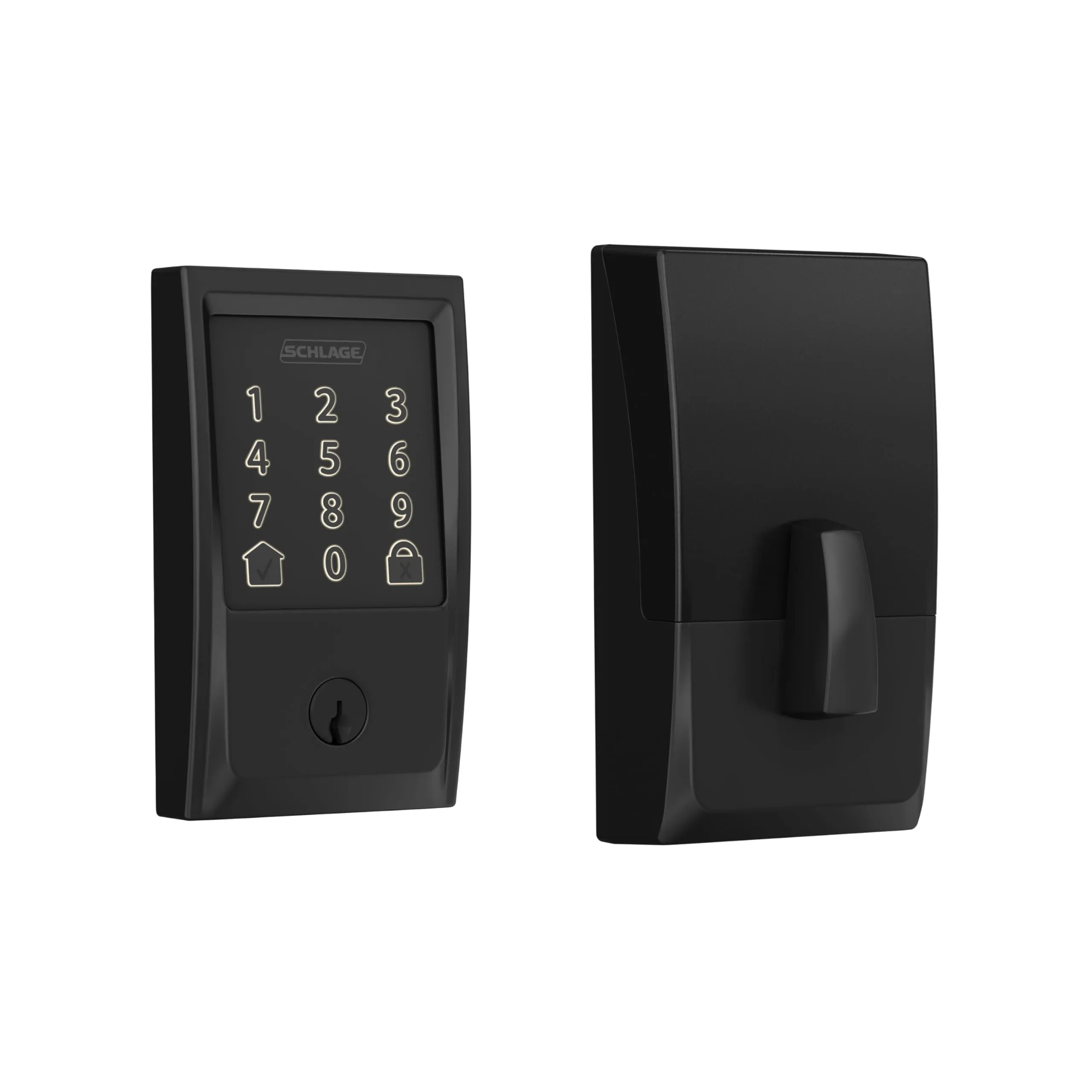
Schlage Encode’s design is about visibility and access: a touchscreen keypad for keyless entry, a matte-black finish option, and a form factor that needs to match your door and existing hardware layout. If aesthetics and a cohesive door-hardware look matter, Encode has more “front-and-center” design impact.
Capacity matters mainly for Schlage Encode’s access management and for label width on Phomemo D30. Encode can manage up to 100 access codes, which is useful for families, guests, and rentals. Phomemo D30 supports narrow label tape (up to around 0.55 inches max media size per specs), which is well-suited to bins, cables, and small containers but not designed for wide shipping labels.
Both are space-efficient in different ways. Phomemo D30 takes almost no space and can live in a drawer, desk, or bag, making it ideal for small homes that can’t spare countertop area.
Schlage Encode doesn’t take up usable interior space once installed, but it does require compatible door hardware space and a location with dependable Wi‑Fi coverage. If your entry door is far from the router, “space efficiency” can be offset by connectivity workarounds.
Noise isn’t a major concern for either product. Phomemo D30 is frequently described as quiet while printing, which is helpful if you label items at night or in a shared space. Schlage Encode is generally unobtrusive in operation as well, and the main day-to-day “disruption” tends to be notifications or battery alerts rather than sound.
Schlage Encode is designed for DIY installation with a screwdriver and no hardwiring, and many reviewers describe it as an easy retrofit—especially when replacing an existing deadbolt with matching holes. However, there are also reports that certain doors or tolerances can make installation difficult, so measuring door thickness and backset before buying is important.
Phomemo D30 has virtually no installation: charge it, load label tape, pair by Bluetooth, and print from the app. The only common setup snag is ensuring the correct label size/type is selected in the app.
Schlage Encode is a substantial, door-mounted device made with a zinc body (per specs) and is frequently described as solid once installed. That said, some buyers report units breaking within months, which tempers confidence.
Phomemo D30 is lightweight and compact, which is great for portability but can be less forgiving of drops (one reviewer reported breaking it after dropping). There are also some longer-term concerns about internal issues affecting print quality, even though at least one buyer reported responsive support and replacement.
Schlage Encode appears physically robust as a zinc smart deadbolt, but buyer feedback includes reports of some units breaking within six months, suggesting durability can vary by unit or installation conditions.
Phomemo D30 is lightweight and portable, which often trades off with impact resistance; one reviewer broke theirs after a drop. There are also a few long-term concerns about internal issues affecting print crispness. If you expect rough handling, consider protective storage for either device.
Phomemo D30 maintenance is straightforward: keep compatible label tape on hand, reload as needed, and manage templates in the app. Thermal printing means no ink, toner, or ribbon replacements, which simplifies ownership.
Schlage Encode maintenance centers on batteries and mechanical alignment. You’ll need to replace AA batteries periodically and pay attention to low-battery indicators. If the bolt binds against the strike plate, it can cause more strain and potentially worsen battery drain, so occasional fit checks are part of ownership.
Phomemo D30 is the clear portability winner. At a very light weight with a pocket-friendly shape and rechargeable battery, it’s easy to take between rooms, classrooms, or small business setups.
Schlage Encode is effectively non-portable because it’s installed in a door. While it doesn’t consume countertop space, it’s not something you can move or share between locations without uninstalling and reinstalling hardware.
Phomemo D30’s features center on label creation: templates, symbols, frames, barcode/QR generation, image importing, timestamps, and even OCR/voice input as listed in the product details. It also supports both continuous tape and fixed-length labels.
Schlage Encode’s features are security-driven: remote lock/unlock, access code management (up to 100), lock history, notifications, auto-lock timing options, one-touch locking, and a built-in alarm function. If you need automation and monitoring around entry, Encode has the more meaningful feature set; if you need creative labeling tools, D30 is the better fit.
Phomemo D30’s app is praised for being user-friendly by many, and it includes a large set of creation tools (templates, icons, barcode/QR, image import). However, reviews also mention a glitchy experience at times, including problems with saved templates loading and difficulty filtering out subscription-only assets.
Schlage Encode’s Schlage Home app is commonly described as easy for programming and daily use, enabling notifications and code management. Still, if the lock disconnects or batteries drain quickly, the app experience can feel less dependable even if the interface itself is solid.
Both are app-controlled, but Schlage Encode is much more aligned with typical smart home setups. Encode supports Wi‑Fi control from anywhere and voice assistants (Alexa and Google Home), and it’s designed for remote alerts and code management. Phomemo D30 is “smart” mainly in a practical sense: it uses a phone app for templates and Bluetooth printing, but it isn’t positioned around smart-home routines or ecosystem integrations.
Schlage Encode is the more capable smart-home device: it connects to home Wi‑Fi for remote control and supports Alexa and Google Home for voice control when paired with the app and a compatible voice device. It also supports automations like auto-lock timing and multi-user code management. Phomemo D30 is app-driven but not ecosystem-driven; its “smart” features are mainly label design tools, not routines, integrations, or monitoring.
Schlage Encode offers more meaningful automation for a home: auto-lock time delays, remote locking/unlocking, notifications, and voice control integrations. Those features can reduce manual “check the door” habits and support guest access workflows.
Phomemo D30 doesn’t automate household systems; its “automation” is more about speeding up labeling through templates and app tools like importing data and adding timestamps. If you want hands-off behavior, Encode is the stronger choice.
Phomemo D30 uses Bluetooth 4.0 to connect directly to a phone or tablet. Reviews frequently mention quick pairing and stable day-to-day use, though app glitches can still make the overall experience feel less consistent.
Schlage Encode uses Wi‑Fi for remote access (and also lists Bluetooth in its connectivity protocol). The big advantage is control from anywhere without a separate hub, but buyer feedback is mixed: some report seamless operation while others experience frequent disconnections, making Wi‑Fi signal strength near the door an important practical factor.
Phomemo D30 is efficient in day-to-day operation because thermal printing needs no ink or toner, and many users find it quick to print and easy to reload. The main “efficiency” downside mentioned is occasional label waste at the start of printing.
Schlage Encode’s efficiency is more about battery use. Typical use can be reasonable for some households, but reviews are mixed, including reports of batteries needing frequent replacement. Good door alignment (no bolt binding) and stable Wi‑Fi setup can affect how efficiently it runs in practice.
Schlage Encode has a clearer privacy/security footprint because it’s connected to Wi‑Fi and uses apps for remote management, lock history, and notifications. It also states it uses a secure, encrypted connection. If privacy is a priority, consider who has account access and whether you’re comfortable managing entry activity through an app.
Phomemo D30’s privacy exposure is typically smaller, but it still depends on an app for label content creation, which could matter if you label sensitive information. App stability and permissions are worth reviewing before heavy use.
Phomemo D30 is the stronger value play for most households because the upfront price is low, ongoing costs are mostly label tape, and reviews commonly praise ease of use and output quality for everyday organization. Even with some app glitches and occasional durability complaints, many buyers feel it’s worth the money.
Schlage Encode can still be good value if you will actively use remote access, multiple codes, lock history, and auto-lock—especially for rentals or busy households. However, mixed reports on connectivity, battery drain, and early failures mean the “value” depends heavily on getting a stable install and dependable operation in your specific home.
Schlage has stronger brand trust signals in the provided data, including a long stated history and many buyers describing good quality and helpful customer service. That said, some reports of early failures still affect confidence for certain users.
Phomemo earns trust more through volume of positive buyer feedback around value and usability, plus at least one report of responsive tech support and a replacement unit. For both brands, real-world trust is tied to consistency—app stability for D30 and connectivity/reliability for Encode.
Phomemo D30 has very high review volume with a strong average rating, and the common praise themes are portability, clear labels, easy Bluetooth setup, and good value. The recurring negatives focus on a glitchy app experience, subscription-gated assets, occasional label waste, and some reports of fading or declining print quality over time.
Schlage Encode also has a large review base and a strong average rating, with frequent positives around easy installation, useful access-code features, and app convenience. However, satisfaction is more split on connectivity, battery life, and long-term reliability, with some owners reporting failures within months.
These products aren’t direct substitutes: Phomemo D30 is a portable label maker, while Schlage Encode is a Wi‑Fi smart deadbolt. If you’re deciding where to spend first, the D30 is the clearer overall win for general household utility and value—its main upside is easy, low-cost labeling, and its main downside is occasional app glitches and some durability/print-quality complaints over time.
Schlage Encode is the better pick when the priority is entry control and smart-home security features. Its strongest point is remote access with robust code management and alerts, while its biggest drawback is mixed real-world reliability (connectivity, battery drain, and some early failures). For security-critical homes, weigh those trade-offs carefully.
Overall winner
Depends on your needs
They serve different jobs, so “better” depends on what you’re buying for. Phomemo D30 is a portable thermal label maker aimed at home and small-business labeling, with strong portability and value. Schlage Encode is a Wi‑Fi smart deadbolt focused on home entry security, remote control, and access codes, but it has mixed reports around connectivity and battery life.
Phomemo D30 is typically quick to get running: pair over Bluetooth and print from your phone, and many buyers describe it as simple and convenient. Schlage Encode is also commonly described as straightforward to install on standard doors, but setup can be more involved because it’s a door device that needs correct alignment, Wi‑Fi pairing, and ongoing battery monitoring.
Phomemo D30 is the easiest fit for small spaces because it’s pocket-sized and stores in a drawer, bag, or desk. Schlage Encode can work well in apartments if you’re allowed to change the deadbolt and your door matches the supported thickness/backset, but it’s still a permanent fixture and requires reliable Wi‑Fi coverage near the door.
No. The D30 is a thermal label maker that prints black text only. If you want a “color label” look, you achieve that by using colored or patterned label tapes, but the printed text itself remains monochrome. Reviews generally describe the output as clear and clean for typical home-organization label needs.
Schlage Encode is designed to connect directly to home Wi‑Fi without requiring a separate hub, and it supports voice control with Alexa and Google Home when paired with the Schlage Home app and a compatible voice-enabled device. Some buyers report seamless integrations, while others mention occasional disconnections, so Wi‑Fi stability near the door matters.
Both have generally positive sentiment, but each has a different risk pattern. Phomemo D30 complaints tend to focus on app glitches, subscription-gated templates, and occasional long-term print-quality degradation. Schlage Encode has more serious mixed reports that can affect access—such as connectivity drops, fast battery drain for some users, and some units failing within months.
Phomemo D30 maintenance is mostly keeping label tape stocked and occasionally managing app templates; it doesn’t use ink or toner. Schlage Encode maintenance includes replacing AA batteries, checking low-battery alerts, and ensuring the deadbolt isn’t binding (which can affect performance and battery drain). If you don’t want battery upkeep, a smart lock can feel more demanding.
Phomemo D30 is widely perceived as strong value because it’s inexpensive up front and uses inkless thermal printing, keeping ongoing costs focused on label tape. Schlage Encode costs much more, but it delivers security-focused features like remote control, access code management, and lock history. Value depends on whether those entry-management features are worth the higher price and battery upkeep.
Check our rankings and expert guides to find the best home lifestyle products for your goals.