
#1 Overall Winner
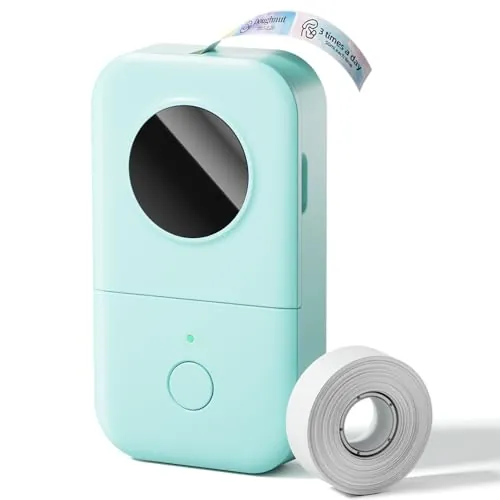
Phomemo D30 Portable Bluetooth Label Maker
- Very compact and lightweight for grab-and-go labeling around the home, classroom, or office
Comparison
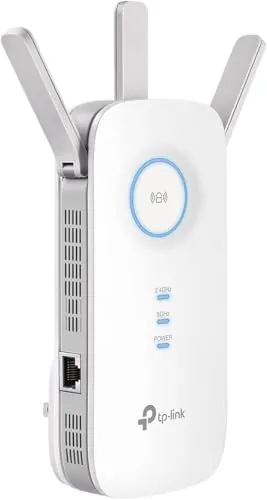
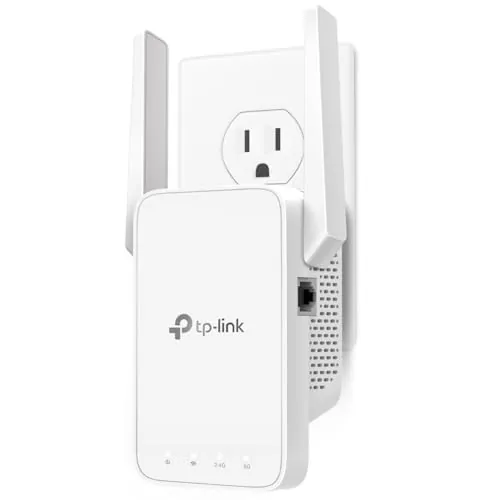
The Phomemo D30 is a portable Bluetooth label maker for home organization and tagging, while the TP-Link RE315 is an AC1200 Wi‑Fi extender built to reduce dead zones and improve coverage. Both are budget-friendly and well-reviewed, but they solve completely different problems. Choose the D30 for labeling and the RE315 for stronger Wi‑Fi reach and a wired Ethernet option.
#1 Overall Winner
Contender
Pick the Phomemo D30 if you want a small, rechargeable label maker for bins, cables, pantry items, and school/office organization. Pick the TP-Link RE315 if your goal is fewer Wi‑Fi dead zones, steadier streaming/work calls, or an easy way to add a wired Ethernet connection in a weak-signal room. Both are good value, but for completely different needs.
Overall winner
Depends on your needs
| Feature | Phomemo D30 Portable Bluetooth Label Maker | TP-Link AC1200 WiFi Extender RE315 | Winner |
|---|---|---|---|
| Primary purpose | Prints labels for organization and tagging | Extends Wi‑Fi coverage | Depends |
| Typical placement | Handheld / stored in a drawer or bag | Wall outlet in a mid-point location | Depends |
| Portability | Pocket-sized, battery powered | Portable to move, but outlet-dependent | Phomemo D30 Portable Bluetooth Label Maker |
| Output / result | Monochrome thermal labels (black text) | Improved Wi‑Fi reach; 1 Ethernet port | Depends |
| Connectivity method | Bluetooth to phones/tablets | Wi‑Fi repeater + RJ45 Ethernet | Depends |
| App experience (based on feedback) | Feature-rich but can be glitchy; some subscription-gated items | Generally user-friendly; supports controls like LED and access control | TP-Link AC1200 WiFi Extender RE315 |
| Ease of setup | Generally easy; app learning curve for some | Often set up in minutes with app guidance and indicators | TP-Link AC1200 WiFi Extender RE315 |
| Noise | Quiet printing noted in reviews | Silent operation | Tie |
| Consumables / refills | Requires label tapes (no ink/toner) | No consumables | TP-Link AC1200 WiFi Extender RE315 |
| Capacity / coverage metric | Narrow label width; suited to small labels | Coverage up to ~1500 sq ft; up to ~30 devices (listing) | TP-Link AC1200 WiFi Extender RE315 |
| Reliability pattern in reviews | Some long-term print/app issues reported; support can resolve | Some reports of drops/slowdowns; others report stable use | Tie |
| Value impression (price + feedback) | Strong value for frequent labeling | Strong value for fixing dead zones | Tie |
In everyday home use, these products improve different friction points. The Phomemo D30 helps keep storage, cables, and supplies clearly labeled so items are easier to find and put back, especially in shared homes, classrooms, and busy kitchens. The TP-Link RE315 is about making Wi‑Fi more usable in “problem rooms” so streaming, studying, and remote work feel less interrupted. If your home pain point is clutter and unclear storage, the D30 is more immediately visible. If it’s connectivity in a back room or garage, the RE315 will make a bigger difference.
The Phomemo D30 fits kitchen routines better because it can label pantry containers, shelves, and food expiration dates (as referenced in its suggested uses and reviews). The TP-Link RE315 doesn’t have a kitchen-specific role, except indirectly by improving Wi‑Fi for devices used nearby (like a tablet for recipes) if your kitchen has weak signal.
For core performance, the Phomemo D30 is mainly judged by label clarity and day-to-day printing. Buyer feedback frequently mentions clean, crisp labels and fast, quiet printing, though there are some mentions of print quality degrading over time and labels fading in longer use. The TP-Link RE315 is judged by whether it reduces dead zones and keeps devices connected. Many users report noticeably better coverage and a steadier connection for streaming, work, and multiple devices, but a minority report drops or slow performance, especially depending on placement or operating mode.
Reliability is mixed for both, with different failure patterns. For the Phomemo D30, printing and pairing are often praised, but there are recurring complaints about app glitches and occasional issues like fonts/templates not loading; one user reported print quality getting worse after months and needing a replacement due to an internal issue. For the TP-Link RE315, many users report stable performance and good coverage, but some experience connection drops or inconsistent behavior (including intermittent Ethernet drops in access point mode). Placement, environment, and configuration can strongly affect extender stability.
The TP-Link RE315 can be relevant for home monitoring setups if your cameras or devices struggle with Wi‑Fi at the edge of your home, since buyers mention using it to improve connections for cameras. The Phomemo D30 doesn’t monitor anything, but it can help with practical labeling (for example, identifying cables or devices) to keep a security or networking setup organized.
The TP-Link RE315 can support basic home monitoring reliability by improving Wi‑Fi reach where cameras or connected devices struggle, and at least one reviewer mentions using it to help cameras outside the home. It also includes an Ethernet port, which can help stabilize a single device in a weak area. The Phomemo D30 doesn’t provide monitoring, but it can be useful for labeling cables, routers, and device names/locations to make troubleshooting and household tech management easier.
The Phomemo D30 uses inkless thermal printing and a rechargeable battery. Practical safety considerations are basic handling: avoid drops, use the recommended charging approach, and be cautious with charging cables/ports to reduce wear (one reviewer specifically advises caution when connecting/disconnecting). The TP-Link RE315 is a plug-in electrical device; safe use mainly comes down to proper indoor placement, adequate ventilation, and avoiding overloaded outlets or cramped power splitters (especially since users mention it can interfere with adjacent sockets). No specific safety incidents are described in the provided reviews.
Comfort benefits depend on what stresses your household more. The Phomemo D30 can make daily life feel smoother by reducing small annoyances—misplaced items, unlabeled cables, and unclear storage—especially in shared spaces. The TP-Link RE315 improves “digital comfort” by reducing Wi‑Fi frustration in a problem room, which can matter for work calls, streaming, and connected devices. If you’re frequently hunting for items, labels help; if you’re frequently reconnecting devices, better coverage helps.
The TP-Link RE315 tends to be simpler for first-time setup because many users report getting it working in minutes with the Tether app and signal indicators. The Phomemo D30 is also often described as easy to use and quick to pair over Bluetooth, but several reviews mention the app can be confusing at first and occasionally glitchy. If you want “plug in and place,” the extender is usually the lighter learning curve; if you enjoy templates and design tools, the label maker offers more depth.
The Phomemo D30 is designed for portability: palm-sized, lightweight, and easy to store, with printing controlled through the app rather than a built-in display. The TP-Link RE315 uses a wall-plug format with external antennas, aiming for practical placement and better coverage direction, plus indicator lights to help you choose a good location. If you want something that disappears into a drawer between uses, the D30 fits better; if you want something unobtrusive on a wall outlet, the RE315 is more appropriate.
“Capacity” looks very different here. The Phomemo D30’s practical limit is label size: it supports narrow label widths (listed around the 0.55–0.59 inch range), which is great for cables, bins, and small containers but not for large, highly readable signage. The TP-Link RE315’s capacity is coverage and connections: the listing claims up to about 1500 sq ft coverage and around 30 devices. If you need big labels, the D30 may feel constrained; if you need broader Wi‑Fi reach, the RE315 is built for that.
Both are space-friendly, but in different ways. The Phomemo D30 stores easily in a drawer, bag, or desk organizer and doesn’t take permanent space. The TP-Link RE315 uses a wall outlet and keeps counters and floors clear, but it can block nearby sockets on some outlet setups due to its body and antennas. If you’re tight on outlets, plan placement carefully for the extender; if you’re tight on storage, the D30 is easy to tuck away.
Neither product is likely to be disruptive. The Phomemo D30 is frequently described as quiet while printing, making it easy to use at a desk or in a classroom without drawing much attention. The TP-Link RE315 has no moving parts in normal operation and is effectively silent once plugged in.
Both are low-installation products. The Phomemo D30 setup is mainly charging, loading a label tape, pairing via Bluetooth, and selecting the correct label size in the app. The TP-Link RE315 typically involves plugging into a wall outlet, pairing with your router via the Tether app or one-touch methods, and then finding the best location using signal indicators. The biggest “installation” factor for the extender is placement; the biggest for the label maker is tape compatibility and sizing.
Build quality feedback is stronger overall for the TP-Link RE315, with buyers commonly describing it as solid and well-made for the price. The Phomemo D30 is praised for being compact and convenient, but long-term sturdiness looks more mixed: one buyer reported a drop broke the unit, and another reported an internal issue after months that required replacement. Neither listing provides detailed material specs, so the most practical takeaway is that the D30 benefits from careful handling (and possibly a case), while the RE315 is a stationary wall device.
Long-term durability signals are stronger for the TP-Link RE315, likely helped by its stationary, plug-in use. The Phomemo D30 is portable and therefore more exposed to drops and daily handling; at least one buyer reported breaking it after a fall, and another experienced an internal issue months in. On the other hand, there is also feedback of responsive support and replacement, which can reduce downtime if something fails.
The Phomemo D30 maintenance is mostly about keeping label tapes on hand, loading rolls correctly, and managing app templates and label size settings (especially for third-party tapes). It benefits from keeping the device protected from dust and impacts. The TP-Link RE315 has no consumables; maintenance is primarily occasional repositioning for best signal, app-based management, and troubleshooting if you encounter drops (sometimes requiring resets). If you want minimal ongoing “supplies,” the extender is simpler; if you want a low-mess printer with no ink, the D30 is easy day to day.
The Phomemo D30 is built for portability: it’s lightweight, pocket-sized, and rechargeable, so it can move from kitchen to office to classroom without needing an outlet. The TP-Link RE315 is portable in the sense that you can relocate it easily, but it needs a wall outlet and is intended to stay put once you’ve found the best signal location. For travel or carrying in a bag, the D30 is the clearer choice.
The Phomemo D30’s standout features are in its app toolkit: templates, symbols, frames, barcode/QR creation, image import, OCR, timestamping, and Excel data import, plus support for continuous tapes and fixed-length labels. The TP-Link RE315 focuses on network features: dual-band Wi‑Fi, external antennas, an Ethernet port, and app controls such as LED control and access control (per product description). Neither product competes on the other’s feature set; it’s creativity and labeling workflows versus network coverage tools.
The Phomemo app offers a very large set of creative functions (icons, frames, barcodes/QR codes, OCR, Excel import), but multiple reviews mention glitches, premium items that can’t be filtered out, and saved templates not reliably loading. The TP-Link Tether app is generally described as user-friendly for setup and management, with controls like LED management and access control noted in the product description. If you’re sensitive to app stability, RE315 feedback looks more consistent overall.
These are “smart” in different ways. The Phomemo D30 connects to a phone over Bluetooth and depends on its app for templates and advanced label creation, but it isn’t a smart-home hub or automation device. The TP-Link RE315 is home-network equipment and can help smart devices work more reliably by improving Wi‑Fi reach, but it’s listed as not smart home compatible in the provided specs, meaning you shouldn’t expect voice assistant or smart-ecosystem integrations from the extender itself.
The Phomemo D30 is app-controlled over Bluetooth and offers lots of template-driven customization, but it’s not positioned as a smart-home automation device. The TP-Link RE315 is network infrastructure that can make smart devices work more reliably by extending coverage, but the provided specs state it’s not smart home compatible, so you shouldn’t expect voice assistant control or automation routines from the extender itself. In short: D30 is “smart labeling,” RE315 is “smarter coverage.”
Neither product is built around hands-off automation in the usual smart-home sense. The Phomemo D30 is manual “print on demand,” although it supports structured workflows like Excel data import for batch labeling. The TP-Link RE315 can help devices stay connected more seamlessly (and the listing references adaptive path selection), but it’s still a networking tool rather than a routine-based automation product.
The Phomemo D30 uses Bluetooth 4.0 to connect to a phone or tablet and print wirelessly at short range, which fits quick labeling anywhere in the home. The TP-Link RE315 connects to your router over Wi‑Fi and rebroadcasts the signal on dual bands, plus it offers a wired RJ45 Ethernet port for a single device. If you need a stable connection for a computer/TV in a weak area, RE315’s Ethernet option is a practical advantage; for portable printing without cables, D30 is the better match.
The Phomemo D30’s efficiency advantage is inkless thermal printing: there’s no ink or toner, and many users see it as cost-effective over time, with refills limited to label tapes. The TP-Link RE315 doesn’t require consumables, but it’s an always-on network device that draws power continuously while extending coverage. If your priority is minimizing ongoing supplies, the extender wins on consumables; if your goal is lowering printing-related ongoing costs compared with ink-based options, the label maker is the more efficient approach for labeling tasks.
Privacy considerations are more relevant to the TP-Link RE315 because it’s network equipment managed through an app (with features like cloud management mentioned in the description). You’ll want to review account requirements and access control settings in the Tether app and keep firmware up to date if available. The Phomemo D30’s privacy footprint is typically smaller because it connects over Bluetooth for printing, but it still relies on an app for templates and features; if you use OCR or image import, be mindful of what data you choose to process in-app.
Both products are positioned as strong budget buys, and buyer feedback supports that, but “value” depends on frequency of use. The Phomemo D30 can be excellent value if you label often, since it avoids ink/toner costs and makes it easy to produce labels on demand; however, some users dislike subscription-gated design elements and occasional app instability. The TP-Link RE315 offers strong value if it fixes a real dead zone, and the Ethernet port adds practical utility, but results can vary with placement and some users report drops or slower performance. The best value is the one that solves your daily problem.
Based on the provided data, TP-Link shows stronger brand-trust signals for networking, including regulatory certifications (CE, RoHS) and a stated security commitment in the listing. Phomemo has strong customer volume and generally positive sentiment for the D30, and at least one review highlights responsive support and a replacement when a fault occurred. If you prioritize long-established networking brand presence, TP-Link is the safer bet; if you prioritize labeling specialization and low-cost printing, Phomemo’s track record here is well supported by reviews.
Both products have very high review counts and the same overall star rating, suggesting broad satisfaction at their price points. For the Phomemo D30, repeated praise centers on portability, clear printing, and usefulness for organization, with recurring negatives around app glitches, premium gating, and occasional fading/long-term print issues. For the TP-Link RE315, buyers commonly praise quick setup, improved coverage, and good value; the main recurring negatives are occasional connection drops, slow performance for some setups, and inconsistency reported by a minority (notably in access point mode). Overall sentiment is positive for both, with different pain points.
The Phomemo D30 and TP-Link RE315 aren’t direct competitors, so there’s no single winner—each is “best” only within its category. The Phomemo D30 is a strong, value-focused portable label maker with clear monochrome printing, excellent portability, and a feature-rich app, but it’s held back by occasional app glitches, subscription-gated designs, and a few durability/long-term print complaints. The TP-Link RE315 is a well-liked budget Wi‑Fi extender that can meaningfully improve coverage and offers a handy Ethernet port, but some homes will experience drops or inconsistent performance depending on placement and configuration. Choose the one that targets your everyday pain point: organization (D30) or connectivity (RE315).
Overall winner
Depends on your needs
They serve different jobs, so “better” depends on what problem you’re solving. The Phomemo D30 is for printing labels for organization, school, and small-business tagging, while the TP-Link RE315 is for extending Wi‑Fi coverage into dead zones. If you need tidier storage and clearer labeling, pick the D30. If you need more reliable Wi‑Fi in a weak room, pick the RE315.
The Phomemo D30 is the direct fit for home organization because it prints labels for bins, cables, pantry containers, folders, and date labels. Reviews frequently mention clear labels, easy Bluetooth connection, and a compact device that’s convenient to keep on hand. The TP-Link RE315 can indirectly help by improving Wi‑Fi for home office devices, but it doesn’t help with physical organization.
Both are commonly described as straightforward, but in different ways. The Phomemo D30 typically pairs quickly over Bluetooth and prints from a phone app, though some users mention the app can take time to learn and may be glitchy. The TP-Link RE315 often sets up in minutes using the Tether app and signal indicators, though placement and mode choices can affect results.
No. The D30 is a monochrome thermal label printer that outputs black text. If you want a colored look, it comes from using patterned or colored label tapes rather than colored ink. This approach keeps it ink-free, but it also means you won’t get true multi-color graphics or photo-like output.
The RE315 is designed to improve Wi‑Fi coverage and stability in areas your router doesn’t reach well. The product listing notes that extenders generally do not directly increase speed; in practice, better signal can make performance feel more consistent in weak zones. Some reviewers report good speeds, while others mention slowdowns or drops depending on placement and environment.
Both can work well in small spaces, but for different needs. The Phomemo D30 is extremely space-efficient and easy to store, making it handy for dorm labeling and shared storage. The TP-Link RE315 is also compact and plugs into a wall outlet, which can be ideal if a flat has a bedroom or corner with weak Wi‑Fi coverage.
With the Phomemo D30, multiple reviews praise print quality, but there are mentions of app glitches and at least one report of print quality degrading over time that required support and replacement. With the TP-Link RE315, many users find it reliable, but some report connection drops or inconsistent performance, especially in certain configurations like access point mode.
The Phomemo D30 uses inkless thermal printing, so there’s no ink or toner to buy, but you will need replacement label tapes over time. Some features and design elements in the app may be tied to a subscription, based on buyer feedback. The TP-Link RE315 has no consumables, but it does draw power continuously while plugged in.
Check our rankings and expert guides to find the best home lifestyle products for your goals.