#1 Overall Winner
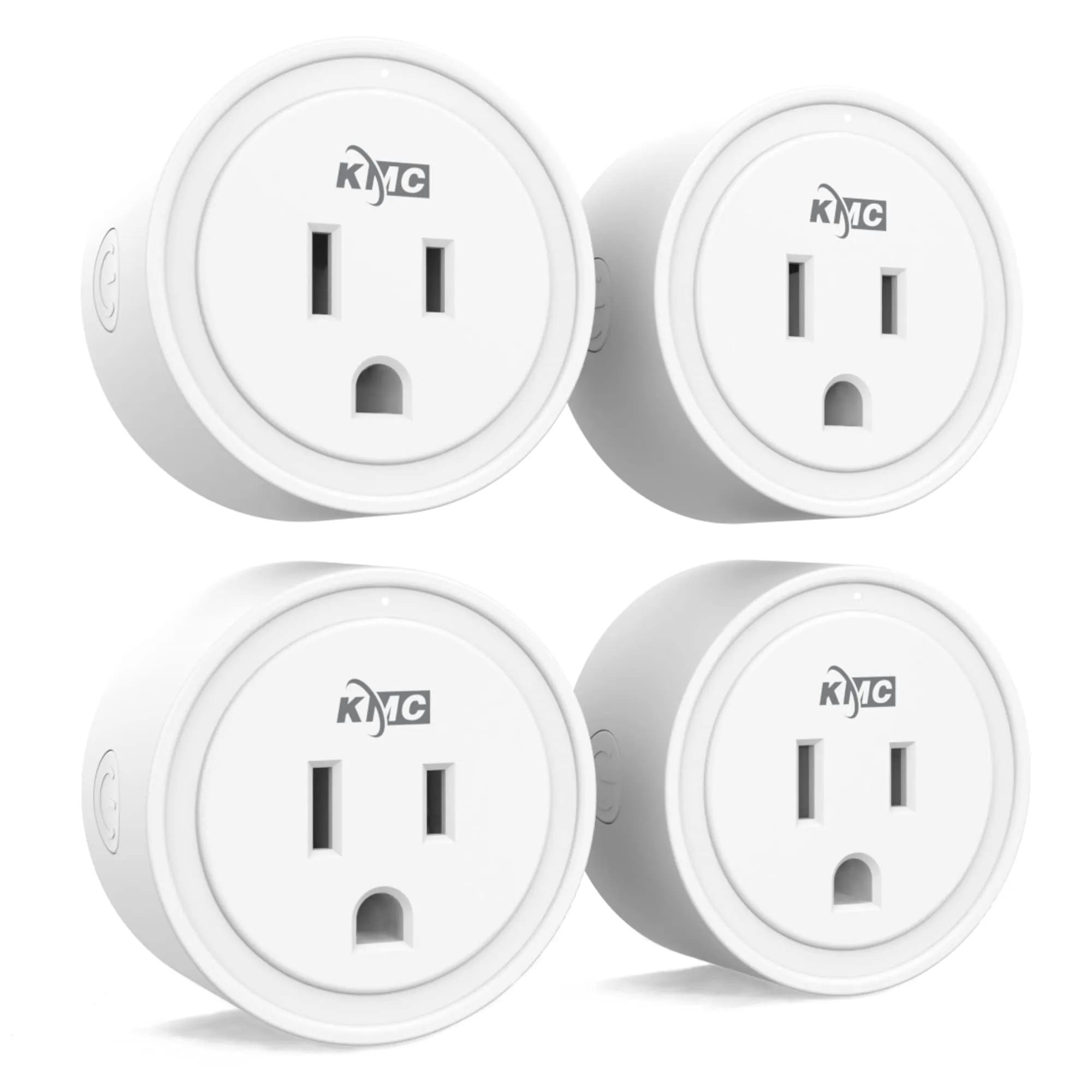
KMC Smart Plug Mini 4-Pack
- Strong overall value as a 4-pack for basic smart outlet control
Comparison
KMC Smart Plug Mini 4-Pack and meross Smart Plug Mini are Wi‑Fi smart outlets aimed at simple on/off control, schedules, and voice commands for lamps and small devices. KMC is positioned as an easy, low-cost Alexa/Google option, while meross stands out for Apple HomeKit and Siri support. Both have mixed buyer feedback around Wi‑Fi stability, so your router setup and platform choice matter.
#1 Overall Winner
Contender
Choose KMC if you want an affordable 4-pack for Alexa/Google routines with straightforward app control and sharing. Choose meross if you’re committed to Apple HomeKit/Siri and want plugs that integrate directly into the Home app—just be prepared for occasional HomeKit/Wi‑Fi setup friction depending on your network.
Overall winner
Depends on your needs
| Feature | KMC Smart Plug Mini 4-Pack | meross Smart Plug Mini 4 Pack (MSS110HK) | Winner |
|---|---|---|---|
| Typical ecosystem fit | Alexa / Google Assistant homes (via KMC Smart app) | Apple HomeKit / Siri homes (plus Alexa/Google) | Depends |
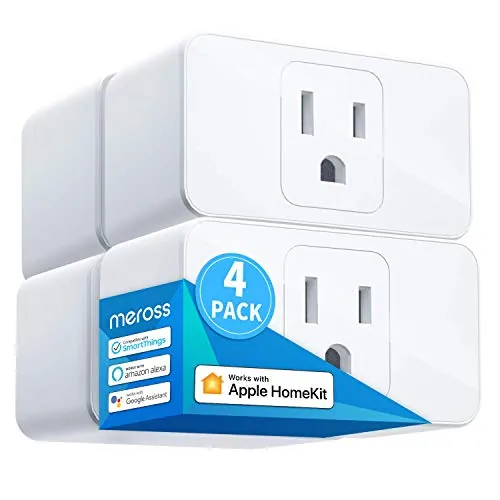
| HomeKit support | Not listed | Supported (HomeKit/Siri) | meross Smart Plug Mini 4 Pack (MSS110HK) |
| No-hub operation | No hub required (listed) | No hub needed for basic use; HomeKit remote needs a home hub | Depends |
| Wi‑Fi requirement | 2.4 GHz Wi‑Fi required (listed) | 2.4 GHz Wi‑Fi only (listed) | Tie |
| Scheduling / automation basics | Scheduling and conditions (time, sunrise/sunset, weather, status) | Schedule with sunrise/sunset support | KMC Smart Plug Mini 4-Pack |
| Physical size / outlet blocking | Some reviewers say plugs are a bit large | Compact; designed to stack two in one outlet | meross Smart Plug Mini 4 Pack (MSS110HK) |
| Rated electrical load (listed) | 15A, up to 1875W (listed) | 15A (listed) | Tie |
| Certifications (listed) | ETL listed; UL/ETL wording in details | ETL and FCC (listed) | Depends |
| Connectivity stability (buyer sentiment) | Mixed: some stable, some dropouts/failed Wi‑Fi | Mixed with significant disconnection complaints | KMC Smart Plug Mini 4-Pack |
| App experience (buyer sentiment) | Generally easy, but some glitches/offline status reports | Some find it user-friendly; others dislike proprietary app requirement | Depends |
| Support / warranty info provided | Lifetime warranty and US-based support stated | Support praised in at least one review; no lifetime warranty stated | KMC Smart Plug Mini 4-Pack |
| Overall value as a 4-pack | Lower listed price | Higher listed price with HomeKit support | Depends |
For everyday home routines—turning lamps on/off, setting timers, and making hard-to-reach outlets more convenient—both packs handle the basics well when connected reliably. KMC tends to suit general-purpose use in mixed households (Android/iOS plus Alexa/Google), while meross is most compelling for Apple-first homes that want everything controlled from the Home app. If you’re planning to deploy many plugs, also consider physical clearance: KMC has more feedback about blocking neighboring sockets, while meross is designed to be more compact.
In kitchens, smart plugs are most useful for simple on/off control of low-to-moderate draw devices (for example, accent lighting or seasonal decor) and for setting schedules so things don’t get left on. Both KMC and meross are rated at 15A in their listings, but they are still best treated as on/off switches rather than precision cooking controls. For kitchens with crowded outlets and backsplash plugs, meross’ compact design may be easier to live with.
For comfort routines like running fans on schedules or controlling lamps/heat lamps (within rated limits), both plug sets can work well. KMC’s app description highlights condition-based automation options, which can be handy if you want more than simple timers, while meross can shine for Apple Home automations when the HomeKit connection is stable. Because both have mixed connectivity feedback, the “best” comfort experience often comes down to Wi‑Fi coverage where the plug will live.
Both products are designed for basic, fast on/off switching and timed control, and many reviews describe near-instant response once the plugs are paired correctly. KMC feedback is generally positive for responsiveness and day-to-day usability, but there are recurring mentions of plugs going offline or needing re-pairing. meross can perform extremely well inside HomeKit—several reviewers highlight quick reactions—yet aggregated feedback also points to frequent disconnections and cases where HomeKit pairing times out, which directly undermines real-world performance.
Reliability is the main watch-out for both packs. KMC has a split pattern: many owners describe weeks of stable use, while others report plugs that stop working, go offline, or fail to connect to Wi‑Fi, and at least one review describes devices disappearing from the app and requiring re-setup. meross also has mixed reliability, including reports of units failing after months and not reconnecting, plus aggregated feedback calling out frequent disconnections and HomeKit connection failures for some households.
Neither product provides true climate control, but both can support simple comfort routines by switching devices like fans or lamps on schedules. KMC’s app description suggests more conditional automation options, while meross offers strong HomeKit-based automations for Apple users. The more important factor for comfort-related routines is whether your 2.4 GHz Wi‑Fi signal is strong where the plug is installed, since both products have mixed connectivity feedback.
Both listings indicate a 15A rating, and both mention ETL certification in the provided details, which is a useful baseline for buyer confidence compared with unlisted devices. meross also notes PC flame-retardant material and FCC certification in its description. That said, safe use still depends on matching the plug to the load: smart plugs like these are typically best for lamps, fans, and similar household electronics within the rated limits. If an outlet is cramped or the plug is forced against furniture, ensure there’s adequate clearance and avoid stressing the connection.
Comfort benefits come from convenience: turning lights on from bed, scheduling a fan, or creating routines that match your day. KMC users often highlight easy routines and quick manual control through the app or voice assistants, which can make daily lighting feel more effortless. meross can be especially comfortable in Apple homes because control lives inside HomeKit scenes and automations, but if your network causes disconnections, that convenience can drop quickly.
KMC is frequently described as quick to set up and easy to expand across multiple plugs, with simple in-app scheduling. However, some users report pairing that can be slow or may need repeating, plus occasional “offline” status glitches. meross can be quick for many users, but HomeKit setup can be more involved: reviewers mention staying close to the device during pairing, possible firmware updates, and extra steps to link the plug in both HomeKit and the meross app.
meross has the clearer advantage in practical design for tight spaces: it’s described as compact and intended to occupy only one socket, with the ability to place two in one outlet. KMC’s design is more likely to create crowding, with multiple reviewers noting the plugs can be large on power strips or near adjacent outlets. If placement flexibility behind furniture matters, meross reviewers also mention needing a bit of wall clearance due to plug thickness.
Both products are sold as 4-packs, which is often enough to cover a small set of key outlets (living room lamps, seasonal lights, a fan, and a hallway lamp). KMC’s listing is explicit about a 15A / 1875W rating, while meross states support up to 15A. In practical terms, “capacity” here is less about pack size and more about how many outlets you need to automate and whether the plugs physically fit where you plan to use them.
meross is the more space-efficient choice in typical wall outlets because it’s explicitly designed to occupy a single socket and allow two plugs in one outlet. KMC can be a tougher fit on crowded strips or tight wall plates, with multiple users noting it may block adjacent sockets. If you’re outfitting a small flat or using outlets behind furniture, measuring clearance and choosing compact plugs can prevent day-to-day annoyance.
Noise isn’t a meaningful factor for either product. These are silent on/off smart outlets with no fan or motor, so they’re generally suitable for bedrooms, offices, and living spaces without adding audible distraction. Any usability differences are more likely to come from connectivity stability and how quickly the plug responds to commands.
Both are plug-in devices with no wiring. KMC setup is typically app-first (KMC Smart) and then linking to Alexa/Google for voice control and routines. meross setup can be straightforward, but HomeKit pairing may require more attention: reviewers mention keeping your phone close during setup and sometimes adding the plug to both HomeKit and the meross app. For either plug, plan for physical clearance and avoid crowded outlet locations if the plug body blocks neighbors.
Both are described positively for basic build in buyer summaries, and both list safety-related certifications (ETL on both; meross also lists FCC). meross specifically notes PC flame-retardant material in its details, while KMC lists a plastic body with metal contacts. Long-term quality signals are mixed for both, with reports of some units failing over time. Based on the feedback provided, neither pack is immune to occasional defective units.
Long-term durability signals are mixed for both brands based on the provided reviews. KMC has users reporting stable operation over weeks, but also reports suggesting resets and re-pairing may be needed after certain issues. meross has at least one report of multiple plugs failing after several months (with replacement provided), alongside other users reporting multi-year stable use. If you plan a large deployment, consider buying from a retailer with easy returns and testing each unit early.
Maintenance is generally light for both: there are no filters or consumables, and most upkeep is occasional app updates and re-pairing if Wi‑Fi changes. KMC maintenance tends to be about troubleshooting app “offline” states or repeating pairing when needed. meross maintenance can include firmware updates and, for HomeKit users, ensuring your HomeKit hub remains powered and connected. In both cases, labeling plugs in the app helps reduce confusion as you add more outlets.
Both options are easy to move between rooms because they’re plug-in accessories. KMC’s larger body (per some reviewers) can make it less convenient to relocate into tight spaces like packed power strips. meross’ more compact design is better suited to swapping between outlets around the home, especially if you often need two devices on one receptacle. Portability for either plug is limited mainly by how frequently you want to redo pairing after moving it.
KMC offers app control, voice control with Alexa/Google, device sharing, and a wider range of automation conditions described in the listing (including time and sunrise/sunset, plus other conditions). meross provides app control, timers/schedules with sunrise/sunset, and broad voice assistant coverage including Siri/HomeKit; it also has clear guidance that HomeKit remote control requires an Apple home hub. Neither listing mentions energy monitoring, dimming, or variable power control—these are primarily on/off smart outlets.
KMC’s app is often described as easy, but reviewers mention occasional glitches such as the app showing a device offline incorrectly, and some scheduling quirks. meross requires its app for setup, and while some find it user-friendly, others dislike needing a proprietary app alongside HomeKit. Several meross reviewers describe extra steps during HomeKit onboarding (adding to HomeKit, then linking in the meross app and sometimes running firmware updates), which can feel less streamlined.
This is where the two packs differ most. KMC is positioned for Alexa and Google Assistant households with no hub required, plus in-app scheduling and sharing. meross supports Alexa and Google too, but its key advantage is Apple HomeKit and Siri support, letting you control plugs inside the Apple Home ecosystem and build HomeKit automations. If your smart home is Apple-led, meross has the platform fit; if you want a simpler, app-first approach for Alexa/Google routines, KMC is usually the cleaner match.
KMC integrates with Alexa and Google Assistant and leans on the KMC Smart app for scheduling, automation conditions, and sharing control—good for common multi-user households. meross stands out for Apple HomeKit: when setup works, it can feel “native” in Apple Home with fast responses and simple scene-based automations. The trade-off is that meross has more reports of HomeKit and Wi‑Fi setup friction, while KMC has more emphasis on app-driven automation features but still has some reported dropouts.
Both support timers and schedules, including sunrise/sunset. KMC’s listing goes further by describing automation based on multiple conditions (time, sunrise/sunset, weather, and device status), which may appeal if you want more app-driven logic. meross automation is strongest for Apple users who build routines inside HomeKit, but the practical automation experience depends on a stable HomeKit connection and (for remote control) a HomeKit hub staying online.
Both are 2.4 GHz Wi‑Fi devices, which means performance depends heavily on router settings, signal strength, and how your network handles band steering. KMC has mixed feedback: many stable experiences, but also reports of plugs failing to connect or going offline. meross connectivity complaints are more prominent in the aggregated summary, including constant disconnections and inability to join Wi‑Fi for some users, plus HomeKit pairing timeouts in certain mesh/dual-band setups.
Neither listing provides detailed energy-use or standby-power data, so an efficiency comparison is mostly about avoiding wasted runtime through scheduling. Both support schedules (including sunrise/sunset), which can help prevent lights being left on. meross also suggests energy saving through timers, but without measured consumption details it’s not possible to quantify differences. In day-to-day use, the more “efficient” option will be the one that stays connected reliably enough to follow your schedules.
Both products rely on apps and Wi‑Fi connectivity, which can involve accounts and cloud control, but the provided data does not include detailed privacy or security practices for either brand. Reviews mention KMC app changes and device/account behavior, and meross users mention the need to use the meross app even when using HomeKit. If privacy is a priority, consider separating smart devices on a dedicated IoT network and review each app’s permissions during setup.
KMC has the lower listed price for a 4-pack and is widely described as a strong value, especially for straightforward Alexa/Google control and scheduling. meross costs more but includes Apple HomeKit and Siri support, which can be worth paying for if you want native control inside Apple Home and HomeKit automations. Because both products have mixed reliability feedback, value also depends on how stable they are on your particular Wi‑Fi setup—factor in the hassle cost of troubleshooting or replacing a problematic unit.
Based on the provided information, KMC offers clearer support positioning via a stated lifetime warranty and US-based customer support, which can improve confidence if something goes wrong. meross has at least one detailed review praising fast replacement through customer support after failures, but the listing data doesn’t provide the same level of warranty clarity here. In both cases, large review counts suggest widespread adoption, but buyer experiences still vary substantially by network and unit-to-unit reliability.
Both products have high review volume and generally positive star ratings, with many buyers praising easy setup, convenience, and good value. KMC satisfaction is boosted by frequent “works as advertised” comments and responsive control, but there’s a recurring minority reporting Wi‑Fi issues and occasional app problems. meross earns strong praise from Apple users when HomeKit works smoothly, yet the aggregated feedback highlights more pronounced connectivity complaints and mixed HomeKit pairing success, alongside reports of some units failing after a period of use.
KMC’s listing states a lifetime warranty and US-based customer support, which is unusually clear for budget smart plugs. For meross, warranty terms are not specified in the provided data, but at least one review describes customer support performing diagnostics and replacing failed plugs quickly. If support matters, confirm the current warranty/returns policy at purchase and test all plugs early in the return window.
Between these two 4-packs, KMC Smart Plug Mini is the more broadly practical choice for most households because it’s priced lower, integrates cleanly with Alexa/Google, and is widely described as easy to set up and responsive. Its main drawback is inconsistent reliability for some users, including occasional offline/app glitches.
meross Smart Plug Mini is the better match for Apple households thanks to HomeKit and Siri support and a more compact, outlet-friendly design. The main limitation is a higher likelihood of Wi‑Fi/HomeKit setup friction and mixed long-term reliability reports, even though some users report great stability and helpful replacements. If you’re all-in on HomeKit, meross is compelling; otherwise KMC is the safer general pick.

Overall winner
Depends on your needs
If you mainly use Alexa or Google Assistant and want a straightforward 4-pack, the KMC Smart Plug Mini set is the simpler fit based on the provided details and buyer feedback. If your home runs on Apple HomeKit and you want Siri control inside the Home app, meross is the more relevant option—just expect that Wi‑Fi/HomeKit setup can be the deciding factor.
KMC is listed as “no hub required” and is designed to work over 2.4 GHz Wi‑Fi using the KMC Smart app (with Alexa/Google support). meross is also listed as no hub needed for basic operation, but HomeKit remote control specifically requires a HomeKit bridge device such as a HomePod or Apple TV, and it must remain online.
meross is the clear HomeKit-focused choice because it explicitly supports Apple HomeKit and Siri, and multiple reviews mention seamless integration when setup succeeds. However, reviews and the aggregated feedback also highlight that some households run into HomeKit pairing timeouts or Wi‑Fi issues, especially on certain dual-band or mesh setups.
Both are frequently described as easy to set up, but KMC reviews lean toward a very quick, app-first process for multiple plugs. meross setup can be fast for many users, but HomeKit onboarding can be more sensitive to network conditions (2.4 GHz requirements, staying close to the plug during pairing, and potential mesh/dual-band complications).
Neither is universally “set-and-forget” based on the provided feedback. KMC has mixed reliability notes, including reports of plugs going offline or needing re-pairing after issues. meross also has mixed reliability and more prominent reports of disconnections and units failing after months, although at least one reviewer reports fast replacement through customer support.
Yes—both products are commonly used for lamps and seasonal lighting in the reviews, and both listings state a 15A rating. As with any smart plug, the practical fit depends on keeping the connected device within the plug’s rated limits and ensuring the outlet location has enough physical clearance for the plug body.
meross is specifically described as compact and designed to occupy only one socket, with the intent that two can fit in the same outlet. KMC has reviewer feedback noting the plugs can feel a bit large, which may block neighboring outlets on crowded strips or tight wall plates. If physical space is tight, meross has the stronger design positioning.
KMC is positioned for remote control through the KMC Smart app over Wi‑Fi, and voice control can be used through Alexa/Google integrations. For meross, remote control through Apple HomeKit requires a HomeKit home hub (HomePod/Apple TV/iPad) to be set up and kept online; otherwise remote commands may fail to respond.
Yes. KMC feedback includes occasional pairing slowness and the app sometimes showing devices offline incorrectly, plus mixed Wi‑Fi stability reports. meross feedback more strongly highlights constant disconnections for some users and situations where HomeKit pairing times out, particularly on certain network configurations. In both cases, network setup (stable 2.4 GHz coverage) matters.
Check our rankings and expert guides to find the best home lifestyle products for your goals.