#1 Overall Winner
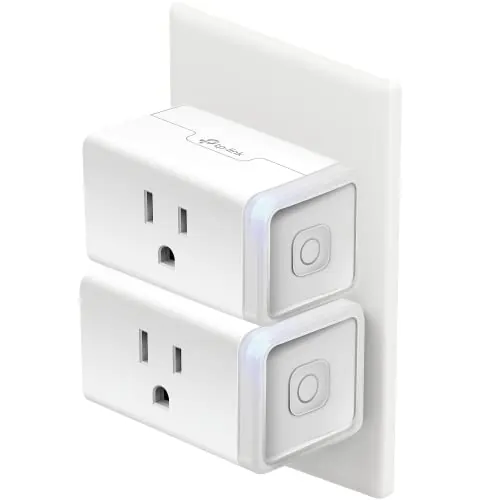
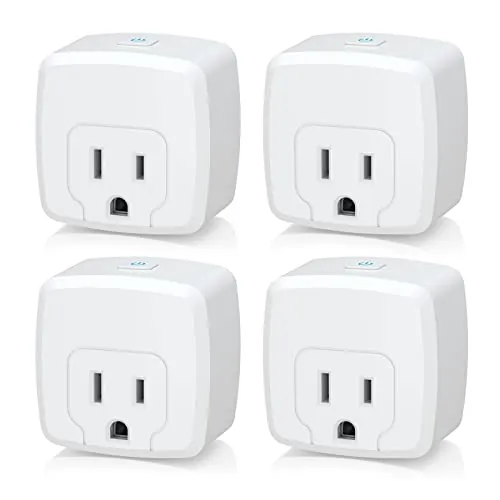
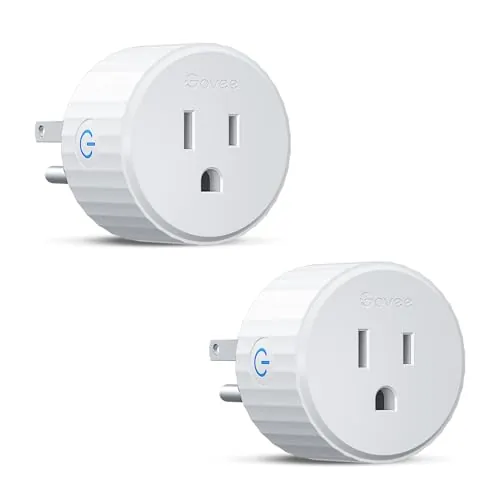
Govee Smart Plug (H5083) 2 Pack
- Fast, straightforward setup in the Govee Home app, with strong ease-of-use feedback from buyers.
Comparison
The Govee Smart Plug (H5083) and Kasa Outdoor Smart Plug (EP40) both add app and voice control to everyday devices, but they’re aimed at different locations. Govee is a compact indoor plug sold as a 2-pack with strong feedback for simple setup and stable routines. Kasa EP40 is built for outdoor use with two independently controlled sockets and sunrise/sunset scheduling, but it has more mixed long-term reliability feedback.
#1 Overall Winner
Contender
Choose the Govee H5083 if you want compact indoor smart plugs that are easy to set up, work well with Alexa/Google, and handle basic schedules and grouping. Choose the Kasa EP40 if you need a purpose-built outdoor plug with two independently controlled outlets and sunrise/sunset scheduling for lights or yard devices—while keeping in mind the more mixed long-term reliability feedback.
Overall winner
Depends on your needs
| Feature | Govee Smart Plug (H5083) 2 Pack | Kasa Outdoor Smart Plug (EP40) | Winner |
|---|---|---|---|
| Intended placement | Primarily indoor plug-in smart outlet | Outdoor smart plug (IP64) | Kasa Outdoor Smart Plug (EP40) |
| Number of controllable outlets | 1 per plug (2-pack) | 2 independent sockets | Kasa Outdoor Smart Plug (EP40) |
| Max stated load | 10A / 1200W (listed) | 15A / 1875W max (listed) | Kasa Outdoor Smart Plug (EP40) |
| Wi‑Fi band support | 2.4 GHz only (no 5 GHz) | 2.4 GHz only | Tie |
| Extra connectivity option | Bluetooth + Wi‑Fi (listed) | Wi‑Fi (long range claim) | Govee Smart Plug (H5083) 2 Pack |
| Voice assistant support | Alexa, Google Assistant | Alexa, Google Home | Tie |
| Automation features | Schedules, timers, grouping | Schedules, countdown, sunrise/sunset offset | Depends |
| App ecosystem | Govee Home app required for setup | Kasa app (with setup guidance) | Depends |
| IFTTT support | Not stated | Compatible with IFTTT (listed) | Kasa Outdoor Smart Plug (EP40) |
| Manual control | On-device button (noted in reviews) | On-device control + status LEDs (noted in reviews) | Tie |
| Space/plug footprint | Compact; often doesn’t block outlets (reviews) | Outdoor body with short cable | Govee Smart Plug (H5083) 2 Pack |
| Reported reliability trend | Mostly stable; some Wi‑Fi issues reported | Mixed; some early failure reports | Govee Smart Plug (H5083) 2 Pack |
| Warranty clarity | Not provided | 2-year warranty (listed) | Kasa Outdoor Smart Plug (EP40) |
| Price (as provided) | 15.01 (2 pack) | 17.64 (single outdoor unit) | Depends |
Both plugs are useful for everyday convenience—turning devices off remotely, setting bedtime shutdowns, or running predictable schedules. Govee tends to fit best for indoor rooms where a compact plug matters and you want multiple plugs for multiple devices. Kasa EP40 is more about extending automation to outdoor routines (lights, fountains, seasonal décor), and its dual outlets can replace using two separate indoor plugs—if the outlet location and weather exposure are suitable.
Either plug can help with simple kitchen routines like scheduling a small appliance or controlling accent lighting, as long as the device stays within the plug’s stated rating. Govee’s compact body is often easier on busy kitchen outlets, while Kasa EP40 is less suited to indoor countertop placement due to its outdoor form factor. Neither listing mentions energy monitoring, so they’re mainly for on/off control rather than tracking usage.
Both plugs can support cleaning-related routines such as running an air purifier or turning devices off automatically after a set time. Govee is commonly used indoors for items like purifiers in living spaces or work areas. Kasa EP40 can be useful for outdoor cleaning-adjacent equipment if it’s appropriate for the environment and you have strong Wi‑Fi coverage. For either plug, the main benefit is timer/schedule control, not enhanced cleaning performance.
Smart plugs can improve comfort by automating fans, heaters used in specific scenarios, or other comfort devices. Indoors, Govee is a practical pick for fans and similar devices because it’s compact and frequently praised for stable daily routines. Outdoors, Kasa EP40 is used by some buyers for weather-exposed needs (for example, seasonal devices), but outdoor comfort control depends heavily on placement and Wi‑Fi reach. Always match the plug to the device’s power requirements.
For the main job—reliable on/off control and scheduling—both plugs perform well for many households based on buyer feedback. Govee’s day-to-day responsiveness and stability are recurring positives in reviews, particularly for indoor routines like lamps and fans, with only occasional Wi‑Fi complaints. Kasa EP40 is praised for quick response and outdoor suitability, but its performance story is slightly less consistent due to mixed reliability reports and some network-connection issues for certain users.
Govee reliability feedback is generally strong: many buyers report stable connections and consistent routine execution over months, with only some noting Wi‑Fi issues. Kasa EP40 is often praised as solid and stable, but its aggregated feedback is more mixed, including multiple reports that units stopped working within a couple of months. For outdoor use, reliability can be influenced by exposure, temperature swings, and Wi‑Fi signal strength at the receptacle.
Both products list ETL certification, which helps with baseline confidence in electrical safety when used as intended. A key safety difference is load rating: Govee is listed at 10A/1200W, while Kasa EP40 is listed at 15A/1875W, so you should avoid plugging higher-draw devices into the lower-rated model. For Kasa outdoors, IP64 weather resistance helps, but it’s still important to reduce direct exposure and keep connections protected from water ingress. For either plug, use with grounded outlets as intended and avoid overloading.
Both products can improve day-to-day comfort by removing small chores: turning lamps on before you enter a room, ensuring a fan shuts off overnight, or running outdoor lights on a predictable schedule. Govee’s compact indoor setup is convenient for room-by-room routines and grouped bedtime shutdowns. Kasa’s comfort advantage is outdoors, where not having to step outside to manage lighting, fountains, or seasonal setups can be a meaningful convenience.
Both are widely described as easy to set up: plug in, open the app, and follow guided steps for Wi‑Fi pairing and voice assistant linking. Govee gets especially consistent praise for quick installation and straightforward everyday control, though some users find the app less intuitive for advanced automation. Kasa’s app is frequently called intuitive, but outdoor placement can make troubleshooting tougher if Wi‑Fi coverage is marginal.
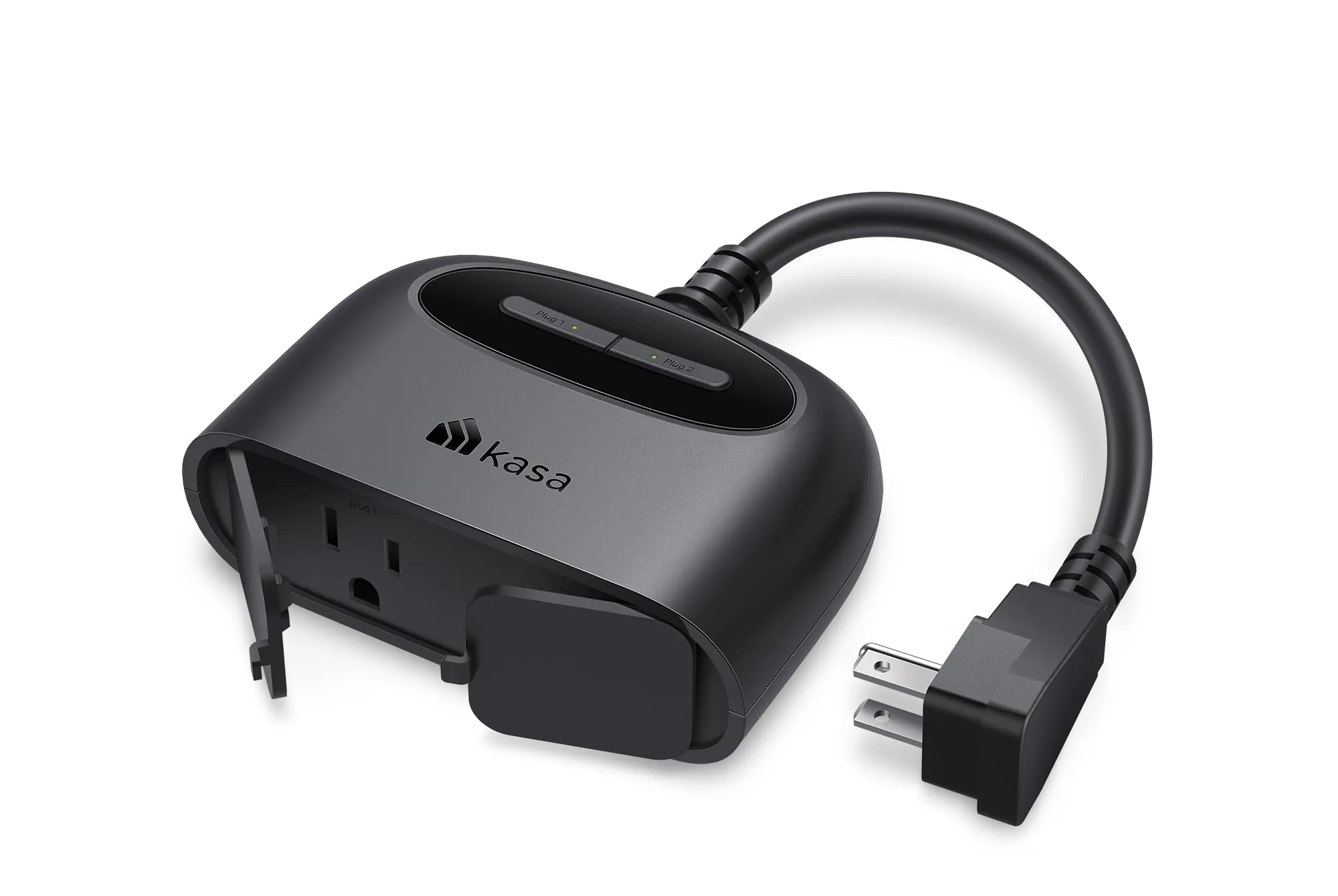
Govee’s smaller, room-friendly design suits tight indoor outlets and power strips, and it includes an on-device button for quick control. Kasa EP40 uses an outdoor-ready form factor with two sockets, status LEDs, and a short cable designed to hang from an exterior receptacle or fit into an outdoor enclosure. If you want something discreet on an indoor wall, Govee is typically easier to place; for patios and gardens, Kasa’s layout is more practical.
Kasa EP40 effectively offers more “capacity” for control because it provides two independently controlled outlets in a single unit, reducing the need for multiple plugs outdoors. Govee’s H5083 is a single-outlet smart plug, but the product is sold as a 2-pack, which can be more flexible across separate rooms. The better fit depends on whether you want two devices controlled at one outdoor location (Kasa) or two separate indoor devices (Govee).
Govee is typically more space-efficient indoors because it’s designed not to block adjacent outlets and fits neatly on wall receptacles and power strips. Kasa EP40 is space-efficient outdoors in a different way: it consolidates two controllable outlets into one unit, which can reduce clutter at an exterior receptacle. For small indoor spaces and tight outlet layouts, Govee is usually the cleaner fit; for outdoor outlets, Kasa’s two-socket design is practical.
Neither plug produces ongoing noise like a fan or vacuum, but smart plugs can make a small relay sound when switching. At least one Govee reviewer mentions an audible “click” during on/off, which is normal for relay-based devices but worth noting for bedrooms. Kasa reviews provided don’t emphasize switching noise; in typical use, either should be unobtrusive once set up.
Both are plug-in devices with app-guided setup, so installation is usually quick. Govee setup requires the Govee Home app and is commonly described as very fast, especially when adding additional plugs. Kasa EP40 setup is also described as straightforward, but outdoor installation benefits from planning: confirming Wi‑Fi signal at the outlet, using the included clamp/screw if needed for cable management, and considering an enclosure or sheltered location to reduce exposure.
Govee’s indoor plug is often described as solid and compact, with a design that typically avoids blocking adjacent outlets. Kasa EP40 is built with outdoor use in mind, using a polycarbonate housing and an attached cover; reviewers often describe it as durable and weather-resistant. The main build-quality concern for Kasa comes from reports of some units failing early, which can feel like a durability issue even if the housing itself is sturdy.
Govee’s indoor plug appears to hold up well in normal indoor use based on longer-running user comments, but there isn’t much detail about long-term part wear beyond general reliability. Kasa EP40 has an outdoor-oriented housing that reviewers describe as robust, yet some reports of early failure raise durability concerns for a subset of buyers. If the EP40 will be exposed, using a sheltered outlet or an outdoor enclosure may help reduce stress from weather and debris.
Maintenance is low for both: there are no filters, tanks, or consumables listed. Typical upkeep is keeping them accessible, checking that the device remains connected to Wi‑Fi, and updating app/firmware as needed. Kasa EP40 may need occasional cleaning around the cover and plugs due to outdoor dust and moisture exposure. Govee’s maintenance is mostly “set and forget,” with occasional app adjustments for schedules and grouping.
Govee’s compact indoor plugs are easy to move between rooms and pack for travel or a second home, and the 2-pack is convenient for spreading across locations. Kasa EP40 is portable in the sense that it plugs in without wiring, but the outdoor body and cable make it less convenient for frequent moving. If you want something you’ll routinely relocate (for example, between rooms or trips), Govee is the easier option.
Govee focuses on the essentials: app control, voice control, schedules, timers, and grouping, plus a manual button on the unit. Kasa EP40 adds outdoor-specific advantages, notably two independent sockets and sunrise/sunset scheduling with offset, and it lists IFTTT support for broader smart home workflows. Neither product is described as offering energy monitoring in the provided information, so feature differences mainly come down to outdoor readiness and dual-outlet control.
App experience is one of the clearer differences. Govee’s app is commonly described as workable for basic timers and schedules, but several users find it unintuitive for more advanced workflows. Kasa’s app is frequently praised as intuitive with strong control features and guided setup. If you plan to do more than simple on/off schedules, Kasa’s software experience may feel smoother—assuming the plug remains reliable in your environment.
Both products are strong “entry points” into smart home routines: voice control, remote app control, and scheduling are the core wins. Govee fits neatly if you already use the Govee Home app and want grouping across multiple plugs. Kasa EP40 integrates with Alexa and Google Home and also lists IFTTT, which can broaden automation options for users who build cross-platform routines.
In smart home terms, both support the core workflow: connect to 2.4 GHz Wi‑Fi, add to an app, then control by voice or routines. Govee is a good match for simple, repeatable indoor routines and grouping multiple plugs, but the app is sometimes criticized for complex automation flows. Kasa EP40 adds IFTTT support and outdoor-oriented scheduling (sunrise/sunset offsets), which can be useful if you build broader automations across devices.
Both handle the automation basics well: schedules, timers, and voice assistant routines. Govee’s grouping is useful for one-command shutdowns (for example, multiple plugs off at bedtime). Kasa EP40’s sunrise/sunset offset is a practical automation advantage for outdoor lighting that needs to track seasons. If your automations are mostly indoor “time of day” routines, either works; if you want outdoor lighting to follow daylight, Kasa is stronger.
Both plugs require 2.4 GHz Wi‑Fi, so network coverage and router settings matter. Govee also lists Bluetooth support, which can help with pairing and may reduce frustration in some setups. Kasa emphasizes long Wi‑Fi range in open space, which is helpful outdoors, but real-world performance depends on walls, distance, and router placement. Reviews for both include some connectivity complaints, so expect occasional troubleshooting in tougher networks.
Neither listing provides detailed energy-use metrics, and neither is described as offering energy monitoring. Practically, efficiency benefits come from using schedules and timers to avoid leaving devices on longer than needed. Kasa highlights sunrise/sunset offsets, which can reduce “guesswork” for outdoor lighting schedules. Govee’s grouping and timers can make it easier to shut down multiple devices reliably, which may help reduce unnecessary runtime for indoor electronics.
Both products rely on app-based control over Wi‑Fi, which typically implies account/app usage and network access. The provided reviews include advice from one Govee user to place smart devices on a guest network, reflecting general household privacy hygiene rather than a specific proven risk. Kasa lists IFTTT support, which can expand integrations but may also add another service layer. If privacy is a priority, consider network segmentation and only enabling the permissions you need.
Value depends on where you’re using the plug and how many devices you need to control. Govee’s pricing is for a 2-pack and is widely described as good value, especially for indoor automation across multiple rooms. Kasa EP40 costs more but targets outdoor use, includes two independently controlled sockets, and explicitly states a 2-year warranty—features that can justify the difference if you need them. If you only need basic indoor on/off schedules, Govee is typically the more cost-effective route; for outdoor dual-outlet control, Kasa can be the better fit.
Both brands have strong adoption signals in the provided data through high review counts and generally positive ratings. Kasa (TP-Link) emphasizes being widely used and provides a clearly stated 2-year warranty, which can improve buyer confidence. Govee earns trust mainly through consistent buyer feedback around ease of setup and stable daily performance. If warranty clarity is a deciding factor, Kasa has the advantage based on the listing details provided.
Both products have very high review volumes with strong average ratings. Govee feedback is especially consistent around easy setup, compact design, and reliable everyday routines, with the most common negatives being occasional Wi‑Fi issues and an app that isn’t ideal for advanced automation. Kasa EP40 customers frequently praise outdoor usefulness, app control, and the dual independently controlled outlets. The biggest satisfaction risk for Kasa is mixed reliability feedback, including reports of units failing within a couple of months for some buyers.
Kasa EP40 clearly lists a 2-year warranty, which helps set expectations for support and long-term ownership. The Govee H5083 listing provided does not specify a warranty term, so it’s harder to compare support on paper. If warranty coverage is a primary concern, confirm the exact warranty and return window for the Govee plug with the retailer before buying.
There isn’t a single winner for every home because these plugs are designed for different jobs. The Govee Smart Plug (H5083) is the stronger everyday indoor pick: it’s compact, generally easy to set up, and reviews repeatedly highlight stable routines and good value. Its main drawbacks are 2.4 GHz-only Wi‑Fi and an app that some users find unintuitive for complex automation.
The Kasa Outdoor Smart Plug (EP40) is the better choice when you need outdoor placement and dual independently controlled sockets, plus sunrise/sunset scheduling and IFTTT support. Its biggest limitation is more mixed reliability feedback, including some early failures, so a good Wi‑Fi signal and thoughtful outdoor placement are important.
Overall winner
Depends on your needs
For indoor, everyday plug-in automation, the Govee H5083 stands out for compact design, simple setup, and generally strong buyer feedback around stability. If you need a plug specifically made for outdoor outlets, the Kasa EP40 is the more appropriate choice thanks to its weather resistance and dual independently controlled sockets. The better pick depends mainly on indoor vs outdoor placement and whether you need two outlets.
The Kasa EP40 is the clearer fit for outdoor holiday lights because it’s built for outdoor use with IP64 weather resistance and supports sunrise/sunset scheduling with offsets. The Govee H5083 is described and reviewed primarily as an indoor smart plug; some users may use plugs outdoors with added protection, but that isn’t the stated intended use in the provided data.
Yes. Both the Govee Smart Plug (H5083) and the Kasa Outdoor Smart Plug (EP40) list compatibility with Alexa and Google Assistant for voice control. In reviews, many users report successful voice control and routine use, although both products have some reports of Wi‑Fi setup or connectivity issues depending on the home network.
No. Both products specify 2.4 GHz Wi‑Fi only. That’s common for smart plugs, but it means you may need to connect your phone to the 2.4 GHz network during setup and ensure your router’s 2.4 GHz band reaches the outlet location (especially important for outdoor placement).
Both are generally described as easy to set up, with app-guided onboarding and straightforward controls. Govee gets especially consistent feedback for quick pairing and simple daily use, while Kasa is also praised for an intuitive app experience. In both cases, occasional buyers report connection hiccups, so router signal strength and network settings can make a difference.
Based on the provided review summaries, the Govee H5083 has more consistently positive reliability comments (rare disconnects for many users). The Kasa EP40 is often described as reliable, but its aggregated feedback is more mixed, including reports that some units stopped working within a couple of months. Individual outcomes may vary with outdoor exposure and Wi‑Fi quality.
With the Kasa EP40, yes: it has two sockets that are controlled independently, which is useful for running separate schedules (for example, lights on one outlet and a fountain or heater on the other). The Govee H5083 plugs are single-outlet units, so each controlled device typically needs its own plug.
Energy monitoring isn’t listed for either product in the provided details. A Govee reviewer specifically notes that these plugs focus on core on/off and timer functions and do not offer power-consumption tracking. If energy monitoring is a must-have, you’d need to choose a different model that explicitly states that feature.
Both products list ETL certification. The Govee plug is rated for a lower maximum load than the Kasa EP40, so it’s important to match the plug to the device you’re controlling. For the Kasa EP40, IP64 suggests weather resistance rather than full waterproofing, so placement in a sheltered area or an outdoor enclosure can help reduce exposure.
Check our rankings and expert guides to find the best home lifestyle products for your goals.