
#1 Overall Winner
Amazon Smart Thermostat – Save money and energy - Works with Alexa and Ring - C-wire required (Pack of 2)
- Strong Alexa integration for voice control, routines, and multi-thermostat management in one app
Comparison
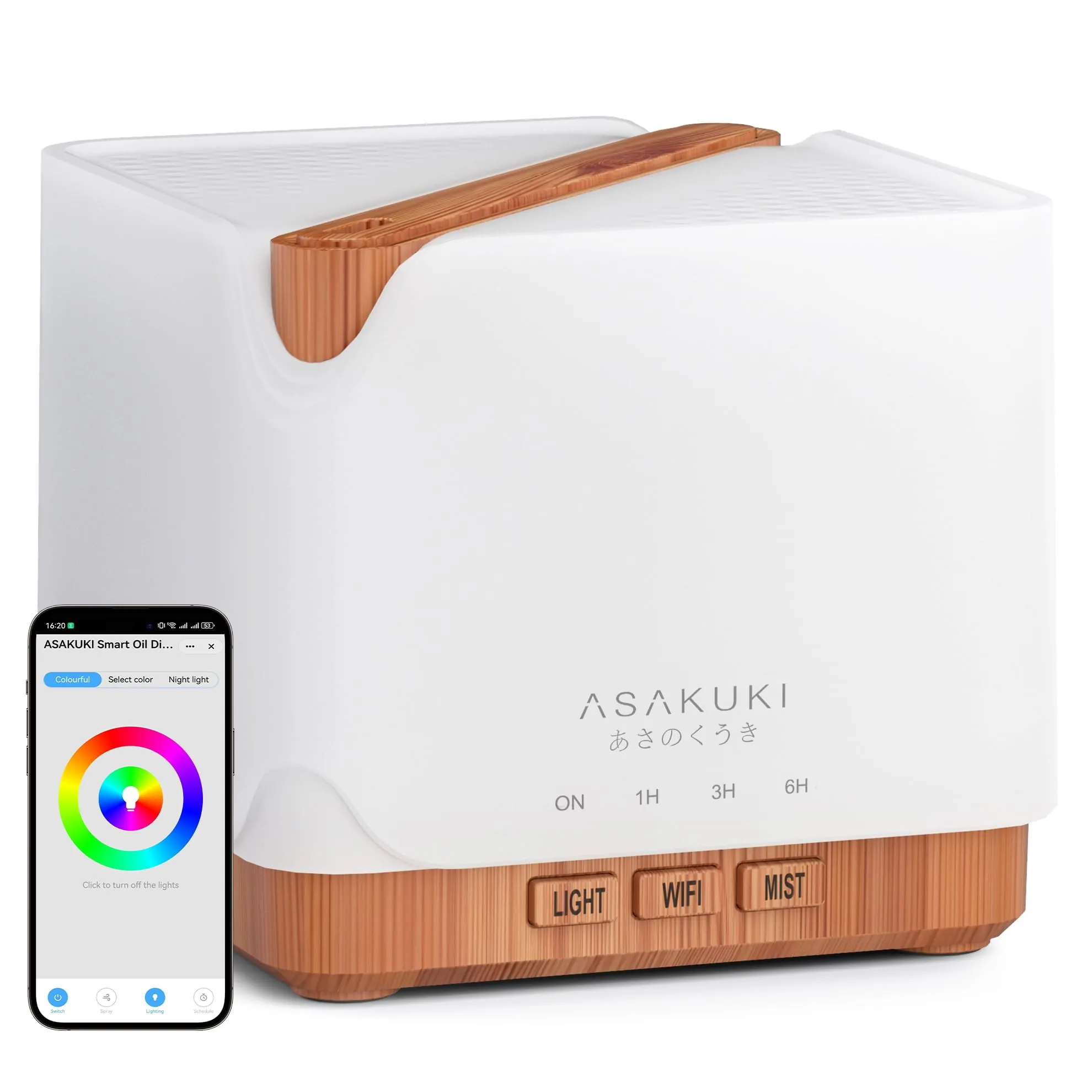
The Amazon Smart Thermostat is a wired smart thermostat for controlling heating and AC through Alexa, while the ASAKUKI Smart WiFi Diffuser is a 700 ml essential oil diffuser/humidifier with app scheduling, voice control, and LED lighting. The clearest difference is installation and purpose: the thermostat requires HVAC wiring compatibility (including a C-wire), whereas the diffuser is a plug-in tabletop device focused on room ambience and mist runtime.
#1 Overall Winner
Contender
Choose the Amazon Smart Thermostat if you want Alexa-first control of your HVAC and you’ve confirmed wiring compatibility (or you’re prepared for a more involved install). Choose the ASAKUKI Smart WiFi Diffuser if you want an inexpensive, long-running diffuser with timers and lighting for a bedroom or living space—just be mindful of cleaning and placement to avoid drips and noise.
Overall winner
Depends on your needs
| Feature | Amazon Smart Thermostat – Save money and energy - Works with Alexa and Ring - C-wire required (Pack of 2) | ASAKUKI Essential Oil Diffuser for Home, Smart WiFi 700 ml Humidifier, Easy Connect with Alexa and Google Home, Phone App & Voice Control, Customized Schedule Timers and LED Light - Yellow | Winner |
|---|---|---|---|
| Category / main purpose | HVAC smart thermostat | Smart Wi‑Fi diffuser / humidifier | Depends |
| Typical setup complexity | Wiring + compatibility checks (C‑wire requirement) | Plug-in + app pairing | ASAKUKI Essential Oil Diffuser for Home, Smart WiFi 700 ml Humidifier, Easy Connect with Alexa and Google Home, Phone App & Voice Control, Customized Schedule Timers and LED Light - Yellow |
| Voice assistant support (stated) | Works with Alexa (and Ring) | Alexa + Google Home via Tuya | ASAKUKI Essential Oil Diffuser for Home, Smart WiFi 700 ml Humidifier, Easy Connect with Alexa and Google Home, Phone App & Voice Control, Customized Schedule Timers and LED Light - Yellow |
| App control | Alexa app control | Tuya Smart app control | Tie |
| Scheduling / timers | Schedules with day copying; Home/Away/Sleep modes | App schedules + 1/3/6h timer buttons | Depends |
| Capacity relevance | Not a meaningful factor for thermostats | 700 ml tank | ASAKUKI Essential Oil Diffuser for Home, Smart WiFi 700 ml Humidifier, Easy Connect with Alexa and Google Home, Phone App & Voice Control, Customized Schedule Timers and LED Light - Yellow |
| Runtime (stated) | Not stated | Up to 20 hours (stated) | ASAKUKI Essential Oil Diffuser for Home, Smart WiFi 700 ml Humidifier, Easy Connect with Alexa and Google Home, Phone App & Voice Control, Customized Schedule Timers and LED Light - Yellow |
| Noise sensitivity | No operating noise concerns noted | Mixed: many say quiet; some report splashing/drips | Amazon Smart Thermostat – Save money and energy - Works with Alexa and Ring - C-wire required (Pack of 2) |
| Space efficiency | Low-profile wall unit | Tabletop 6.3" x 6.3" footprint | Amazon Smart Thermostat – Save money and energy - Works with Alexa and Ring - C-wire required (Pack of 2) |
| Portability | Not portable once installed | Easy to move room-to-room (corded) | ASAKUKI Essential Oil Diffuser for Home, Smart WiFi 700 ml Humidifier, Easy Connect with Alexa and Google Home, Phone App & Voice Control, Customized Schedule Timers and LED Light - Yellow |
| Maintenance needs | Low ongoing upkeep; mostly app/settings | Refill water + clean tank regularly | Amazon Smart Thermostat – Save money and energy - Works with Alexa and Ring - C-wire required (Pack of 2) |
| Reliability signals from reviews | Generally positive; some app quirks and install edge cases | Generally positive; some reports of early failure | Amazon Smart Thermostat – Save money and energy - Works with Alexa and Ring - C-wire required (Pack of 2) |
| Safety features mentioned | No specific safety feature stated in listing data | Auto shut-off when water runs out | ASAKUKI Essential Oil Diffuser for Home, Smart WiFi 700 ml Humidifier, Easy Connect with Alexa and Google Home, Phone App & Voice Control, Customized Schedule Timers and LED Light - Yellow |
| Value for money (based on price + feedback) | Good value for a smart thermostat (often paired with rebates) | Low cost with strong satisfaction | Depends |
For everyday home use, these products fit into different routines. The thermostat becomes part of how your home runs in the background—setting temperatures for mornings, nights, and away periods, and responding to Alexa voice commands. The diffuser is more “room-based”: you’ll fill it, choose mist level and light settings, and run it on timers when you want scent or a calmer atmosphere. Many homes could use both without overlap: thermostat for whole-house temperature, diffuser for comfort in specific rooms.
Neither product is a kitchen appliance, but they can still affect kitchen routines. The thermostat can help keep the whole home comfortable while cooking (and can be adjusted by voice if your hands are busy). The diffuser can be used in the kitchen as stated in the recommended uses, but placement matters—mist can leave moisture nearby, so it’s best kept away from shelves/cabinets and electronics and used with attention to cleanup.
For climate and comfort, the Amazon Smart Thermostat directly controls heating and AC, so it’s the better tool for temperature consistency and whole-home comfort. The ASAKUKI diffuser supports comfort in a different way—mist and scent for a room, plus lighting for ambience. If your main discomfort is “the house runs too hot/cold,” the thermostat is the relevant purchase. If your focus is “the room feels dry or I want a relaxing atmosphere,” the diffuser is the better match.
In core performance, the Amazon Smart Thermostat is aimed at reliable HVAC control and scheduling; reviews generally describe it as doing the job well and being accurate enough for day-to-day comfort, with the main “performance” risks tied to installation/wiring edge cases rather than heating/cooling output itself. The ASAKUKI diffuser is reported to produce a strong mist and scent output for larger spaces, and its large tank supports long sessions. However, performance can feel inconsistent if placement isn’t level or if condensation causes dripping/noise that affects where you can comfortably use it.
Reliability looks different across these categories. With the Amazon Smart Thermostat, most reported issues are about install variables (wiring, split-system nuances) and occasional app quirks, rather than the device failing to function once correctly set up. With the ASAKUKI diffuser, customer sentiment is broadly positive, but durability feedback is mixed and includes reports of units stopping after a few months. For either product, reliability improves when setup is done carefully: correct wiring and power for the thermostat; level placement, correct lid seating, and routine cleaning for the diffuser.
For climate control in the strict sense (heating and cooling), the Amazon Smart Thermostat is the only product here that directly controls HVAC equipment. The ASAKUKI diffuser can contribute to how a room feels—especially if you like mist and aromatherapy—but it doesn’t replace heating or cooling and should be treated as a comfort accessory. If you’re trying to manage seasonal temperature changes or set consistent schedules, the thermostat is the appropriate tool.
The ASAKUKI diffuser has a clearly stated safety feature: automatic shut-off when water runs out, intended to prevent overheating. That’s important for a device that may run for long periods. It also comes with practical safety considerations from reviews—condensation, lid drips, and potential water pooling—so careful placement away from electronics and attention during refills/removal matters.
For the Amazon Smart Thermostat, safety is mostly about installation. If you’re altering HVAC wiring, powering off the system and following correct instructions is critical to avoid damaging equipment. If you’re not comfortable working with wiring, hiring a professional is a safer approach.
The ASAKUKI diffuser has a strong advantage for “atmosphere comfort”: scent, mist, and lighting can make a room feel calmer and more pleasant, and the long runtime supports overnight or all-day sessions. The Amazon Smart Thermostat wins for “climate comfort”: it’s designed to keep your home’s temperature within a chosen range and integrate those settings into daily routines. If your comfort issues are temperature swings, choose the thermostat; if you want ambience and gentle room-level moisture, choose the diffuser.
Day to day, both are designed to be simple, but setup differs. The ASAKUKI diffuser is typically quick: fill the tank, choose a timer, and optionally pair it in the Tuya app (on 2.4GHz Wi‑Fi). The Amazon Smart Thermostat can feel easy once the wiring is compatible—some users describe very fast setup—but missing/incorrect wiring (especially around a common wire) can turn it into a longer project. App navigation can also feel heavier in Alexa if you manage many devices.
The Amazon Smart Thermostat is designed to blend into a hallway or living area: wall-mounted, low profile, and intended to stay put once installed. The ASAKUKI diffuser is a square tabletop “decor” style unit with visible LED lighting and a footprint that needs a stable, level surface. Practical design trade-offs are clear: the thermostat frees up surface space, while the diffuser is more flexible to move between rooms but needs careful placement to avoid moisture around shelves or electronics.
Capacity matters far more for the ASAKUKI diffuser than the thermostat. The diffuser’s 700 ml tank is a key advantage because it supports longer runtimes and fewer refills, and it’s positioned for medium-to-larger rooms based on the stated coverage range. For the Amazon Smart Thermostat, “capacity” isn’t a meaningful buying metric; fit is about HVAC compatibility (wires and system type) rather than tank size or coverage claims.
The Amazon Smart Thermostat is more space-efficient because it mounts to the wall and doesn’t consume tabletop or shelf area. The ASAKUKI diffuser has a modest footprint for its tank size, but it still needs a stable, level surface with clearance above it, and reviewers note that mist placement can affect nearby shelves/ceilings. In small flats or cluttered rooms, wall-mounting is often the cleaner option; in a bedroom with a clear nightstand, the diffuser can be easy to accommodate.
Noise is rarely a concern with a thermostat itself, so the Amazon Smart Thermostat is the safer choice if you’re sensitive to sound in bedrooms or offices. The ASAKUKI diffuser is often described as quiet, but there are also credible reports of loud splashing/dripping noises caused by condensation on the lid. If you plan to run a diffuser while sleeping, expect to experiment with placement, surface level, and lid seating—or choose a room where occasional water sounds won’t bother you.
Installation is the biggest practical separator. The Amazon Smart Thermostat is a wiring installation that may require drilling/anchors and, crucially, HVAC wiring compatibility. Reviews emphasize doing research on the common wire requirement; some users resort to a transformer or control-board wiring changes, which can be unsafe if you’re inexperienced. The ASAKUKI diffuser is essentially plug-and-play, with optional Wi‑Fi/app setup steps. If you’re not comfortable with wiring, the diffuser is the safer DIY choice and the thermostat may be better with professional help.
Neither product is positioned as a premium build in the provided data. The thermostat benefits from a conventional, established thermostat form factor and includes mounting hardware and an optional wall plate for a cleaner finish. The diffuser uses a polypropylene body with a decorative finish; users often like the look, but long-term sturdiness is mixed, with some reports of units failing after a few months. If build confidence matters most, the thermostat’s long-lived product category and fewer moving/handling steps can feel lower risk.
Long-term durability is more clearly questioned for the ASAKUKI diffuser, where buyer feedback includes both “dependable” experiences and early failures after a few months. The diffuser is also handled more often (refills, cleaning), which can add wear over time. The thermostat is installed once and touched less, which can help longevity, but the provided data doesn’t include warranty specifics or long-term failure trends. If durability risk worries you, plan for careful diffuser maintenance and consider how often you’ll run it.
The ASAKUKI diffuser needs ongoing maintenance: frequent refills and regular cleaning of the tank (the listing suggests about weekly), plus care to avoid moisture buildup that can cause odors or residue. The thermostat’s maintenance is lighter: after installation, it’s mostly software settings—adjusting schedules, modes, and any comfort limits. If you want a truly low-touch device after day one, the thermostat is easier to live with. If you don’t mind a simple weekly routine, the diffuser remains manageable.
The ASAKUKI diffuser is far more portable: it’s a small, corded tabletop unit you can move between rooms as needed (bedroom at night, living room during the day). The Amazon Smart Thermostat is fixed once installed and is tied to a specific HVAC zone, so portability is effectively not part of the experience. If you want one device to follow you around the home, the diffuser fits that use pattern.
The thermostat’s features focus on HVAC routines: scheduling, simple mode profiles (Home/Away/Sleep), Alexa voice control, and guardrails like adjustable temperature limits. The diffuser’s features focus on room ambience and convenience: multiple mist levels, app scheduling, physical timer buttons, independent light control with multiple colors/brightness, and an automatic shut-off when water runs out. If you want deeper room-atmosphere customization, the diffuser offers more “visible” features; if you want whole-home temperature automation, the thermostat’s features are the meaningful ones.
Amazon Smart Thermostat is managed through the Alexa app, which can be convenient if you want one place for smart-home control. However, at least one reviewer reports the scheduling section force-closing on an older Android device, suggesting app experience may depend on phone age and software. The ASAKUKI diffuser relies on the Tuya Smart app for schedules and settings; the listing emphasizes easy setup, but it also adds another app layer. If you prioritize fewer apps, the thermostat’s approach may feel simpler.
Both products support smart home control, but with different ecosystems and goals. The Amazon Smart Thermostat is tightly centered on the Alexa app and voice control, which can simplify management if you already use Alexa for routines and devices. The ASAKUKI diffuser uses the Tuya Smart app and can connect to Alexa or Google Home for voice control, which may suit mixed-ecosystem homes. In both cases, your experience will depend on network/app stability and how much automation you want.
Smart-home-wise, the Amazon Smart Thermostat is built for the Alexa experience: voice control, routines, and account-based setup that some users find unusually smooth. The ASAKUKI diffuser uses Tuya for scheduling and remote control and then links into Alexa/Google Home for voice commands. If you already live in Alexa and want fewer apps, the thermostat fits that preference. If you want Google Home compatibility and don’t mind Tuya as the control layer, the diffuser may integrate more broadly.
The thermostat’s automation is geared toward household routines—scheduled temperature changes and modes like Home/Away/Sleep that can tie into Alexa devices and routines. The diffuser’s automation is more session-based: scheduled on/off times and simple timers for mist and lighting. If you want “set it once and let the home run itself,” the thermostat’s automation is typically more impactful. If you want timed ambience without thinking about it, the diffuser’s scheduling is the right style.
The thermostat’s connectivity experience is mainly described through Alexa account onboarding, with at least one report of app instability on older Android hardware during scheduling. The diffuser explicitly supports only 2.4GHz Wi‑Fi and requires putting the device into a Wi‑Fi configuration mode, which can be a sticking point if your router is set up in a way that makes 2.4GHz pairing inconvenient. Neither product includes enough detail here to call one universally “more stable,” but both benefit from a solid home network.
Efficiency is measured differently for these categories. With the thermostat, efficiency is mainly about how well schedules and automation help you avoid unnecessary heating/cooling; reviews also mention utility rebates, which can change the overall cost picture. For the diffuser, efficiency is more about runtime per refill and power draw (listed wattage), plus whether it delivers the mist output you want without needing constant high settings. In both cases, real-world efficiency depends heavily on your routines and usage patterns.
Both products involve app accounts and cloud-connected control, which can matter in privacy-sensitive homes. The Amazon Smart Thermostat is controlled through the Alexa ecosystem; the diffuser uses the Tuya Smart app and then links to Alexa or Google Home. The provided data doesn’t detail data handling, storage, or security features, so the practical guidance is to review app permissions, account security options, and whether you’re comfortable with cloud control for a comfort device.
Both products are positioned as strong-value buys, but value depends on what problem you’re solving. The Amazon Smart Thermostat costs more upfront, yet reviews mention utility rebates that can significantly change net cost, and the benefits are larger if you’re managing multiple zones or want schedules and voice control for HVAC. The ASAKUKI diffuser is much cheaper and offers a large tank, long stated runtime, and lighting features that many buyers find impressive for the price. However, mixed durability feedback can affect long-term value if you need to replace it sooner than expected.
Brand trust signals differ in the provided data. The thermostat benefits from being positioned as an Amazon thermostat created in partnership with Honeywell (a long-established thermostat maker), which some buyers say increased their confidence. ASAKUKI has strong repeat-buyer comments and high satisfaction volume, but durability feedback is more mixed. Neither listing provides detailed support or warranty clarity here, so brand trust may come down to ecosystem preference (Alexa vs Tuya) and your tolerance for durability variability.
Both products have strong review volume and generally positive ratings, but the themes differ. Amazon Smart Thermostat buyers frequently praise value, Alexa integration, and ease of setup when wiring is compatible; complaints cluster around C-wire complexity, limited mode profiles for some users, and occasional app instability on older devices. The ASAKUKI diffuser gets frequent praise for strong mist output, large tank, attractive lighting, and ease of use, while the recurring negatives are mixed durability and occasional disruptive splashing/dripping noise depending on placement and lid seating.
Neither product is a direct substitute for the other, so the better choice depends on what kind of comfort you’re trying to improve. The Amazon Smart Thermostat is the clearer pick for HVAC control: its main strength is Alexa-centered scheduling and routines that can run your heating and AC more smoothly, while its main limitation is the up-front installation hurdle—especially the C-wire requirement and occasional app quirks on older devices.
The ASAKUKI Smart WiFi diffuser is the stronger choice for room ambience: its main strength is the large tank with long sessions, mist/lighting controls, and overall buyer satisfaction at a low price, while its main limitation is mixed durability and reports of splashing/dripping noise or water mess if setup and placement aren’t right.
Overall winner
Depends on your needs
They solve different problems. Amazon Smart Thermostat is for controlling your HVAC system (heating/AC) with scheduling and Alexa routines, but it requires compatible wiring (often a C-wire). The ASAKUKI diffuser is for room-level mist/aromatherapy and ambience lighting with timers, and it’s easier to set up, but it needs refilling and regular cleaning.
Yes—this model is described as C-wire required, and reviews highlight that the common wire question is a key part of installation planning. Some users work around missing wiring with solutions like a transformer or rewiring at the HVAC control board, but that adds complexity. Checking compatibility before purchase is important.
Yes. The product details state it connects using the Tuya Smart app and can integrate with Alexa and Google Home for voice control. It also notes it only supports 2.4GHz Wi‑Fi, so you’ll want to confirm your network setup before pairing, especially if your home mainly uses 5GHz Wi‑Fi.
The ASAKUKI diffuser is typically easier because it’s a plug-in tabletop device with app pairing. The Amazon Smart Thermostat can be quick in a compatible home, but it’s still a wiring project; reviews mention drilling/mounting and the need to plan for a common wire (or an alternative power approach) in older installations.
The thermostat itself is effectively silent in normal use. The diffuser is often described as very quiet, but there are also reports of splashing/dripping noises caused by condensation on the lid, which some users found too loud to sleep near. Placement and seating the lid correctly seem to matter for noise.
If comfort means temperature consistency and HVAC control, the Amazon Smart Thermostat is the relevant choice, since it manages heating and cooling schedules. If comfort means ambience—scent, gentle mist, and lighting—the ASAKUKI diffuser is the better fit. Many households could reasonably use both in different ways.
The diffuser requires the most routine maintenance: refilling water and cleaning the tank regularly (the listing suggests cleaning about every 7 days). The thermostat has less frequent upkeep once installed, though you may spend more time up front on wiring compatibility and occasional app-related troubleshooting depending on your phone and setup.
Amazon Smart Thermostat focuses on HVAC automation inside the Alexa ecosystem, including schedules and home/away-style routines. The ASAKUKI diffuser focuses on timers, mist levels, and LED lighting control via the Tuya app, with voice control through Alexa or Google Home. They’re “smart” in different ways because their home roles differ.
Check our rankings and expert guides to find the best home lifestyle products for your goals.