#1 Overall Winner
Amazon Smart Thermostat – Save money and energy - Works with Alexa and Ring - C-wire required (Pack of 2)
- Strong Alexa integration and easy in-app control for day-to-day temperature changes.
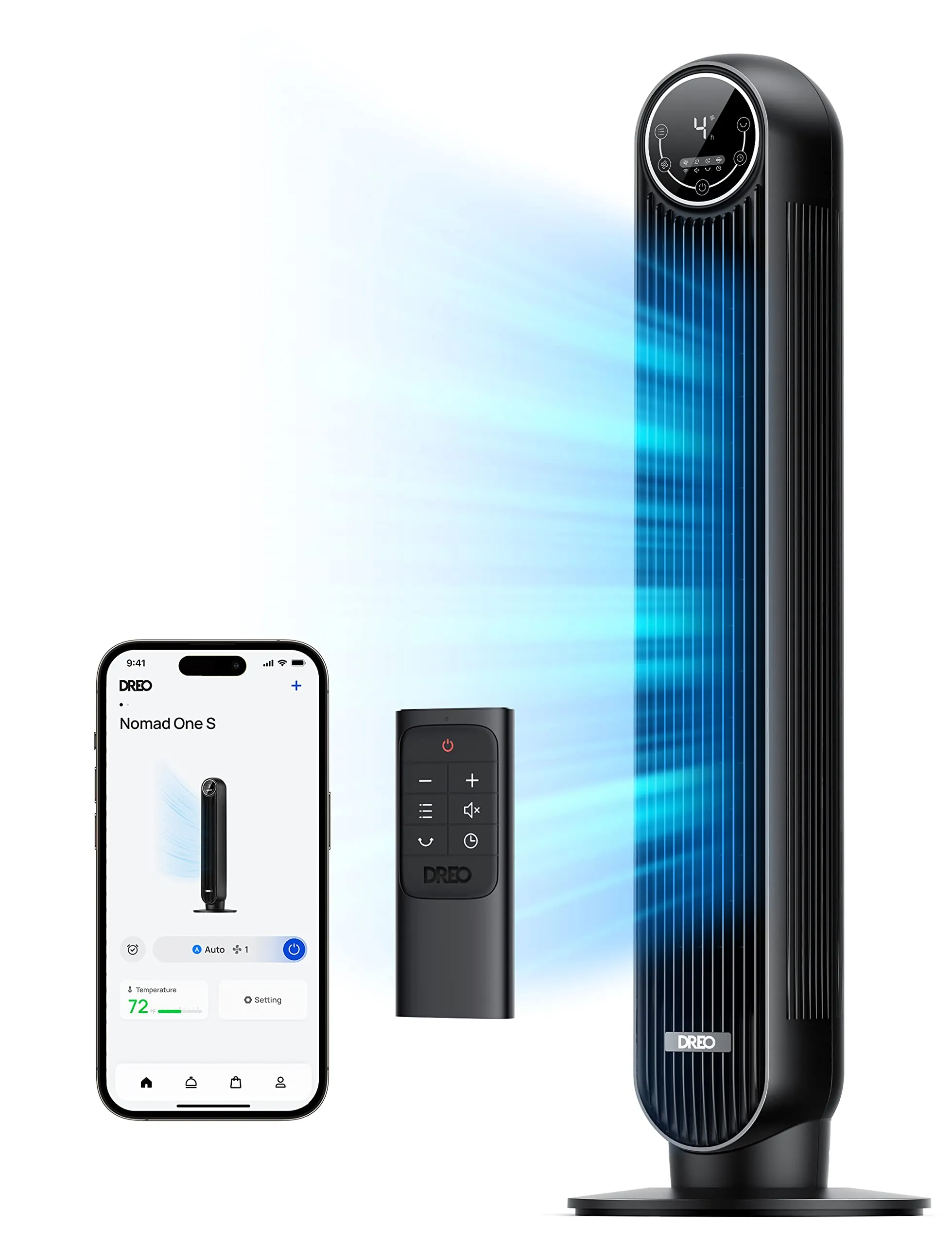
Comparison
Amazon Smart Thermostat and the Dreo Tower Fan improve comfort in very different ways: one controls your HVAC system, while the other provides portable airflow for bedrooms and living spaces. The thermostat is best if you want Alexa-based scheduling and temperature management, but it may require C-wire planning. The Dreo is quick to set up with app/voice/remote controls, though cleaning and higher-speed noise can be trade-offs.
#1 Overall Winner
Contender
Pick the Amazon Smart Thermostat if you want HVAC temperature control, Alexa-centric scheduling, and a budget-friendly way to upgrade multiple zones—assuming your wiring is compatible. Pick the Dreo Tower Fan if you want portable, quiet airflow with a timer and flexible controls for bedroom comfort. For many homes, they complement each other rather than compete.
Overall winner
Depends on your needs
| Feature | Amazon Smart Thermostat – Save money and energy - Works with Alexa and Ring - C-wire required (Pack of 2) | Dreo Tower Fan for Bedroom, Smart Oscillating Quiet Floor Fans, Standing Bladeless Fan with Remote and WiFi Voice Control, 4 Modes, 4 Speeds, 8H Timer, 28dB, Works with Alexa/Google | Winner |
|---|---|---|---|
| Primary purpose | Controls HVAC heating/cooling via thermostat | Circulates air for perceived cooling/comfort | Depends |
| Typical placement | Wall-mounted, fixed location | Free-standing floor tower, movable | Dreo Tower Fan for Bedroom, Smart Oscillating Quiet Floor Fans, Standing Bladeless Fan with Remote and WiFi Voice Control, 4 Modes, 4 Speeds, 8H Timer, 28dB, Works with Alexa/Google |
| Smart ecosystem | Works with Alexa and Ring (per title) | Works with Alexa and Google (per listing) | Depends |
| Controls available | Alexa app + device interface | App + remote + touch + voice | Dreo Tower Fan for Bedroom, Smart Oscillating Quiet Floor Fans, Standing Bladeless Fan with Remote and WiFi Voice Control, 4 Modes, 4 Speeds, 8H Timer, 28dB, Works with Alexa/Google |
| Scheduling/automation focus | HVAC schedules and Home/Away/Sleep routines | Timer and app routines for on/off and modes | Depends |
| Installation effort | May require C-wire or alternative power solution | No installation required; basic assembly | Dreo Tower Fan for Bedroom, Smart Oscillating Quiet Floor Fans, Standing Bladeless Fan with Remote and WiFi Voice Control, 4 Modes, 4 Speeds, 8H Timer, 28dB, Works with Alexa/Google |
| Noise considerations | No direct device noise; depends on HVAC cycling | Quiet at low speeds; louder at high speeds (some reviews) | Depends |
| Space efficiency | Low-profile wall device | Slim tower footprint | Tie |
| Maintenance needs | Mostly app management; reminders can help | Dust cleaning; some find disassembly harder | Amazon Smart Thermostat – Save money and energy - Works with Alexa and Ring - C-wire required (Pack of 2) |
| Comfort impact | Steadier temperatures via HVAC control | Immediate airflow; good for sleep comfort | Depends |
| Portability | Not portable once installed | Portable; easy to reposition (review mentions one-hand carry) | Dreo Tower Fan for Bedroom, Smart Oscillating Quiet Floor Fans, Standing Bladeless Fan with Remote and WiFi Voice Control, 4 Modes, 4 Speeds, 8H Timer, 28dB, Works with Alexa/Google |
| App experience (from data) | Some scheduling/app quirk reported on older Android | Generally praised for simple setup and control | Dreo Tower Fan for Bedroom, Smart Oscillating Quiet Floor Fans, Standing Bladeless Fan with Remote and WiFi Voice Control, 4 Modes, 4 Speeds, 8H Timer, 28dB, Works with Alexa/Google |
| Value angle | Strong value; rebate mentions common for smart thermostats | Seen as worth the price for features/quiet | Depends |
| Best fit for small rooms | Controls zone temperature (if HVAC supports it) | Compact tower; praised for small spaces | Dreo Tower Fan for Bedroom, Smart Oscillating Quiet Floor Fans, Standing Bladeless Fan with Remote and WiFi Voice Control, 4 Modes, 4 Speeds, 8H Timer, 28dB, Works with Alexa/Google |
For general home use, these products usually solve different pain points. The Amazon Smart Thermostat is a “set it once, manage it daily” device that can simplify how you run heating and AC across zones, especially if you already use Alexa routines. The Dreo tower fan is more immediate: you can move it to wherever you need airflow—bedroom at night, office during the day—without touching HVAC settings. If your home struggles with hot rooms or stale air, a fan can help, but it won’t replace thermostat-based temperature control.
In climate and comfort terms, the thermostat is about controlling temperature through your HVAC system, while the tower fan is about feeling cooler through airflow. The Amazon Smart Thermostat helps maintain comfort bands via schedules and home/away behavior, which can be more effective for whole-home comfort. The Dreo fan is frequently described as ideal for sleep thanks to quiet operation on lower speeds, oscillation, and a timer, but some users note the airflow feels less like a direct “breeze,” which may matter if that’s what helps you fall asleep.
Performance depends on the job you need done. The Amazon Smart Thermostat’s core performance is stable HVAC control with convenient scheduling and phone control; reviewers generally describe it as doing the job well and being accurate enough for daily comfort management, with strong value compared with pricier competitors. The Dreo tower fan performs strongly for airflow and room circulation, with reviews repeatedly calling it powerful and effective in bedrooms, helped by oscillation and multiple modes. If you need actual heating/AC control, the thermostat is the only one that can deliver that; if you need immediate airflow, the fan is the clear performer.
Both products appear generally reliable, with a few watch-outs. The Amazon Smart Thermostat is described as working well once installed correctly, but reliability can be indirectly impacted by wiring complexity—miswiring or non-standard HVAC setups can cause headaches until resolved. The Dreo fan has lots of positive “still working strong” feedback, but there are isolated reports of serious issues (like a burning smell) and at least one user calling it noisy and below expectations after a year. For either product, careful setup and early testing during the return window matters.
For climate control, the Amazon Smart Thermostat is the only device here that can directly command heating and air conditioning equipment. Reviews indicate it’s effective and convenient, but installation can hinge on C-wire availability. The Dreo fan can’t cool air the way AC does; it circulates air and can help distribute conditioned air more evenly, which reviewers mention using alongside air conditioners. If you’re trying to solve uneven rooms or want a supplement to AC, the fan is useful; if you need true temperature control, choose the thermostat.
Safety considerations are more hands-on for installation with the thermostat and more operational for the fan. Thermostat reviews include advice to power off circuits and be cautious when working at an HVAC control board, especially if using non-standard wiring methods; if you’re unsure, hiring a professional reduces risk. For the Dreo fan, the listing notes pinch-proof grills, a fused plug, and built-in circuit protection, and it’s ETL listed; still, at least one review mentions a burning smell immediately, which is a reason to stop using it and pursue a return/exchange. For both, follow manufacturer instructions and test carefully after setup.
Comfort comes down to the kind of comfort you want. The Amazon Smart Thermostat supports steady temperatures and predictable routines, which can reduce “too hot/too cold” swings across the day. The Dreo tower fan improves comfort through airflow, oscillation, and sleep-friendly settings, which many users find helps them rest better during warm nights. If you want that physical sensation of air movement, the fan is the comfort pick; if you want consistent room temperature, the thermostat is the comfort pick.
Day-to-day, both are easy once set up. The thermostat can be very quick to install if your wiring is compatible, but reviewers emphasize that C-wire planning can turn setup into a bigger project. The Dreo fan is typically simpler: assemble the base, plug in, and pair the app if you want smart control. For quick comfort with minimal friction, the fan is usually the easier start.
The Amazon Smart Thermostat is designed to be low-profile on the wall, with an interface meant for quick temperature checks and changes, plus app-first management. The Dreo tower fan is a slim, modern floor tower intended to disappear into a corner while still pushing air across a room. If you want something that doesn’t take floor space, the thermostat wins by nature; if you need airflow but want a compact footprint, the tower format is a practical compromise.
“Capacity” looks different here. The Amazon Smart Thermostat’s capacity is effectively the HVAC zone it controls, which depends on your existing system rather than the thermostat itself. The Dreo fan’s capacity is about room coverage, supported by oscillation and strong airflow intended to reach across a bedroom or office. If you’re choosing based on how much space a single device can influence without HVAC changes, the fan has the clearer room-coverage story.
Both products are space-efficient, but in different ways. The Amazon Smart Thermostat uses no floor or counter space and keeps the wall footprint relatively low-profile. The Dreo fan uses floor space, but its tower design is compact and often praised for working well in small rooms. If you’re extremely tight on floor space, the thermostat has the advantage; if you need airflow with minimal clutter, the tower fan is a good compromise.
Noise is more relevant for the Dreo fan because it produces audible airflow and motor sound. Reviews often call it quiet, especially on low settings and in Sleep mode, but some users note it gets louder at higher speeds. The thermostat itself is effectively silent, though any added HVAC cycling could change how often you hear your furnace or AC. For a bedroom where device noise matters, the fan’s low-speed performance is the key factor.
Installation is where the two products differ most. The Dreo tower fan requires minimal setup: assemble the base and plug it in, with optional app pairing. The Amazon Smart Thermostat installation can be quick when wiring is compatible, but reviews highlight the C-wire requirement as the main hurdle, sometimes requiring a spare wire, a transformer, or work at the HVAC control board. If you’re not comfortable with wiring, professional installation may be the safer route for the thermostat.
Build quality impressions are solid for both, with different caveats. The Amazon Smart Thermostat benefits from Honeywell involvement mentioned by reviewers, but it’s positioned more as a value-focused thermostat than a premium-feel device. The Dreo fan is often described as sturdy and reliable despite being plastic, though a small number of reviews raise quality concerns (including a report of a burning smell). Overall, both appear well-made for their price classes, with the fan having slightly more mixed anecdotes.
Long-term durability signals are mixed but mostly positive for both. The thermostat is a fixed, low-wear device once mounted, though its long-term success depends on stable power and correct wiring. The Dreo fan is portable and more likely to be bumped or tipped, and while some reviews praise sturdiness, a small number of owners report quality concerns. If you expect frequent moving and accidental knocks, the fan’s physical durability matters more; the thermostat’s durability is more about stable installation and consistent power.
The Amazon Smart Thermostat’s maintenance is mostly digital: adjusting schedules, updating routines, and using reminders (reviewers mention filter reminders as a helpful option). The Dreo fan needs physical upkeep—regular dust removal and occasional deeper cleaning, which some users find harder than with traditional fans. If you want the least hands-on maintenance, the thermostat is typically simpler; if you’re fine cleaning a fan periodically for best airflow, the Dreo is manageable but more involved.
The Dreo tower fan is the clear winner for portability: it’s a free-standing device designed to move between rooms, and at least one reviewer notes it’s light enough to pick up with one hand. The Amazon Smart Thermostat is not portable in practical terms; once installed, it’s tied to that HVAC zone and location. If you need one device to serve multiple rooms, the fan is the better match.
The Amazon Smart Thermostat focuses on HVAC features: schedules, Home/Away/Sleep profiles, and Alexa-based control, with some users praising the ability to copy schedules across days and set comfort limits (like max heating/cooling). The Dreo tower fan offers more “device-level” features: 4 modes, 4 speeds, a timer, oscillation, Sleep behavior, and multiple control methods (app/voice/remote/touch). Feature leadership depends on whether you value HVAC automation (thermostat) or flexible airflow settings (fan).
The Amazon Smart Thermostat relies on the Alexa app experience; reviewers like having “one app” for smart home control, but there are mentions of scheduling screens force-closing on an older Android device and some users finding Alexa’s settings dense. The Dreo app experience is mostly described as simple and effective, with quick pairing and routine creation. If app smoothness is your top priority, buyer feedback leans more consistently positive for the fan, while the thermostat’s app experience can vary by device.
Both products fit into a smart home, but in different ways. The Amazon Smart Thermostat is tightly centered on Alexa (and Ring per the product title), with routines and scheduling inside the Alexa app so you can manage multiple devices in one place. The Dreo fan supports Wi-Fi control and works with Alexa and Google, offering more control methods day to day (remote, touch, app, and voice). If your home is Alexa-only, both work well; if you rely on Google Assistant, the Dreo has clearer stated compatibility.
As smart devices, both support voice control and routines, but the thermostat is more “system-level” because it changes HVAC behavior across an entire zone. Users highlight seamless Alexa account pairing and schedule tools, with a small note of app instability on some older Android devices. The Dreo fan’s smart layer is about convenience—remote start/stop, mode changes, and routines—often praised for simple setup. Choose the thermostat for home energy routines; choose the fan for day-to-day comfort automation in specific rooms.
The thermostat’s automation is built around schedules and home/away behavior that can change HVAC setpoints automatically, which is useful for predictable weekly routines. The Dreo fan’s automation is more lightweight—timers and app routines for turning on/off and changing modes—ideal for bedtime and daily comfort patterns. If you want automation that affects energy use and whole-zone temperature, the thermostat is stronger; if you want simple room-based routines, the fan is easier.
Both products are designed for connected control. The Amazon Smart Thermostat is managed through the Alexa app, and reviewers highlight smooth onboarding that can avoid manual Wi-Fi password entry in some setups. The Dreo fan uses Wi-Fi app control and supports Alexa and Google voice control, with reviews generally describing setup as quick and stable. If you want broader voice assistant compatibility, the Dreo has the clearer stated support; if you want tighter Alexa-centric setup, the thermostat has the edge.
Efficiency trade-offs also differ. A smart thermostat can improve efficiency mainly through better schedules and away/home behavior, helping you avoid heating or cooling when you don’t need it. The Dreo fan uses a 35W motor per the listing and is commonly used to improve comfort without lowering the thermostat as much, though results vary by home and heat load. If your goal is reducing HVAC runtime through smarter control, the thermostat is the more direct tool; if your goal is lower-power airflow comfort, the fan can be part of the strategy.
Both products can involve app accounts and cloud-connected control. The Amazon Smart Thermostat runs through the Alexa ecosystem, which can be convenient but may matter for households that prefer fewer connected services. The Dreo fan uses the Dreo app and supports voice assistant control, which similarly implies networked operation. If privacy is a priority, consider whether you’re comfortable with app-connected devices in bedrooms, and use strong account passwords and device-sharing settings within your smart home app.
Value depends on what you’re replacing. The Amazon Smart Thermostat is positioned as a cost-effective way to add smart control to HVAC, with reviewers specifically calling out utility rebates that can materially change the overall cost. If you have multiple zones/thermostats, its pricing can make a big difference versus premium thermostat alternatives. The Dreo fan is also widely seen as worth the price due to strong airflow, quiet low-speed operation, and flexible controls (app/voice/remote). If you need true heating/AC control, the thermostat offers more “system value”; if you need targeted bedroom comfort, the fan can be the better-value fix.
Brand trust signals differ. The thermostat benefits from the “Amazon + Honeywell” association mentioned in reviews, which can reassure buyers familiar with long-established thermostat makers. The Dreo fan brand is supported by large review volume and generally strong buyer sentiment for reliability and performance, though there are a few negative reports that are worth weighing. If you prioritize legacy HVAC experience, the thermostat’s partnership angle may matter; if you prioritize recent buyer feedback at scale, the fan’s ratings and review volume are strong indicators.
Both products show strong customer satisfaction based on high review counts and generally positive sentiment, but the Dreo fan’s average rating is higher. Thermostat reviews emphasize good pricing, smooth Alexa integration, and successful installs, with recurring “do your wiring homework” advice and occasional app/profile limitations. Dreo fan reviews repeatedly praise quiet operation, strong airflow, and bedroom usefulness, with a minority noting higher-speed noise, cleaning difficulty, and a few quality issues. Overall sentiment is positive for both, with more consistent comfort praise for the fan and more setup-dependent feedback for the thermostat.
Neither product is a universal winner because they aren’t direct alternatives: one controls HVAC temperature and the other circulates air for comfort. The Amazon Smart Thermostat is the better pick for Alexa-based climate control, scheduling, and multi-zone upgrades at a sensible cost, but its main limitation is installation complexity in homes without an easy C-wire solution (plus occasional app/profile constraints). The Dreo Tower Fan is the better pick for bedroom airflow, quiet low-speed operation, and easy setup with app/voice/remote control, with its main drawbacks being more involved cleaning and mixed feedback about noise or quality in a small number of reviews. If your home needs both stable temperatures and better airflow, they can work well together.
Overall winner
Depends on your needs
They solve different comfort problems. Amazon Smart Thermostat is the better choice if you want to control your heating and AC system with schedules and Alexa routines. The Dreo tower fan is better if you want portable airflow, quiet nighttime operation, and room-to-room flexibility. Many homes use both: thermostat for temperature control, fan for comfort and circulation.
It’s listed as C-wire required, and reviews reinforce that compatibility research matters. Some users can use an existing spare wire as the common wire, while others choose alternative approaches (like adding a transformer) to power the thermostat. If your wiring is limited or your system is complex, it may be worth checking compatibility first or hiring an installer.
The Dreo tower fan is generally easier because it’s mostly plug-in with basic assembly, plus app/voice pairing. The Amazon Smart Thermostat can be quick on compatible systems, but setup can become more involved if you don’t have a C-wire or if your HVAC wiring is non-standard. Several reviewers emphasize doing homework on wiring before buying.
The Dreo tower fan is designed for bedroom use, with Sleep mode, an up-to-8-hour timer, and a reputation for being quiet on lower speeds. The thermostat helps by maintaining a stable set temperature overnight, but it won’t create the “breeze” feeling some people like. If you want both stable temperature and airflow, pairing them can work well.
The Dreo fan is specifically reviewed as quiet, particularly on low settings, though a few users say it’s louder at higher speeds. A thermostat itself doesn’t create fan noise the way a room fan does, but it can cause your HVAC system to cycle on/off. If you’re noise-sensitive, the Dreo on low speed and thoughtful HVAC scheduling are both relevant.
Both support Alexa control, but they focus on different automations. The Amazon Smart Thermostat centers on schedules, Home/Away/Sleep behavior, and HVAC-focused routines within the Alexa app. The Dreo fan adds flexible control methods (app, remote, touch, voice) and routines for turning on/off at specific times. The best choice depends on whether you want HVAC control or airflow automation.
The thermostat is mostly “set and manage” maintenance, with app-based changes and optional reminders (like filter reminders mentioned by reviewers). The Dreo fan may need more hands-on upkeep because it can collect dust, and some owners find it harder to take apart for cleaning than simpler fans. If low-maintenance is a priority, the thermostat usually requires less physical cleaning.
Amazon Smart Thermostat stands out for value if you need HVAC control across multiple zones, especially if you can take advantage of local utility rebates mentioned in reviews. The Dreo fan is also seen as worth the price by many buyers, offering strong airflow, multiple control options, and bedroom-friendly modes. Value depends on whether you need true heating/AC control or portable cooling comfort.
Check our rankings and expert guides to find the best home lifestyle products for your goals.