#1 Overall Winner
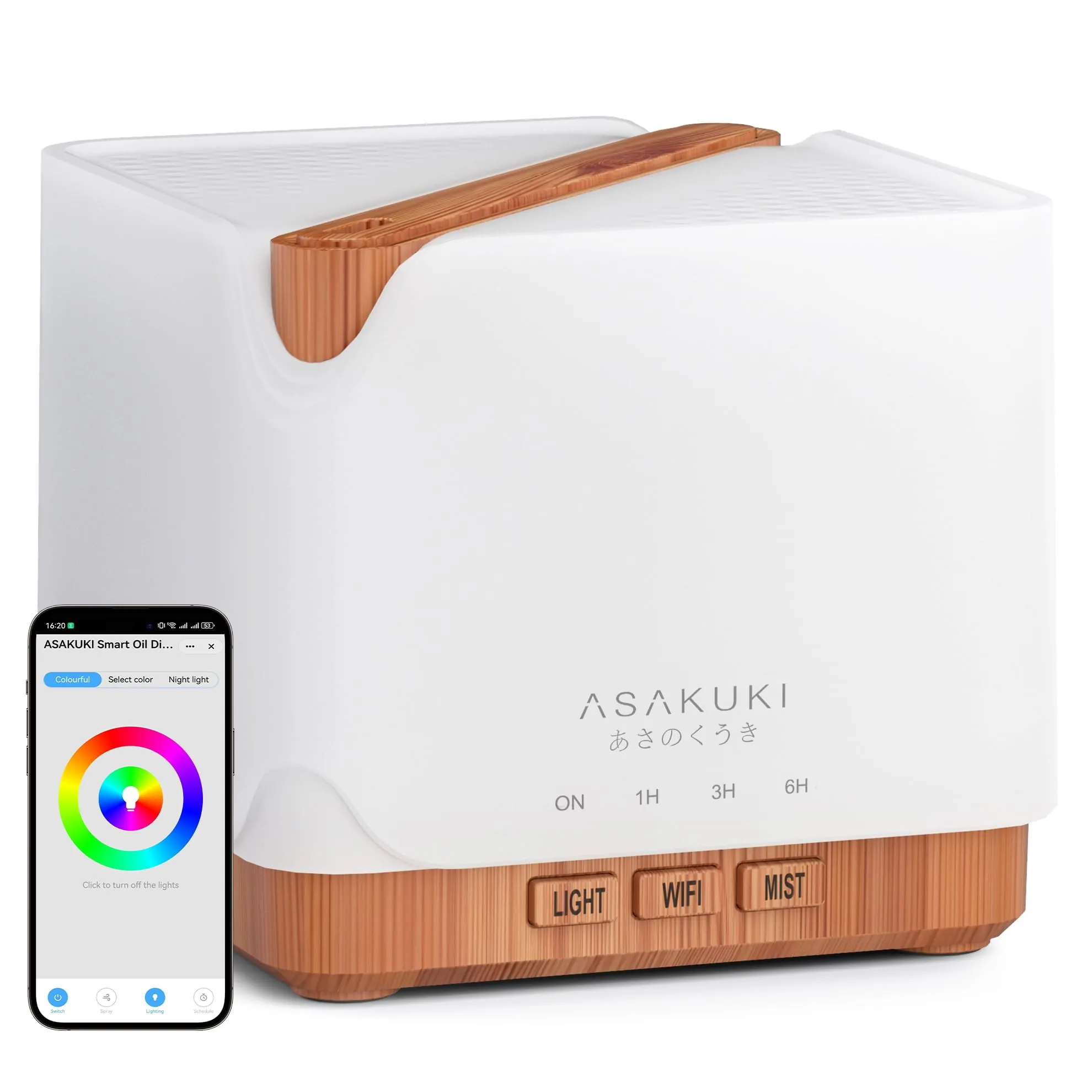
ASAKUKI Essential Oil Diffuser for Home, Smart WiFi 700 ml Humidifier (AD04W)
- Large 700ml tank with long claimed runtime, meaning fewer refills for daily use.
Comparison
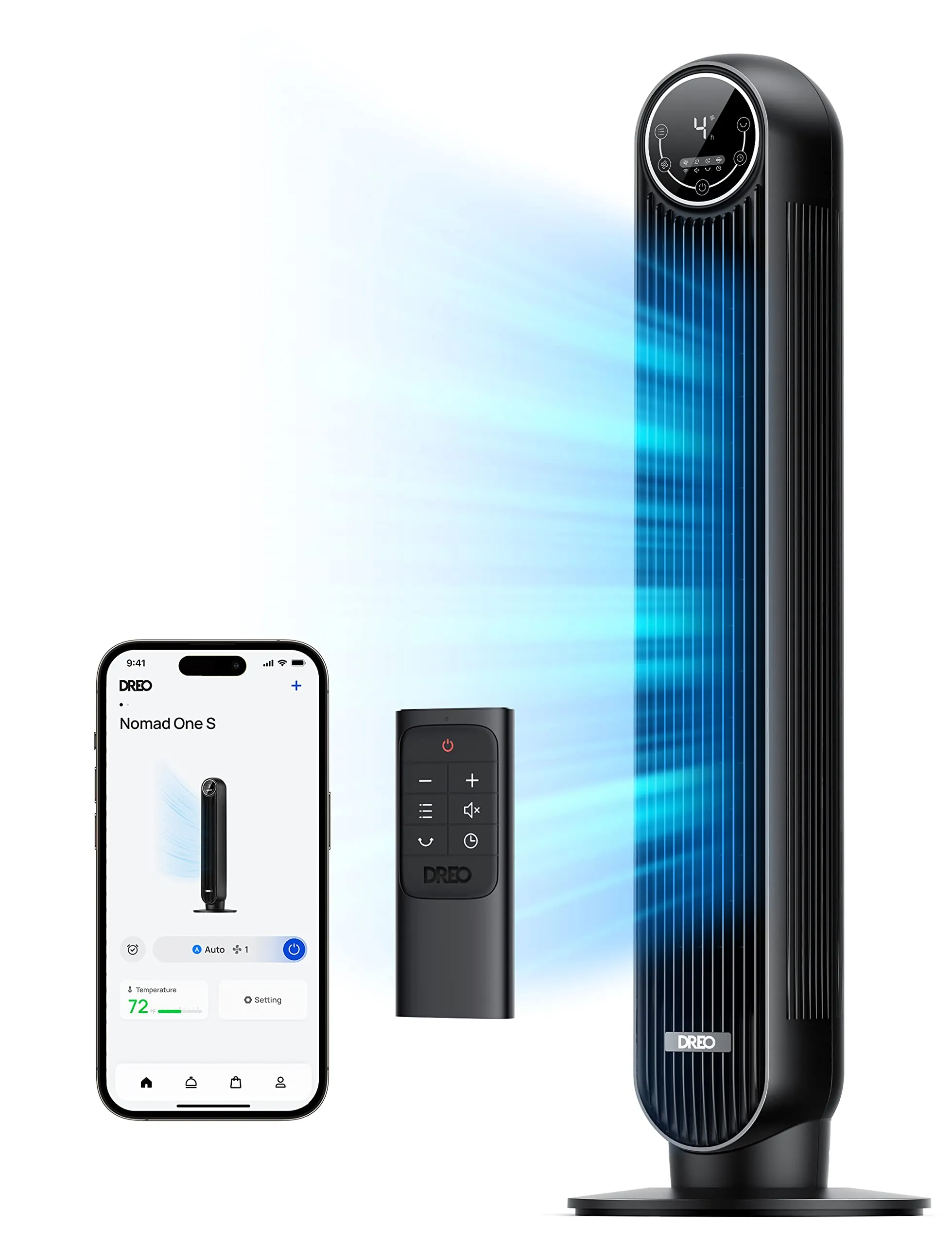
The ASAKUKI AD04W is a smart essential oil diffuser with a large 700ml tank, app scheduling, and LED mood lighting, while the Dreo DR-HTF007S is a smart tower fan built for quiet airflow and oscillation in bedrooms and small spaces. Both support Alexa/Google voice control and timers, but they address different comfort needs: scented mist and humidity vs cooling air circulation.
#1 Overall Winner
Contender
Pick the Dreo DR-HTF007S if you want smart, bedroom-friendly airflow with oscillation, a remote, and generally quieter performance on low settings. Choose the ASAKUKI AD04W if you want a budget-friendly smart diffuser with a large tank, strong mist output, and customizable LED lighting—just plan for regular cleaning and careful, level placement.
Overall winner
Depends on your needs
| Feature | ASAKUKI Essential Oil Diffuser for Home, Smart WiFi 700 ml Humidifier (AD04W) | Dreo Tower Fan for Bedroom, Smart Oscillating Quiet Floor Fan (DR-HTF007S) | Winner |
|---|---|---|---|
| Primary purpose | Aromatherapy diffuser + mist/humidity | Air circulation/cooling tower fan | Depends |
| Typical placement | Tabletop/flat surface | Floor-standing tower | Dreo Tower Fan for Bedroom, Smart Oscillating Quiet Floor Fan (DR-HTF007S) |
| Tank/capacity relevance | 700ml water tank | Not applicable (no tank) | ASAKUKI Essential Oil Diffuser for Home, Smart WiFi 700 ml Humidifier (AD04W) |
| Coverage/room suitability (stated) | Coverage listed for 320–380 sq ft | Designed for bedrooms; oscillation for wider room coverage | Depends |
| Controls | Buttons + Tuya app + voice control | Touch + remote + app + voice control | Dreo Tower Fan for Bedroom, Smart Oscillating Quiet Floor Fan (DR-HTF007S) |
| Timers & scheduling | App schedules + 1/3/6-hour timer | 8-hour timer; app routines mentioned in reviews | Tie |
| Noise experience (buyer feedback) | Often quiet, but some report splashing/drip noise | Often very quiet on low; louder at higher speeds for some | Dreo Tower Fan for Bedroom, Smart Oscillating Quiet Floor Fan (DR-HTF007S) |
| Maintenance | Regular tank cleaning; wide opening helps | Dust cleaning; some say disassembly is harder | ASAKUKI Essential Oil Diffuser for Home, Smart WiFi 700 ml Humidifier (AD04W) |
| Safety features mentioned | Auto shut-off when water runs out | Pinch-proof grille, fused plug, circuit protection, ETL-listed | Dreo Tower Fan for Bedroom, Smart Oscillating Quiet Floor Fan (DR-HTF007S) |
| Smart home compatibility | Alexa/Google via Tuya; 2.4GHz Wi‑Fi only | Alexa/Google; app control highlighted | Dreo Tower Fan for Bedroom, Smart Oscillating Quiet Floor Fan (DR-HTF007S) |
| Portability | Light tabletop unit | 9 lb tower; some reviewers carry it one-handed | Tie |
| Best for hot nights | Adds scent/mist; not a cooling device | Airflow + oscillation for cooling comfort | Dreo Tower Fan for Bedroom, Smart Oscillating Quiet Floor Fan (DR-HTF007S) |
| Best for ambiance | 7-color LED lighting; nightlight mode via app | Display auto off in sleep mode (no mood lighting stated) | ASAKUKI Essential Oil Diffuser for Home, Smart WiFi 700 ml Humidifier (AD04W) |
| Value at listed price | Lower price with smart control and large tank | Higher price with strong airflow and smart controls | Depends |
In everyday home use, these devices play different roles. ASAKUKI is best treated as a tabletop comfort accessory for scent, mood lighting, and light humidity—useful in bedrooms, living rooms, and offices where you want a calmer feel. Dreo functions as an active comfort appliance for moving air through a room, helping spaces feel cooler and less stuffy, and it can be repositioned easily when you need airflow elsewhere.
Neither product is a kitchen appliance, but both can be used around kitchen routines. ASAKUKI’s hands-free voice control can be convenient while cooking, though you’ll want to place it away from upper cabinets or surfaces you don’t want exposed to moisture. Dreo can help circulate air during warmer cooking days and is easy to move in and out, but it uses floor space and may need more frequent dust cleaning in high-traffic areas.
For climate and comfort, Dreo is the direct choice when your goal is airflow and cooling sensation, especially at bedtime with oscillation and sleep-oriented controls. ASAKUKI supports comfort differently—through mist output, scent dispersion, and optional night lighting—so it’s better for ambiance and perceived freshness rather than temperature reduction. In humid climates or already-damp rooms, adding mist may be less desirable than air circulation.
Performance is strong for both within their intended jobs. ASAKUKI is repeatedly described as producing a thick mist quickly with strong scent dispersion, and its large tank supports long sessions without constant refills. The main performance caveat is that setup and placement can influence the experience—some users report splashing/dripping sounds and water pooling if the lid isn’t seated well.
Dreo performs well as a cooling and circulation fan, with reviews emphasizing strong airflow and effective room coverage via oscillation. It remains comfortable for many sleepers at lower speeds, while higher speeds can be more noticeable depending on noise sensitivity.
Reliability signals are stronger for Dreo overall, with many customers describing it as dependable over time. That said, there are a few negative reviews mentioning noise complaints and at least one report of a burning smell on first use, which is a reason to monitor closely during initial operation and follow return procedures if anything seems off.
ASAKUKI has very high buyer satisfaction but more mixed longevity feedback: some users report trouble-free daily use, while others report the diffuser stopping after a few months. Correct placement, routine cleaning, and avoiding water pooling around the base may help reduce issues.
For climate control, Dreo is purpose-built for airflow management: oscillation and speed options help distribute air across a room and can complement existing AC. ASAKUKI can change the feel of a room through mist and scent and is listed with a coverage range, but it won’t replace the cooling impact of active air movement. If you’re trying to feel cooler quickly, Dreo is the more effective tool; if you want gentle humidity and aroma, ASAKUKI is the better fit.
Both products include safety-minded features, but they address different risks. ASAKUKI has an automatic shut-off when the water runs out, reducing the risk of overheating during longer runs. However, reviews highlight practical moisture risks: if the lid drips or isn’t seated well, water can pool around the device, which isn’t ideal around electronics—so stable, level placement matters.
Dreo includes pinch-proof grilles and electrical protections (fused plug and circuit protection) and lists an ETL specification. A rare report of a burning smell suggests you should supervise first use and stop immediately if you notice unusual odor or heat.
Both can improve comfort, but in different styles. ASAKUKI supports relaxation through aromatherapy, a soft LED glow, and the option to run mist without lighting (or vice versa). Dreo improves comfort more physically by circulating air and making rooms feel less hot or stagnant, which is especially helpful during warm nights. If comfort means “calm atmosphere,” ASAKUKI wins; if comfort means “sleep through heat,” Dreo is the stronger option.
Both are generally easy to use, but in different ways. ASAKUKI has straightforward buttons plus app scheduling, though Wi‑Fi setup requires a 2.4GHz network and correct pairing steps. Daily use is simple once placed and filled properly. Dreo is frequently described as easy to assemble and operate, with the remote and app reducing the need to get up at night. If you want the simplest “set it and run it,” Dreo tends to be more plug-and-play.
ASAKUKI has a compact, square “decor” look with a wood-grain style and LED lighting that can act as a nightlight. It’s easy to fit on a bedside table or shelf, but should be placed carefully to avoid moisture affecting nearby surfaces. Dreo’s tower design is tall and space-efficient, making it easier to tuck into corners. Its control approach is more appliance-like, with touch controls plus a remote and app for bedroom convenience.
Capacity matters much more for ASAKUKI because its 700ml tank determines how long it can run before refilling, and customers often cite the convenience of fewer refills. Dreo doesn’t use a tank, so “capacity” is better thought of as room coverage—oscillation and strong airflow help it serve larger bedrooms, while its narrow footprint helps it fit into smaller rooms without taking up much usable space.
Dreo is more space-efficient in many layouts because its tower footprint is small for the amount of airflow it provides, and it can live on the floor in a corner. ASAKUKI is compact, but it consumes tabletop real estate and needs clearance to avoid moisture affecting nearby shelves, ceilings, or finishes. For studio flats and tight bedrooms with limited surfaces, Dreo is typically easier to place.
Dreo is the more consistent pick for low-noise operation in a bedroom, with many reviews praising quiet performance—particularly at lower speeds and in sleep-oriented settings. ASAKUKI is often described as ultra-quiet, but there are notable reports of splashing or dripping sounds from condensation on the lid, which can be disruptive for light sleepers. If you’re sensitive to irregular water sounds, Dreo is the safer choice.
Neither product requires permanent installation. ASAKUKI setup is mainly app pairing (2.4GHz Wi‑Fi), connecting to Alexa/Google, and choosing a safe, level placement away from surfaces that could be affected by moisture. Dreo setup is basic assembly of the base and then pairing the app/voice control if desired. For most users, Dreo is closer to “assemble and go,” while ASAKUKI can take a bit more attention to placement and networking.
Dreo’s build quality is typically described as solid for a plastic tower fan, and the base stability is mentioned positively (including on carpet). ASAKUKI uses a polypropylene body and looks decorative, but long-term build feedback is more mixed, with some users reporting early failures. ASAKUKI’s lid and condensation behavior can also affect the perceived sturdiness, especially if drips create mess around the base.
Dreo has generally positive long-term feedback (including use across a full hot season) and a stable base that tolerates normal bumps, though it remains a plastic appliance. ASAKUKI’s durability feedback is more mixed, with a noticeable subset of reviews reporting early failure. If you want a device you expect to run heavily through summer nights, Dreo looks like the safer durability bet; ASAKUKI is better treated as a lower-cost comfort accessory that still needs care.
ASAKUKI maintenance is mostly about water hygiene: refill, empty, and wipe the tank regularly to avoid residue and odors. The wide-opening tank helps, but it’s still a repeating task if you use it daily. Dreo maintenance is dust-focused; it can collect dust more than some users expect, and while parts are removable, deep cleaning can be fiddly. If you prefer rinse-and-wipe upkeep, ASAKUKI may feel simpler; if you dislike dusting and disassembly, plan extra time for the fan.
ASAKUKI is easy to move room-to-room thanks to its compact size, but you’ll need to consider water spillage when relocating it mid-use. Dreo is heavier and taller, yet still designed to be portable; users mention carrying it with one hand and moving it between rooms. If you often reposition a device quickly, Dreo is more convenient because there’s no water to manage.
Dreo offers a broader “appliance” feature set: four modes, four speeds, 90° oscillation, timer, and multiple control methods (touch, app, voice, and remote). ASAKUKI’s standout features are comfort/ambience-focused: app scheduling, voice control, two mist levels, 1/3/6-hour physical timers, auto shut-off when water is low, and a 7-color LED system with independent mist/light control. If you want lighting and aroma routines, ASAKUKI fits better; if you want airflow control options, Dreo is stronger.
ASAKUKI uses the Tuya Smart app for schedules, nightlight mode, and remote control. That gives flexibility, but the experience depends on getting the Wi‑Fi setup right (2.4GHz) and keeping permissions/settings enabled on your phone. Dreo’s app is described in reviews as straightforward, with routines and full control that many users rely on daily—especially helpful if the remote is misplaced. For app-first households, Dreo has stronger sentiment.
Both products support smart-home control with Alexa/Google voice commands and app operation, which is useful for bedtime routines and hands-free changes. ASAKUKI relies on the Tuya Smart app and only supports 2.4GHz Wi‑Fi, which can be a practical constraint. Dreo’s smart control is a core part of the product experience, with reviews frequently mentioning easy setup, routines, and reliable day-to-day app use alongside the included remote.
Smart-home features are meaningful on both. ASAKUKI supports app control and scheduling via Tuya Smart plus Alexa/Google voice commands, but it requires a 2.4GHz Wi‑Fi network and correct pairing steps. Dreo’s smart experience is frequently praised in reviews for quick setup and routine-style automation, and it still includes a remote for times when voice/app control isn’t convenient. For households already using voice assistants daily, Dreo’s overall smart-control experience appears smoother.
Both support automation through timed operation, but the focus differs. ASAKUKI is strongest for scheduled on/off routines tied to morning/evening aromatherapy sessions, plus quick physical 1/3/6-hour timers. Dreo’s automation is geared toward sleep and comfort patterns with an 8-hour timer and app routines that can turn the fan on/off automatically. Choose based on whether you want automated scent/mist or automated airflow.
ASAKUKI explicitly supports 2.4GHz Wi‑Fi only, which can be a limitation in homes that default to 5GHz or use combined SSIDs. Dreo’s listing doesn’t specify band limits here, but it is positioned around reliable Wi‑Fi/app control and voice assistants, and buyer feedback often mentions easy pairing. If your router setup is complicated, ASAKUKI may take more effort to connect and keep stable.
Based on provided power figures, ASAKUKI is a low-watt device designed for long runs, which can suit overnight or all-day use when you want steady mist and scent. Dreo draws more power but is doing more mechanical work to move air across a room and includes a timer and sleep-focused settings to reduce unnecessary runtime. In practice, efficiency depends on the goal: for cooling sensation, the fan delivers more “comfort per minute,” while the diffuser is about steady ambiance.
Because both devices use app and voice control, they may require account/app setup and network connectivity. ASAKUKI relies on Tuya Smart for remote control and scheduling, which can be a consideration if you prefer minimizing connected accounts. Dreo’s app similarly enables remote control and routines, and smart control implies network-based operation. If privacy is a priority, consider using only local controls (buttons/remote) and limiting app permissions where possible.
ASAKUKI offers strong value at its price by combining a large tank, long claimed runtime, voice/app control, scheduling, and customizable lighting—features that are often extra-cost in this category. The value caveat is longevity: some owners report early failures, which can reduce long-term value if you need replacement.
Dreo costs more, but it delivers a different kind of value through strong airflow, quiet low-speed performance, oscillation, a remote, and safety-focused design details. If you need cooling comfort night after night, Dreo’s higher upfront cost may be easier to justify.
Both brands have large review volume, but the trust signals differ. Dreo shows more consistent sentiment around reliability and day-to-day performance, and it provides clear safety-oriented product details (including an ETL specification). ASAKUKI earns strong satisfaction for features and price, but mixed durability feedback makes brand confidence more conditional on getting a good unit and maintaining it well. If you prioritize predictable long-term ownership, Dreo appears stronger here.
Both products have high ratings across large review counts, suggesting broad customer satisfaction. ASAKUKI buyers frequently praise strong scent output, long runtime, attractive lighting, and ease of use, while negative feedback clusters around durability and occasional water noise/drips. Dreo buyers commonly highlight quiet operation, strong airflow, easy setup, and smart controls; negative reviews are less common but include complaints about noise at higher speeds and isolated concerns like burning smell. Overall sentiment is slightly more consistent for Dreo.
These two products aren’t direct substitutes: ASAKUKI AD04W is a smart diffuser for scent, mist, and lighting, while Dreo DR-HTF007S is a smart tower fan for airflow and cooling comfort. If you want the most broadly useful comfort upgrade—particularly for hot nights—the Dreo is the clearer overall winner thanks to strong airflow, oscillation, flexible controls (including a remote), and consistently positive noise feedback on lower settings.
ASAKUKI’s main strength is value: a large tank, scheduling, and customizable LED lighting at a low price. Its main limitation is mixed durability and occasional dripping/splash-noise complaints tied to placement. Dreo’s main limitation is cleaning effort and higher-speed noise for some users, but it’s the safer pick for everyday cooling.
Overall winner
Depends on your needs
They improve comfort in different ways. The ASAKUKI is focused on scented mist and ambient lighting, and it can run for long periods thanks to its larger tank. The Dreo tower fan is designed for airflow and cooling with oscillation and sleep-friendly controls. If heat is the problem, the fan is usually the more direct fix.
Dreo is widely described as quiet, especially at lower speeds and in Sleep mode, though higher speeds can be more noticeable. The ASAKUKI is often called quiet too, but some reviews mention splashing or drip sounds caused by condensation and lid fit. For predictable low-noise airflow, Dreo has the clearer advantage.
Yes, both listings state compatibility with Alexa and Google. ASAKUKI uses the Tuya Smart app for setup and scheduling, and it requires a 2.4GHz Wi‑Fi network. Dreo supports app and voice control as well, and reviews frequently mention successful Alexa control plus easy setup.
The ASAKUKI is designed for easy filling and cleaning with a wide-opening tank, but it still needs regular cleaning to prevent buildup and odors. The Dreo fan can collect dust and some users find deep-cleaning more involved even though parts are removable. If you prefer quick wipe-and-rinse maintenance, ASAKUKI may feel simpler.
Dreo’s tall, narrow tower design and freestanding setup make it easy to place in corners without taking much floor area. The ASAKUKI has a relatively compact footprint for a diffuser, but it needs a stable tabletop surface and careful placement to avoid moisture near walls, shelves, or electronics. For floor-based space efficiency, Dreo tends to fit more layouts.
The ASAKUKI is a diffuser/humidifier-style device intended for scented mist and some added moisture, but it is not positioned with the same specs as a dedicated whole-room humidifier. The Dreo is a fan, so it moves air rather than actively cooling like an air conditioner. Some reviews mention pairing the fan with AC for better circulation.
At the listed prices, ASAKUKI stands out for low cost while still offering a large tank, lighting, timers, and smart/voice control. Dreo costs more, but it brings strong airflow, oscillation, multiple control methods, and safety-focused design details like circuit protection and ETL listing. Value depends on whether you need mist/aroma or cooling airflow.
Confirm you have a 2.4GHz Wi‑Fi network for app features, and plan a safe placement away from shelves/ceilings that could be affected by moisture. Reviews suggest it should be on a level surface and the lid should be seated properly to avoid drips. Regular cleaning is important, especially if you use it often.
Think about how you like to feel airflow: some users prefer a direct “breeze,” while others like room circulation. If you run a fan at high speed, expect more noise than on low/sleep settings. Also factor in cleaning: dust buildup is mentioned, so removable parts help, but deep cleaning may still take time.
Check our rankings and expert guides to find the best home lifestyle products for your goals.