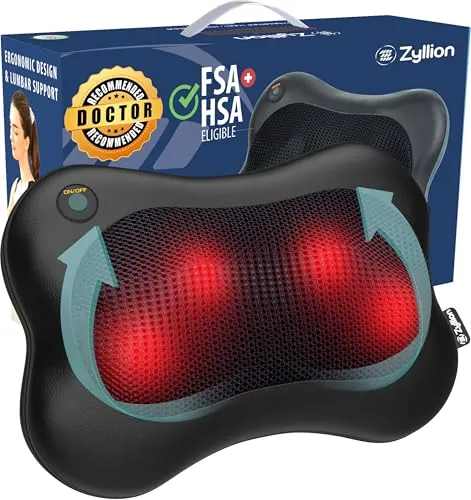
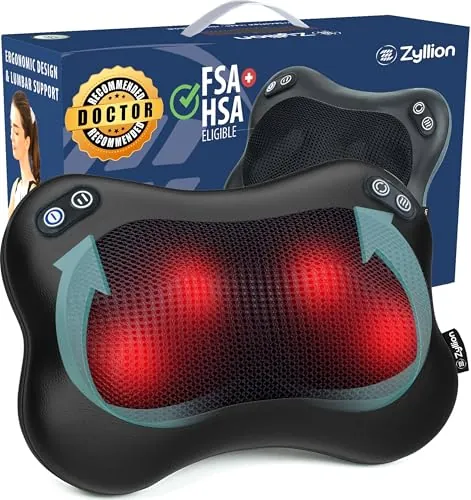
#1 Overall Winner
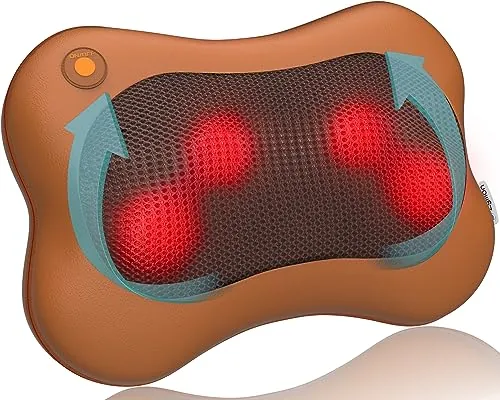
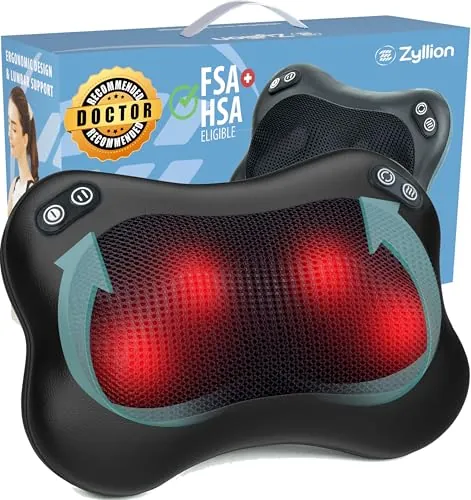
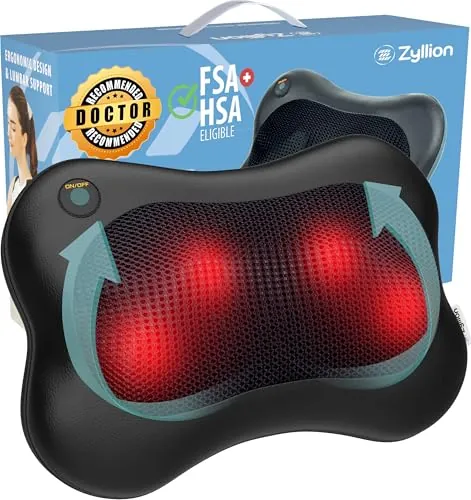
Zyllion Shiatsu Back and Neck Massager with Heat (ZMA-13)
- Strong deep-kneading shiatsu feel that many buyers say gets into tight back and neck muscles
Comparison
The Zyllion ZMA-13 and Zyllion ZMA-34 are corded shiatsu massage pillows with heat designed for back, neck, shoulders, legs, and feet. The ZMA-34 adds two speeds and direction/rotation control, while the ZMA-13 leans more toward simple operation and stronger overall buyer satisfaction. Both are similarly priced and both have some durability complaints, so the right pick depends on how often you’ll use it and how much adjustability you want.
#1 Overall Winner
Contender
Choose the Zyllion ZMA-13 if you want a straightforward shiatsu kneading pillow with heat, quieter operation, and stronger overall buyer satisfaction. Choose the Zyllion ZMA-34 if you specifically want two speeds and direction control to better manage intensity—just be more cautious about durability based on the provided buyer feedback.
Overall winner
Depends on your needs
| Feature | Zyllion Shiatsu Back and Neck Massager with Heat (ZMA-13) | Zyllion Shiatsu Back and Neck Massager with Heat, 2 Speeds (ZMA-34) | Winner |
|---|---|---|---|
| Type | Shiatsu massage pillow (kneading/rolling) | Shiatsu massage pillow (kneading/rolling) | Tie |
| Power | Corded electric (not cordless) | Corded electric (not cordless) | Tie |
| Heat + safety shutoff | Heat with overheat protection; auto shutoff (20 min stated) | Heat with overheat protection; auto shutoff (15 min stated) | Zyllion Shiatsu Back and Neck Massager with Heat (ZMA-13) |
| Speed/intensity control | Standard controls; automatic direction change | 2 speeds; bi-direction/rotation control | Zyllion Shiatsu Back and Neck Massager with Heat, 2 Speeds (ZMA-34) |
| Noise (practical use) | Quieter overall (based on scoring) | Moderate noise control (based on scoring) | Zyllion Shiatsu Back and Neck Massager with Heat (ZMA-13) |
| Comfort feel | Very strong comfort feedback (based on scoring and reviews) | Strong comfort feedback (based on scoring and reviews) | Zyllion Shiatsu Back and Neck Massager with Heat (ZMA-13) |
| Portability | Compact pillow; car adapter; straps | Compact pillow; car adapter; straps | Tie |
| Foot/leg versatility | Back/neck/legs/feet supported; plantar fasciitis mentioned | Back/neck/legs/feet supported; plantar fasciitis mentioned | Tie |
| Reliability (trend) | Some durability complaints; generally steadier reliability | Notable early-failure concerns in summary/scores | Zyllion Shiatsu Back and Neck Massager with Heat (ZMA-13) |
| Durability (trend) | Mixed long-term feedback; cover wear reported | More pronounced durability concerns reported | Zyllion Shiatsu Back and Neck Massager with Heat (ZMA-13) |
| Customer satisfaction | Higher rating with very large review base | Good rating with smaller review base | Zyllion Shiatsu Back and Neck Massager with Heat (ZMA-13) |
| Warranty/support | 3-year warranty path; strong support mentions | 3-year warranty path; strong support mentions | Tie |
| Best fit for sensitive users | Single main intensity feel; adjust via positioning | Two speeds help reduce intensity | Zyllion Shiatsu Back and Neck Massager with Heat, 2 Speeds (ZMA-34) |
| Overall pick | Stronger all-around balance for most homes | More adjustable, but with bigger durability question marks | Zyllion Shiatsu Back and Neck Massager with Heat (ZMA-13) |
For everyday home use—on a sofa, desk chair, or bed—both models do the same core job: provide a kneading shiatsu massage in a compact pillow format. The ZMA-13 tends to suit people who want quick relief with minimal fiddling, while the ZMA-34 is better for households where different people want different intensity levels. Since both are corded, outlet placement (or using the car adapter) plays a bigger role in convenience than the product size.
These are comfort devices rather than climate products, but they can still impact day-to-day comfort by easing muscle tightness and helping relaxation. Both offer optional heat and are commonly used for back and neck tension after work or before bed. The ZMA-13’s comfort and quieter operation make it slightly better suited to winding down without as much disruption. With the ZMA-34, the extra speed setting can help if you find deep-kneading pillows too intense and want a gentler session.
Both Zyllion pillows are positioned as deep-kneading shiatsu massagers, and the reviews provided support meaningful pain-relief results for common problem areas like the lower back and neck. The ZMA-13 comes across as the stronger performer overall, with especially strong comfort feedback and many buyers describing a “deep into the muscles” feel. The ZMA-34 also performs well, but the advantage is more about control than raw massage effectiveness, thanks to two speeds and direction control. For either model, pressure management matters—how you lean into the pillow and where you position it can change intensity significantly.
Reliability is where the two products separate most clearly. The ZMA-13 has mixed feedback—some owners report years of use, while others report failures within a couple of months. The ZMA-34’s provided summary and scoring point to more frequent early-failure complaints, with multiple customers saying the unit broke within a month. In both cases, there are also strong service stories (replacements, parts, covers), which can reduce the real-world risk if you register and use the warranty process.
Both models include safety-minded features in the provided listings, including overheat protection and automatic shutoff, which can help prevent excessively long sessions. They are not water resistant, so they should be kept away from spills and used with dry hands. Reviews also suggest heat and repeated cycles can lead to the unit warming up; following the timed sessions and letting it cool between runs is a practical precaution. If you’re using it on the neck or upper back, intensity management is important—use positioning and (on the ZMA-34) speed choice to avoid discomfort.
Comfort is strong for both models, with many buyers using them to relax and reduce muscle tension. The ZMA-13 has a slight edge overall: reviews frequently describe satisfying deep kneading and meaningful relief, and the scores indicate a very strong comfort profile. The ZMA-34 can be more comfortable for sensitive users because the second speed setting can reduce intensity. Heat comfort is mixed for both, with some users wanting stronger warmth, particularly on the ZMA-34.
Both massagers are generally easy to operate: plug in, position the pillow, and start a timed session. The ZMA-13’s simpler control approach can feel more intuitive for first-time users. The ZMA-34 adds speed and direction options, which can take a little experimenting but also makes it easier to find a comfortable setting. In both cases, the straps help stabilize the pillow on a chair, and the compact size makes it easy to move room to room.
Design is very similar: both are compact massage pillows intended to be pressed between your body and a chair, headrest, or cushions, with straps to help keep them in place. Their small footprint makes them easy to store and practical for smaller rooms. The ZMA-34’s design advantage is control flexibility (two speeds and direction control), while the ZMA-13’s advantage is a simpler, less fussy interface. Both are corded, so cord routing and outlet proximity affect placement.
As massage pillows, “capacity” is less about volume and more about how well the shape fits different body areas. Both target the same set of areas (back, neck, shoulders, legs, feet) and are designed to contour against the body. If you want longer single sessions, note the stated auto-shutoff difference: the ZMA-13 runs longer per session than the ZMA-34. For larger body types, positioning and pressure control remain the key determinants of comfort and effectiveness.
Space efficiency is a strength for both models. The compact pillow shape stores easily in a drawer, on a shelf, or in a car, and it doesn’t demand a dedicated corner like larger massage chairs or full-seat pads. They also work well in small flats, bedrooms, and home offices because you can use them with furniture you already own. The main space consideration is leaving enough slack for the cord so the unit stays comfortably positioned.
Both pillows create some motor and kneading noise, especially when pressed firmly into the body or a chair. Based on the provided scoring, the ZMA-13 is the quieter option overall, which can matter if you plan to use it while watching TV, working, or relaxing before sleep. The ZMA-34 is still usable in shared spaces, but it’s more likely to be noticeable in quieter rooms.
There’s no real installation beyond plugging in, but “setup” includes positioning and securing the pillow. Both models use straps to attach to an office chair or car headrest, which helps keep the nodes aligned with tight spots. The main practical step is cable management—ensuring the cord doesn’t pull taut during use—and choosing a chair or seating position where you can apply steady pressure without slipping. The car adapter makes vehicle setup straightforward for road trips.
Build quality is a weak spot for both models based on the provided summaries and scoring. The ZMA-13 has mixed durability feedback, with some long-term success stories alongside reports of early breakage and cover wear. The ZMA-34 shows a stronger signal of durability concerns, including multiple reports of the unit failing within a month. On the positive side, several reviews across the models mention accessible covers/sleeves and responsive support when parts wear out or issues arise.
Long-term durability appears variable on both massagers. For the ZMA-13, cover/mesh wear from kneading friction is a recurring theme, and there are also reports of the unit breaking early despite many long-lasting units. For the ZMA-34, durability concerns are more prominent in the provided overview and scoring, suggesting a higher chance of needing warranty support. If you expect heavy daily use, plan for normal wear on the cover and avoid excessive body weight pressure on the nodes.
Maintenance is relatively light for both: keep the surface clean, avoid moisture (not water resistant), and manage wear on the sleeve/cover area where friction is highest. Reviews indicate cover wear can happen over time, and replacement covers/parts and support responsiveness can matter as much as the original build. Because both are corded, there’s no battery to maintain. Also consider giving the unit cool-down time if it becomes warm during repeated sessions, especially when heat mode is used.
Both are portable pillow massagers intended to move between rooms and into a vehicle. They’re compact enough to store easily and use on a chair or bed, and both include a car adapter that supports travel. The main portability limitation is that both are corded, so you’ll still be “tethered” to a power source during use. If you want to reposition frequently during a session, the ZMA-13’s quieter, simple operation may feel a bit less fussy.
Feature-wise, they share the essentials: shiatsu kneading/rolling massage, optional heat, auto shutoff, overheat protection, straps for chair/headrest mounting, and a car adapter. The biggest difference is adjustability. The ZMA-34 includes two speeds plus bi-direction/rotation control, giving you more ways to tune intensity and massage behavior. The ZMA-13 keeps things simpler, relying on automatic direction changes and straightforward controls. If multiple users in the home have different sensitivity levels, the ZMA-34’s extra controls can be genuinely useful.
Neither product includes energy-use details in the provided data, so efficiency here is mostly about practical operation. Both are corded, so you don’t have to manage charging, and both use timed auto-shutoff to limit run time. In reviews for the ZMA-13, users mention it can heat up during extended use (especially with heat on), potentially requiring breaks. For the ZMA-34, the shorter timed session can be seen as either more controlled or less convenient, depending on how you use it.
With identical listed prices, value mostly comes down to (1) how much you’ll benefit from extra controls and (2) how confident you are about longevity. The ZMA-13 looks like better overall value for many households because buyer satisfaction is stronger across a much larger review base, and its all-around scoring is higher. The ZMA-34 can still be worth it if you want two speeds and direction control, but the durability concerns reduce its value unless you’re comfortable relying on warranty support. Both include a car adapter and a warranty path, which helps the value case.
This is a same-brand comparison, so brand trust factors are largely shared. Both products describe a USA-based company and the same 3-year warranty structure (with registration for the extension). Across the provided reviews, customer service responsiveness is a consistent positive theme, including replacement covers, parts, and even full unit swaps. The main brand-trust caution is that durability feedback is mixed, so support quality may matter as much as initial build for long-term satisfaction.
Both massagers are well-liked overall, with buyers commonly praising pain relief, deep kneading, and convenience at home or in the car. The ZMA-13 has the stronger satisfaction signal: a higher star rating and an extremely large review count, with many comments emphasizing effective relief and relaxation. The ZMA-34 remains positively rated but shows more mixed feedback around heat performance and a stronger theme of early failure. For either model, the presence of multiple positive service experiences suggests issues are not always “dead ends,” but they do affect buyer sentiment.
Both listings describe a 3-year warranty structure (1 year automatic plus a 2-year extension with registration) and mention replacement of the unit, cover, or accessories if issues arise. In the provided reviews for both models, multiple buyers describe quick responses, troubleshooting, and straightforward replacements (including covers and parts). If you buy either, registering and keeping purchase details organized is a practical step given the mixed durability feedback.
The Zyllion ZMA-13 is the better overall pick for most households: it’s widely praised for deep-kneading pain relief, comfort, and ease of use, and it appears quieter and more consistently satisfying in the provided data. Its main drawback is that it’s corded and durability feedback is mixed, including cover wear and some early failures.
The Zyllion ZMA-34 is the better choice if you specifically want more control, thanks to two speeds and direction/rotation control. However, its biggest limitation is more pronounced reliability and durability concern signals in the review summary and scoring, plus mixed heat impressions. If you want the safer all-round option at the same price, the ZMA-13 wins; if adjustability is non-negotiable, the ZMA-34 can still make sense with warranty registration.

Overall winner
Depends on your needs
If you want a simpler, set-and-go massage pillow with strong overall buyer satisfaction, the ZMA-13 comes out ahead in the provided scoring and feedback. If you want more adjustability, the ZMA-34 adds two speeds and direction control. Both are corded and both have some durability complaints, so the better choice depends on how often you plan to use it.
The ZMA-34 adds two speeds and bi-direction/rotation control, while the ZMA-13 emphasizes straightforward use with automatic direction changes. The stated auto-shutoff time differs too (20 minutes on ZMA-13 vs 15 minutes on ZMA-34). Buyer ratings and review volume are stronger for the ZMA-13 in the data provided.
Based on the specifications provided for both listings, neither the ZMA-13 nor the ZMA-34 is cordless; both are described as corded electric and come with a car adapter. Some reviews mention “cordless” variants, but that appears to refer to other versions, not the specific corded models described in the product specs here.
Both are designed to be straightforward: position the pillow, strap it to a chair/headrest if needed, and use the basic controls. The ZMA-13 is slightly more “simple controls” focused, while the ZMA-34 adds speed and direction options that can take a little more experimenting to find your preferred setting. Neither appears complicated to operate day to day.
Noise is subjective, but the provided scoring suggests the ZMA-13 is the quieter of the two overall. Both are pillow-style kneading massagers, so some motor and roller sound is expected, especially when pressed firmly into the body or against a chair. If you plan to use it while watching TV or working, the ZMA-13 is the safer bet for lower disruption.
Both include a heat mode, but buyer feedback is mixed—particularly on the ZMA-34, where the review summary notes inconsistent heat impressions. On the ZMA-13, many users like the heat, but there are also comments about the unit heating up during extended use and needing breaks. If heat is your top priority, keep expectations realistic.
They’re similarly suited for car use because both are compact massage pillows that can strap to a headrest and include a car adapter. The choice mostly comes down to control preference: the ZMA-34’s two-speed option can help if you want to reduce intensity while driving or sitting upright. For simpler operation, the ZMA-13 is easy to set and run.
Yes. While many buyers report long-term use, the provided summaries also mention durability concerns on both products. The ZMA-13 has mixed durability feedback, including reports of breakage after short use. The ZMA-34’s summary highlights multiple reports of breaking within a month. If you plan heavy, frequent sessions, warranty/support and gentle use matter.
At the same listed price, the ZMA-13 tends to look like the stronger value based on higher overall satisfaction and stronger all-around scoring. The ZMA-34’s value proposition is the added control (two speeds and direction control). If you’ll actually use those extra settings, it can be worth it; if not, the ZMA-13 is the safer pick.
Check our rankings and expert guides to find the best home lifestyle products for your goals.