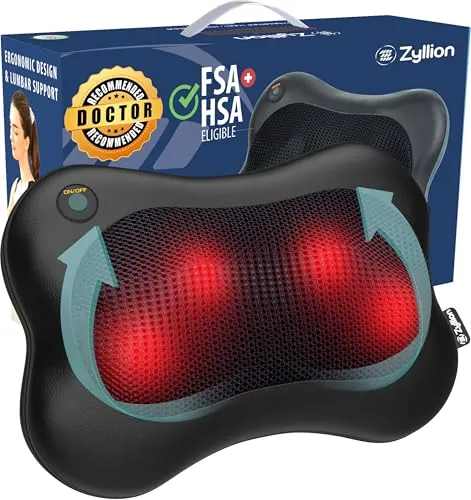
#1 Overall Winner
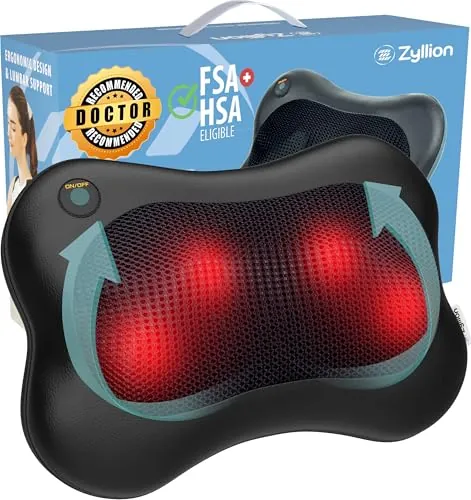
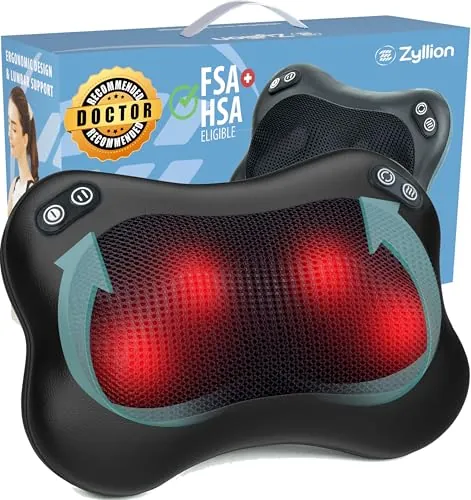
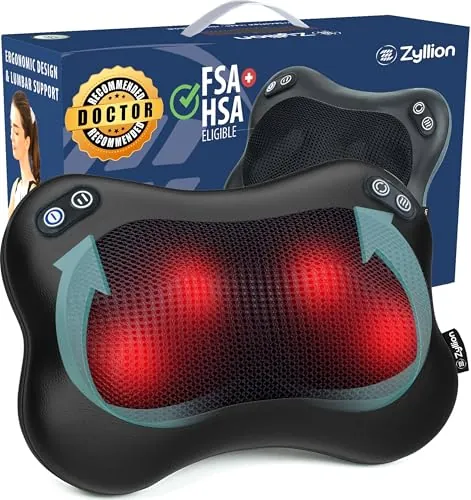
Zyllion Shiatsu Back and Neck Massager with Heat ZMA-13
- Deep-kneading shiatsu-style massage that many buyers say helps with back and neck pain
Comparison
The Zyllion ZMA-13 and ZMA-34 are corded shiatsu massage pillows with heat designed for neck, back, shoulders, legs, and feet. The ZMA-34 adds two speeds and rotation control for more adjustability, while the ZMA-13 leans on simpler operation and a longer session timer. Both are popular for at-home and in-car pain relief, but durability feedback is mixed on each.
#1 Overall Winner
Contender
Choose the Zyllion ZMA-13 if you want a simpler, quieter shiatsu pillow with a longer session timer and the strongest overall buyer-satisfaction signal. Choose the Zyllion ZMA-34 if you want two speeds and rotation control to better tune intensity and comfort. Both are corded massagers with heat and are best used in shorter sessions due to mixed durability feedback.
Overall winner
Depends on your needs
| Feature | Zyllion Shiatsu Back and Neck Massager with Heat ZMA-13 | Zyllion Shiatsu Back and Neck Massager with Heat (2 Speeds) ZMA-34 | Winner |
|---|---|---|---|
| Type | Shiatsu kneading massage pillow | Shiatsu kneading massage pillow | Tie |
| Power | Corded electric (not cordless) | Corded electric (not cordless) | Tie |
| Heat | Heat mode + overheat protection | Heat mode + overheat protection | Tie |
| Speed control | Not specified (single-speed feel) | 2 speeds | Zyllion Shiatsu Back and Neck Massager with Heat (2 Speeds) ZMA-34 |
| Rotation/direction control | Auto-rotates/changes direction periodically | Rotation control + bi-direction control | Zyllion Shiatsu Back and Neck Massager with Heat (2 Speeds) ZMA-34 |
| Auto shutoff session length | Auto shutoff after 20 minutes | Auto shutoff after 15 minutes | Zyllion Shiatsu Back and Neck Massager with Heat ZMA-13 |
| Portability | Portable pillow; car adapter included | Portable pillow; car adapter included | Tie |
| Noise (practical) | Quieter overall trend | Moderate noise trend | Zyllion Shiatsu Back and Neck Massager with Heat ZMA-13 |
| Comfort (overall feel) | Comfortable for many; some find nodes too hard | Comfort-focused; adjustable intensity helps | Zyllion Shiatsu Back and Neck Massager with Heat (2 Speeds) ZMA-34 |
| Customer satisfaction signal | Very high review volume; higher average rating | Lower review volume; slightly lower average rating | Zyllion Shiatsu Back and Neck Massager with Heat ZMA-13 |
| Reliability trend | Mixed but stronger overall trend | Mixed; more frequent early-failure concerns | Zyllion Shiatsu Back and Neck Massager with Heat ZMA-13 |
| Warranty/support | 3-year warranty (with registration extension); replacement parts/covers noted | 3-year warranty (with registration extension); replacements noted | Tie |
| Price (listed) | Lower | Slightly higher | Zyllion Shiatsu Back and Neck Massager with Heat ZMA-13 |
| Best for control/tuning | Position-based intensity control | Two speeds + rotation control | Zyllion Shiatsu Back and Neck Massager with Heat (2 Speeds) ZMA-34 |
For everyday home use, both pillows fill the same role: quick, targeted kneading sessions on a sofa, bed, or office chair. The biggest practical difference is control. The ZMA-34’s extra speed/direction options can be helpful if multiple people in the home share it and prefer different intensities. The ZMA-13 is better if you want simpler controls and longer default sessions, especially in quieter spaces like a home office.
Both products are comfort devices aimed at muscle tension rather than climate control. Heat is available on both for a warmer, more relaxing feel, but user feedback suggests heat intensity can vary and may feel mild for some people (especially on the ZMA-34). If you plan to use a massager as part of a nightly wind-down routine, the ZMA-13’s quieter profile and longer timer may fit better, while the ZMA-34’s two speeds can help you keep pressure gentler before sleep.
Both Zyllion pillows are designed to deliver kneading shiatsu-style pressure, and buyer feedback for both repeatedly highlights relief for lower-back and neck tightness. The ZMA-13 has the stronger overall performance trend, backed by extensive review volume that frequently mentions deep tissue-like kneading and effective pain relief. The ZMA-34 also performs well, and its two speeds can help you match intensity to sensitive areas.
Performance concerns are less about massage feel and more about consistency over time: reviews for both mention early failures, and some users note heat can be underwhelming or inconsistent depending on the unit and usage.
Reliability is the most consistent caution for both models. For the ZMA-13, overall sentiment is strong, but durability and reliability feedback is mixed, including reports of units breaking within a couple of months and issues like overheating breaks in heat mode or a power connection that can pull loose in certain setups. For the ZMA-34, multiple customers report early failures (sometimes within a month), and heat consistency is also questioned.
The upside is that review examples for both models describe responsive support and warranty replacements, which can reduce risk if you register and keep purchase details.
Neither model is a climate-control product, but both use heat as part of comfort. The main takeaway from the provided data is that heat satisfaction is mixed: some users like it as a gentle add-on, while others expect stronger warmth. If heat is central to your routine, it’s worth prioritizing easy returns and registering the warranty so you have options if the heater underperforms.
Both models list safety-focused features such as overheat protection and an automatic shutoff timer, which is important for heat-based comfort devices used at home. The main safety-related considerations in the provided data are practical: avoid using them in wet areas because they are not water resistant, and avoid placing excessive body weight on the nodes/motor during use, which reviewers suggest can strain the mechanism. Also, because both are corded, safe cord routing matters—especially in bedrooms or next to office chairs—so the cord doesn’t become a trip hazard.
Comfort depends on how intense you like kneading and how you position the pillow. The ZMA-34 has an advantage for comfort tuning because the two speeds can help you back off intensity on sensitive areas like the neck. The ZMA-13 is comfortable for many users, but there are examples of people finding the nodes too hard or the pressure too much. In both cases, comfort improves when you control pressure by leaning in gently rather than putting full body weight on the unit.
Both are generally easy to use: position the pillow, strap it to a chair/headrest if needed, and start a timed session. Because both are corded, day-to-day convenience depends on outlet access (or using the car adapter). The ZMA-34’s extra controls add flexibility but also add one more decision during use. The ZMA-13’s simpler setup can feel more straightforward for quick relief breaks.
Both models share a compact pillow format and similar dimensions, making them easy to position behind the lower back, at the neck, or under calves/feet. Straps help keep the unit in place on a chair or car headrest, which reduces the need to hold it by hand. The ZMA-34’s design advantage is control layout: the added speed and rotation options give you more ways to tailor the session without repositioning. The ZMA-13 emphasizes simple operation and longer timed use.
Space efficiency is a strong point for both models. The pillow form factor stores easily in a drawer or on a shelf and doesn’t require dedicated floor space like larger massage equipment. The straps also help keep it in place on an office chair so it doesn’t become extra clutter. Between the two, the difference is minimal, though the ZMA-34’s added control features don’t meaningfully change footprint.
Noise is relevant for home-office or bedtime use. The ZMA-13 is the quieter option overall based on the provided scoring trend, making it a better fit if you’ll use it while working, watching TV at low volume, or winding down. The ZMA-34 is still usable in most homes, but it is less of a standout for low-noise operation.
There’s no permanent installation for either unit, but initial setup still matters. Both are straightforward: plug in the power adapter, optionally use the car adapter, and secure the pillow using the Velcro straps on a chair/headrest. The ZMA-34’s added controls do not appear to create a difficult learning curve, but it may take a session or two to figure out which speed and direction feel best for different body areas.
Build quality signals are mixed on both. Reviews for the ZMA-13 mention long-lasting units and positive experiences with replacement covers, but there are also reports of early breakage and friction wear on the mesh. The ZMA-34 likewise gets praise for how it feels when working, yet multiple customers report units failing within a short period. If build quality is your top concern, the most practical “mitigation” shown in the data is Zyllion’s willingness to replace parts/units under warranty.
Long-term durability looks variable for both pillows. The ZMA-13 has credible long-use stories (including multi-year ownership), but also enough early-failure and cover-wear comments to treat longevity as inconsistent. The ZMA-34 similarly shows durability concerns in the aggregated summary and reviews, even when customers like the massage quality. Because friction wear on the cover is a theme in this product type, plan for careful use and consider how easy it is to access replacements through the warranty process.
Maintenance is mostly about keeping the exterior clean, preventing excessive friction wear, and using the device in a way that avoids overheating. Neither is water resistant, so cleaning should be limited to gentle wiping rather than washing. Reviews for the ZMA-13 mention cover wear and replacement support, and ZMA-34 reviews also reference sleeves/covers and support interactions. If you expect frequent use, factor in the practical benefit of a brand that will replace covers or parts under warranty.
Both are portable pillow-style massagers with similar size and weight, and both include a car adapter for travel. Because they’re corded, portability is best described as “easy to move, but you still need power.” If you plan to carry it between rooms, office, and car, either works well; if you want the simplest grab-and-go experience, the ZMA-13’s simpler controls can feel quicker for short sessions.
Feature sets are similar at the core: shiatsu kneading nodes, heat mode, auto shutoff, overheat protection, straps for attaching to a chair, and a car adapter. The ZMA-34 differentiates itself with two speeds and bi-direction/rotation control, which can make it easier to adjust intensity without changing your body position as much. The ZMA-13 focuses on a simpler control scheme and automatic direction changes, and it lists a longer auto shutoff session.
These are plug-in comfort devices, so “efficiency” is mostly about how effectively they deliver relief within a short timed session and how well they manage heat buildup. The ZMA-13’s shorter-efficiency weakness in the provided scoring aligns with review notes that heat mode may require cooldown breaks after repeated cycles. The ZMA-34’s efficiency trend is stronger overall, but buyer summaries still mention mixed experiences with heat performance. For either, shorter, targeted sessions tend to be the most practical approach.
Value comes down to the mix of massage effectiveness, control features, and the risk of early failure. The ZMA-13 tends to offer stronger value because it’s priced lower in the provided listings, has extremely high review volume with strong satisfaction, and has repeated examples of support replacing covers/accessories. The ZMA-34 costs a bit more but gives you two speeds and rotation control, which can be worth paying for if it helps you use the device more comfortably and consistently.
Because durability is a concern for both, “value” is also tied to warranty registration and your willingness to use support if something fails.
This is effectively a comparison within the same brand, and both listings emphasize a US-based company and a 3-year warranty structure (with registration extension). Reviews for both models include detailed, positive experiences with customer service, including replacements and troubleshooting. The practical trust signal here is less about brand reputation in general and more about consistent support behavior in buyer stories, which appears strong for both ZMA-13 and ZMA-34.
Customer satisfaction is strong for both models, with many reviews describing meaningful relief for back and neck tension and a relaxing experience, especially when combined with heat. The ZMA-13 stands out for sheer volume of feedback and a higher average rating, which reduces the chance that your experience is based on a small sample. The ZMA-34 has fewer reviews and a slightly lower rating, and its aggregated feedback highlights more mixed impressions around heat performance and durability.
Across both products, the most consistent negative pattern is early failures for a subset of buyers—balanced by repeated praise for responsive replacements.
Both models list the same warranty structure: a 1-year warranty plus a 2-year extension with registration. Review examples for both products describe responsive support, including troubleshooting, replacement units, and replacement covers/parts. If you buy either model, registering promptly is a practical step given the mixed durability feedback and the likelihood of cover wear over time.
The Zyllion ZMA-13 is the better overall pick for most people because it pairs strong, consistent pain-relief feedback with quieter use, a longer auto shutoff session, and exceptionally broad customer feedback. Its main limitation is inconsistency in long-term durability for a subset of buyers, along with cover wear from friction and the constraints of a corded design.
The Zyllion ZMA-34 is a strong alternative if adjustability matters more than simplicity: two speeds and rotation control can make the massage easier to personalize and more comfortable on sensitive areas. Its main limitation is the same core risk—durability concerns and mixed heat impressions. If you register the warranty and want more control, pick the ZMA-34; otherwise, the ZMA-13 is the safer default choice.

Overall winner
Depends on your needs
The ZMA-13 is the better pick if you want a simple, proven shiatsu pillow with strong buyer satisfaction signals and a longer auto shutoff session. The ZMA-34 is a better fit if you want more control, since it adds two speeds and rotation control. Both are corded models with heat, and both have mixed durability feedback.
The biggest differences are the controls and session timing. The ZMA-34 adds two speeds and bi-direction/rotation control, while the ZMA-13 focuses on simpler operation with automatic direction changes. The ZMA-13 lists a 20-minute auto shutoff, while the ZMA-34 lists a 15-minute shutoff. Pricing and review volume also differ, with the ZMA-13 having far more reviews.
No. The provided specifications for both the ZMA-13 and ZMA-34 list them as corded electric and explicitly note they are not cordless. They can still be used in a vehicle because a car adapter is included, but for general use you’ll need to be near a power source.
The ZMA-34 is easier to customize because it includes two speeds and rotation control, giving you more ways to dial intensity up or down. The ZMA-13 relies more on positioning and pressure (how you lean into it) plus its automatic direction changes. If you’re sensitive to strong kneading, the ZMA-34’s extra control may help.
Based on the provided scoring trend, the ZMA-13 comes across as the quieter option overall. Both are marketed as quiet and are pillow-style massagers, so noise is usually more noticeable in very quiet rooms (like bedrooms). If you plan to use it while watching TV or working, the ZMA-13 is the safer choice for low disruption.
Heat is included on both, but feedback is mixed. For the ZMA-34, multiple buyers mention that the heat can feel mild or inconsistent. For the ZMA-13, reviewers generally like the heat, but some note it can contribute to the unit needing breaks during repeated cycles. If heat is a priority, expect variation and keep sessions within the built-in timers.
Durability is mixed for both models. The ZMA-13 has many long-term positive stories, but there are also reports of units failing within a couple months and covers wearing from friction. The ZMA-34 also has repeated “broke within a month” complaints. The practical advantage is Zyllion’s warranty approach and replacement parts/cover support mentioned by reviewers.
Both are well suited to chair and car use because each includes Velcro straps and a car adapter. If you want longer uninterrupted sessions, the ZMA-13’s longer auto shutoff window may suit you better. If you want more control over intensity while seated, the ZMA-34’s two speeds can be helpful for fine-tuning comfort during work or driving breaks.
Check our rankings and expert guides to find the best home lifestyle products for your goals.