#1 Overall Winner
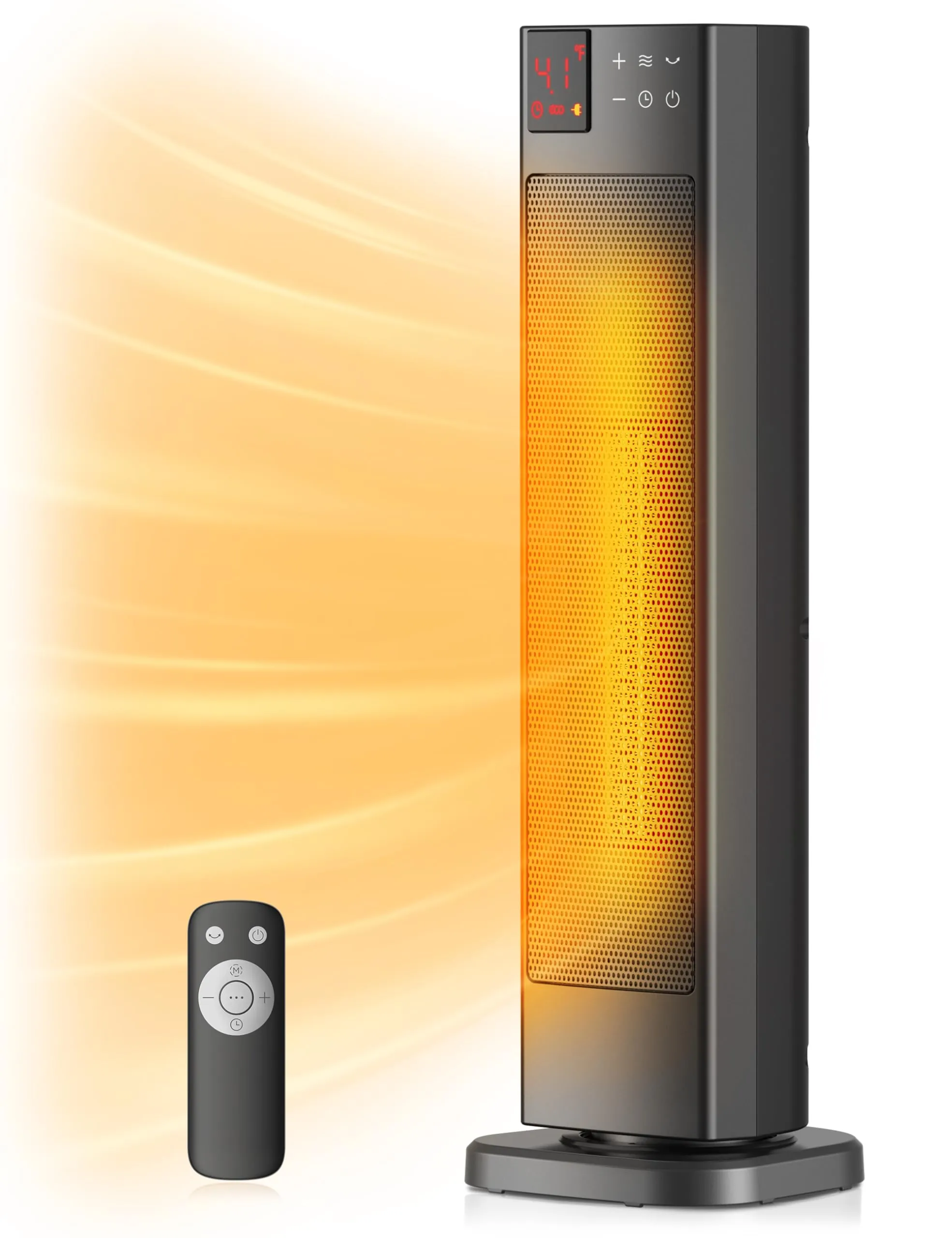
PELONIS Oscillating Ceramic Tower Indoor Space Heater (PHF15RSAPH23)
- Fast heat-up with strong warm-air output for its size (1500W ceramic tower design).
Comparison
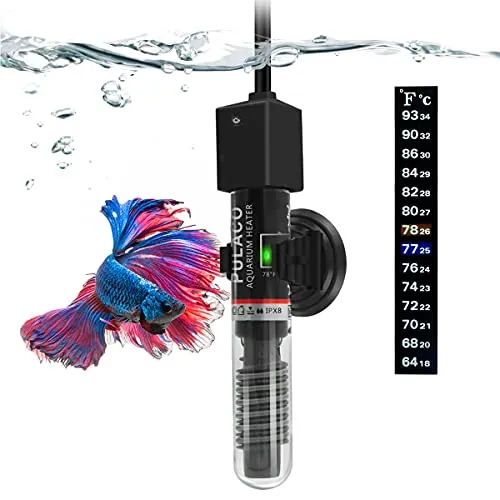
The PELONIS PHF15RSAPH23 is a 1500W oscillating ceramic tower heater designed to warm indoor air in small-to-medium rooms with thermostat control, ECO mode, timer, and a remote. The PULACO 25W mini heater is a fully submersible aquarium heater meant for 1–6 gallon tanks and targets a preset 78°F water temperature. The core difference is environment and risk: room comfort features versus a simple tank heater with mixed temperature-control feedback.
#1 Overall Winner
Contender
Choose the PELONIS if you want a quiet, feature-rich space heater for a bedroom, office, or small-to-medium room, with oscillation, a thermostat, timer, and remote. Choose the PULACO only if you specifically need a compact, preset 78°F heater for a 1–6 gallon aquarium and you’re comfortable monitoring temperature closely due to mixed overheating and failure reports.
Overall winner
Depends on your needs
| Feature | PELONIS Oscillating Ceramic Tower Indoor Space Heater (PHF15RSAPH23) | PULACO 25W Mini Aquarium Submersible Betta Heater (Preset 78°F) | Winner |
|---|---|---|---|
| Primary use | Indoor air heating (space heater) | Aquarium water heating (fish tank heater) | Depends |
| Heat output / power | 1500W | 25W | PELONIS Oscillating Ceramic Tower Indoor Space Heater (PHF15RSAPH23) |
| Intended capacity/coverage | Up to 220 ft² (listed) | 1–6 gallon tanks (listed) | Depends |
| Temperature control style | Adjustable thermostat (41–95°F), modes, timer | Preset 78°F (±3°F stated) | PELONIS Oscillating Ceramic Tower Indoor Space Heater (PHF15RSAPH23) |
| Modes/settings | High/Low/ECO/Fan + oscillation | On/off cycling via preset thermostat; indicator lights | PELONIS Oscillating Ceramic Tower Indoor Space Heater (PHF15RSAPH23) |
| Noise | Quiet operation reported; still a fan heater | Silent (no fan) | PULACO 25W Mini Aquarium Submersible Betta Heater (Preset 78°F) |
| Portability | Floor tower; movable room-to-room | Very small and lightweight | PULACO 25W Mini Aquarium Submersible Betta Heater (Preset 78°F) |
| Ease of setup | Plug-in floor heater; remote included | Fully submerge and plug in; preset temp | Depends |
| Safety protections (listed) | Tip-over + overheat protection; flame-retardant material listed | Must be fully submerged; warnings about out-of-water operation | PELONIS Oscillating Ceramic Tower Indoor Space Heater (PHF15RSAPH23) |
| Reliability signals from reviews | Mostly positive; some unexpected shutoff reports | Mixed; overheating and failure reports appear repeatedly | PELONIS Oscillating Ceramic Tower Indoor Space Heater (PHF15RSAPH23) |
| Controls and convenience | Remote + digital panel + 12h timer | No adjustment; indicator lights | PELONIS Oscillating Ceramic Tower Indoor Space Heater (PHF15RSAPH23) |
| Value proposition | Low price for a feature-rich room heater; strong review volume | Very low price; includes thermometer strip; large review volume | Depends |
In everyday home use, the PELONIS is a people-comfort product: it’s designed to sit on the floor and warm the air where you live and work, with controls that suit routine use (timer, remote, thermostat). The PULACO is a pet-care accessory: it supports a stable aquarium environment rather than changing room comfort. If your goal is to feel warmer at home, the space heater fits; if your goal is to keep a nano tank at tropical temperatures, the aquarium heater fits.
For household climate comfort, the PELONIS is the relevant tool: it’s designed for indoor air heating with oscillation and multiple heat modes to adjust room feel. The PULACO affects comfort only indirectly by stabilizing aquarium water temperature for fish, not by warming the room. If you’re managing cold spots in a bedroom, office, or living space, the PELONIS is the practical choice; the PULACO is purpose-built for tank temperature stability.
For their intended jobs, the PELONIS shows stronger all-around performance signals: it’s a 1500W ceramic tower heater with wide oscillation and many reviews describing quick warm-up and noticeable heating in small-to-medium spaces. The PULACO can perform well in the right tank size, and many users report it holds near its preset target, but performance feedback is more mixed due to reports of overheating or failing to maintain temperature. Because stable temperature is the core function of an aquarium heater, that inconsistency is a bigger performance red flag for Product B.
The PELONIS shows generally strong real-world reliability feedback, with many long-term positive reports, but it isn’t flawless: customers mention cases where the heater turns off unexpectedly, which could be frustrating if you rely on it overnight or during work hours. The PULACO’s reliability concerns are more severe: multiple reviews describe overheating events and malfunctions, alongside reports of it not heating or failing after months of use. Because aquarium heating failures can directly affect fish health, Product B’s reliability risk is harder to overlook.
The PELONIS provides more granular climate control for a room, with adjustable temperature settings and multiple heat modes that let you tune output as conditions change. The PULACO offers a single preset target (78°F) with stated tolerance, so it’s less adaptable if your tank needs a different temperature or if room conditions swing widely. Reviews indicating occasional overheating or failure to heat also suggest Product B’s control consistency may vary by unit or setup.
The PELONIS lists multiple household safety protections (tip-over and overheating protection) and uses materials described as flame-retardant, which are important considerations for a floor space heater. Still, buyers note occasional unexpected shutoffs, and one review cautions about feeling strong hot air close to the unit—so placement away from kids/pets and clear airflow space remains important.
The PULACO carries a different safety burden: it must be fully submerged, must not be powered out of water, and reviews include repeated overheating reports with severe outcomes for fish. For aquarium use, frequent temperature checks and correct circulation are especially important if choosing Product B.
For personal comfort, the PELONIS does more: oscillation, a thermostat range, and a timer make it easier to keep a room feeling consistently warm without constant manual adjustment. The PULACO improves “comfort” only for aquarium inhabitants by keeping water warmer for tropical fish, which can noticeably change fish activity according to reviews. If comfort means human room warmth, choose Product A; if comfort means fish welfare in a small tank, Product B is the relevant category.
Both products are easy to start, but in different ways. The PELONIS is straightforward for a space heater thanks to the digital panel, remote, and timer, though it has more settings to learn. The PULACO is plug-and-play with no temperature dial, but correct installation matters more: it must be fully submerged and is best used with water circulation as advised. For most households, Product A is easier to use safely without constant checking.
The PELONIS has a slim tower footprint (about 23 inches tall) that’s easy to place in corners or near desks, and oscillation helps distribute heat without repositioning the unit. The PULACO is extremely compact and transparent, designed to be hidden inside a small tank and not distract from the aquarium. For living spaces, Product A’s tower format is more practical; for minimalist tank aesthetics, Product B’s small size is the clear advantage.
Capacity is measured differently here. The PELONIS lists coverage up to 220 ft², which is a typical small-to-medium room target, and oscillation helps reach more of the space. The PULACO is sized for 1–6 gallon aquariums and is not intended for tanks under 1 gallon. If you’re heating a room, Product A matches that need; if you’re heating a nano aquarium, Product B matches the scale.
Both are space-friendly for their categories. The PELONIS uses a slim tower footprint that takes up limited floor area compared with wider heaters. The PULACO is extremely compact and sits inside the tank, with minimal visual clutter due to its transparent design. In very small flats or bedrooms, the aquarium heater takes virtually no room space, but for heating the room itself, the PELONIS is a sensible space-efficient format.
The PULACO is effectively silent in use, which is ideal for bedrooms where a tank sits nearby. The PELONIS is frequently described as quiet for a fan heater and is often used in bedrooms and offices, but it still produces some airflow noise. If you need near-silence, Product B wins on noise; if you need quiet room heating, Product A is commonly considered unobtrusive.
The PELONIS is a floor-standing tower heater built for room use, and reviews include positive durability feedback over long periods, though not everyone comments on materials. The PULACO’s compact glass-and-rubber construction has more mixed durability signals, including reports of the housing separating and becoming waterlogged. Based on provided review patterns, Product A appears more robust for long-term household use, while Product B may require more caution and periodic inspection.
Durability signals favor the PELONIS based on the available feedback, including users reporting multi-season or year-plus use without major issues. The PULACO has mixed durability feedback: some users report long life, but others describe failures around a year and physical separation/waterlogging that ends the heater’s life. If you want a heater that’s likely to hold up to frequent handling and seasonal storage, Product A appears the safer bet from the provided data.
The PELONIS maintenance is mostly routine: keeping vents unobstructed, occasional exterior dusting, and sensible placement to avoid tip hazards. The PULACO requires aquarium-specific upkeep: checking that it remains fully submerged, monitoring temperature with the included strip (or another thermometer), and ensuring good water circulation as recommended. Given the mixed temperature-control feedback for Product B, ongoing monitoring becomes part of “maintenance,” making Product A the lower-effort option for most users.
The PELONIS is portable in the sense that you can move it room-to-room as a slim floor tower, which suits renters or households targeting cold spots. The PULACO is even more portable due to its tiny size and light weight, but it can only be used inside an appropriately sized, water-filled tank. For moving around the home for comfort heating, Product A is more practical; for travel or switching between nano tanks, Product B is easier to pack.
The PELONIS offers a fuller feature set for home comfort: multiple modes (High/Low/ECO/Fan), oscillation, thermostat adjustments in fine steps, a digital control panel, remote control, and a 12-hour timer. The PULACO is intentionally minimal: it’s preset to 78°F with indicator lights and includes a basic thermometer strip. If you want control and scheduling, Product A is better equipped; if you want the simplest possible “set-and-forget” concept (with monitoring), Product B is simpler.
Neither product includes detailed energy-usage testing data, but their designs imply different efficiency goals. The PELONIS includes an ECO mode and thermostat-based cycling intended to avoid running at full output continuously. The PULACO is low wattage (25W) and cycles on/off around a preset temperature, but mixed reports of overheating or inconsistent control suggest real-world efficiency can vary by setup, placement, and water circulation. For controllable, room-based efficiency features, Product A has clearer tools.
The PELONIS is priced like a budget-friendly room heater while still including convenience features (remote, thermostat, timer, oscillation) and has strong overall buyer sentiment, which supports its value for supplemental home heating. The PULACO is very inexpensive and can be a cost-effective solution for nano tanks, and many owners are satisfied—however, the potential cost of failure (overheating or malfunction) can outweigh the low purchase price if you’re heating a live-animal environment. Value looks better for Product A in typical home use; Product B’s value depends heavily on getting a good unit and monitoring it.
Based on the provided data, PELONIS shows stronger trust signals in this comparison due to consistently high buyer sentiment around performance, quietness, and long-term use reports for this heater type. PULACO provides clear warranty/support statements, but the repeated review themes of overheating and failures reduce confidence for a safety-sensitive aquarium application. If brand trust is defined by predictable outcomes and fewer high-severity complaints, Product A has the edge here.
Both products have very large review counts and generally positive star ratings, but the nature of complaints differs. PELONIS reviews commonly praise fast heating, quiet operation, temperature control, and the remote; the most notable negative theme is mixed experiences with automatic shutoff. PULACO reviews include many success stories about keeping small tanks stable, but also recurring complaints about overheating and malfunctions, including negative experiences tied to fish loss. Overall satisfaction appears more stable for Product A.
The PULACO listing states a 12-month warranty and 24-hour after-sales service with replacement if unsatisfied. No warranty/support terms are provided in the PELONIS data here, so it can’t be compared directly on warranty length or process from the provided information. If warranty coverage is important, confirm seller/manufacturer terms before purchase.
There’s no direct “one is better” answer because these heaters serve different environments, but there is a clearer recommendation on dependability. The PELONIS tower heater stands out as the better choice for household comfort heating thanks to strong warm-up performance, quiet operation feedback, and practical controls like oscillation, a timer, and a remote—its main drawback is mixed reports of unexpected shutoffs and a few usability quirks.
The PULACO mini aquarium heater is attractive for nano tanks because it’s compact, inexpensive, and simple, and many users report stable 78°F operation. However, repeated overheating and malfunction reports are a serious limitation for a product used around live animals. If you need room heat, choose PELONIS; for a small tank, PULACO is a cautious, monitor-first option.

Overall winner
Depends on your needs
They’re designed for completely different jobs. The PELONIS is a 1500W indoor space heater for warming air in small-to-medium rooms with oscillation, thermostat control, timer, and a remote. The PULACO is a 25W fully submersible aquarium heater meant for 1–6 gallon tanks with a preset 78°F target. Choose based on whether you need room heating or fish-tank heating.
The PELONIS lists tip-over and overheat protection for home use, though some buyers mention the unit shutting off unexpectedly. The PULACO has multiple reviews reporting overheating and malfunctions that harmed fish, which is a major concern for an aquarium heater. With any heater, correct placement and following the safety instructions are essential, but the reported risk profile differs between these two products.
The PELONIS is the relevant option for bedrooms and offices because it’s an indoor air heater with quiet operation feedback, a thermostat, ECO mode, and a 12-hour timer. The PULACO is silent but it heats aquarium water only, not room air. If your goal is personal comfort in a room, the PELONIS is the appropriate choice.
Based on the provided details, no. The PULACO heater is preset to 78°F and is designed to turn on/off around that target, with a stated accuracy of ±3°F. If you need a different temperature for your species, seasonal changes, or a specific setup, you would need a heater that supports adjustable temperature control rather than a fixed preset.
The PELONIS lists heating coverage up to 220 ft² and uses oscillation to spread warm air. Reviews suggest it can help in small-to-medium spaces and can contribute warmth even in more open areas depending on room layout, ceiling height, and drafts. Real-world results can vary, especially in open-plan rooms or spaces with high ceilings.
Both are designed to be straightforward. The PELONIS adds convenience features like a remote, a digital control panel, and a timer, but it also has more settings to manage. The PULACO is “plug-and-play” with a preset temperature, but it requires correct submersion and careful monitoring given mixed feedback about temperature stability.
The PULACO is effectively silent during operation because it has no fan. The PELONIS is widely described as quiet for a space heater and is often considered bedroom-friendly, but it still moves air and can be audible in a very quiet room. If absolute silence is the priority, the aquarium heater has the advantage, though it serves a different purpose.
For the PELONIS, the standout concern is mixed feedback about automatic shutoff behavior, with some users reporting unexpected turn-offs. For the PULACO, reviews include reports of overheating and failures to heat consistently, including severe outcomes for fish. These patterns matter because both products are used to maintain a stable temperature over time.
No. Both products are listed as not smart-home compatible, and no app, Wi‑Fi, or voice-assistant integration is provided in the product data. Controls are local: PELONIS uses onboard controls plus a remote, while PULACO relies on its preset thermostat behavior and indicator lights.
Check our rankings and expert guides to find the best home lifestyle products for your goals.