#1 Overall Winner
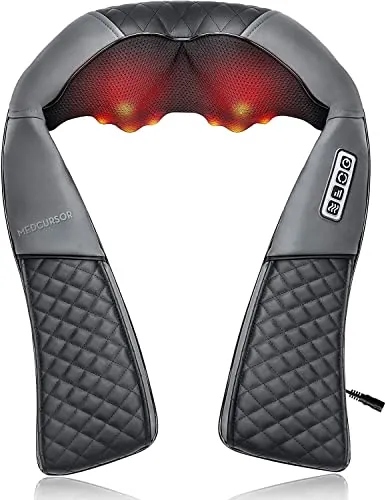
Medcursor Neck Massager MD-KP02
- Deep-kneading shiatsu style with bi-directional rotating massage heads aimed at working muscle knots
Comparison
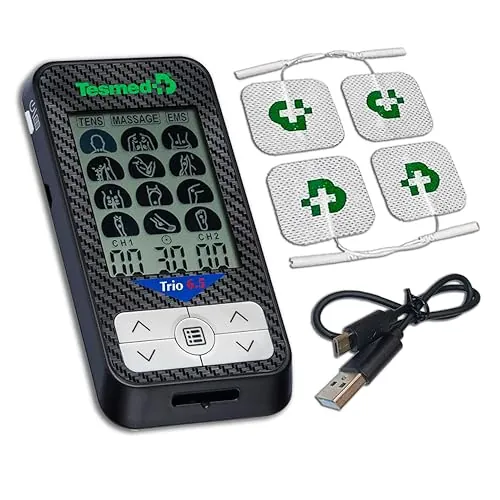
The Medcursor Neck Massager and TESMED Trio 6.5 both aim to help with everyday muscle pain relief, but they do it in very different ways. Medcursor is a corded shiatsu-style kneading pillow with optional heat, while TESMED is a cordless TENS/EMS unit with many programs and electrode pads. The better pick depends on whether you want deep mechanical kneading or targeted electrostimulation you can use anywhere.
#1 Overall Winner
Contender
Choose the Medcursor Neck Massager if you want straightforward, deep-kneading shiatsu pressure for neck/shoulder/back tightness and don’t mind a power cord. Choose the TESMED Trio 6.5 if you want a compact cordless TENS/EMS device with lots of programs and fine intensity control, and you’re comfortable learning electrode placement and using a small screen.
Overall winner
Depends on your needs
| Feature | Medcursor Neck Massager MD-KP02 | TESMED Trio 6.5 | Winner |
|---|---|---|---|
| Type of pain-relief approach | Shiatsu-style kneading pillow massager | Electrode-based TENS/EMS stimulator | Depends |
| Best use areas (from listing) | Back, neck (and commonly used on other areas) | Back (and other listed areas via electrodes) | Tie |
| Cordless use | No (corded) | Yes (USB rechargeable) | TESMED Trio 6.5 |
| Heat function | Yes (on/off) | Not listed | Medcursor Neck Massager MD-KP02 |
| Program variety | 3 speed levels + direction changes | 36 programs + 40 intensity levels + 2 channels | TESMED Trio 6.5 |
| Learning curve | Low (position and select speed) | Moderate (pad placement + program selection) | Medcursor Neck Massager MD-KP02 |
| Comfort consistency | Mixed if you prefer gentler massage | Generally comfortable with adjustable intensity | Depends |
| Noise | Motorized kneading (some noise) | Very quiet operation | TESMED Trio 6.5 |
| Portability (carry and use anywhere) | Portable, but needs power outlet/car adapter | Pocketable and cordless | TESMED Trio 6.5 |
| Build material feedback | PU leather + mesh; generally feels solid | Some concerns about plastic robustness | Medcursor Neck Massager MD-KP02 |
| Ongoing consumables | No pads to replace (basic cleaning only) | Electrode pads are consumables over time | Medcursor Neck Massager MD-KP02 |
| Value for money (based on features + reviews) | Strong value for deep kneading relief | Strong value for multi-program TENS/EMS | Tie |
For typical at-home use (sofa, bed, or a desk break), Medcursor is more “grab-and-go”: you position the kneading pillow where you’re sore and adjust speed and pressure with the straps. TESMED can be just as practical once you know your preferred pad placements, but it’s more of a routine—attach electrodes, choose a program, and set intensity. If multiple people in the household will share the device, Medcursor tends to be simpler to hand off, while TESMED offers more personalization per user.
Both products focus on muscle comfort, but the experience differs. Medcursor provides a physical kneading sensation that many buyers describe as deep and effective for knots; however, that same depth can be uncomfortable for sensitive users. TESMED provides stimulation pulses that can feel gentler and more controllable thanks to many intensity steps, but it relies heavily on correct pad placement. If warmth is part of your relaxation routine, Medcursor offers heat (with mixed review feedback on strength), while TESMED does not list a heat feature.
Medcursor’s performance is strongest when you want a direct, deep-kneading massage: reviews repeatedly mention noticeable relief in the neck, traps, shoulders, and lower back, especially after long workdays or driving. Its rotating heads and direction changes help it feel more like sustained manual pressure, though some users report it can be too intense and leave them sore if used aggressively.
TESMED performs well for targeted relief sessions using TENS programs, with reviews noting meaningful pain reduction (including back and shoulder discomfort). Its effectiveness depends more on choosing a suitable program and placing pads correctly. If you want consistent “hands-on” pressure, Medcursor fits better; if you want targeted stimulation with lots of adjustment, TESMED is the stronger performer.

Both products show generally strong reliability signals in the provided feedback, but their risks differ. Medcursor relies on a rotating mechanism; users note it’s powerful, but over-pressing or long sessions could contribute to wear over time. Heat also appears inconsistent across reviews, which may be a reliability-of-experience issue rather than a total failure.
TESMED’s reliability depends on electronics, leads, and electrode adhesion. Reviews include positive notes about repeated use with pads still sticking, but there are also concerns about plastics feeling less robust. If you plan very frequent use, handling and storage are especially important for TESMED.
Medcursor includes overheat protection and an automatic shut-off, which helps reduce risk from long, unattended sessions. That said, deep kneading can be intense; several users report soreness or a bruised feeling, so starting gently and avoiding excessive pressure is important. It is also not water resistant, so it should be kept away from moisture.
TESMED’s main safety consideration is correct use of electrodes and intensity. Because placement can be confusing for some users, following the manual and keeping intensity at a comfortable level matters. Like the Medcursor, it’s not water resistant and should be stored and used in dry conditions.
Comfort is more variable with Medcursor: many buyers love the deep tissue feel, but several mention it can be intense enough to cause soreness or a bruised sensation, particularly on higher settings or with extra pressure applied. Users often improve comfort by adjusting strap tension or adding a towel layer.
TESMED is often experienced as comfortable because you can adjust intensity in small steps and choose from many pulse patterns. However, comfort depends on correct electrode placement—misplaced pads can feel unpleasant or ineffective. If you want a gentler, more adjustable sensation, TESMED may suit you better.
Medcursor is easier for most beginners: plug it in, place it on the sore area, select a speed, and adjust pressure with the straps. Reviews frequently call it intuitive.
TESMED takes more effort to get right. Buyers mention the screen can be hard to read and that pad placement isn’t always obvious, even with the included illustrated instructions—some rely on trial and error. Once you’ve learned your preferred setup, it can be quick, but the first week of use may take patience.
Medcursor’s pillow-style design is meant to be pressed into the neck/back and controlled by strap tension. It suits couch or bed use and can be repositioned to different areas, but the cord affects where you can sit and how freely you can move.
TESMED’s design is compact and minimal, with a small screen and lightweight body that’s easy to pack. That portability is a major advantage, though readability is a recurring complaint. If you value “set it and forget it” positioning, Medcursor feels more straightforward; if you value a small footprint, TESMED wins.
Medcursor’s “coverage” is essentially the size of the kneading area on the pillow, and you can move it to treat different spots quickly. It works best for broader areas like neck/shoulders/back where you can press the unit in and adjust pressure.
TESMED’s coverage depends on electrode size, placement, and whether you use both channels. Some reviewers mention the included pads can feel small, and others buy larger pads for back coverage. If you want fast coverage without pad placement, Medcursor is easier; for precise targeting, TESMED is more adjustable.
TESMED takes up very little storage space and can fit in a drawer or travel pouch along with electrodes. It’s the better choice for small flats, shared households, or minimal clutter.
Medcursor is still reasonably compact for a pillow massager, but it’s bulkier than a TENS/EMS device and has cords to manage. If you want something that disappears into a small drawer, TESMED is easier to live with.
TESMED Trio 6.5 is the quieter option in normal use, since it delivers stimulation through electrodes rather than a motorized kneading mechanism. That makes it easier to use discreetly in shared spaces.
Medcursor is still described as relatively quiet by some reviewers compared with other massage devices, but it does have moving massage heads, so some audible motor/rotation noise is expected. If you’re especially noise-sensitive, TESMED is the safer pick.
Medcursor uses PU leather and breathable mesh and is generally described as well made in reviews, with a familiar “massage pillow” style construction. As with most rotating-head massagers, long-term life can depend on how hard you press or lean into it during use.
TESMED’s compact body is convenient, but reviews mention the plastics can feel less robust. Because it relies on electrode pads and lead connections, careful storage and handling matter. If build sturdiness is a top priority, Medcursor has fewer red flags in the provided feedback.
Medcursor’s materials (PU leather and mesh) are typical for massage pillows and should hold up with routine care, though the internal kneading mechanism is the part most likely to wear if used with heavy body weight or aggressive pressure.
TESMED’s small body is easy to protect, but reviews mention plastics that feel cheaper. Electrode pads are also a wear item and will likely need replacement over time. For long-term ownership, Medcursor may feel more durable day to day, while TESMED’s longevity is tied to pad and accessory upkeep.
Medcursor maintenance is straightforward: wipe down the exterior materials and store it dry (it’s not water resistant). There are no pads, gels, or filters involved, so upkeep is minimal.
TESMED requires more routine attention. You’ll need to keep electrodes clean enough to maintain adhesion, store them properly, and eventually replace pads as they wear. Charging is also part of regular use. If you want the lowest-maintenance option, Medcursor is simpler; if you’re comfortable with consumables, TESMED is manageable.
TESMED Trio 6.5 is far more portable: it’s small, lightweight, and cordless, so it works in a bag, on trips, or in places without convenient outlets. USB charging also fits modern travel setups.
Medcursor is portable in the sense that you can take it to the office or car, and it includes both wall and car adapters with a long power cord. But you still have to be plugged in during use, which limits where and how you can use it comfortably.
TESMED Trio 6.5 is the clear feature leader on paper: it combines TENS, EMS, and massage modes with many preset programs, a wide intensity range, and two independent channels for more customized sessions. It also uses pre-gelled electrodes that don’t require extra gel.
Medcursor’s features are simpler but practical: multiple speed levels, automatic direction changes, optional heat, and built-in safety shutoff. If you prefer a straightforward device with physical massage heads, Medcursor’s feature set is enough. If you want lots of presets and fine control over stimulation patterns, TESMED offers more to explore.
TESMED is efficient for short, targeted sessions because it’s battery-powered and quick to run once set up, with users reporting multiple treatments between charges. It can also be used without needing a nearby outlet, which makes it efficient in busy routines.
Medcursor is efficient in a different way: there are no electrodes to place or consumables to manage, so it’s quick to start. The trade-off is that it must be plugged in, and some users may need a brief preheat period if they want to feel the heat function more clearly.
Both sit in a similar budget price range and have high review volumes with strong ratings, so value comes down to fit. Medcursor offers good value if you want a deep, physical massage with simple controls and no ongoing consumables. The main “value risk” is that some buyers find the heat feature underwhelming and the pressure too strong.
TESMED offers excellent value if you want a multi-mode TENS/EMS device with extensive programs, two channels, and cordless use. The trade-offs are a steeper learning curve, potential pad replacement costs over time, and some concerns about plastic robustness.
Based on the provided information, both brands have products with very large customer bases and broadly positive ratings, which is a reassuring baseline. Medcursor’s feedback focuses on massage effectiveness and ease of use, while TESMED’s feedback often references structured electrotherapy-style use (sometimes alongside physiotherapy guidance).
Neither listing provides clear warranty or support detail here, so brand trust mainly comes from consistency in buyer reports. If you prioritize a simpler device with fewer components to troubleshoot, Medcursor may feel lower risk; if you want a specialist-style electrostimulator with a detailed manual, TESMED may feel more purpose-built.
Both products have the same headline star rating and very high review counts, suggesting broad satisfaction. Medcursor reviews strongly emphasize deep pain relief and the ability to use it on multiple body areas. The most consistent complaint is that the heat may be weak or “not noticeable,” and some users find the kneading uncomfortably intense.
TESMED reviews commonly praise effective relief, strong output, and the range of programs. Repeated negatives center on usability: a small/hard-to-read screen and uncertainty around electrode placement. Some also mention plastics feeling lower quality, which can affect long-term satisfaction for frequent users.
Neither product is universally “better,” but the TESMED Trio 6.5 is the stronger overall pick for many households because it combines solid pain-relief feedback with extensive program options, very quiet operation, and true cordless portability. Its biggest limitations are usability (screen readability and placement learning curve) and some concerns about plastic sturdiness.
The Medcursor Neck Massager is the better choice if your goal is a direct, deep, kneading massage that feels more like physical pressure on knots and stiffness, with quick setup and minimal maintenance. Its main drawbacks are being corded during use and inconsistent buyer experiences with the heat feature, plus the fact that the massage can feel too intense for some users.
Overall winner
Depends on your needs
They serve different needs. Medcursor is a kneading shiatsu-style pillow massager that many buyers use for neck, shoulders, and back tightness, with optional heat (though heat feedback is mixed). TESMED Trio 6.5 is a TENS/EMS unit focused on targeted stimulation via electrodes, offering many programs and cordless convenience, but it takes more setup and correct pad placement.
The Medcursor is typically simpler: you position it, choose a speed, and optionally toggle heat. The TESMED needs electrode placement, channel setup, and program/intensity selection. Reviews mention the TESMED screen can be hard to read and placement guidance may require trial and error, which can slow down daily use for beginners.
TESMED Trio 6.5 is the more portable option because it’s compact and cordless with USB charging. The Medcursor can travel (it includes a car adapter and long power cord), but it still needs to be plugged in during use, which makes it less convenient for commuting, office use, or quick sessions away from an outlet.
Buyer feedback is mixed. Some reviews describe the heat as a helpful add-on, while others say it’s weak or not noticeable during use. If heat is a must-have feature for you, this inconsistency is worth considering. If you buy it, plan for a short preheat period as the listing suggests.
It includes an illustrated manual designed to help with placement, but at least one reviewer still found placement directions unclear and relied on internet guidance and trial and error. If you prefer a device that doesn’t require pad positioning, the Medcursor’s kneading pillow style may be easier. If you choose TESMED, expect a learning period.
The TESMED is typically close to silent in use because it’s an electrostimulation device rather than a motorized kneading unit. The Medcursor is still described as relatively quiet by some buyers, but it uses rotating massage heads, so you should expect some motor noise compared with an electrode-based device.
TESMED may suit sensitive users because intensity can be finely adjusted and the sensation is stimulation pulses rather than deep mechanical pressure. With Medcursor, several buyers love the “deep” feel, but some report soreness or a bruised sensation, especially on higher settings. Pressure can be moderated by positioning or adding a towel layer.
Medcursor mainly needs basic surface cleaning and careful handling (it’s not water resistant). TESMED requires more ongoing consumables because electrode pads wear over time and may need replacement. Some buyers report the included pads remain sticky after many uses, but long-term pad replacement is a typical ownership consideration for TENS/EMS devices.
Check our rankings and expert guides to find the best home lifestyle products for your goals.