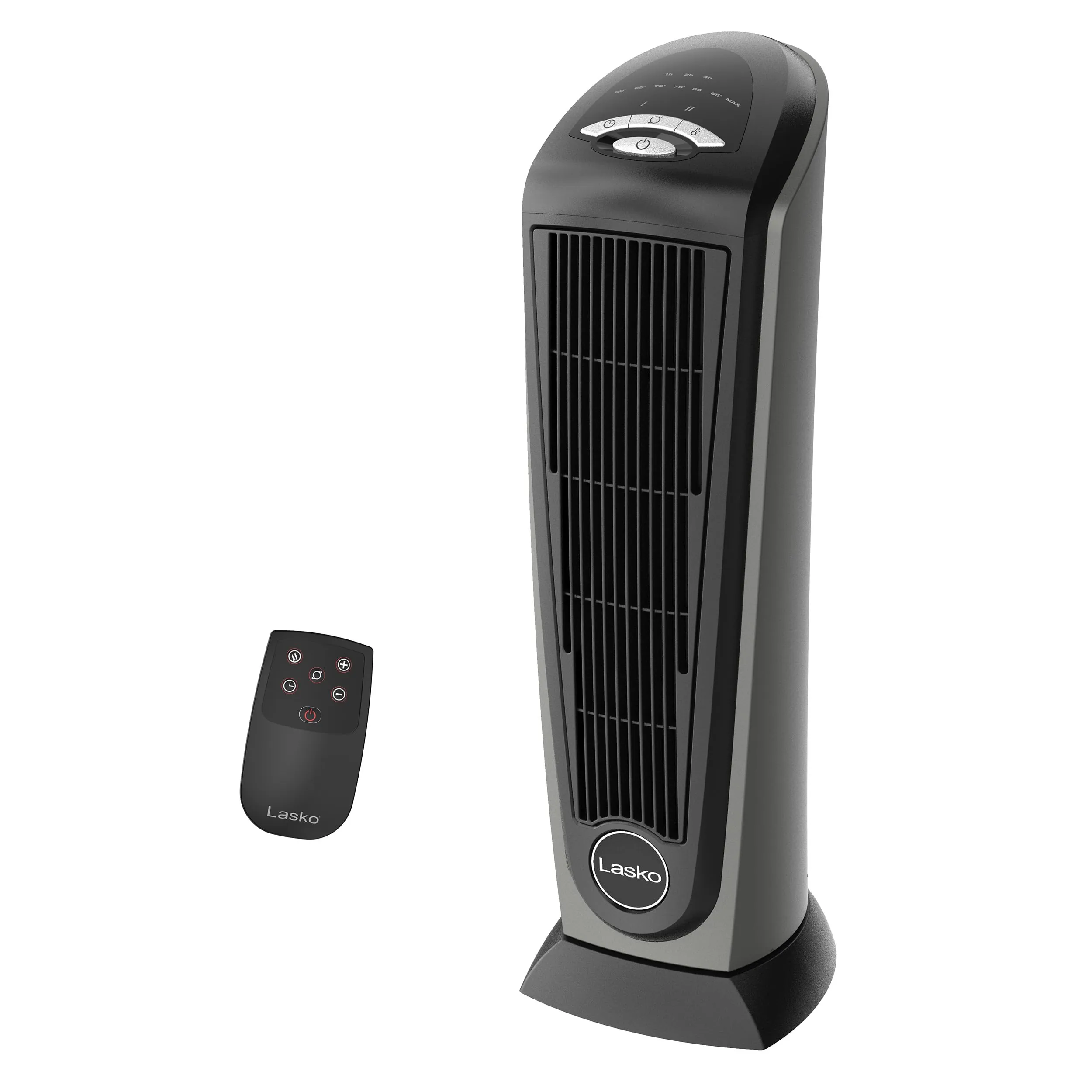
#1 Overall Winner
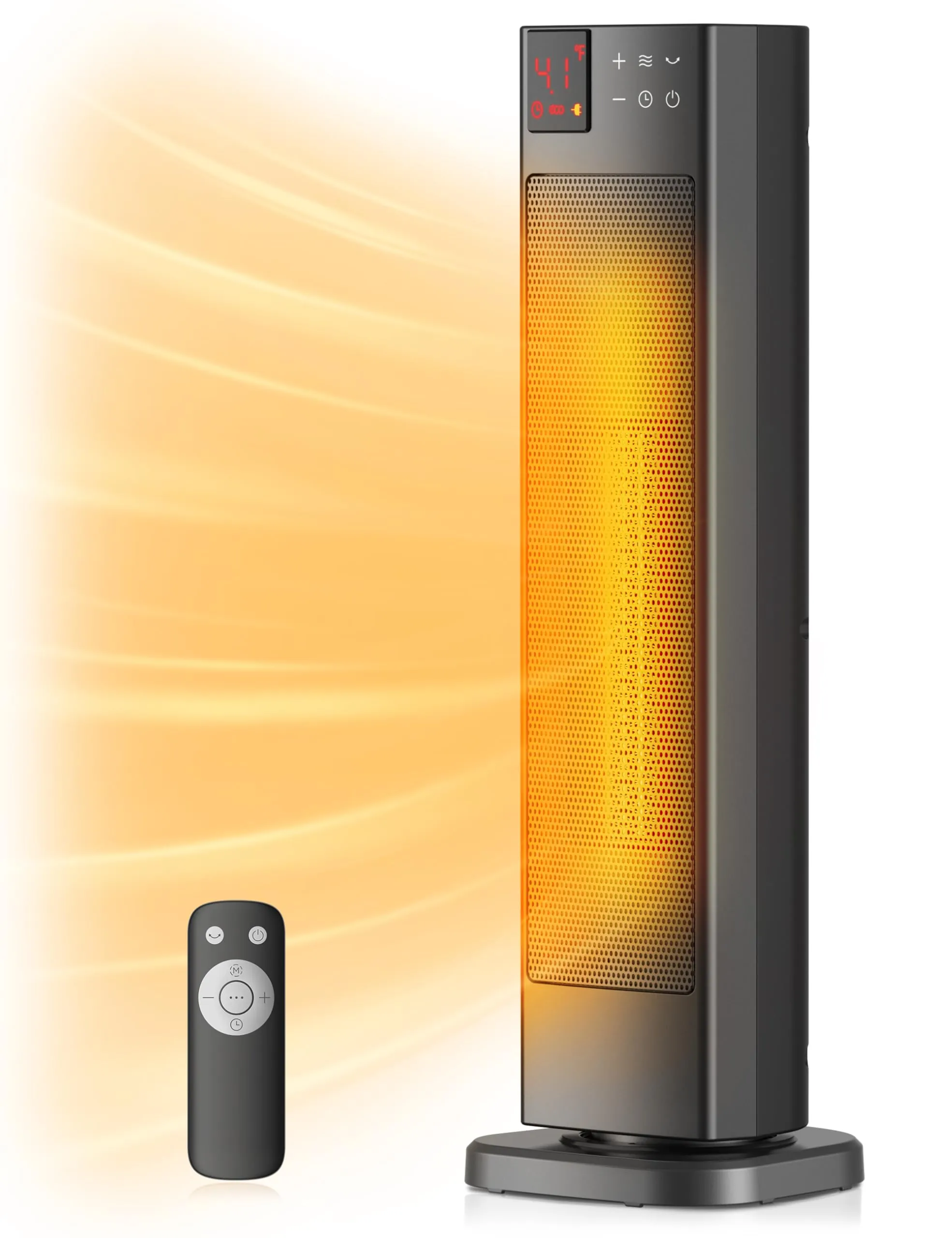
Lasko 1500W Ceramic Tower Space Heater with Remote, Thermostat, Timer & Widespread Oscillation, 751320
- Strong room-warming performance for small to medium spaces, with quick heat-up noted by many buyers
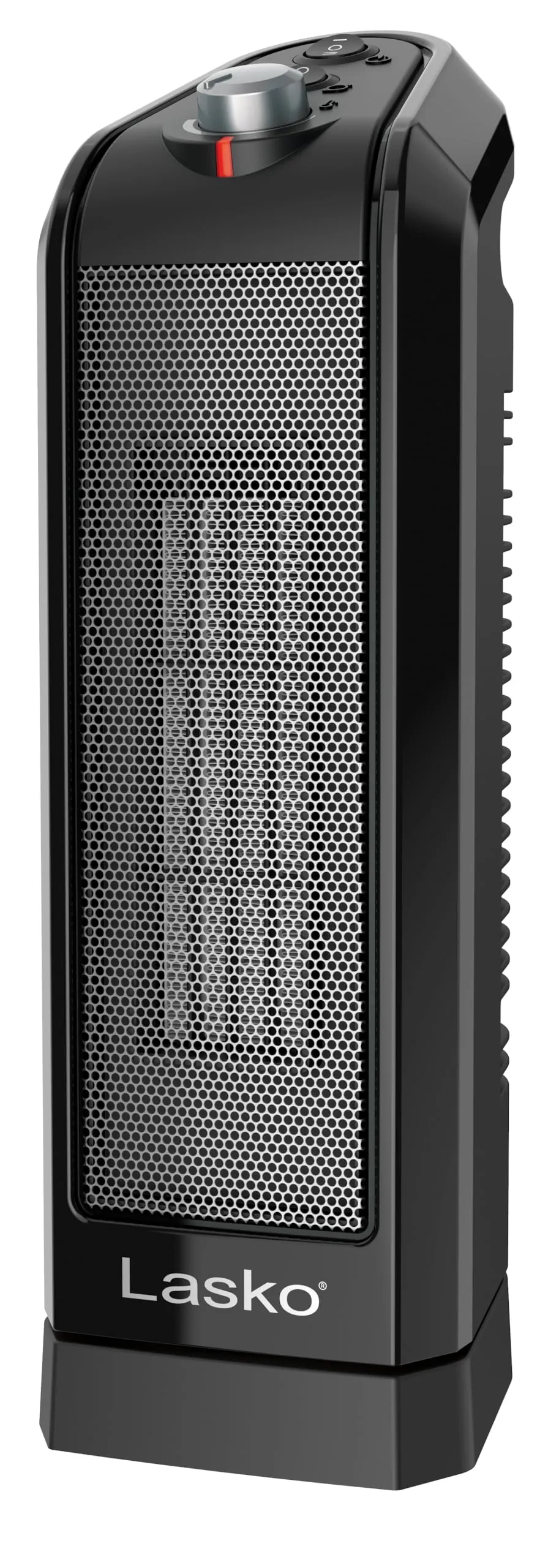
Comparison
The Lasko 751320 and Lasko CT16450 are both 1500W ceramic, oscillating space heaters built for targeted indoor room heating. The 751320 focuses on convenience features like a remote, programmable thermostat behavior, and a 1–7 hour timer, while the CT16450 prioritizes compact size and simple manual controls. Both have strong buyer ratings, but reviews for each mention some reliability concerns.
#1 Overall Winner
Contender
Choose the Lasko 751320 if you want a floor-standing tower heater with a remote and timer for bedroom or living room routines. Choose the Lasko CT16450 if you need a smaller heater for a desk or tight space and prefer manual controls, but take the tip-over shutoff concerns in reviews seriously when deciding where and how you’ll use it.
Overall winner
Depends on your needs
| Feature | Lasko 1500W Ceramic Tower Space Heater with Remote, Thermostat, Timer & Widespread Oscillation, 751320 | Lasko Oscillating Ceramic Tower Space Heater 1500W, CT16450 | Winner |
|---|---|---|---|
| Type / form factor | Tall ceramic tower heater (floor) | Compact ceramic tower (floor or tabletop) | Depends |
| Max heat output | 1500W | 1500W | Tie |
| Heat settings | High / Low + thermostat mode | High / Low (900W low listed) | Lasko 1500W Ceramic Tower Space Heater with Remote, Thermostat, Timer & Widespread Oscillation, 751320 |
| Thermostat style | Electronic/programmable thermostat (digital setpoints) | Manual thermostat dial | Depends |
| Timer | 1–7 hour auto-off timer | Not listed | Lasko 1500W Ceramic Tower Space Heater with Remote, Thermostat, Timer & Widespread Oscillation, 751320 |
| Remote control | Included remote (onboard storage) | Not listed | Lasko 1500W Ceramic Tower Space Heater with Remote, Thermostat, Timer & Widespread Oscillation, 751320 |
| Oscillation | Widespread oscillation | Widespread oscillation | Tie |
| Coverage (listed) | 150 sq ft | 150 sq ft | Tie |
| Noise (buyer sentiment + score) | Often described as quiet | Often described as very quiet | Tie |
| Safety notes from reviews | Safety features emphasized; cool-touch housing often praised | Tip-over shutoff reported missing/not working in reviews | Lasko 1500W Ceramic Tower Space Heater with Remote, Thermostat, Timer & Widespread Oscillation, 751320 |
| Portability | Very light, carry handle | Compact with carry handle | Tie |
| Warranty (provided data) | Not stated in provided data | 3-year limited warranty (listed) | Lasko Oscillating Ceramic Tower Space Heater 1500W, CT16450 |
| Customer satisfaction signals | Higher rating with very large review base | Strong rating with fewer reviews | Lasko 1500W Ceramic Tower Space Heater with Remote, Thermostat, Timer & Widespread Oscillation, 751320 |
| Best fit use-case | Bedroom/living room comfort with remote + timer | Desk-side or small-room spot heat with simple manual control | Depends |
For everyday home use, both models work best as supplemental heaters—warming a bedroom, office, or living area rather than trying to heat an entire house. The 751320 feels more “set-and-forget” thanks to its timer and remote, which suits bedtime and sofa use. The CT16450 is more of a grab-and-go heater for quick personal warmth in a small room, especially if you want a unit that can sit on a desk or countertop.
Both heaters are built for comfort in cooler seasons, with ceramic forced-air heat and oscillation to reduce cold spots. The 751320’s digital temperature range and timer can make it easier to maintain a steady feel in a bedroom overnight or during work hours. The CT16450 can deliver fast spot warmth in a small space, but some reviews mention the heat can feel directed low to the floor, which may affect comfort depending on where you sit or sleep.
In pure heating performance, both Lasko models are positioned to warm small to medium rooms quickly, and reviews support that they put out strong heat for their size. The 751320 has a slight edge for whole-room comfort because it pairs widespread oscillation with an electronic thermostat approach that many owners use to maintain set temperatures. The CT16450 is frequently described as surprisingly powerful for its compact height, but it’s more of a personal-area heater in practice, especially in larger rooms.
For both, real-world results will depend on insulation, drafts, and room layout. Reliability complaints (shutoffs or early failure) can also affect practical performance over time.
Reliability is the main caution area for both heaters. For the Lasko 751320, aggregated feedback and reviews mention units that stop working early or randomly turn off, even though many owners report consistent, strong performance over long use. For the CT16450, buyer sentiment is similarly split: plenty of reports of solid daily heating, but also complaints about sudden failure within months.
Given these patterns, it’s sensible to prioritize a retailer with straightforward returns and to test your heater thoroughly during the return window. Also avoid stressing the unit with blocked airflow or unsafe placement, which can trigger shutoffs.
Both models provide basic climate control for a single room: choose a heat level, adjust the thermostat, and optionally use oscillation to spread airflow. The 751320’s digital set temperature range (as listed) makes it easier to target a specific room temperature, though thermostat performance reviews are mixed. The CT16450’s manual thermostat dial is simpler but less specific—good for “warmer/less warm” control rather than a precise setpoint. If maintaining a consistent overnight temperature matters, 751320 is typically the better fit.
Both heaters list core safety features like overheat protection and cool-touch housing, which are important for everyday indoor use. The bigger safety separator comes from review feedback: multiple CT16450 reviewers state that tip-over shutoff is missing or does not work, and they report the heater continuing to output heat after falling. That’s a meaningful consideration in homes with pets, kids, or high-traffic walkways.
The 751320’s reviews more often emphasize peace-of-mind aspects (such as the housing staying cool), though it still needs careful placement with clear airflow and away from fabrics. For either heater, avoid extension cords unless the manufacturer explicitly allows them and keep the front grille unobstructed.
For overall comfort, the 751320 has the advantage of convenience features that support steady warmth: oscillation, electronic temperature selection, and a timer for bedtime routines. Reviews also commonly describe it as warming rooms quickly without being disruptive. The CT16450 can feel very comfortable for spot heating near your desk or chair, and many people like the simple thermostat dial. Comfort may depend more on placement with CT16450, since some feedback suggests the heat is directed lower to the floor.
Both heaters are generally easy to live with, but they appeal to different styles. The CT16450 is the simplest: it comes fully assembled and uses straightforward manual controls. The 751320 is also easy for most households, but it has more buttons and options (timer, thermostat mode, oscillation) plus a remote, which adds convenience once you learn the layout. If you want minimal interaction, CT16450 is simpler; if you want couch/bed control, 751320 is easier day to day.
The design choice mainly comes down to height and placement. The 751320 is taller and slim, designed to sit on the floor and push warm air at a more typical seated/standing level, with an electronic control panel and remote storage. The CT16450 is shorter and can fit on a desk, counter, or nightstand, which is useful in tight rooms. Some reviews mention CT16450’s heat can feel aimed low, so placement height can matter more with the shorter unit.
Both heaters list similar heating coverage (around 150 sq ft), so neither is intended to be a whole-house solution. The practical “capacity” difference is more about air distribution: the 751320’s taller tower format can feel better suited to spreading warmth across a typical bedroom or living room layout, while the CT16450’s compact height can work well for personal-area heating and smaller enclosed rooms.
Both models are space-friendly compared with bulkier heaters. The 751320 uses a slim tower footprint that tucks beside a bed, sofa, or desk without taking much floor area. The CT16450 is even easier to fit into tight homes because it can sit on a tabletop, counter, or nightstand, freeing floor space. If you’re in a small flat or a crowded office corner, CT16450 is usually easier to place, while 751320 is easier to keep as a dedicated floor unit.
Both heaters are often described as quiet, which matters for bedrooms and work calls. The 751320 is commonly reported as quiet enough for sleep, while the CT16450 gets praise for being much quieter than some older fan-forced heaters. You should still expect audible fan noise—especially on higher heat settings—but neither product is positioned as a high-noise heater based on the reviews provided.
Build quality feedback is broadly positive for both, with many buyers describing them as sturdy for the price. That said, each has mixed reliability and durability sentiment, which can be a sign that long-term consistency varies unit to unit. The 751320’s slim tower body and controls are often described as practical, while the CT16450’s compact casing is appreciated for portability. If you have pets or kids, pay attention to grille and placement, since the front area can still get hot during operation.
Long-term durability looks mixed across both products based on buyer feedback. Some owners of each heater report good longevity, while others report early breakdowns. The CT16450 includes an explicitly stated 3-year limited warranty in the listing, which can be meaningful if you keep proof of purchase and follow the claim process. With the 751320, durability comments range from “long time user” praise to reports of early failure, suggesting outcomes can vary.
Maintenance is fairly straightforward for both: keep the intake and grille clear of dust, ensure unobstructed airflow, and store the heater clean and dry when not in use. The 751320’s tower format can take a little more surface area to wipe down, but it also has features (like a timer) that may reduce unnecessary runtime. The CT16450’s smaller body is easy to move and clean around. Neither unit includes filters or water tanks, so ongoing maintenance is mostly basic housekeeping and safe storage.
Both heaters are easy to move between rooms thanks to their compact footprints and built-in handles. The 751320 is notably lightweight for a taller tower and is easy to reposition from bedroom to living room. The CT16450 is shorter and fits on more surfaces (tabletop or floor), which can make it feel even more portable in daily use, though it is heavier in the provided specs. If you routinely move a heater from desk to bedside, CT16450’s size can be the deciding factor.
The Lasko 751320 is clearly the more feature-rich heater: it includes a multi-function remote, widespread oscillation, a programmable thermostat style of control, and a 1–7 hour auto-off timer. Those features make it easier to run on a routine and fine-tune comfort without walking over to the unit.
The Lasko CT16450 keeps features minimal—two heat settings, oscillation, and a manual thermostat dial—aimed at people who want basic, immediate heat with no menus. It also explicitly includes a 3-year limited warranty in the listing.
Neither listing provides measured energy consumption beyond wattage, so efficiency is best judged by control style and how you’ll actually run it. The CT16450 has explicit low and high wattage settings and reviews that mention noticeable electricity cost when used frequently at higher power. The 751320’s thermostat mode and timer can help avoid unnecessary runtime if you use them consistently, but it’s still a 1500W heater at full output. For either model, using lower settings and targeted room heating can help manage running costs.
Value depends on how much you’ll use the extra features. The Lasko 751320 costs more, but it includes a remote, timer, and more advanced controls that can improve comfort and reduce hassle—especially in bedrooms and living rooms where you don’t want to keep getting up. The CT16450 is much cheaper in the provided pricing and still delivers quick, effective heat in reviews, which can make it attractive as a basic spot heater.
However, value is also affected by longevity and safety confidence. CT16450’s tip-over shutoff concerns and mixed durability feedback can change the value equation depending on your household, even with the lower purchase price.
Both products are from the same brand (Lasko), and the listings position the company as an established home-comfort maker. With that said, brand trust here is mostly shaped by customer sentiment: both heaters have many positive reviews, but both also have recurring reliability complaints. If brand support matters to you, note that only the CT16450 listing explicitly states a 3-year limited warranty, which can improve confidence if you need service.
Customer satisfaction is strong for both heaters, with the 751320 holding a higher average rating and a much larger review base. Across reviews, buyers consistently praise fast heat-up, good warmth for the stated room size, and generally quiet operation. The 751320 also gets frequent praise for its remote and oscillation, while CT16450 reviews highlight compact size and simplicity.
The main negative themes are also similar: mixed reliability and durability, including reports of sudden failure. For the CT16450, there’s an additional repeated complaint around the lack of tip-over shutoff, which can affect overall satisfaction for safety-focused households.
Only the Lasko CT16450 includes a clearly stated warranty in the provided information: a 3-year limited warranty. No warranty length or support details are provided for the Lasko 751320 here. If warranty coverage is important, confirm the exact terms (what’s covered, how claims work, and whether shipping is involved) before purchasing.
This comparison doesn’t produce a single clear winner for every home, but the Lasko 751320 is the more rounded choice for most bedrooms and living rooms because it combines strong heating, oscillation, a remote, and a timer that supports comfortable daily routines. Its main drawback is consistency: some owners report early failure or unexpected shutoffs, and thermostat feedback is mixed.
The Lasko CT16450 is a compelling low-cost, compact option that many buyers find quiet and effective for spot heating, and it includes a stated 3-year limited warranty. Its biggest limitation is safety confidence based on reviews reporting no tip-over shutoff, plus mixed durability feedback. Pick CT16450 for tight spaces and simple use; pick 751320 for convenience features and broader comfort.
Overall winner
Depends on your needs
Neither is a universal winner because they’re aimed at slightly different setups. The Lasko 751320 is better if you want remote control, a programmable thermostat mode, and a 1–7 hour timer. The Lasko CT16450 is better if you want a compact heater with very simple manual controls and an included 3-year limited warranty, but reviews raise concerns about tip-over shutoff.
The Lasko 751320 is usually the more bedroom-friendly option because it adds a timer for planned shutoff and lets you adjust settings with the remote without getting up. Both are often described as quiet, but buyer feedback on the 751320 also mentions steady comfort and easy control. As always, placement and keeping clearances matter for safe overnight use.
The CT16450 is the simplest: it arrives fully assembled and uses straightforward high/low heat settings with a manual thermostat dial. The 751320 is still considered easy to use, but it has more functions (remote, thermostat mode, timer), which adds a bit more to learn. If you want “plug in and turn a dial,” the CT16450 fits that style.
Both are commonly described as quiet in reviews, and neither appears positioned as a loud “workshop-only” heater. The CT16450 gets specific praise for being quieter than some older fan-forced heaters. The 751320 is frequently described as quiet enough for sleep on low and generally not disruptive. Noise perception will still vary by room acoustics and distance.
Yes—only the Lasko 751320 includes a 1–7 hour auto-off timer in the provided specs and listing details. The CT16450 does not list a timer feature and is positioned as a simpler, manual-control heater. If you rely on scheduled shutoff to warm a room before bed or while working, the 751320 has the clearer built-in advantage.
Reviews for the CT16450 specifically mention that tip-over shutoff appears missing or does not work as expected, with users reporting it can keep heating after a fall. The listing highlights overheat protection and cool-touch housing, but tip-over protection is a separate safety behavior. If tip-over shutoff is a must-have for your household, confirm it before buying.
The CT16450 tends to fit better in very tight spaces because it’s shorter and explicitly described as suitable for tabletop or desk use. The 751320 is still space-saving thanks to its slim tower design, but it’s more of a floor-standing heater meant to sit beside a bed, sofa, or desk. Your choice depends on whether you need a desk-height unit or a taller floor tower.
Yes. For the 751320, customer feedback includes reports of units stopping after one use or randomly turning off, alongside many positive long-term experiences. For the CT16450, reliability and durability feedback is also mixed, with some users reporting failures within about six months. If reliability is critical, consider buying from a retailer with easy returns and keep the box during the trial period.
Check our rankings and expert guides to find the best home lifestyle products for your goals.