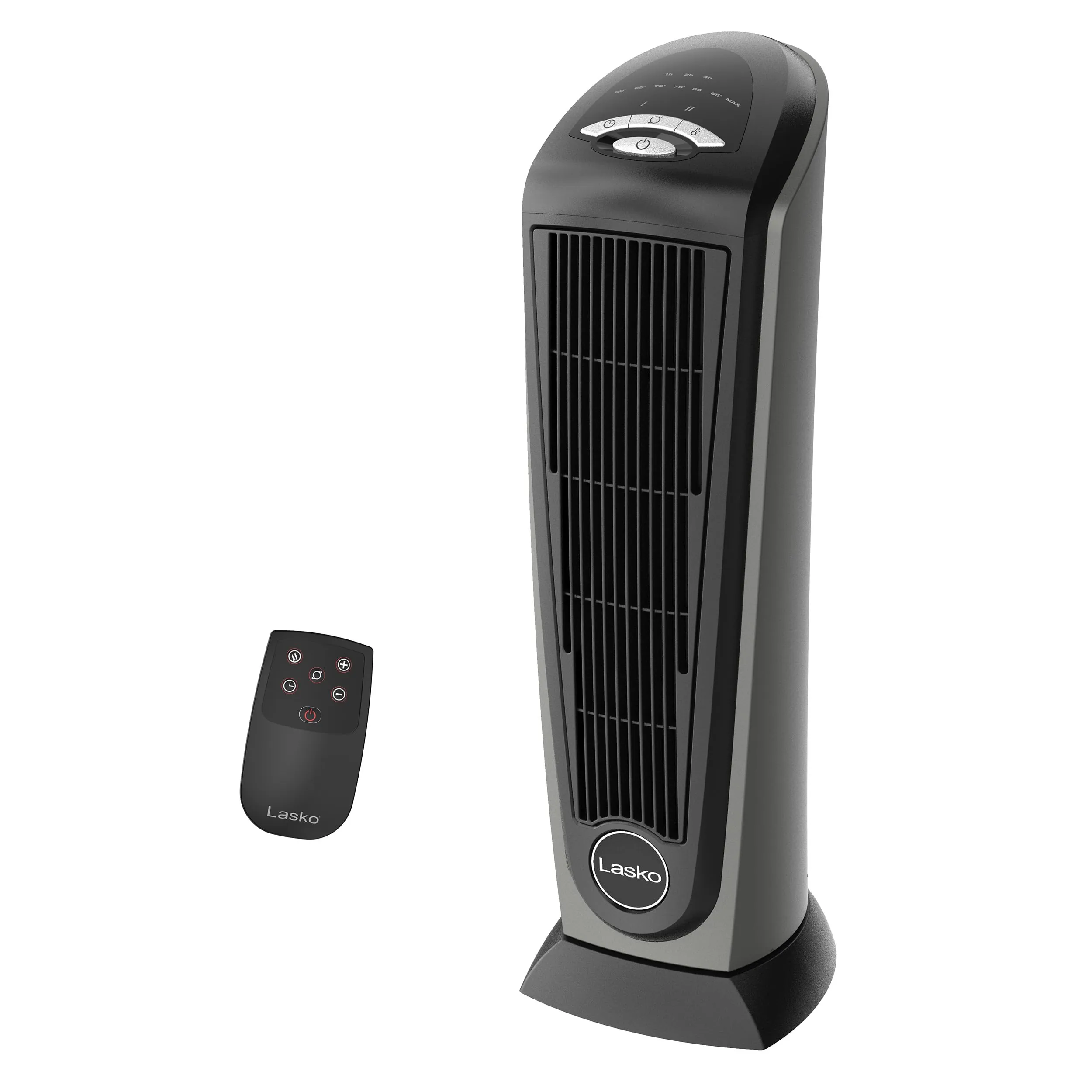
#1 Overall Winner
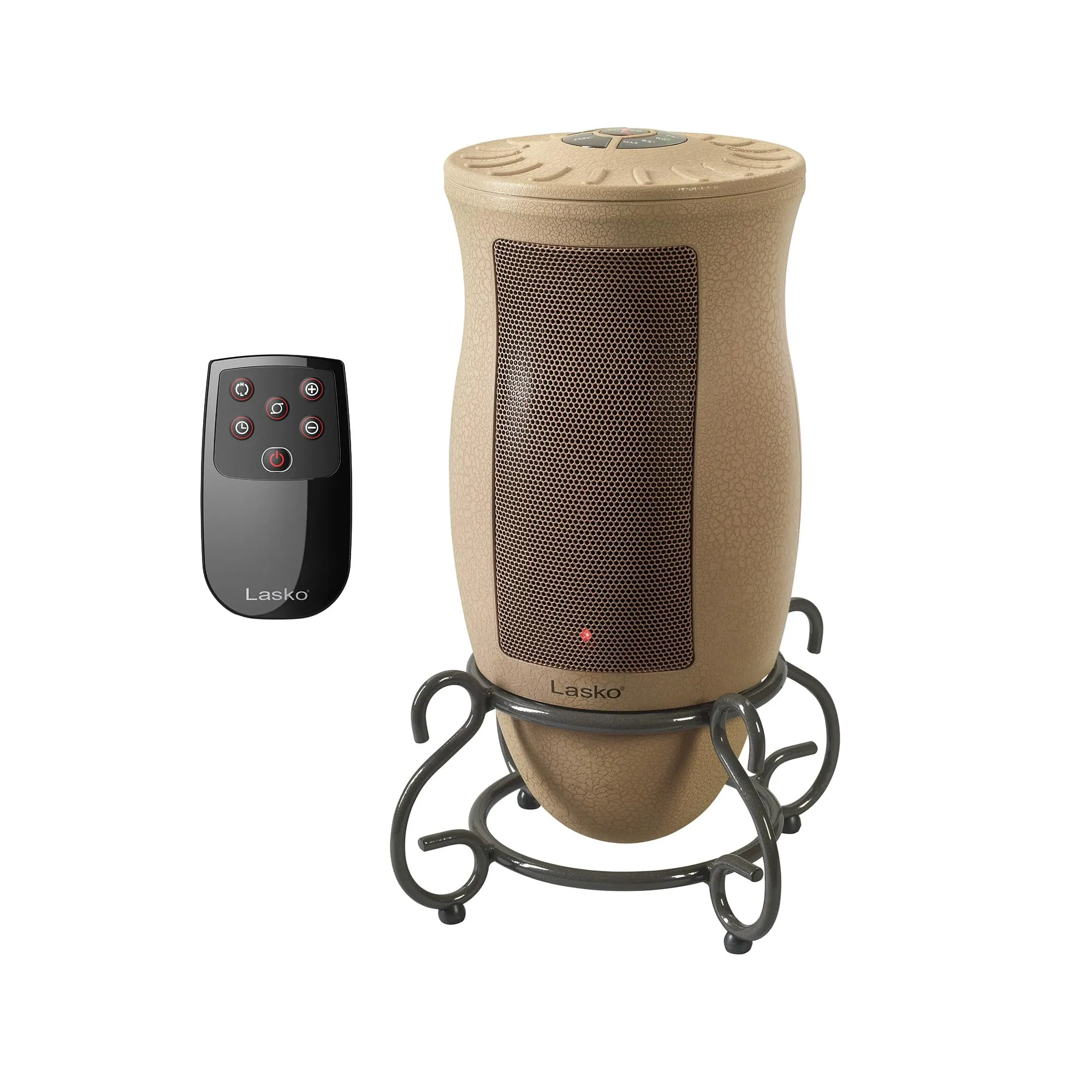
Lasko Oscillating Designer Ceramic Tower Space Heater 6435
- Strong small-room heating with an adjustable thermostat and forced-air ceramic heat
Comparison
The Lasko 6435 and Lasko CT16450 are compact ceramic tower space heaters designed to warm small rooms quickly with oscillating forced-air heat. The 6435 focuses on convenience with an electronic thermostat, timer, and remote, while the CT16450 keeps things simpler with manual controls and a smaller footprint. Both have strong heat output for their size, but reviews raise tip-over shutoff as a concern for each model.
#1 Overall Winner
Contender
Choose the Lasko 6435 if you want a compact heater with a timer and remote for bedroom or office comfort, and you value more consistently positive long-term feedback. Choose the Lasko CT16450 if you want the simplest controls and the smallest footprint at the lowest price. Both can heat a small room quickly, but both have reviews warning that they may not shut off if tipped over.
Overall winner
Depends on your needs
| Feature | Lasko Oscillating Designer Ceramic Tower Space Heater 6435 | Lasko Oscillating Ceramic Tower Space Heater CT16450 | Winner |
|---|---|---|---|
| Type / heating method | Ceramic forced-air tower heater | Ceramic forced-air tower heater | Tie |
| Max heat output | 1500W | 1500W | Tie |
| Heat settings | 2 settings (High/Low) | 2 settings (High/Low; 900W/1500W listed) | Tie |
| Thermostat type | Adjustable electronic thermostat (60–85°F listed) | Manual adjustable thermostat | Depends |
| Timer | 7-hour auto-off timer | Not listed | Lasko Oscillating Designer Ceramic Tower Space Heater 6435 |
| Remote control | Included | Not listed | Lasko Oscillating Designer Ceramic Tower Space Heater 6435 |
| Oscillation | Widespread oscillation | Widespread oscillation | Tie |
| Coverage (listed) | Up to 150 sq ft | Up to 150 sq ft | Tie |
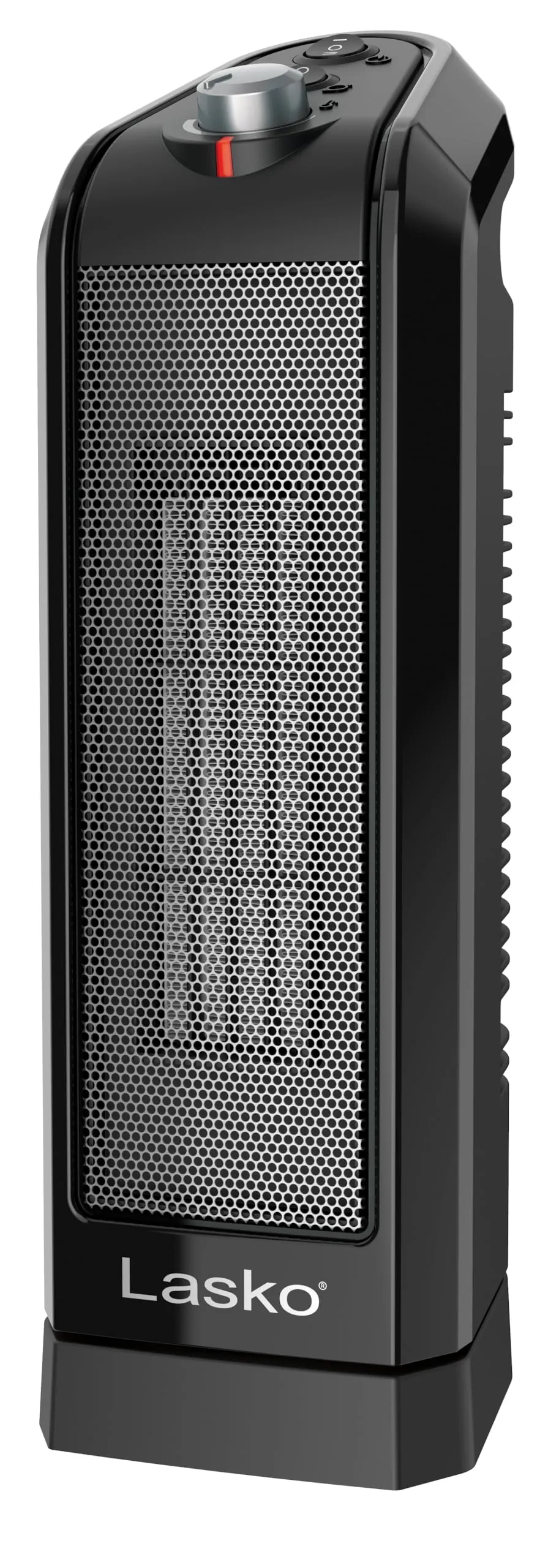
| Size / footprint | 8.25in x 8.25in base; 16.05in tall | Approx. 6.08in x 5.08in base; 15.7in tall | Lasko Oscillating Ceramic Tower Space Heater CT16450 |
| Weight / carry | 3 lb; portable | 3.97 lb; built-in carry handle | Depends |
| Noise (real-world use) | Often described as quiet | Often described as quiet; “much quieter” vs some older heaters | Tie |
| Safety (tip-over behavior in reviews) | No tip-over shutoff reported; may keep running when tipped | No tip-over shutoff reported; may keep running when tipped | Tie |
| Reliability feedback | More consistently positive over time | Mixed; some reports of failing within months | Lasko Oscillating Designer Ceramic Tower Space Heater 6435 |
| Price (provided listing) | $51.06 | $15.40 | Lasko Oscillating Ceramic Tower Space Heater CT16450 |
For typical home use—warming a bedroom, office, or a cold corner—both heaters can deliver fast, fan-driven warmth and can cycle heat using a thermostat. The difference is daily convenience. The Lasko 6435 is easier to live with if you want to set a timer for evenings or adjust settings from bed using the remote. The CT16450 is better for quick, manual “turn it on and warm up” use, especially when you want to move the heater between rooms.
Both heaters are designed for supplemental winter comfort in small rooms, using oscillation to reduce cold spots and a thermostat to avoid constant full-power running. Reviews for both models suggest they can take the chill out quickly and maintain a comfortable temperature in spaces like bedrooms and offices. If you want more hands-off comfort (timer + remote), the 6435 fits better. If you mainly want fast directed heat in your immediate area, the CT16450’s compact, easy-to-move design can be more practical.
In terms of core heating ability, both models look strong for their size: each is rated to 1500W and is repeatedly described as heating small rooms quickly. The Lasko 6435 gets particularly consistent feedback around maintaining set temperature via thermostat cycling and spreading warmth with oscillation. The CT16450 also earns praise for quick heat and solid output on both settings, though it’s more often described as best for personal-area or small-room heating rather than large open spaces. Real-world performance will still depend on insulation, drafts, and how large your room feels compared with the stated coverage.
The Lasko 6435 has stronger reliability signals in the provided feedback, including multi-year use without service issues and generally consistent satisfaction across many reviews. The CT16450’s reliability is more variable: while many buyers report good performance, the aggregated review summary notes mixed durability, including reports of units suddenly stopping or breaking within about six months. If you’re buying for daily winter use, that consistency gap matters. For occasional or backup heating, the CT16450’s lower entry cost may offset the risk for some households.
Both models provide thermostat-based heat control rather than fixed continuous output, which helps stabilize room comfort once warmed. The 6435’s electronic set temperature range is specified, and reviews describe it cycling within a small band around the target. The CT16450 uses a manual thermostat dial, which can be effective but may take a bit more trial-and-error to find the exact comfort point in your room. If you want more repeatable temperature targeting, the 6435 is the safer bet.
Both heaters list overheat protection and cool-touch exteriors, which are helpful baseline safety features for a fan-forced ceramic heater. However, reviews for both models raise a meaningful concern: they may not shut off if tipped over. That matters in homes with pets, children, or unstable placements (like elevated surfaces or high-traffic areas). If you choose either model, prioritize stable placement on a flat surface, maintain clear space around the heater, and avoid running it unattended in situations where it could be knocked over. Also follow typical space-heater guidance from the listing, such as plugging directly into a wall outlet rather than using an extension cord.
Comfort is similar overall: quick warm air, thermostat-controlled cycling, and oscillation to reduce hot/cold spots. The 6435 can feel more “hands-off” comfortable because the timer and remote make it easier to tailor heat to bedtime or desk sessions without getting up. The CT16450’s comfort advantage is immediacy and simplicity—easy to aim at your seating area and adjust quickly. If you’re sensitive to dryness or blown-air heat, both are forced-air designs, so placement and runtime management matter.
Both heaters are sold as fully assembled, so setup is mainly placement and plugging in. The CT16450 is especially straightforward thanks to manual controls that many users find refreshingly simple. The 6435 is still easy to operate, but reviews suggest there can be a short learning curve, and some users find the remote’s icon-only buttons harder to read. If you value “no fuss,” CT16450 has the edge; if you value remote/timer convenience, 6435 is easier in daily routines.
The 6435 prioritizes a décor-friendly “designer” look with a wider base and top-mounted controls, making it easy to adjust while standing over it. The CT16450 is more utilitarian and notably narrower, which helps on desks, nightstands, or tight floor spots. If you care about blending into a living space, the 6435 has the stronger aesthetic appeal. If you care most about a small footprint and easy moving, the CT16450’s shape and carry handle are more convenient.
Both heaters list coverage around 150 square feet, which aligns with typical small bedrooms, offices, and enclosed porches. In practice, either can struggle in larger or very drafty spaces, where you may get best results by using it as spot heat near where you sit rather than expecting whole-room warmth. If your room is near the top end of that range (or has lots of windows), oscillation helps, but placement and insulation will still make the biggest difference.
Space efficiency is a strength for both models, but the CT16450 is the more compact footprint option, especially for desks, nightstands, or tight floor areas. The 6435 still fits easily in small rooms and is sized to be unobtrusive, but it has a larger base. If you’re furnishing a small apartment or a crowded home office, CT16450 wins on pure footprint; if you’re placing it in a visible living space, 6435’s more decorative design may feel like a better fit.
Both models are commonly described as quiet for a ceramic fan heater, making them workable for bedrooms and offices where constant fan roar would be distracting. The CT16450 is even described as much quieter than some older fan-forced heaters. That said, both still rely on airflow, so you should expect some fan sound, especially on High and when oscillation is running.
The Lasko 6435 is often described as well-designed and sturdy enough for regular use, and some buyers appreciate that it feels more substantial than typical plastic heaters (though reviews also note plastic construction). The CT16450 receives more mixed durability commentary overall, including reports of units failing earlier than expected. Both are lightweight portable towers, so neither should be treated like a heavy-duty workshop heater, but the 6435 appears to inspire more consistent confidence from buyers.
Neither heater is positioned as heavy-duty, but long-term user feedback is more reassuring for the 6435, with reports of it continuing to work well over multiple seasons. For the CT16450, durability feedback is mixed: some owners say it has lasted for years (even with drops), while others report early failure. If you expect frequent moves between rooms or daily winter runtime, the 6435 looks like the safer durability bet based on the data provided.
Maintenance is similar for both: keeping the intake/outlet areas clear and periodically removing dust so airflow stays consistent. The 6435 gets positive comments about being easy to remove dust from, which can help with smell and performance over time. The CT16450 doesn’t list special cleaning features either, so expect basic wipe-down and careful vacuuming around vents (with the unit unplugged and fully cool). Neither model lists user-replaceable filters, so upkeep is mostly about cleanliness and safe storage.
Both heaters are light and designed to be moved as needed. The 6435 is lighter on paper, which helps for quick repositioning between a bedroom and office. The CT16450 is slightly heavier but adds a built-in carry handle and a narrower profile that makes it easier to grab and stash. If you move your heater frequently during the day, CT16450’s handle is a practical advantage; if you want the lightest lift, 6435 has the edge.
The Lasko 6435 is the more feature-rich option: it includes electronic controls, a 7-hour timer, and a remote, alongside oscillation and an adjustable thermostat. That combination is useful for bedtime use, working sessions, or anyone who wants predictable shutoff. The CT16450 focuses on essentials—two heat settings, oscillation, and a manual thermostat—plus a built-in carry handle. If you want fewer buttons and no remote, CT16450 is simpler; if you want more convenience features, 6435 is the clear winner.
Both are high-wattage electric resistance heaters at full power, so operating cost is largely determined by your electricity rate and how often the thermostat cycles. The CT16450 gets specific feedback about higher running costs when used frequently, and one reviewer explicitly highlights the expense at higher settings. The 6435’s thermostat cycling is described in detail by a long-term user, suggesting it may run in shorter cycles once a room is up to temperature. If cost is critical, plan to use Low when possible and heat only the space you occupy.
At the provided prices, the CT16450 is the clear budget play, delivering fast ceramic heat and oscillation for a very low upfront cost. The trade-off is fewer convenience features (no timer/remote listed) and more mixed reliability feedback, which can reduce value if you need it to run daily through winter. The 6435 costs more, but it bundles features that can materially improve day-to-day use (timer, remote, electronic controls) and it shows stronger overall customer satisfaction. If you’ll use the timer/remote regularly, 6435 can justify the premium; if you need a basic backup heater, CT16450 may be enough.
Both heaters come from Lasko, and both listings position the brand as established in home comfort. In the provided data, brand trust is broadly similar between the two models. The more meaningful distinction comes from model-level buyer feedback: the 6435 has more consistent long-term satisfaction, while the CT16450 has more variability in reliability reports. If brand confidence is important, weigh the specific model’s track record, not just the name on the front.
Both models are well reviewed overall, but the Lasko 6435 stands out with a higher star rating and a very large review count, with repeated praise for quick heating, compact size, quiet operation, and the usefulness of the timer/thermostat/remote combination. The CT16450 also has strong volume and generally positive feedback on heating speed and quietness, but its aggregated sentiment is more mixed on durability and value, with some users reporting early failure. If you want the safer bet based on buyer sentiment, the 6435 is ahead.
Both listings state a 3-year limited warranty and note that the heaters arrive fully assembled. Beyond that, the provided information doesn’t include detailed support experiences or claim handling outcomes. If warranty service matters to you, it’s worth checking the current warranty terms, what’s required for a claim, and whether replacement parts (like remotes) are available for your specific model.
The Lasko 6435 is the better overall pick for most households: it combines strong small-room heating with the convenience features people actually use (timer, thermostat control, oscillation, and remote), and its customer feedback is more consistently positive. Its biggest limitation is safety-related—reviews explicitly warn it may not shut off if tipped over—so it needs stable placement and careful use.
The Lasko CT16450 is a compelling budget alternative with fast heat, a small footprint, and simple manual operation, but it gives up the timer/remote and has more mixed durability reports. If you want a more dependable, feature-complete heater for daily winter use, choose the 6435; if you want basic spot heat for minimal upfront cost, the CT16450 can fit—provided you’re comfortable with the reliability trade-off.

Overall winner
Depends on your needs
If you want more convenience features, the Lasko 6435 is the stronger all-round pick because it adds an electronic thermostat, timer, and remote, and buyer sentiment is more consistently positive. The Lasko CT16450 can make sense if you want a very simple, low-cost heater with manual controls and easy portability, but reviews are more mixed on long-term reliability.
Based on the provided reviews, tip-over shutoff is a concern for both models. Reviews for the Lasko 6435 explicitly state it does not turn off when tipped. Reviews for the Lasko CT16450 also mention it may continue heating if it falls over. If tip-over protection is a must-have for your household, this is a key point to verify before buying.
The CT16450 is generally simpler for quick use because it relies on straightforward manual controls and avoids remote-driven menus. The 6435 adds a timer, thermostat controls, and a remote, which can be convenient once learned, but some buyers mention the remote icons can be hard to see and the controls may feel a little confusing at first.
Both are described as relatively quiet for ceramic fan heaters and both include thermostatic control to cycle heat. The Lasko 6435 has an advantage for bedroom routines because it includes a built-in timer and remote so you can adjust settings without getting up. If you’re sensitive to lights, note that the CT16450 has a front red light mentioned in reviews.
Both are compact tower heaters designed for small-room supplemental heat, but the CT16450’s narrower footprint and carry handle make it especially convenient for moving between a desk, bedside, and other tight spots. The 6435 is also lightweight and easy to place, and it may suit small spaces better when you specifically want remote control and a timer.
Yes. Both models list oscillation to help distribute warm air and both provide thermostat control for cycling on and off around a target comfort level. The main difference is how you control those functions: the 6435 uses electronic top-mounted controls and includes a remote, while the CT16450 uses simpler manual controls.
Based on the provided summaries and reviews, the Lasko 6435 has more consistently positive feedback about ongoing performance, including users reporting multi-year use without problems. The CT16450 has mixed reliability and durability feedback, with some owners saying it works well and others reporting it stops working or breaks within months.
The CT16450 is dramatically cheaper in the provided listing, which can make it appealing for basic, occasional spot heating. The 6435 costs more, but it adds practical features (timer and remote) and has stronger overall buyer satisfaction in the data provided. Value depends on whether you’ll use those convenience features and how much you prioritize consistent reliability.
Check our rankings and expert guides to find the best home lifestyle products for your goals.