
#1 Overall Winner
Amazon Smart Plug, Works with Alexa, Simple Setup, Endless Possibilities (2-Pack)
- Very smooth setup for most users inside the Alexa app
Comparison
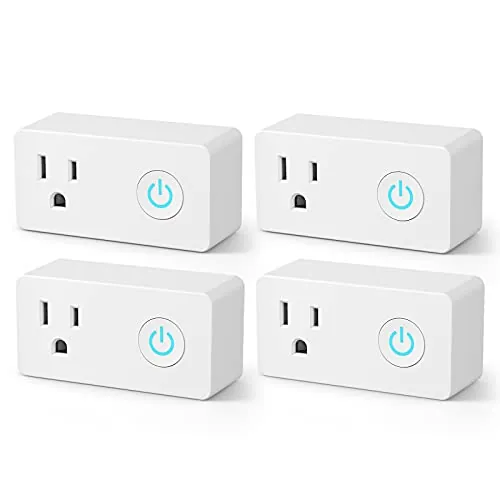
The Amazon Smart Plug (2-pack) and the BN-LINK WiFi Heavy Duty Smart Plug (4-pack) both add voice and app control to everyday devices like lamps and fans. Amazon’s plug leans toward the simplest Alexa-first setup and more consistent reliability, while BN-LINK focuses on getting more outlets for less money and adding Google Assistant compatibility. The best choice typically comes down to ecosystem (Alexa vs Google) and how much you value consistency versus upfront savings.
#1 Overall Winner
Contender
Choose the Amazon Smart Plug if you want the smoothest Alexa integration and the strongest reliability trend for routines like lamps, holiday lights, or baby monitor power control. Choose BN-LINK if you need a budget-friendly 4-pack and want Google Assistant support too—just be prepared for a more app-dependent setup and more mixed connectivity feedback.
Overall winner
Depends on your needs
| Feature | Amazon Smart Plug, Works with Alexa, Simple Setup, Endless Possibilities (2-Pack) | BN-LINK WiFi Heavy Duty Smart Plug Outlet, No Hub Required with Timer Function, White, Compatible with Alexa and Google Assistant, 2.4 Ghz Network Only (4 Pack) | Winner |
|---|---|---|---|
| Category | Wi‑Fi smart plug (2-pack) | Wi‑Fi smart plug (4-pack) | Depends |
| Voice assistant support (as provided) | Alexa-focused | Alexa + Google Assistant | BN-LINK WiFi Heavy Duty Smart Plug Outlet, No Hub Required with Timer Function, White, Compatible with Alexa and Google Assistant, 2.4 Ghz Network Only (4 Pack) |
| Setup experience trend | Usually fast in Alexa app; occasional detection hiccup | App-based setup; some pairing friction reported | Amazon Smart Plug, Works with Alexa, Simple Setup, Endless Possibilities (2-Pack) |
| Connectivity stability trend | Strong, stable once paired | Mixed; some connectivity issues reported | Amazon Smart Plug, Works with Alexa, Simple Setup, Endless Possibilities (2-Pack) |
| Reliability trend | Consistently reliable feedback | Mixed reliability feedback | Amazon Smart Plug, Works with Alexa, Simple Setup, Endless Possibilities (2-Pack) |
| App experience | Primarily Alexa app workflow | Smart Life/BN-LINK app; reports of ads/notifications and confusing instructions | Amazon Smart Plug, Works with Alexa, Simple Setup, Endless Possibilities (2-Pack) |
| Automation & routines | Strong Alexa routines support | Timers/schedules; voice routines supported (Alexa/Google) | Depends |
| Physical outlet fit | Compact; often doesn’t block adjacent socket | Can block adjacent outlets on some power strips | Amazon Smart Plug, Works with Alexa, Simple Setup, Endless Possibilities (2-Pack) |
| Indicator light/bedroom suitability | No specific complaint noted | LED light reported as annoying and not disableable | Amazon Smart Plug, Works with Alexa, Simple Setup, Endless Possibilities (2-Pack) |
| Pack value | 2 plugs for the price | 4 plugs for the price | BN-LINK WiFi Heavy Duty Smart Plug Outlet, No Hub Required with Timer Function, White, Compatible with Alexa and Google Assistant, 2.4 Ghz Network Only (4 Pack) |
| Electrical rating clarity | Not provided in the data | 15A, 125V, 1875W (ETL listed) | BN-LINK WiFi Heavy Duty Smart Plug Outlet, No Hub Required with Timer Function, White, Compatible with Alexa and Google Assistant, 2.4 Ghz Network Only (4 Pack) |
| Customer satisfaction signal | Very high rating with very large review base | Good rating with smaller review base | Amazon Smart Plug, Works with Alexa, Simple Setup, Endless Possibilities (2-Pack) |
For everyday home routines—like turning on lamps at dusk, controlling fans, or switching seasonal décor—both products cover the basics. The Amazon Smart Plug is the more straightforward option in an Echo home because it’s centered on Alexa control and tends to be less fussy once installed. BN-LINK can make sense when you want to automate many outlets at once for low cost or you’re running Google Assistant, but it may take a bit more patience to set up and keep stable in some networks.
Neither plug directly changes heating or cooling on its own, but both can support comfort routines by powering devices like fans, humidifiers, or lamps on schedules. Amazon’s reliability trend makes it the safer choice for comfort automations you want to run every day without troubleshooting. BN-LINK can do similar schedules and supports voice control across Alexa/Google, but connectivity and app friction may matter more if you rely on it nightly in a bedroom.
Both smart plugs aim to do one main job well: reliably switching power for connected devices on command or on schedule. The Amazon Smart Plug looks stronger for consistent switching performance and dependable everyday use, supported by very positive user feedback and high reliability/connectivity scoring. BN-LINK performs well for many buyers and offers practical timer use, but the overall picture is more variable—some users report great operation and reconnection, while others mention connectivity problems and unreliable behavior.
Amazon Smart Plug shows a stronger reliability pattern in the provided data: multiple users describe consistent operation over time and fewer headaches compared with other brands. BN-LINK reliability is more uneven. Some owners report solid performance, quick reconnection after Wi‑Fi/power interruptions, and stable routines, while others describe connectivity issues and unreliable behavior. If the plug will power something you depend on for daily routines, Amazon is the lower-risk choice.
Both plugs can support simple climate-related routines by powering compatible devices such as fans or humidifiers on a schedule. BN-LINK reviews describe using it to control fans based on time/routine setups, and it’s positioned for broad voice control. However, Amazon’s more consistent reliability signal makes it the safer choice when you want a nightly routine to run without interruption.
BN-LINK provides clearer safety-related listing details, including an ETL certification claim and a stated electrical rating (15A/125V/1875W). Amazon’s listing details in the provided data do not include equivalent electrical rating or certification information, so it’s harder to compare on paper. Regardless of brand, use smart plugs only within their rated limits and be cautious with high-draw appliances (one reviewer specifically avoided using them for heaters). If you need a plug for higher-load use, verify ratings and match them to the device you plan to control.
Comfort here is mostly about convenience: lights and devices responding reliably, especially at night or during routines. Amazon Smart Plug tends to deliver a smoother, more predictable experience in Alexa homes, which can make daily habits feel more automatic. BN-LINK can provide similar convenience, particularly with timers and Google Home routines, but the comfort advantage depends on whether your network and setup avoid the connectivity and app-friction issues some buyers report.
Amazon Smart Plug is generally easier for Alexa households because setup often happens directly in the Alexa app with minimal steps, and ongoing use is straightforward. BN-LINK can be easy once you learn the process, but reviews mention confusing or incorrect instructions, occasional pairing workarounds, and the need to manage settings through Smart Life/BN-LINK before (or alongside) voice assistants.
Amazon Smart Plug’s design is more outlet-friendly in typical use, with buyers noting it fits securely and usually doesn’t block the second socket. BN-LINK’s plugs work well on wall outlets but can be wider on power strips and may cover adjacent receptacles in tighter layouts. One BN-LINK review also mentions an always-on light that can be distracting in dark bedrooms.
Capacity mainly comes down to how many controlled outlets you get in one purchase. Amazon’s option is a 2-pack, which can suit smaller setups or a couple of key devices. BN-LINK’s 4-pack is better for expanding automation across multiple lamps or rooms at once, especially if you’re just starting to add smart control throughout the home.
Amazon Smart Plug is the more space-efficient option for tight outlets and small-room layouts, since user feedback highlights that it often doesn’t block adjacent sockets. BN-LINK’s plugs can be fine on standard wall outlets, but they may reduce usable outlets on some power strips and have a visible light that can be distracting in bedrooms. For compact flats and crowded surge protectors, Amazon is typically easier to live with.
Neither product is meaningfully “noisy” in normal use, but BN-LINK users mention a small clicking sound when switching on/off, which some find helpful confirmation. Amazon Smart Plug doesn’t have notable noise complaints in the provided reviews. For bedrooms, the bigger issue noted is BN-LINK’s visible light rather than sound.
Both are plug-in devices with no tools required, but setup complexity differs. Amazon Smart Plug is typically faster to “install” in an Alexa home, though one review notes occasional manual steps (like scanning a code) if auto-detection doesn’t trigger. BN-LINK setup generally involves putting each plug into pairing mode, adding it in an app, then linking it to Alexa/Google, with some users reporting workarounds when adding multiple plugs.
Both products are basic plug-in adapters, but the overall build-quality signal is stronger for the Amazon Smart Plug based on scoring and broad buyer sentiment. BN-LINK is often described as good for the price, yet its long-term sturdiness and consistency are less certain from the mixed reliability/durability feedback. If you expect frequent use and want fewer doubts about consistency, Amazon has the edge here.
Long-term durability is difficult to confirm from listings alone, but the overall durability signal is stronger for the Amazon Smart Plug based on scoring and broad buyer sentiment. BN-LINK buyers often like the product for the price, yet several comments highlight uncertainty about how long it will last and a more mixed reliability profile. For long-term, heavy everyday switching, Amazon appears more dependable.
Smart plugs require minimal physical maintenance, but “maintenance” often means dealing with apps, reconnecting Wi‑Fi, and managing routines. Amazon Smart Plug tends to be lower-maintenance because it’s commonly controlled directly in Alexa and has fewer reported connectivity hassles. BN-LINK may require more attention if you encounter pairing issues, need to manage notifications in the companion app, or have to re-link devices after changes to your Wi‑Fi setup.
Both are highly portable because they simply plug into any suitable outlet and can be moved room to room. Amazon’s compact design makes it especially easy to relocate without disrupting nearby sockets. BN-LINK is still portable, but its bulk can be more noticeable on crowded power strips, which may affect where you choose to use it.
BN-LINK’s feature set is broader on paper for mixed ecosystems, with listed Alexa and Google Assistant compatibility, app control from anywhere, scheduling/timers, grouping, and sharing control. Amazon Smart Plug focuses more narrowly on Alexa-first voice control and routines with a streamlined experience. If you want the fewest moving parts and primarily use Alexa, Amazon’s approach can feel cleaner; if you want more outlets and Google support, BN-LINK’s feature mix may fit better.
Amazon Smart Plug is typically managed through the Alexa app, which reduces the need for an extra third-party app and can simplify routines and naming. BN-LINK commonly involves Smart Life/BN-LINK app setup and then linking to Alexa/Google; reviews mention confusing steps, incorrect instructions, and daily ad notifications (which some users disable). If you want the simplest software experience, Amazon is usually easier.
Amazon Smart Plug is the more “native” choice for Alexa-centric smart homes, with routines and voice commands being the main strength. BN-LINK is more flexible if your home uses Google Assistant or you want cross-platform voice control, and it supports grouping/sharing controls through its app. The trade-off is that Amazon tends to feel more seamless inside Alexa, while BN-LINK may require more app involvement and can be less consistent depending on the household network.
Amazon Smart Plug is optimized for Alexa automation, making it easier to create routines and manage devices in a single ecosystem. BN-LINK is more versatile for mixed homes thanks to Alexa and Google Assistant support and sharing/grouping features through its app. If your priority is reliability and minimal setup complexity, Amazon is usually the better smart-home “building block.” If your priority is expanding control across many outlets at low cost, BN-LINK can be compelling.
Both support automation through schedules and voice-assistant routines. Amazon’s strength is Alexa routines that tend to “just work” once set up. BN-LINK supports timers and can be used in Google Home routines as well, which is useful for Google-first households. The practical difference is consistency: Amazon is the safer bet for hands-off automation, while BN-LINK offers flexibility with a higher chance of troubleshooting.
Both products rely on Wi‑Fi, and BN-LINK is explicitly limited to 2.4 GHz networks. Amazon’s connectivity trend is stronger based on scoring and reviews that emphasize stable, problem-free use once paired. BN-LINK connectivity is more dependent on household conditions, with some users reporting quick reconnection after outages and others reporting dropouts or trouble pairing additional plugs.
Neither listing provides detailed energy-use data for the plug itself, so efficiency is mostly about practical operation: stable connections, effective scheduling, and avoiding wasted “always on” devices. Both support timers/schedules that can reduce unnecessary runtime for lights and small appliances. Amazon’s stronger reliability trend can indirectly improve efficiency by making schedules more dependable, while BN-LINK’s mixed connectivity could lead to occasional missed schedules in some homes.
Privacy and data security can differ depending on which app ecosystem you rely on. Amazon Smart Plug is Alexa-centric, while BN-LINK commonly uses Smart Life/BN-LINK app plus voice-assistant linking; that can mean more accounts, permissions, and notifications to manage. The provided scores indicate weaker privacy/data-security signals for both products compared with their convenience-focused strengths, so it’s worth reviewing app permissions and notification settings during setup.
BN-LINK offers stronger value if you’re trying to automate many outlets at once, since a 4-pack at a lower price can quickly expand coverage across multiple rooms. Amazon Smart Plug costs more per outlet, but it can still be good value for Alexa households that prioritize reliability, smoother setup, and fewer app hassles—especially if you don’t want to troubleshoot connectivity. In practice, the “best value” depends on whether you’d rather pay less upfront (BN-LINK) or reduce the risk of inconsistent behavior (Amazon).
Amazon Smart Plug benefits from strong buyer confidence and consistently positive feedback at very large scale, which supports trust in day-to-day use and ongoing compatibility inside Alexa. BN-LINK is well-liked as a cost-effective alternative, but the provided data shows more mixed reliability/app feedback and a weaker brand-trust signal overall. If you want the most predictable experience over time, Amazon appears more reassuring.
Amazon Smart Plug shows extremely strong customer satisfaction with a very high star rating and an exceptionally large review count, and the sample reviews highlight reliability and ease of setup. BN-LINK has a solid rating and many positive reviews focused on value and timer usefulness, but satisfaction is more mixed due to recurring comments about connectivity issues, pairing friction for additional plugs, and app annoyances such as notifications and confusing instructions.
Warranty and support details aren’t clearly provided for either product in the supplied data. If support is important to you, check the warranty terms, return window, and whether replacement units are easy to obtain. Also consider how dependent the plug is on a companion app and whether that app receives updates, since software support can affect long-term usability.
For most Alexa-first households, the Amazon Smart Plug is the stronger overall choice: it’s easier to set up, feels more seamless in the Alexa app, and has a clearer reliability advantage backed by very strong customer satisfaction. Its main limitation is value per outlet and being centered on Alexa rather than a broader assistant mix.
BN-LINK is a practical alternative when you want a budget-friendly 4-pack and the flexibility of Alexa plus Google Assistant. The key compromise is consistency—connectivity, app experience, and reliability feedback are more mixed, and the physical design can be less friendly on crowded power strips. If you’re comfortable with occasional troubleshooting, BN-LINK can still be a good buy.
Overall winner
Depends on your needs
If you mainly use Alexa and want the smoothest setup and most consistently reliable day-to-day switching, the Amazon Smart Plug is the safer pick based on buyer feedback and scoring. If you want more plugs for less money and also need Google Assistant support, BN-LINK can be a better fit—just expect a more mixed reliability and app experience.
The Amazon Smart Plug is generally simpler because it’s designed to pair directly in the Alexa app, and many reviewers report it’s detected quickly. BN-LINK can still be straightforward, but reviews mention occasional pairing hurdles, confusing instructions, and an extra step of setting it up in an app (such as Smart Life) before linking to Alexa/Google.
Both can work with Alexa routines, but the Amazon Smart Plug is built specifically around Alexa integration and is frequently praised for pairing and reliability within that ecosystem. BN-LINK works with Alexa too, though some users report connectivity issues and a less polished app setup experience, which can impact how “hands-off” it feels.
BN-LINK is the clear choice if you need Google Assistant support, since it’s listed as compatible and reviewers describe using it with Google Home routines. The Amazon Smart Plug is positioned as Alexa-focused, so it’s a better match for Echo households rather than Google-first setups.
BN-LINK is explicitly limited to 2.4 GHz networks only. For the Amazon Smart Plug, the provided data and buyer comments focus on smooth Alexa pairing and Wi‑Fi stability, but do not confirm 5 GHz support. If your router combines bands, plan to use a 2.4 GHz connection during setup to avoid frustration.
The Amazon Smart Plug is typically the easier fit in tight outlet areas because buyers note it doesn’t usually block the second socket and has a compact shape. BN-LINK can work well on wall outlets, but reviews mention it can cover adjacent outlets on power strips, and there’s also a visible light some users find bothersome in bedrooms.
The Amazon Smart Plug has strong reliability sentiment in the provided reviews, with multiple buyers saying it “just works” after pairing. BN-LINK feedback is more mixed: some users report solid reconnection after power/Wi‑Fi interruptions, while others describe connectivity issues and inconsistent reliability, which matters if you plan to automate essential routines.
BN-LINK tends to offer better value if your priority is getting more controllable outlets for less upfront cost, especially in a 4-pack. The Amazon Smart Plug costs more per outlet, but it can justify the price for Alexa households that want smoother setup, fewer app hassles, and more consistent reliability based on buyer feedback.
Check our rankings and expert guides to find the best home lifestyle products for your goals.