Is the Honeywell Home RTH7600D good for everyday home climate control?
It appears well suited to routine household heating and cooling schedules. Buyers consistently praise its temperature programming, auto heat/cool switching, and easy daily operation. Its main caveat is that a smaller number of reviews mention reliability concerns, so it looks stronger as a practical scheduler than as a fault-free long-term bet.
Is the Honeywell Home RTH7600D easy to install?
Installation is one of its stronger areas. Many buyers describe the wiring as straightforward, and the included mounting hardware and quick install guide help with replacement jobs. Even so, thermostat compatibility should be checked carefully before buying, especially because the listing presents mixed compatibility information in different sections.
Does the Honeywell Home RTH7600D need a C-wire?
Based on the provided data and reviews, this model is battery powered, and at least one reviewer specifically noted using it without a C-wire. That can simplify installation in some homes. However, buyers should still confirm wiring and HVAC compatibility before purchase rather than assuming every system will match.
Can the Honeywell Home RTH7600D be programmed for different days?
Yes. It supports 7-day programming with four periods per day, which makes it suitable for households with changing routines across the week. Reviews also highlight the ability to set different temperatures by day and time, although one buyer reported frustration with a schedule starting earlier than expected.
Is the Honeywell Home RTH7600D a smart thermostat?
Not in the app-first, connected-home sense most buyers now mean by smart thermostat. The provided information focuses on wired control, programmable scheduling, Smart Response Technology, and touchscreen operation rather than app control, remote access, or major smart home ecosystem features.
How easy is the touchscreen to use?
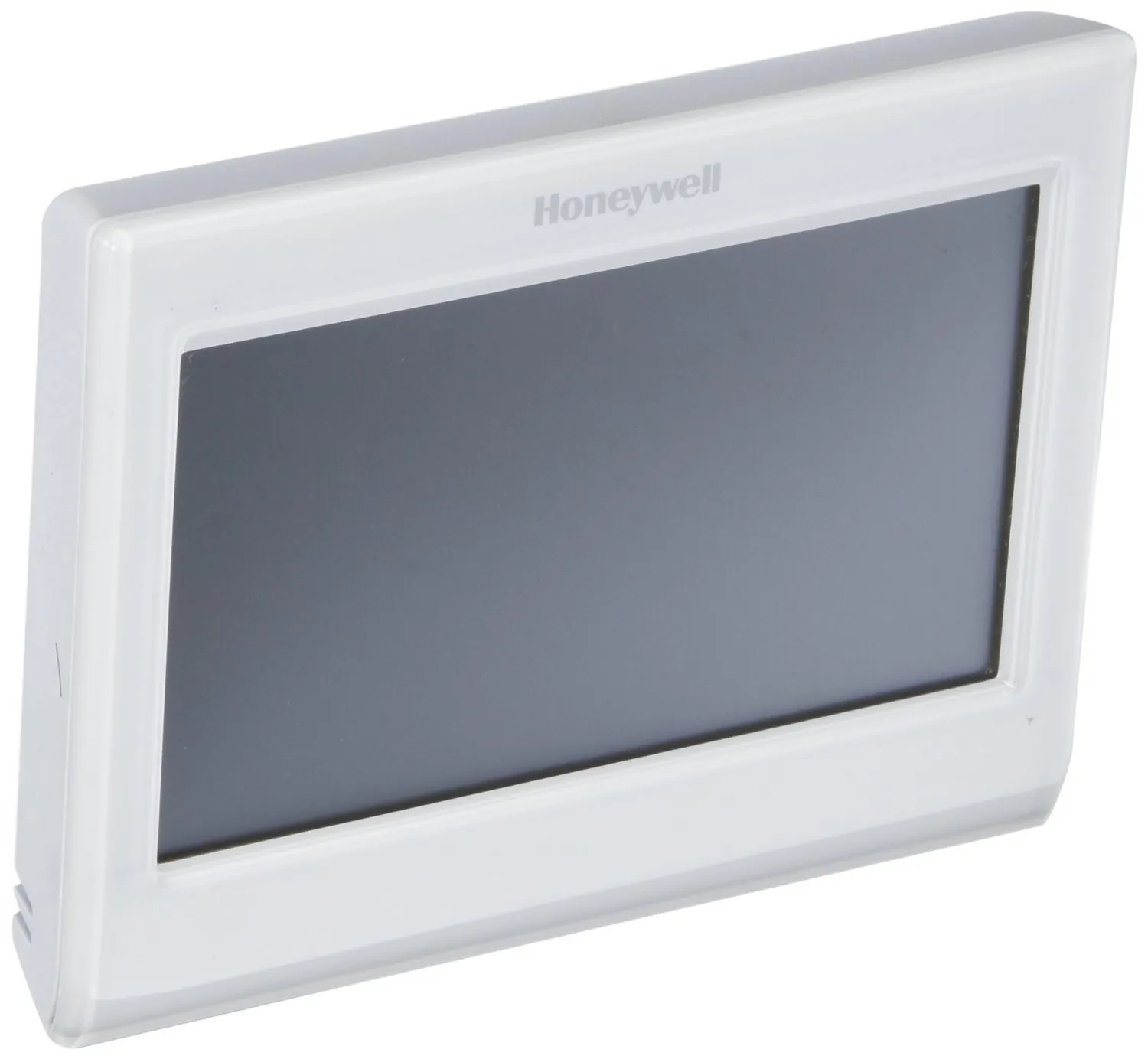
Most feedback suggests the touchscreen and menus are easy to read and navigate, helped by the backlit display and text-based interface. A few comments indicate it can require firmer presses or a short learning period during setup, so it seems generally user-friendly rather than completely effortless for everyone.
What are the main limitations of the Honeywell Home RTH7600D?
The main trade-offs are its limited connected features, the need to verify HVAC compatibility closely, and some reliability concerns in user feedback. It is better positioned as a practical programmable thermostat than as a modern smart home hub or a model built around remote app control.
Does the Honeywell Home RTH7600D offer good value?
For many buyers, yes. It combines detailed scheduling, a touchscreen display, and generally easy installation at a moderate price point, and reviews often mention money saved through better temperature control. Its value case is weaker if you specifically want remote access, smart integrations, or stronger reliability confidence.