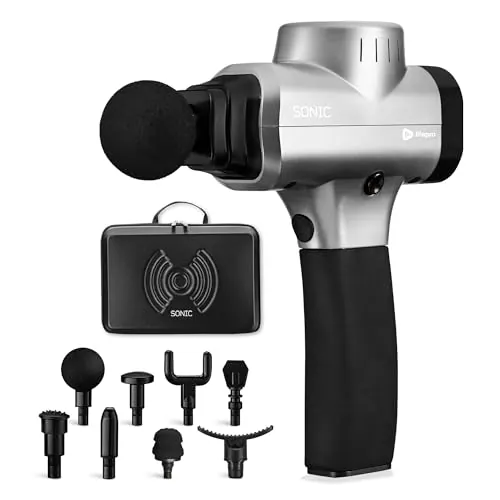
#1 Overall Winner
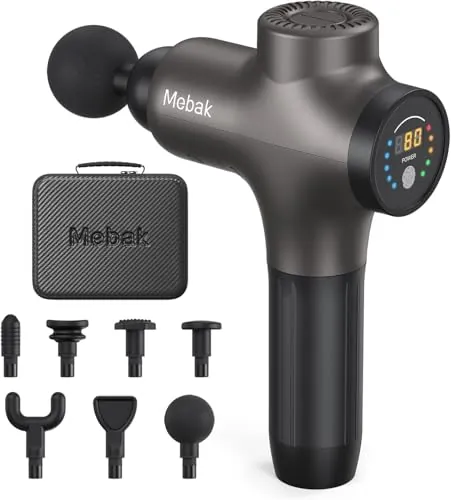
LifePro Sonic Massage Gun (LP-SNK)
- Strong deep-tissue percussion for soreness and tight muscles based on buyer feedback.
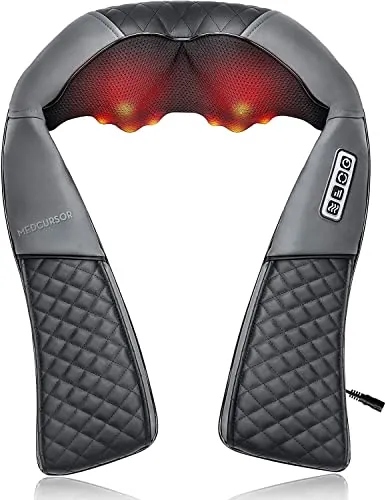
Comparison
The LifePro Sonic Massage Gun and Medcursor Neck Massager both aim to relieve muscle soreness at home, but they do it in different ways. LifePro is a cordless percussion massage gun with multiple heads for spot treatment across the body, while Medcursor is a corded shiatsu-style kneading device with optional heat that’s commonly used for neck and upper-back tension.
#1 Overall Winner
Contender
Pick the LifePro Sonic if you want a cordless percussion massage gun for quick, targeted recovery across the whole body and you value travel-friendly use. Choose the Medcursor if your main problem is neck/shoulder tension and you prefer shiatsu kneading with strap-controlled pressure and built-in auto shutoff—just don’t buy it for heat alone.
Overall winner
Depends on your needs
| Feature | LifePro Sonic Massage Gun (LP-SNK) | Medcursor Neck Massager (MD-KP02 / LY-580A+1) | Winner |
|---|---|---|---|
| Type of massage | Percussion (vibration) massage gun | Shiatsu-style kneading pillow | Depends |
| Power / portability | Cordless, battery powered | Corded electric (AC + car adapter) | LifePro Sonic Massage Gun (LP-SNK) |
| Target areas | Whole body spot treatment | Neck/back focus (also used elsewhere) | Depends |
| Heat function | Not listed | On/off heat (mixed feedback) | Medcursor Neck Massager (MD-KP02 / LY-580A+1) |
| Speed/intensity control | Multi-speed control (listing mentions 5–6 speeds) | 3 speeds + strap pressure adjustment | Depends |
| Attachments / heads | 8 massage heads included | Fixed kneading nodes (no heads listed) | LifePro Sonic Massage Gun (LP-SNK) |
| Battery / runtime | Up to 6 hours stated; 2.5h charge time | Corded (no battery) | Depends |
| Noise (typical feedback) | Often described as quiet | Often described as quiet | Tie |
| Comfort for sensitive users | Can feel intense on sensitive/bony areas | Comfort mixed; can feel painful/bruising for some | Depends |
| Safety features listed | Not specified beyond general use | Overheat protection + 15-min auto shutoff | Medcursor Neck Massager (MD-KP02 / LY-580A+1) |
| Reliability pattern in reviews | Some reports of internal failure; replacement experiences mentioned | Fewer explicit failure reports; recurring heat complaints | Medcursor Neck Massager (MD-KP02 / LY-580A+1) |
| Value for money (buyer sentiment) | Frequently described as worth the price | Frequently described as good value | Tie |
For everyday home use, both can work well, but they fit different routines. LifePro is easier to grab for quick, targeted sessions anywhere in the house because it’s cordless and uses swappable heads for different areas. Medcursor tends to suit “sit down and relax” sessions on a sofa or bed, where you can position the kneading nodes and use the straps to keep consistent pressure—provided you have a nearby outlet (or use the car adapter).
These products are comfort tools rather than climate devices, but the “feel” matters. LifePro’s percussion style is often used for fast muscle recovery and loosening tight spots with adjustable speed and different heads. Medcursor leans into a warmer, kneading massage experience with an optional heat mode, though reviews suggest the warmth level can vary. If you find percussion harsh, the kneading approach may feel more relaxing; if you want precise spot work, the massage gun format is typically more flexible.
Both products are reported to deliver meaningful relief, but in different ways. LifePro’s performance is strongest when you want deep, targeted percussion on specific muscles (for example calves, glutes, traps, or plantar-related soreness), and reviews often call it powerful and effective even on lower settings. Medcursor performs well for neck/shoulder/back tension thanks to its kneading nodes and direction changes, which can help work on stubborn knots.
The main performance caveat is comfort and consistency: Medcursor’s heat is frequently debated in reviews, and some users find the kneading too intense at first. LifePro’s “strong relief” is paired with a small set of reviews describing mechanical issues after limited use.
Reliability feedback differs between the two. LifePro has a few notable reviews describing failures after relatively low use (for example sudden loud vibration or a unit that wouldn’t turn on). At the same time, those reviews also describe the company authorizing replacements, suggesting support can mitigate downtime. Medcursor’s review set contains fewer direct “device failed” stories; the more common reliability-adjacent complaints are that heat feels ineffective for some users and that comfort can vary depending on pressure and body area.
Medcursor is clearer on built-in safety features: it lists overheat protection and a 15-minute auto-shutdown, which can be reassuring for relaxation sessions where people may drift or overuse it. LifePro’s listing does not specify comparable protective features, so safe use depends more on user behavior (short sessions, avoiding bony areas, and stopping if pain occurs).
For both, comfort-related safety matters: multiple reviews mention intensity being high or bruising when used aggressively. Neither product is water resistant, so they should be kept away from water and used with care around sweat and damp environments.
Comfort depends heavily on your sensitivity and technique. LifePro can be very satisfying for tight muscles, but some users find strong percussion uncomfortable on bony areas or if they use too much pressure. Medcursor’s kneading can feel more like “hands,” but comfort feedback is mixed: several reviews mention bruising or that it hurts more than it feels good when started on higher intensity. For either one, starting gentle and increasing gradually tends to be the safer approach.
Both are generally easy to use, but the workflow is different. LifePro requires choosing an attachment and then using speed control; it’s quick for short, targeted sessions and doesn’t tie you to a plug. Medcursor is simple to start and operate, and many users like adjusting pressure using the straps, but the cord can get in the way and finding a comfortable pressure level may take a few sessions—especially if you’re sensitive to deep kneading.
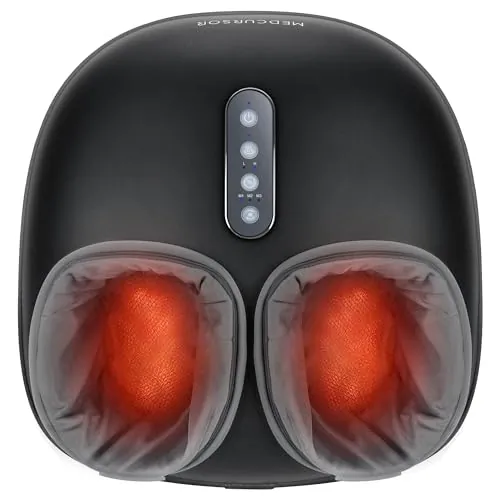
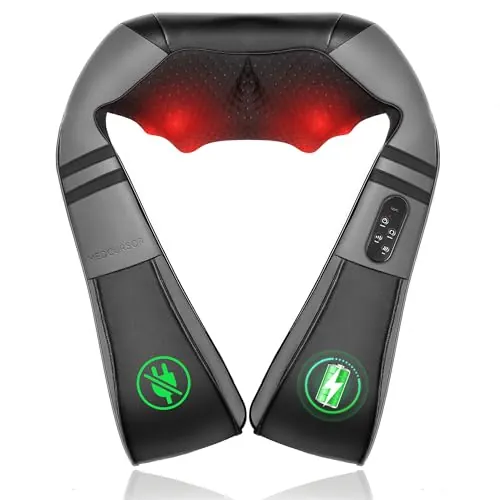
LifePro’s design is the classic massage-gun form: a handheld tool meant for reaching different body areas and swapping heads as needed. The included case supports storage and travel, and the cordless format makes placement flexible. Medcursor’s pillow-style design is better suited to bracing against your neck/back while seated; the handle straps are central to how you control pressure. The trade-off is that Medcursor takes more space on a chair/sofa and depends on cord placement.
Both effectively cover “full-body” use in different ways. LifePro’s capacity advantage is practical targeting: multiple head options and a design intended for many muscle groups. Medcursor’s capacity is more about coverage through positioning—users commonly move it between neck, shoulders, and back, and some also use it on legs and feet. If multiple people in a household want different “feels,” LifePro’s attachments can be more adaptable.
In small spaces, LifePro is easier to store thanks to its compact gun form and included case, and it can be used without rearranging furniture near an outlet. Medcursor is still manageable for flats and bedrooms, but it’s bulkier as a pillow device and you’ll need space to sit comfortably and route the cord. If countertop/cabinet space is tight, LifePro is typically simpler to tuck away.
Noise is unlikely to be the deciding factor here. LifePro is often described as quiet for a percussion gun, and Medcursor also receives “quiet” mentions from users who run it while watching TV. In practice, perceived noise will vary with speed/pressure and contact with furniture, so if you’re sensitive to sound, plan on using lower settings and cushioning placement where possible.
Medcursor is described by some reviewers as well-built, and its PU leather/mesh exterior is designed for comfort and easy wipe-down cleaning. LifePro also receives positive “solid” and “quality construction” feedback overall, but a few detailed reviews mention internal mounting/housing issues that led to rattling or failure. Based on the provided data, Medcursor looks a bit more consistent in perceived build, while LifePro has higher upside but more reported mechanical risk.
For long-term durability, Medcursor may have a slight edge based on fewer explicit breakdown reports in the provided reviews, though users do caution against pressing too hard for extended sessions. LifePro’s durability picture is more mixed: many users describe it as solid, but there are specific anecdotes about internal mounting/housing issues. If you expect frequent use, consider how gently you’ll treat the device, and whether easy replacement/support matters to you.
Maintenance is fairly straightforward for both. LifePro mainly involves keeping the device and heads clean, storing it in its case, and charging the battery. Medcursor is typically a wipe-clean routine for the PU leather/mesh exterior and keeping cords/adapters organized; there’s no battery to manage. Because neither is water resistant, both should be cleaned carefully (no rinsing) and kept away from wet environments.
LifePro is the more portable option overall: it’s cordless, intended for travel, and comes with a case, making it easier to use at the gym or move room-to-room without planning around outlets. Medcursor can still be taken to the office or on trips, but the need for power (and managing long cords) makes it less convenient for truly mobile use.
LifePro focuses on flexibility through hardware: it includes multiple massage heads and cordless operation with speed control, plus a travel case for storage. Medcursor focuses on session-style features: 3 speed options, bi-directional kneading with automatic direction changes, strap-based pressure control, and optional heat. It also includes practical extras for where you use it (AC adapter and car adapter) and adds protective features like auto shutdown and overheat protection.
LifePro may feel more efficient for quick sessions because it’s cordless and the listing notes long runtime between charges, reducing interruptions. Medcursor is efficient in a different sense: it doesn’t need charging at all, but it does require staying near a power source (unless you use the car adapter). If you want predictable, repeatable sessions at a desk or couch, the plug-in approach can be simpler; for on-the-go recovery, LifePro’s battery-powered format is typically more convenient.
Both products are widely viewed as good value at their prices, but value depends on your needs. LifePro tends to deliver strong perceived value if you want a versatile, cordless recovery tool with multiple heads and long stated runtime—especially for people comparing it to more expensive massage guns. Medcursor can be excellent value for home users focused on neck/shoulders/back who want kneading plus optional heat and built-in auto shutoff.
The “value” risk is different for each: LifePro’s is potential mechanical issues for a minority of users, while Medcursor’s is that the heat feature may not meet expectations and the corded design may be limiting.
Based on the provided data, LifePro earns some brand trust points from reviews that mention responsive replacement support after problems, alongside high overall buyer satisfaction. Medcursor also has strong buyer sentiment, but the provided score data suggests weaker warranty/support confidence than LifePro, and reviews focus more on the product experience than support outcomes. If support matters, look for clear warranty steps and keep proof of purchase either way.
Customer satisfaction is high for both, with large review volumes and strong average star ratings. LifePro’s feedback repeatedly highlights deep relief, quiet operation, long battery life, and good value, with a smaller set of reviews flagging durability problems that required replacement. Medcursor’s reviews commonly praise pain relief and the ability to adjust pressure and direction, while recurring negatives focus on heat being underwhelming for some users and comfort being hit-or-miss if the kneading is too strong.
Warranty/support signals favor LifePro in the provided data. Multiple LifePro reviews specifically describe contacting the company and receiving a replacement unit after a failure. For Medcursor, the provided material highlights product features and general satisfaction, but there’s less concrete detail on support outcomes, and the score data suggests warranty/support is a weaker area compared with LifePro.
Neither product is universally “better,” but there is a clear fit for different households. LifePro Sonic is the stronger all-rounder for people who want a cordless percussion massage gun with multiple heads, quiet operation, and high buyer satisfaction—its biggest drawback is that some users report mechanical issues over time.
Medcursor is the better choice if you specifically want shiatsu-style kneading for the neck/shoulders/back, along with features like auto shutoff and overheat protection. Its main limitations are the corded design and that the heat feature is inconsistent in reviews. Pick based on whether you want versatile spot treatment (LifePro) or seated kneading sessions (Medcursor).
Overall winner
Depends on your needs
It depends on how you like massage to feel. LifePro uses percussion and comes with multiple heads for spot-treating different muscle groups, plus it’s cordless for travel and quick sessions. Medcursor uses shiatsu-style kneading with optional heat and handle straps, which many people prefer for neck and shoulder tension at home, but it’s corded.
For many households, Medcursor is the more purpose-built option for neck and shoulder knots because it’s designed to sit and knead those areas and lets you control pressure with the straps. LifePro can still be used on traps and shoulders, but as a percussion tool it may feel more “tapping” than kneading, and intensity needs more care on sensitive areas.
LifePro is typically the easier choice for portability because it’s cordless and includes a travel case, and the listing notes long runtime between charges. Medcursor can travel, but it’s corded and relies on its AC adapter or included car adapter, so it’s more convenient when you know you’ll have power available.
Reviews are mixed. Some users say the heat noticeably helps loosen tight muscles, while others report they barely feel warmth or call it weak. If heat is a must-have feature, treat it as a “nice extra” rather than the main reason to choose Medcursor, and focus on whether you like the kneading style and strap control.
Both products are often described as reasonably quiet in customer feedback. LifePro is frequently praised for quiet operation for a massage gun, while Medcursor also gets “quiet” mentions from some users. Actual perceived noise can vary with speed/pressure and the surface you’re using it on, so the quieter pick may depend on your typical settings.
LifePro has a few detailed reviews describing mechanical problems after limited use (for example, sudden loud vibration or a unit that jammed), though those same reviews mention the company authorizing replacements. Medcursor reviews lean more toward comfort and heat complaints than mechanical failures, but long-term durability is still dependent on how hard you press and how often you use it.
Most beginners find Medcursor straightforward because you position it and use simple speed controls, then adjust pressure with the straps. LifePro is also easy to operate, but the learning curve is more about picking the right head and using appropriate intensity—especially around bony areas or sensitive spots where strong percussion can feel unpleasant.
Yes, within comfort and common-sense use. LifePro is marketed for whole-body use and includes multiple heads for different muscles. Medcursor is designed for neck/back but many reviewers describe using it on legs, glutes, hands, feet, and calves; several also note it’s best to avoid direct use on bony areas and to reduce pressure if it feels too intense.
Check our rankings and expert guides to find the best home lifestyle products for your goals.