#1 Overall Winner
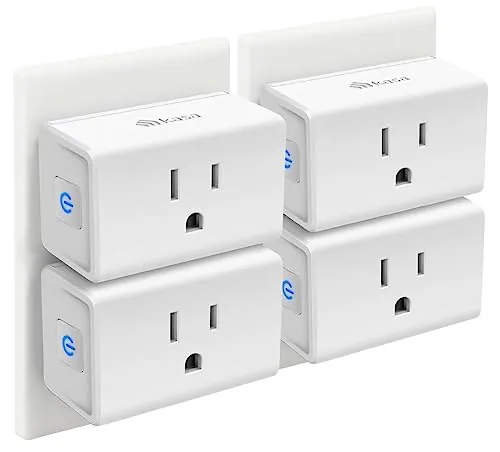
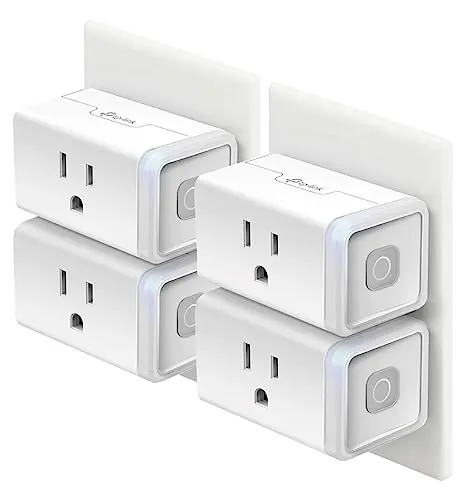
Kasa Smart Plug HS103P4 (4-Pack)
- Very easy initial setup with clear in-app guidance for connecting to 2.4GHz Wi‑Fi and voice assistants.
Comparison
The Kasa Smart Plug HS103P4 and the LEVOIT Core 200S-P are both smart-home devices, but they tackle different needs: outlet automation versus air cleaning. Kasa focuses on scheduling and voice control for lamps and small appliances, while Levoit is built to reduce dust, allergens, and odors in a bedroom-sized space. If you want lifestyle automation, Kasa fits; if you want cleaner air with quiet sleep operation, Levoit is the more direct solution.
#1 Overall Winner
Contender
Pick the Kasa Smart Plug HS103P4 if you want simple scheduling and voice control for multiple lamps or small appliances, especially across several rooms. Choose the LEVOIT Core 200S-P if your priority is improving bedroom air quality with a very quiet sleep mode and convenient app scheduling. They’re different categories, so the “best” option depends on whether you want automation or filtration.
Overall winner
Depends on your needs
| Feature | Kasa Smart Plug HS103P4 (4-Pack) | LEVOIT Core 200S-P Smart Air Purifier | Winner |
|---|---|---|---|
| Product type | Wi‑Fi smart plug (4-pack) | Smart air purifier | Depends |
| Primary use | Remote on/off + schedules for plugged-in devices | Filters air for dust/allergens/odors | Depends |
| Voice assistant support | Alexa + Google Assistant (listed) | Alexa (listed) | Kasa Smart Plug HS103P4 (4-Pack) |
| App control | Kasa app | App control (VeSync mentioned in reviews) | Tie |
| Scheduling/automation | Timers and countdown schedules; routines via assistants | Scheduling via app; sleep mode | Tie |
| Noise considerations | Relay click + bright LED mentioned | Very quiet sleep mode; louder on high | LEVOIT Core 200S-P Smart Air Purifier |
| Coverage/capacity fit | Scales by using multiple plugs | Best for small/medium rooms; limited for larger spaces | Depends |
| Maintenance needs | Minimal (wipe/keep dry) | Filter monitoring and replacement | Kasa Smart Plug HS103P4 (4-Pack) |
| Portability | Very small and easy to relocate | Portable but larger and heavier | Kasa Smart Plug HS103P4 (4-Pack) |
| Space efficiency | Uses an outlet; can be tight on power strips | Small footprint for a purifier; sits on desk/nightstand | Tie |
| Reliability feedback | Mixed reports: stable for many, issues for some | Generally positive; a review notes no auto-restart after outage | LEVOIT Core 200S-P Smart Air Purifier |
| Safety framing | UL certified (listed); indoor use (IP20) | AHAM VERIFIDE (listed); filtration appliance | Tie |
| Value proposition | Low cost per smart-controlled outlet (4-pack) | Air cleaning + smart control; ongoing filter cost | Depends |
| Best match for renters/dorms | Simple plug-in automation, no hub required | Compact purifier for a single room | Depends |
In everyday home use, these products play very different roles. The Kasa HS103P4 helps you automate what you already own—turning lights on before you arrive, scheduling plant lights, or setting a “goodnight” routine that shuts off multiple devices at once. The Levoit Core 200S-P is more about the environment of a room: running quietly overnight, reducing odors, and supporting allergy-sensitive households. If your daily friction is “forgetting to turn things off,” Kasa is the direct fix; if your friction is “the room feels dusty or stale,” Levoit is the more relevant upgrade.
Kasa is the more flexible kitchen helper because it can automate small kitchen devices that are safe to switch on/off at the outlet (for example, accent lighting or a fan), and can be controlled from your phone when you’re away from the room. The Levoit purifier can still be useful near kitchens for managing cooking odors and keeping nearby air feeling fresher, but it’s not a cooking appliance. For kitchen routines, Kasa is about control; Levoit is about air quality.
The Levoit Core 200S-P is directly related to home hygiene by removing airborne dust, pollen, and dander and helping with odors via activated carbon filtration. Reviews mention less dust buildup and a fresher feel, especially in bedrooms. The Kasa HS103P4 doesn’t clean, but it can support cleaning routines indirectly (for example, scheduling a fan or humidifier). If you want a measurable cleaning-adjacent effect, the air purifier is the more relevant tool.
For comfort, the Levoit Core 200S-P is the clearer fit because it’s designed to run in sleeping spaces with a quiet mode and can make a room feel fresher—something multiple reviewers notice overnight. The Kasa HS103P4 contributes to comfort through automation, such as turning on a fan or humidifier before bedtime and switching it off later. In short: Levoit changes the room’s air; Kasa changes when your comfort devices run.
Performance depends on the goal. The Kasa HS103P4 performs well for fast, convenient on/off control and scheduling—buyers frequently describe quick setup and responsive voice commands for lighting and routines. However, performance can be undermined in some homes by Wi‑Fi pairing or connection stability issues reported in mixed feedback.
The Levoit Core 200S-P’s performance is tied to air cleaning and bedroom usability. Reviews commonly note fresher air, reduced dust/allergens, and good odor handling, with strong results in smaller rooms. Its main performance trade-off is fan noise at higher speeds and the need to size expectations appropriately for larger spaces.
Reliability feedback is more mixed for the Kasa HS103P4. Many users report stable day-to-day performance and consistent voice control, but aggregated feedback and reviews also mention issues connecting to Wi‑Fi and cases where the plug stops working after a short time. That pattern suggests it can be excellent when it plays nicely with your network, but not every home setup is trouble-free.
Levoit’s reliability sentiment in the provided reviews is more consistently positive, with fewer reports of smart/control problems. One specific operational downside mentioned is not restarting automatically after a power outage, which is worth considering if you rely on it running unattended.
The Levoit Core 200S-P is the only product here with true cleaning performance, focused on air cleaning. Reviews report reduced dust accumulation, better overnight air freshness, and odor reduction (including smoke and cooking smells). It also combines a pre-filter and activated carbon layer with a main filter aimed at fine particles.
The Kasa smart plug doesn’t provide cleaning capability, but it can support cleaning routines indirectly (for example, turning an air purifier or fan on a schedule).
Levoit contributes to room comfort by circulating and filtering air; reviewers frequently describe a fresher feel and strong nighttime usability. While some users mention it “cools,” it is fundamentally an air purifier rather than an air conditioner, so expectations should stay focused on filtration and airflow. The Kasa plug doesn’t control climate by itself, but it can automate devices that do (like fans or humidifiers) by scheduling when they turn on or off.
Kasa’s listing emphasizes safety with UL certification, and its indoor rating (IP20) implies it should be kept in dry, indoor environments. Because it switches mains power, the practical safety step is staying within its electrical ratings and using it only with appropriate devices and conditions. Reviewers also mention a physical button for manual control, which can be helpful if the network is down.
Levoit safety considerations are more about normal appliance operation: keeping air inlets clear, operating it on a stable surface, and staying on top of filter maintenance. No specific safety fault patterns are highlighted in the provided reviews, but noise and indicator light sensitivity come up more often than safety issues.
Levoit has the clearer comfort impact because many reviewers describe a fresher-feeling room, easier breathing at night, and better sleep comfort when running in quieter modes. The display-off control and sleep mode also support bedroom use.
Kasa’s comfort benefit is convenience: you can reduce small daily annoyances by controlling lamps and devices from bed or setting routines that match your schedule. It won’t change air quality, but it can make the home feel more “managed” with less effort.
Both are generally easy to use. Kasa’s setup process is widely praised for clear instructions, and once connected, daily control via Alexa/Google and simple schedules is straightforward. The main learning curve is Wi‑Fi setup, especially if your home network is not set up for 2.4GHz devices.
Levoit reviewers consistently mention simple setup and easy controls, with smart features that add convenience rather than complexity. For non-smart users, it can still be operated with on-device controls, while the app expands scheduling and remote access.
Kasa’s design is compact for a plug-in device, but some users still note spacing issues on power strips and a bright LED that can be distracting in bedrooms. The physical side button is convenient when you don’t want to use the app.
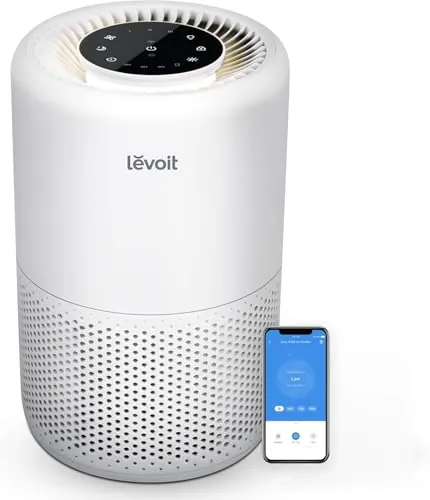
Levoit’s design is commonly praised for being compact enough for a nightstand or desk, with top-mounted controls and a display-off option for nighttime. A few reviewers mention that some lights can remain visible and that noise varies meaningfully by fan speed.
Capacity is meaningful mainly for the Levoit Core 200S-P. It’s positioned for bedroom and small-room use, and reviewers often describe it as ideal for dorms or smaller spaces, while some note it can feel undersized for a master bedroom or larger areas. The Kasa HS103P4 doesn’t have “coverage” in the same way; its practical capacity is how many devices you can control, and the 4-pack helps you scale automation across rooms.
Both are good for small spaces, but in different ways. Kasa’s plug uses almost no room space, but it can be awkward on tight outlets or power strips and may limit adjacent socket access. Levoit is compact for an air purifier and works well on a nightstand, dresser, or desk, making it a strong fit for bedrooms and dorm rooms—just plan for a dedicated spot with clear airflow. If your limiting factor is outlet access, Levoit may be easier; if your limiting factor is surface space, Kasa wins.
Noise matters more for the Levoit purifier, and buyer feedback matches that: it’s frequently described as extremely quiet in Sleep/Night mode, but noticeably louder on maximum speed (some compare it to a fan or PC). The Kasa plug doesn’t generate continuous noise, though users mention an audible click when switching and a bright LED that can be disruptive in dark rooms. For bedrooms, Levoit is purpose-built to be quiet; Kasa may need LED management if placed beside the bed.
Both are plug-and-play in the sense that they don’t require tools or hardwiring. Kasa installation is primarily app-driven: plug it in, pair to 2.4GHz Wi‑Fi, then link to Alexa/Google. Levoit setup is similarly straightforward: place it where airflow isn’t blocked, power it on, and optionally connect the app for scheduling and remote control. The main practical difference is placement—Kasa must fit well at an outlet (and may block adjacent sockets in some setups), while Levoit needs surface or floor space and room around its air intake.
Both products are described as well made by many buyers, but there are different signals to weigh. Kasa’s smart plug is physically simple and generally sturdy, though mixed reliability comments (including reports of early failure) can affect perceived quality over time. The Levoit purifier is often described as solid and well constructed, with filters that are designed to be replaced easily. If you’re prioritizing long-term mechanical durability, the purifier has more moving parts (a fan motor) while the plug is simpler but more dependent on stable electronics and Wi‑Fi behavior.
Long-term durability is hard to guarantee from listings alone, but the review patterns provide hints. Kasa’s plug is a simple device, yet some users report early failure, which can affect confidence for long-term use across all four units. Levoit owners often describe the purifier as solid and “long wearing,” though, as with any fan-based appliance, long-term durability depends on continuous use and filter maintenance. If you expect years of near-constant runtime, the purifier’s motor and filter ecosystem become the key durability factors.
Kasa HS103P4 is low maintenance: there’s no filter, bin, or routine cleaning beyond keeping it dust-free and using it indoors (it lists IP20). Most ongoing attention is software-related—keeping the app/assistant link working and re-pairing if your Wi‑Fi settings change.
Levoit requires recurring maintenance: monitoring filter life, replacing filters, and keeping the intake area clear. Reviewers mention the filter is easy to replace and some vacuum dust from it, but replacement cost is a real ongoing consideration compared with a smart plug.
The Kasa HS103P4 is more portable simply because it’s small and light, and you can move a plug from room to room in seconds. It’s ideal if you want flexible automation that follows the season (holiday lights, a temporary fan, or a dehumidifier in one room). The Levoit Core 200S-P is still portable—reviewers mention moving it around and even traveling with it—but it’s a larger, single-purpose appliance that takes up more space than a plug adapter.
Kasa HS103P4’s key features focus on smart control: app remote access, voice control, and timers/countdowns for automating plugged-in devices. It also includes a physical button and is sold as a 4-pack for multi-room setups. The Levoit Core 200S-P adds appliance-specific features such as multiple fan speeds, sleep mode, display-off control, and filter-life monitoring in-app (as described in the product details). If you want features that improve air quality, Levoit is richer; if you want to make multiple outlets “smart,” Kasa’s bundle is the standout.
Kasa’s app is often described as user-friendly with good setup guidance, but there are specific usability complaints: faint wording, and timer setup that can feel less streamlined (separate settings for on and off). Levoit’s app experience is described more positively in the provided reviews, particularly for scheduling and filter-life monitoring, with comments about intuitive control and low-latency response. If app polish matters most, the Levoit experience appears more consistently praised, while Kasa’s app is functional but not universally loved.
Both devices support smart-home control, but the Kasa HS103P4 is a more “universal” smart-home building block because it can make many dumb devices controllable via voice and schedules. The Levoit Core 200S-P is smart in a more focused way, offering app/voice control for fan speeds and schedules within the air-quality category. If you’re building routines across lights and appliances, Kasa tends to have broader impact; if you want smart control over air purification specifically, Levoit is purpose-built.
Kasa HS103P4 is a classic smart-home “multiplier”: it can bring voice and scheduling to many dumb devices, and reviewers mention using it for routines and broader automations (including integration via smart home hubs). The Levoit Core 200S-P adds smart value within a single device category, letting you schedule operation, adjust settings remotely, and integrate with voice control for simpler daily use. If you want broader smart-home impact across multiple outlets, Kasa usually goes further; if you want smart control of air purification specifically, Levoit is the more complete package.
Kasa is stronger for whole-home automation because it can control many different device types, and reviewers regularly use it for daily and seasonal schedules (dusk/dawn lighting, plant lights, “goodnight” routines). Levoit automation is narrower but still useful: schedules and modes help keep air cleaner when you’re home and quieter when you’re sleeping. If you’re building routines across rooms, Kasa has broader reach; if you want hands-off air cleaning, Levoit’s scheduling is the key feature.
Kasa requires a 2.4GHz Wi‑Fi connection, and reviews show mixed experiences: many users report stable connectivity, while others struggle with Wi‑Fi pairing or occasional dropouts. Levoit connectivity feedback in the provided reviews is generally positive, with users describing app control as quick and responsive, though Wi‑Fi performance still depends on router placement and signal strength. If your home network is complex (mesh, band steering, or 5GHz-only naming), plan for a slightly more hands-on setup for either device.
Efficiency plays out differently here. The Kasa HS103P4 can improve household efficiency by preventing wasted runtime—scheduling lights and devices to turn off automatically or only run when needed. The Levoit Core 200S-P’s efficiency is about maintaining cleaner air without excessive noise or power draw, with sleep mode used to keep it running overnight more comfortably. For both, the most efficient setup is using schedules: Kasa for device control windows, Levoit for matching fan speed to when you’re home and when you need faster cleanup.
Both products use app and Wi‑Fi control, which typically means account/app access and network connectivity. The provided data does not detail what data is collected or how it’s secured, so it’s best to review each app’s privacy policy and permissions before setup. As a practical precaution, use strong Wi‑Fi passwords, keep firmware updated when available, and consider whether you’re comfortable tying device control to cloud-based accounts for remote access and voice assistant integration.
The Kasa HS103P4 is compelling value if you want to automate multiple devices, because the 4-pack spreads the cost across several rooms and common use cases (lamps, seasonal lights, plant lights). Its value is strongest when you’ll actively use schedules and routines, not just occasional remote toggling. Potential value deductions are the mixed reliability/connectivity feedback and the possibility that outlet spacing could limit where you can use them.
The Levoit Core 200S-P is good value if you’ll benefit from daily air cleaning, especially in a bedroom. Many reviewers describe noticeable results and strong quiet performance, but you should budget for replacement filters over time.
Both brands show strong buyer confidence in the provided data: high ratings and large review counts, plus repeat-purchase language in reviews. Kasa (TP-Link) is often discussed as part of a wider ecosystem (plugs, switches, outdoor products), which can build trust if you want consistent control across devices. Levoit is described by reviewers as a respected air-quality brand, with multiple owners reporting positive experiences across several Levoit products. With the information given, brand trust is broadly similar, with category strength leaning Kasa for smart plugs and Levoit for air purification.
Customer satisfaction is high for both, with strong star ratings and substantial review volume. Kasa buyers frequently praise ease of setup, reliable voice control, and useful scheduling, but there’s a notable split in feedback on Wi‑Fi connectivity and longer-term reliability (some report flawless performance, others report connection trouble or failures after a short time). Levoit sentiment is consistently positive in the provided reviews, emphasizing quiet sleep operation and noticeable improvement in air freshness and dust/allergen comfort, with the most common complaints being noise on high and filter replacement cost.
The LEVOIT Core 200S-P is the stronger single purchase for most homes because it pairs effective, bedroom-friendly air cleaning with consistently praised quiet operation and a well-liked smart/app experience. Its main limitations are capacity for larger rooms, noise on higher speeds, and ongoing filter costs.
The Kasa Smart Plug HS103P4 is the better choice when your priority is smart-home convenience across multiple devices. It’s easy to set up for many users and excellent for schedules and voice routines, but it has more mixed feedback around Wi‑Fi connectivity and longer-term reliability, plus small annoyances like a bright LED and a switching click. The better pick depends on whether you’re optimizing air quality or automation.
Overall winner
Depends on your needs
They solve different problems. The Kasa HS103P4 is for controlling power to devices like lamps, fans, and holiday lights with schedules and voice commands. The LEVOIT Core 200S-P is for improving indoor air quality by filtering dust, allergens, and odors. If you want cleaner air, choose Levoit; if you want automated on/off control for existing appliances, choose Kasa.
Yes, both list voice control support. The Kasa HS103P4 lists compatibility with Alexa and Google Assistant and can be controlled through the Kasa app. The LEVOIT Core 200S-P lists app, touch, and voice control, with Alexa support shown in the specifications. In practice, voice control is most useful for quick on/off and for running routines.
Both are generally described as easy to set up. Kasa’s plug setup is often praised for clear step-by-step guidance in the Kasa app, though you’ll need 2.4GHz Wi‑Fi. Levoit reviewers also describe quick setup and straightforward controls, with app setup reported as smooth. If your router setup is tricky, Wi‑Fi band requirements may be the main stumbling block.
If you’re focused on sleep comfort, the LEVOIT Core 200S-P is designed for bedrooms and has a Sleep/Night mode that reviewers describe as very quiet, with options to reduce or turn off lights. The Kasa plug can still help in bedrooms (for lamps or fans), but it doesn’t change air quality and some users mention a bright LED and a small switching click.
Kasa smart plug reviews are mixed on connectivity: many users report stable performance, while others mention Wi‑Fi connection trouble or the plug stopping working after a short period. Levoit feedback in the provided reviews is largely positive for app control, but like many Wi‑Fi devices, real-world performance can still depend on router range and 2.4GHz network stability.
The LEVOIT Core 200S-P requires regular filter upkeep and eventual filter replacement; reviewers mention it’s easy to replace and some note filter cost as a consideration. The Kasa HS103P4 plug is mostly maintenance-free beyond keeping it clean and ensuring it stays in a suitable indoor, dry location (it lists an IP20 rating).
Value depends on what you need. The Kasa HS103P4 is a 4-pack, so it can automate multiple devices across rooms for a relatively low per-outlet cost. The Levoit Core 200S-P can deliver noticeable air-quality benefits in a bedroom or small room, but you should factor in replacement filters over time. Choose based on whether automation or air cleaning is the bigger priority.
One Kasa reviewer notes that app control won’t work during an internet outage, but the plug still works via the physical button and can keep schedules running, then reconnects when the connection returns. For the Levoit purifier, the unit can still be operated with its on-device controls, but smart/app features typically depend on your home network.
A smart plug adds remote control and scheduling to whatever you plug into it (within its electrical ratings), making it ideal for lamps and small appliances. A smart air purifier is a standalone appliance that moves air through filters to reduce particles and odors. They can complement each other: the plug automates devices, while the purifier targets air quality.
Check our rankings and expert guides to find the best home lifestyle products for your goals.