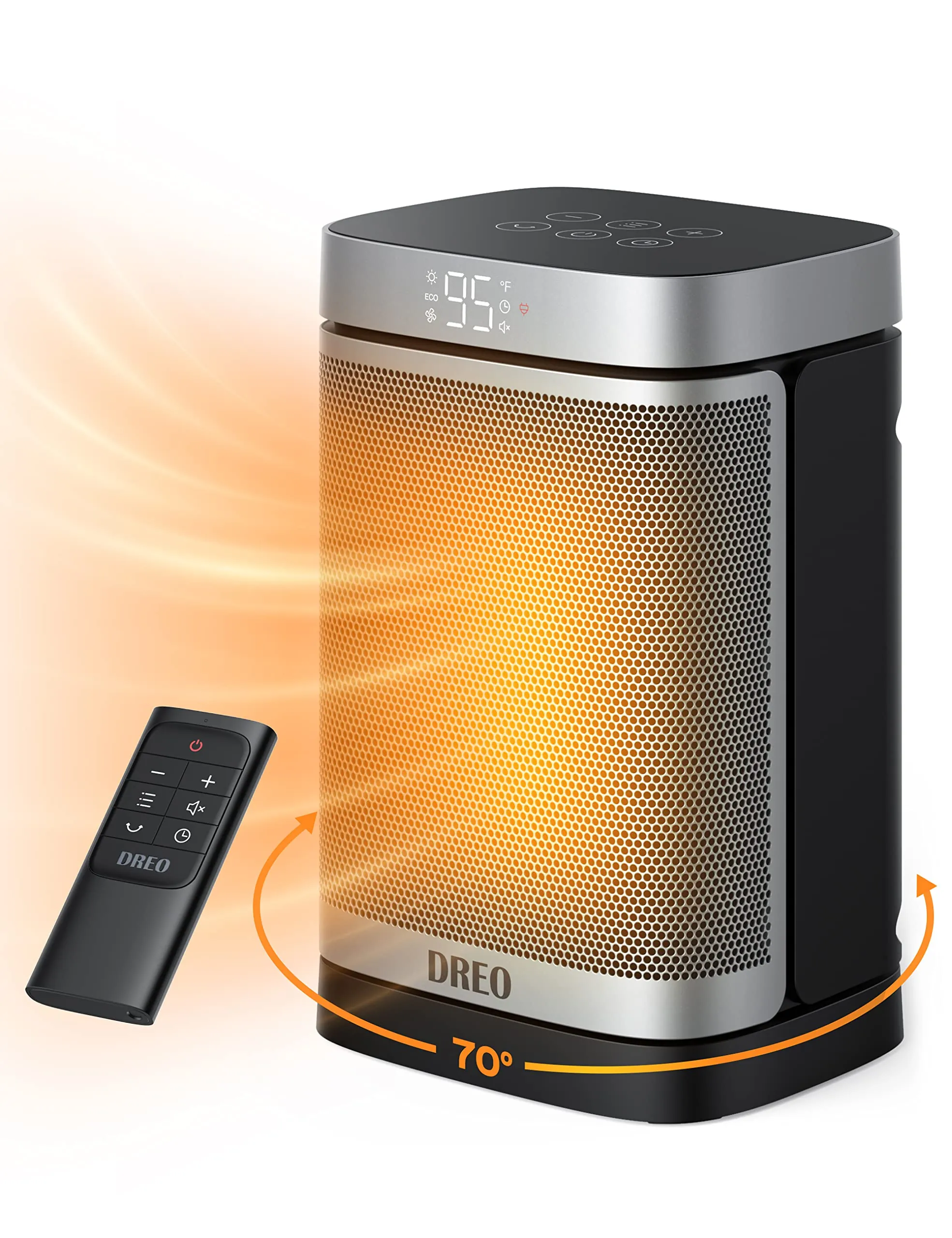
#1 Overall Winner
DREO Space Heater, 1500W Portable Electric Heaters for Indoor Use (DR-HSH004-G)
- Fast warm-up for a compact 1500W ceramic heater, with many reviews noting quick heat
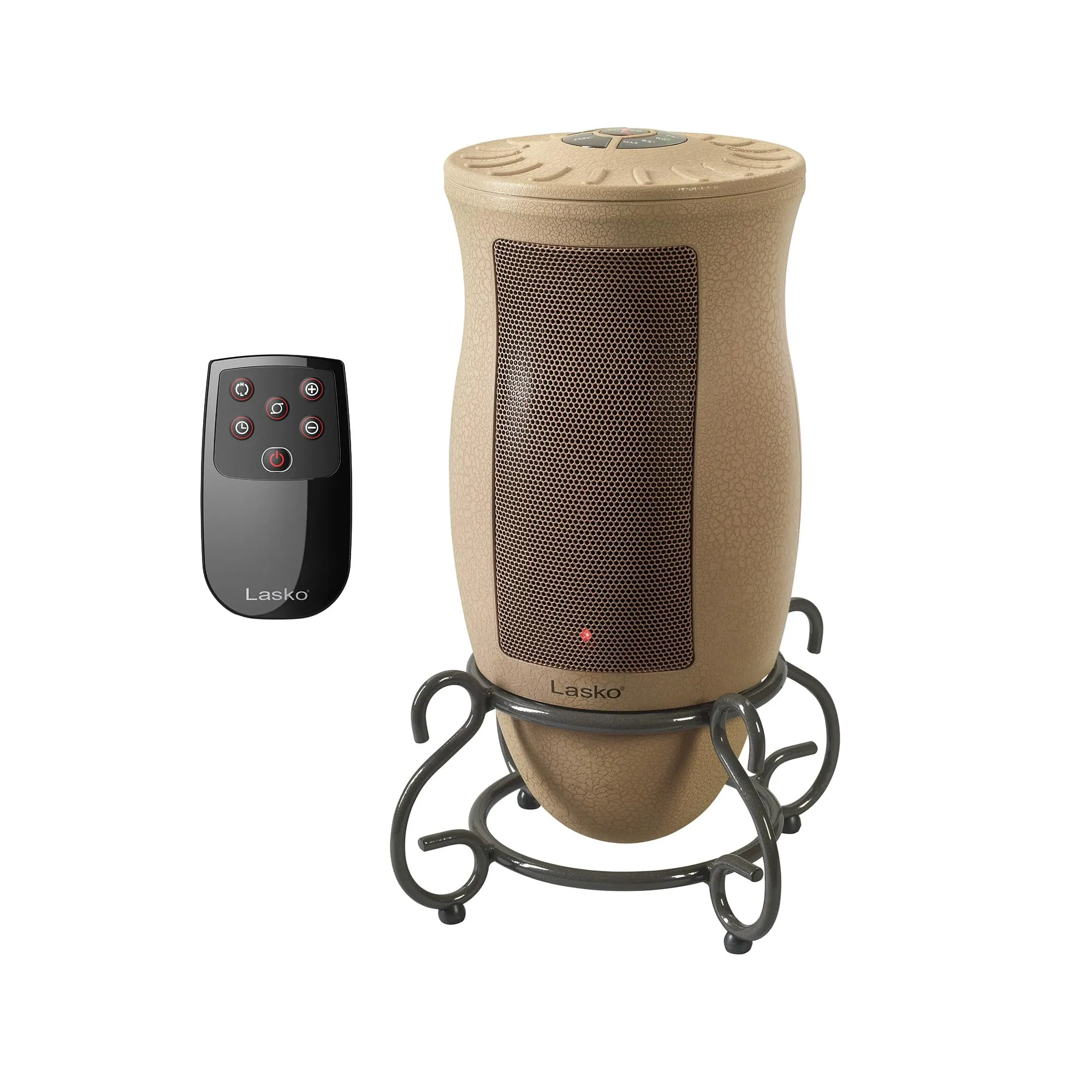
Comparison
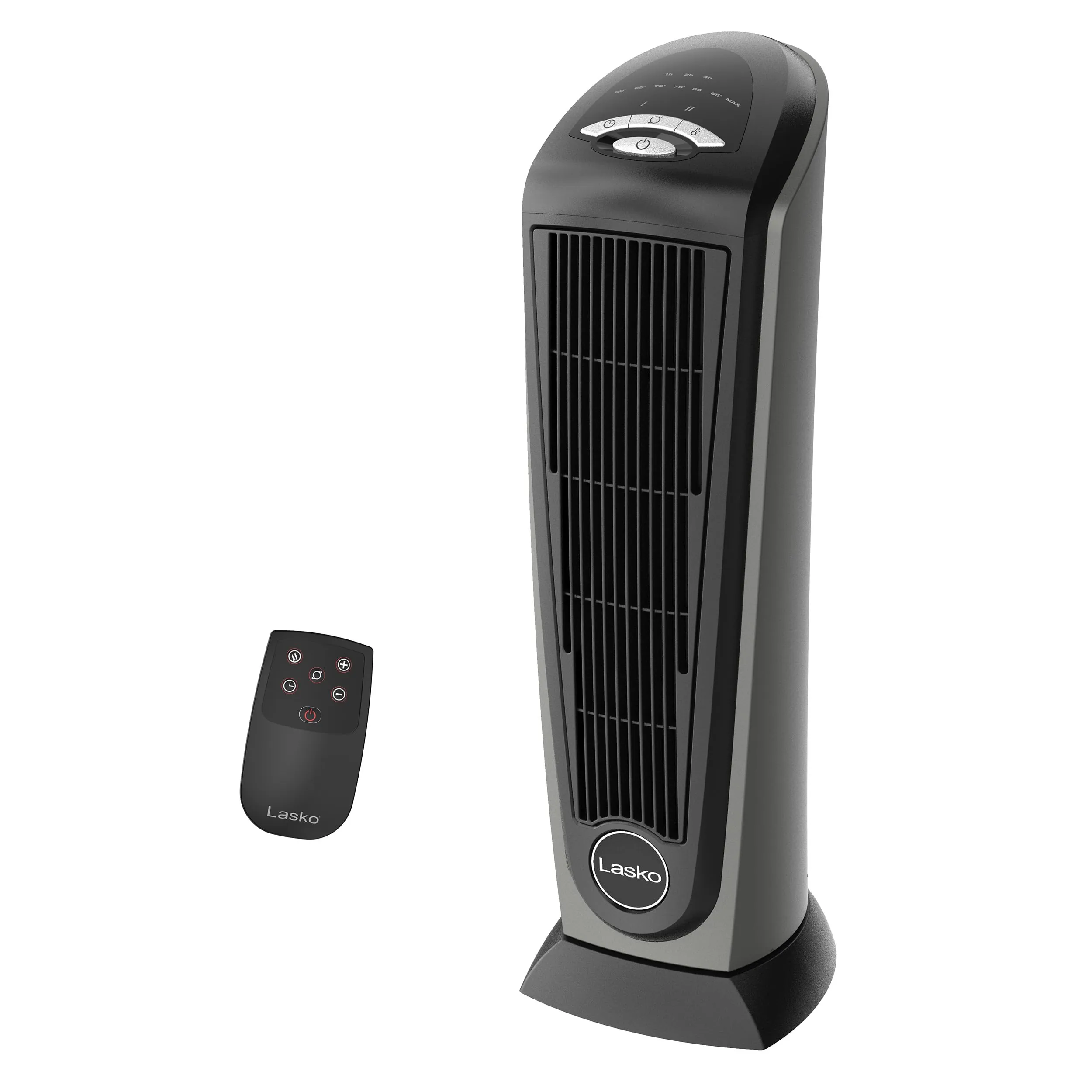
The DREO DR-HSH004-G and Lasko 6435 are both 1500W ceramic tower space heaters designed to add quick warmth to small rooms like bedrooms and home offices. The DREO focuses on quieter operation, a wider thermostat range, and tip-over shutoff, while the Lasko leans into decor-friendly design and includes a stated 3-year limited warranty. The right choice mainly comes down to safety preferences, control precision, and how much long-term reassurance you want from warranty and owner feedback.
#1 Overall Winner
Contender
Choose the DREO DR-HSH004-G if you want a quieter heater with finer thermostat control, a longer timer, and tip-over shutoff for safer everyday use. Choose the Lasko 6435 if you want a compact heater that blends into decor and you prefer having a clearly stated 3-year limited warranty, as long as you can place it where tipping isn’t a realistic risk.
Overall winner
Depends on your needs
| Feature | DREO Space Heater, 1500W Portable Electric Heaters for Indoor Use (DR-HSH004-G) | Lasko Oscillating Designer Ceramic Tower Space Heater 1500W (6435) | Winner |
|---|---|---|---|
| Type | Ceramic tower space heater (forced air) | Ceramic tower space heater (forced air) | Tie |
| Heat output | 1500W | 1500W | Tie |
| Stated heating coverage | Up to 200 sq. ft. | 150 sq. ft. | DREO Space Heater, 1500W Portable Electric Heaters for Indoor Use (DR-HSH004-G) |
| Thermostat range | 41–95°F (1°F increments) | 60–85°F | DREO Space Heater, 1500W Portable Electric Heaters for Indoor Use (DR-HSH004-G) |
| Heat settings / modes | 5 modes / 5 speeds (listed) | 2 heat settings (High/Low) | DREO Space Heater, 1500W Portable Electric Heaters for Indoor Use (DR-HSH004-G) |
| Timer length | 1–12 hours | Up to 7 hours | DREO Space Heater, 1500W Portable Electric Heaters for Indoor Use (DR-HSH004-G) |
| Oscillation | 70° oscillation | Widespread oscillation (no angle stated) | Depends |
| Noise positioning | Listed as quiet (37.5 dB) | Described as quiet in reviews/listing | DREO Space Heater, 1500W Portable Electric Heaters for Indoor Use (DR-HSH004-G) |
| Safety: tip-over shutoff | Tip-over protection listed | Reviews note no tip shutoff | DREO Space Heater, 1500W Portable Electric Heaters for Indoor Use (DR-HSH004-G) |
| Safety: overheat protection | Overheat protection listed | Overheat protection listed | Tie |
| Size / footprint | 6.69" x 5.51" x 10.31" | 8.25" x 8.25" x 16.05" | DREO Space Heater, 1500W Portable Electric Heaters for Indoor Use (DR-HSH004-G) |
| Weight | 1.75 kg | 3 lb | Depends |
| Warranty (stated) | Not provided in the data | 3-year limited warranty | Lasko Oscillating Designer Ceramic Tower Space Heater 1500W (6435) |
| Customer sentiment highlights | Very quiet, heats fast; some long-term failures reported | Heats quickly; design praised; tip-over shutoff criticized | Depends |
For everyday home use, both heaters work well as supplemental warmth for the rooms you actually occupy—like a bedroom at night or a home office during the day. The DREO is easier to “live with” in tight spots thanks to its smaller footprint and stronger emphasis on low noise, and tip-over shutoff is reassuring if the heater may get bumped. The Lasko fits nicely into living spaces where aesthetics matter, and it’s convenient that it comes fully assembled, but it’s better suited to stable placement where it won’t be knocked over.
Both heaters are built for quick comfort in small rooms: you set a temperature, let the heater cycle, and use oscillation to distribute warmth. DREO’s broader thermostat range and ECO mode can be helpful if you want steadier comfort with less manual adjustment, and many reviews emphasize how quiet it feels for sleeping. Lasko’s comfort strengths are simple thermostat cycling and a pleasant “take the chill off” effect, especially when placed near feet, but its narrower temperature range and tip-over behavior may influence how and where you run it.
Both heaters are rated at 1500W and are consistently described by buyers as warming small rooms quickly. DREO has the edge for “feel it fast” performance in reviews, with frequent mentions of rapid heat-up and strong airflow for its compact size, and it’s listed for larger coverage. The Lasko also performs well for taking the chill out of a room, with owners describing reliable thermostat cycling once set. For larger or drafty areas, either heater will work best as targeted, supplemental heat rather than whole-house heating.
Reliability is the most meaningful separation between these two. DREO has very strong overall satisfaction, but the aggregated feedback includes a recurring long-term concern: some units stop working after about a year. That doesn’t mean it will happen to every unit, but it’s a pattern worth weighing if you want a heater you’ll depend on daily through winter.
The Lasko 6435 shows better long-run sentiment in the reviews provided, including examples of owners using it for years without service problems. If long-term dependability is your top priority, Lasko has the more reassuring feedback here.
For climate control within a single room, both heaters offer thermostat-based cycling and oscillation to spread warm air. DREO gives you a wider set temperature range and finer 1°F adjustments, which helps if you’re trying to avoid overheating a bedroom while still staying comfortable. Lasko’s thermostat range is narrower, and reviews mention less precise increments, but it still delivers predictable on/off cycling once dialed in. For either heater, best results come from placing it with good airflow clearance and letting oscillation distribute heat.
Safety is the clearest deciding factor. DREO lists tip-over shutoff and overheat protection and is described as ETL-listed with additional safety elements, which is especially relevant for bedrooms, homes with pets, or any room where the heater might get bumped. Reviews also reinforce standard high-wattage heater guidance: plug directly into a wall outlet and keep clearance from flammable items.
Lasko includes overheat protection and is described as having a cool-touch exterior, but reviews explicitly state that this model does not shut off when tipped. If tip-over risk is realistic in your home, DREO is the safer choice based on the provided information.
Both heaters can make a room feel noticeably more comfortable quickly, especially when used for spot heating near where you sit or sleep. DREO leans toward “set a temperature and relax” comfort, with fine thermostat adjustments and quiet running that suits overnight use. Lasko’s comfort strengths are steady thermostat cycling and gentle warmth with oscillation, plus a design that feels more at home in living areas. If comfort includes peace of mind around tipping, DREO’s tip-over shutoff becomes part of the comfort equation.
DREO is generally easy to run day-to-day thanks to clear temperature control, remote use from bed or desk, and straightforward oscillation and timer settings; reviews also note it’s simple to place because it’s so compact. Lasko is also easy to start using since it comes fully assembled and has top-mounted controls, but some reviews mention a learning curve and a remote with icons that are harder to read. If you want the quickest “set and forget” setup, Lasko’s out-of-box simplicity helps.
If you want something that visually blends into a room, the Lasko 6435’s “designer” styling is a standout feature and reviewers often mention leaving it out because it looks nicer than typical heaters. DREO looks more like a compact, modern utility heater, but its smaller dimensions make it easier to tuck beside a desk, nightstand, or in a tight corner. Both have top controls and include remotes; DREO’s compactness favors placement flexibility, while Lasko’s aesthetics favor open-room placement.
Neither is meant for whole-home heating, but their stated coverage differs. DREO lists coverage up to 200 sq. ft., while Lasko lists 150 sq. ft., which suggests DREO may be the better bet for slightly larger small rooms or for maintaining comfort at a greater distance. For either heater, performance in real homes will still depend on insulation, drafts, ceiling height, and whether you’re heating one closed room or a space connected to hallways.
For space efficiency, DREO is the easier fit: it has a smaller footprint and shorter height, which helps in cramped bedrooms, tight office corners, or apartments where floor space is at a premium. Lasko’s footprint is larger, but its decor-friendly design can make it feel less visually intrusive when it needs to stay out in the open. If the goal is minimal floor-space impact, DREO wins.
If noise is a priority, DREO has the clearer advantage: it’s marketed as very quiet and reviews repeatedly describe it as unobtrusive for sleep and work, sometimes comparing it to a white-noise machine. Lasko is also often described as quiet, but some owners still notice a bit of fan noise when pushing warm air. For light sleepers or calls/meetings, DREO is the safer pick based on the provided feedback.
Both heaters are described as solid enough for typical indoor use, with buyers praising overall fit and finish. DREO is frequently described as well-finished and sturdy for its size, but the main build-quality concern is longer-term reliability based on reports of failures after about a year. Lasko’s design includes a stable base that owners call sturdy, and some reviews mention multi-year use; however, the lack of tip-over shutoff means physical stability and placement matter more from a practical standpoint.
Expected durability favors the Lasko based on the provided owner reports of multi-year use (including continuous seasonal use). DREO’s durability outlook is mixed: many buyers love the performance, but some reports of failure after about a year introduce uncertainty for long-term ownership. For either heater, durability will also depend on keeping airflow paths clear and using proper electrical practices (plugging directly into a wall outlet and avoiding extension cords).
Maintenance is fairly straightforward for both: keep air intakes and outlets clear and remove dust buildup so airflow and safety systems work as intended. DREO includes a detachable filter, which can be a benefit if you want a defined part to clean regularly, but it also adds one more maintenance step (owners note keeping the filter clean matters). Lasko owners mention it’s easy to remove dust from. Neither listing provides detailed replacement-part costs, so plan on periodic cleaning and safe storage off-season.
Both heaters are portable, but DREO is easier to move frequently because it’s smaller and designed for spot placement near feet, desks, or bedside use. Lasko is still light enough for room-to-room carrying, but its larger base and taller body make it a bit more “place it and leave it” in practice. If you expect to move the heater daily between rooms, DREO is the more convenient shape and size.
DREO offers the richer control set: a digital thermostat with 1°F increments across a wider range, ECO mode that adjusts heat automatically, a longer timer window, oscillation, and a detachable filter alongside remote control and on-unit controls. Lasko covers the essentials—thermostat, oscillation, a 7-hour timer, and a remote—paired with simpler two-setting heat operation. If you want finer tuning and more modes, DREO is more flexible; if you want straightforward heat without many options, Lasko keeps it simpler.
Both are 1500W max heaters, so efficiency in practice often comes down to thermostat cycling and how long they need to run to maintain temperature. DREO’s ECO mode is designed to adjust output automatically toward a set temperature, and several reviewers report not seeing an obvious spike in bills when using it as targeted heat. Lasko reviewers also describe using thermostat cycling to heat one room while lowering a home thermostat. For both, efficient use means heating the occupied room, keeping doors closed, and avoiding continuous high output when not needed.
At the listed prices, DREO looks like the stronger value proposition because it’s dramatically cheaper while still offering quiet operation, oscillation, ECO mode, a wide-range thermostat, a long timer, and tip-over shutoff—features that directly affect everyday comfort and safety. The trade-off is the reliability question raised by some long-term owners.
Lasko costs more but includes a stated 3-year limited warranty and has more reassuring multi-year feedback in the reviews provided, which can improve “value over time” for some households. If you’re price-sensitive, DREO is hard to ignore; if you’re buying for long seasonal use, warranty clarity and reliability may justify Lasko’s higher cost.
Both brands have strong buyer sentiment in this category, with high ratings and large review counts. Lasko provides clearer purchase reassurance through an explicitly stated 3-year limited warranty and a long-running product presence (as reflected in older review timelines). DREO earns trust through consistently strong comfort and noise feedback, but the long-term failure reports mean some shoppers may want to weigh support expectations and warranty details before buying (not provided in the data here).
Both heaters score very well with buyers overall and share a similar star rating, but the feedback themes differ. DREO owners repeatedly praise how quickly it heats, how quiet it is, and how convenient the remote, thermostat control, and oscillation feel; the most common negative theme is units failing after extended ownership. Lasko owners often highlight attractive design, quiet operation, and effective small-room warmth, with the most serious recurring complaint being the lack of tip-over shutoff and some remote/control quirks.
Lasko explicitly states a 3-year limited warranty, which provides clearer baseline support expectations at purchase. For the DREO heater, warranty/support terms are not included in the provided data, although the listing mentions customer service contact information. If warranty length and clarity are important to you, Lasko has the advantage based on what’s provided here.
The DREO DR-HSH004-G is the better overall pick for many households because it combines fast, quiet heat with more precise thermostat control and a key safety advantage: tip-over shutoff. Its biggest limitation is long-term reliability uncertainty, with some buyers reporting failures after about a year.
The Lasko 6435 is a strong alternative if you want a more decor-friendly heater and prefer the reassurance of a stated 3-year limited warranty, and the review set includes examples of long-term use. However, the lack of tip-over shutoff is a meaningful downside. If safety around tipping is a priority, go DREO; if the heater will live in a stable, low-traffic spot and warranty clarity matters most, Lasko can make more sense.
Overall winner
Depends on your needs
The DREO is the better pick if you want quieter operation, a wider thermostat range, and tip-over shutoff for added peace of mind. The Lasko 6435 is a good fit if you want a decor-forward heater with a clearly stated 3-year limited warranty and simple controls. Both are well-reviewed for quick warmth in small rooms.
Based on the provided information, the DREO has the clearer safety advantage because it includes tip-over shutoff plus overheat protection (and is described as ETL-listed). Reviews for the Lasko 6435 specifically note that it does not turn off when tipped, which can matter in homes with children or pets that might bump a heater.
Both are frequently described as quiet, but the DREO is positioned more strongly for low noise, including a stated low sound level and multiple reviews comparing it to white-noise-like sound. The Lasko 6435 is also commonly called quiet, but noise expectations may depend on where it’s placed and whether oscillation is used.
The DREO offers a broader stated thermostat range (41–95°F) and 1°F increments, which is useful if you want more precise setpoints. The Lasko 6435 is listed with a narrower range (60–85°F), and reviews mention the thermostat can be limited to five-degree increments, which is simpler but less fine-grained.
Both are compact tower heaters designed for small rooms. The DREO has a smaller footprint and is often praised for fitting “almost anywhere,” while the Lasko is taller and designed to blend into decor. If you’re tight on floor space and want a very compact heater, the DREO is typically the easier fit.
They’re best used as supplemental heat for smaller spaces. The DREO lists coverage up to 200 sq. ft., while the Lasko lists 150 sq. ft., so the DREO has the edge on paper. For larger or open-plan rooms, either may take longer to feel evenly warm, and placement plus oscillation will matter.
The Lasko 6435 has stronger long-term ownership sentiment in the reviews provided (including examples of multi-year use). The DREO is highly rated overall, but the aggregated feedback includes some reports of units stopping working after about a year. As with many small appliances, individual longevity can vary.
Yes. Both listings include a remote control and a built-in timer. The DREO is listed with a longer timer window (up to 12 hours), while the Lasko 6435 is listed with a 7-hour auto-off timer. If you plan overnight or extended scheduling, the DREO’s longer timer may be more convenient.
Value depends on what you prioritize. The DREO is priced much lower here while still offering quiet operation, oscillation, ECO mode, and tip-over protection, so it can look like the stronger feature-per-pound option. The Lasko costs more but includes a stated 3-year limited warranty and a design some owners prefer in living spaces.
Check our rankings and expert guides to find the best home lifestyle products for your goals.