HouseholdRanker
Menu
Amazon Basics 500W Mini Heater vs 1500W Ceramic Heater

Comparison

Amazon Basics 500W Mini Heater vs 1500W Ceramic Heater

The Amazon Basics 500W mini heater and the Amazon Basics 1500W ceramic heater are both compact, budget-friendly options for indoor spot heating. The biggest difference is output and control: the 500W model is a tiny personal desk heater with very basic operation, while the 1500W model adds higher heat, multiple modes, and an adjustable thermostat.

Expert tested Data driven Unbiased reviews Updated 10 June 2026
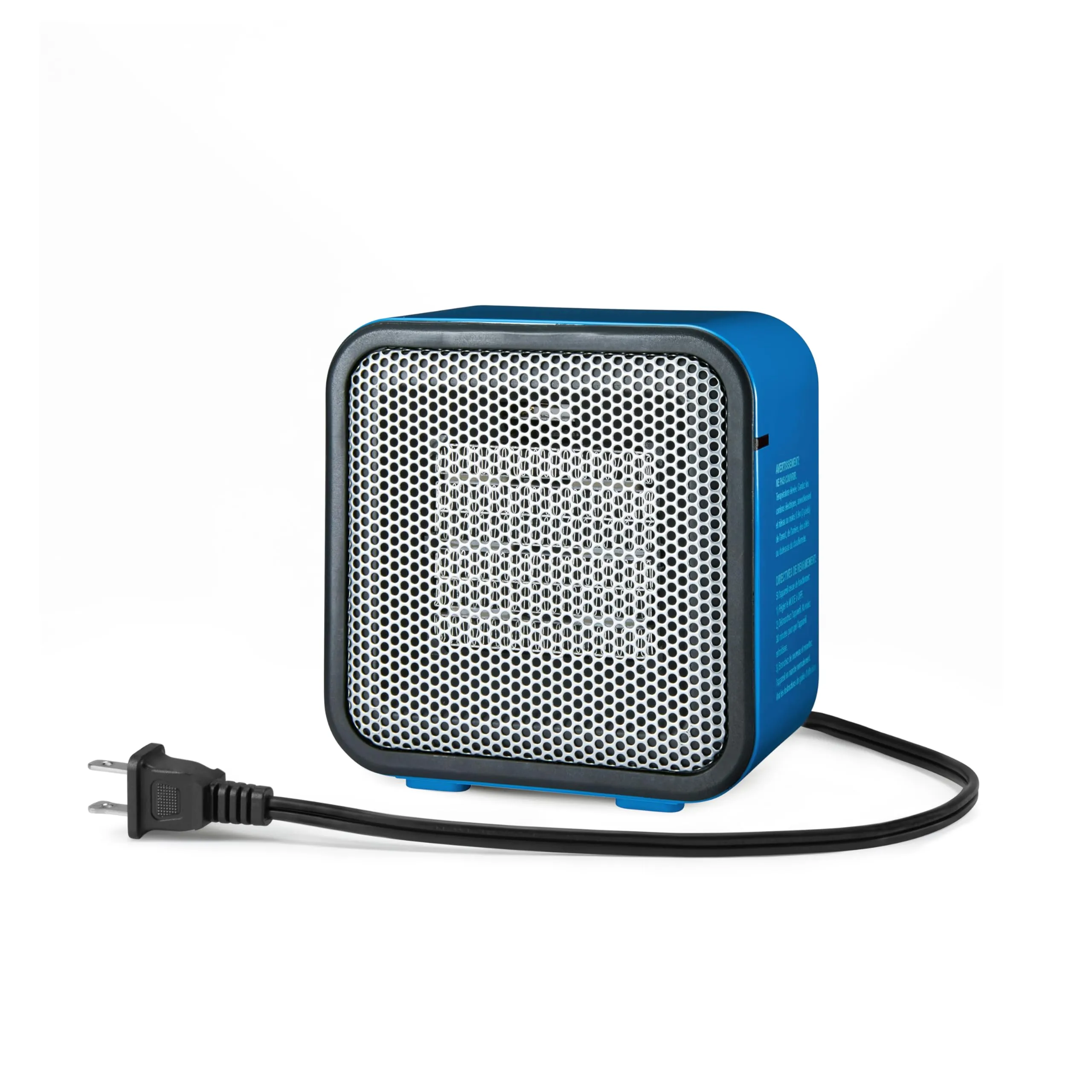
Amazon Basics Ceramic Portable Mini Space Heater 500W (DQ1722B)

#1 Overall Winner

Amazon Basics Ceramic Portable Mini Space Heater 500W (DQ1722B)

70/100
  • Very compact footprint that fits easily on a desk or side table.
View review
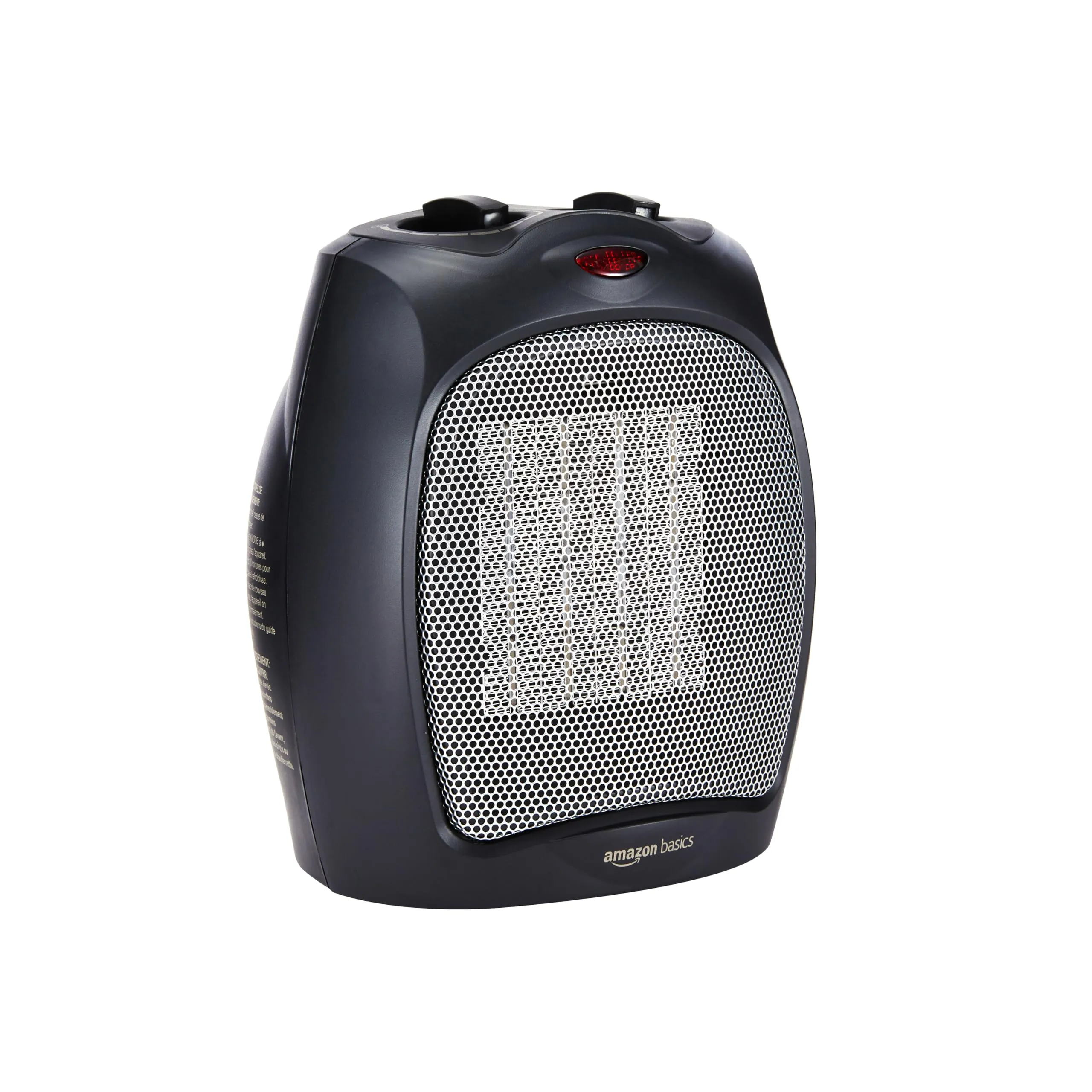
Amazon Basics Ceramic Space Heater 1500W with Thermostat (DQ1927-Y)

Contender

Amazon Basics Ceramic Space Heater 1500W with Thermostat (DQ1927-Y)

81/100
  • Higher heat output for warming small rooms faster than a mini desk heater.
View review

Quick verdict

Pick the Amazon Basics 500W mini heater if you want the smallest, lightest desk heater for personal warmth and simple on/off use. Choose the Amazon Basics 1500W ceramic heater if you need faster small-room heating, prefer a thermostat and multiple modes, and want added overheat protection alongside tip-over shutoff.

Overall winner

Depends on your needs

At-a-glance comparison

Feature Amazon Basics Ceramic Portable Mini Space Heater 500W (DQ1722B) Amazon Basics Ceramic Space Heater 1500W with Thermostat (DQ1927-Y) Winner
Type / use case Mini personal desk heater Portable small-room/personal heater Depends
Heat output 500W 1500W (High), 900W (Low) Amazon Basics Ceramic Space Heater 1500W with Thermostat (DQ1927-Y)
Heat settings Single setting (on/off) High / Low / Fan-only Amazon Basics Ceramic Space Heater 1500W with Thermostat (DQ1927-Y)
Thermostat control No thermostat mentioned Adjustable thermostat Amazon Basics Ceramic Space Heater 1500W with Thermostat (DQ1927-Y)
Safety protections (stated) Tip-over protection Tip-over + overheat protection; power indicator Amazon Basics Ceramic Space Heater 1500W with Thermostat (DQ1927-Y)
Noise (buyer feedback) Often described as quiet; some fan noise Mixed: quiet for some, noisy for others Amazon Basics Ceramic Portable Mini Space Heater 500W (DQ1722B)
Portability Very lightweight, easy to carry Portable but larger Amazon Basics Ceramic Portable Mini Space Heater 500W (DQ1722B)
Footprint / placement Very small; desktop-friendly Compact; floor or tabletop; under-desk fits Amazon Basics Ceramic Portable Mini Space Heater 500W (DQ1722B)
Controls & usability Very simple controls Simple, but more knobs/modes Depends
Room coverage suitability Best for very small spaces / personal zone Better for small rooms; still compact Amazon Basics Ceramic Space Heater 1500W with Thermostat (DQ1927-Y)
Reliability sentiment Some reports of early failure Mixed durability; some early breakage reports Depends
Value perception Frequently called good value Frequently called good value Tie
Best for travel Commonly used for travel due to size Portable, but bulkier Amazon Basics Ceramic Portable Mini Space Heater 500W (DQ1722B)
Best for temperature stability No thermostat; steady heat depends on manual use Thermostat helps cycle to maintain warmth Amazon Basics Ceramic Space Heater 1500W with Thermostat (DQ1927-Y)

Detailed comparison

Home Use

For everyday home use, both heaters work best as supplemental heat rather than a primary heat source. The 500W mini heater is easiest to “live with” in tight personal spaces—on a desk, next to a chair, or near your feet—because it’s tiny and simple. The 1500W heater is more practical when you want to take the chill out of a bedroom or office without relying on central heat, since it can run at different levels and cycle with its thermostat.

Climate Comfort

Both products are aimed at comfort heating, but their comfort impact differs. The 500W mini heater is commonly described as creating a small zone of warmth, which can be ideal if you’re sitting still at a desk or craft table. The 1500W model is better when the whole room feels cold or drafty, since the higher output and thermostat can help stabilize the overall feel of the space. Noise tolerance also matters: the mini heater is more consistently described as unobtrusive, while the 1500W model has more mixed noise feedback.

Performance

For raw heating performance, the 1500W Amazon Basics heater has the clear advantage on paper and in many reviews, with users reporting quick warm-ups in bedrooms and small rooms. The adjustable thermostat also supports more consistent room comfort compared with a simple on/off heater.

The 500W mini heater performs best as a personal desk heater—many buyers say it heats quickly and takes the chill off nearby air, but heat strength is mixed and it’s not designed to rapidly warm larger areas. If you want noticeable room heating, the 1500W model is the more appropriate tool.

Reliability

Reliability is a watch-out for both products based on review summaries. The 500W mini heater has reports of units stopping after just a couple of days, which is a significant concern if you need dependable daily heat. The 1500W heater also has mixed durability feedback, including some units breaking within a month.

That said, both have large review counts and many positive experiences. If reliability is critical, consider buying with an easy return window, testing early, and avoiding situations where a sudden failure would be high-risk or disruptive.

Climate Control

For climate control within a room, the 1500W heater is better equipped because it includes an adjustable thermostat and multiple modes, which can help prevent overheating a small space. The 500W mini heater is more “manual”: it provides quick warmth, but without temperature controls you’re more likely to manage comfort by switching it on and off or changing placement.

Also note the 1500W model’s explicit guidance to avoid humid environments, which affects where you can safely use it.

Amazon Basics Ceramic Portable Mini Space Heater 500W (DQ1722B)

Pros

  • Very compact footprint that fits easily on a desk or side table.
  • Lightweight design makes it easy to move room to room.
  • Fast heat for personal/close-range warmth based on many reviews.
  • Generally quiet for desk use, with a stated low noise level.
  • Tip-over protection with automatic shutoff for basic safety.
  • Strong value for the price, reflected in high review volume and positive sentiment.

Cons

  • Limited heat output for larger spaces; better for personal warmth than room heating.
  • Very basic controls (on/off only) with no thermostat or temperature dial.
  • Mixed feedback on heat strength; some users report it gives off very little heat.
  • Reliability concerns appear in reviews, including units stopping after very short use.
  • Some complaints about control placement or operation (e.g., rear switch / safety toggle behavior).
Amazon Basics Ceramic Portable Mini Space Heater 500W (DQ1722B)

Amazon Basics Ceramic Space Heater 1500W with Thermostat (DQ1927-Y)

Pros

  • Higher heat output for warming small rooms faster than a mini desk heater.
  • More control: High/Low/Fan-only plus an adjustable thermostat.
  • Includes both tip-over and overheat protection plus a power indicator light.
  • Compact and portable for bedroom, office, or under-desk placement.
  • Often praised for quick warm-up and steady temperature maintenance.
  • Strong value for money in buyer feedback.

Cons

  • Mixed durability feedback, including reports of units breaking within a month.
  • Noise is mixed: some find it quiet, others find it loud for small rooms.
  • Non-oscillating heat is directional, so placement matters.
  • Thermostat dial can feel imprecise (a “guessing game”) without marked temperatures.
  • Not recommended for humid environments such as bathrooms or laundry rooms.
  • Some users mention practical annoyances (e.g., indicator light always on unless unplugged).
Amazon Basics Ceramic Space Heater 1500W with Thermostat (DQ1927-Y)

Final verdict

The Amazon Basics 1500W ceramic heater is the better overall pick for most people because it offers stronger heating for small rooms, multiple modes, and a thermostat, plus both overheat and tip-over protection. Its main limitation is mixed buyer feedback on noise and durability, so it’s not a “set-and-forget” purchase without early testing.

The Amazon Basics 500W mini heater is a better fit when you want the smallest possible heater for desk-level personal warmth. Its key strengths are portability, space efficiency, and simple operation, while its main drawbacks are basic controls, limited output beyond close range, and some reliability concerns. If you need room heat, go 1500W; if you need a tiny personal warmer, the 500W mini makes more sense.

Overall winner

Depends on your needs

Frequently asked questions

Which is better: the Amazon Basics 500W mini heater or the Amazon Basics 1500W ceramic heater?

The 1500W Amazon Basics ceramic heater is usually the better pick if you want to warm a small room faster and prefer more control, thanks to multiple settings and an adjustable thermostat. The 500W mini model makes more sense for close-range personal heat on a desk or under a chair, where size and portability matter more than room coverage.

Which heater is better for a desk or under-desk use?

The 500W mini heater is purpose-built for desk-sized spaces: it’s smaller, lighter, and commonly used to create a small “bubble of warmth.” The 1500W model also works under a desk, but it’s larger and more powerful, which can be helpful in colder rooms. Your choice depends on whether you want personal warmth or broader warming.

Do either of these heaters have a thermostat?

Only the 1500W Amazon Basics ceramic heater includes an adjustable thermostat along with High/Low/Fan-only settings. The 500W mini heater is more basic and is described as having an on/off-style control without temperature adjustment, which is a common complaint in customer feedback for people who want finer control.

Which one is quieter?

Noise feedback is mixed on both, but the 500W mini heater is more consistently described as quiet for office or classroom use. The 1500W model has mixed reports: many find it quiet, while others say it can be loud in a small room. If noise is a top priority, the mini heater is the safer bet.

Which heater is better for heating a small room?

The 1500W model is generally better for small-room heating because it has much higher heat output and includes a thermostat to help maintain temperature. The 500W mini heater is widely viewed as a personal heater—good for taking the chill off nearby air, but not intended to heat an entire room quickly.

Are there reliability or durability concerns with either heater?

Yes. The 500W mini heater has reliability concerns in reviews, including reports of units stopping after very short use. The 1500W heater also has mixed durability feedback, with some reports of units breaking within a month. If you depend on daily heating, it’s worth checking return options and handling the unit carefully.

Which heater is easier to use?

The 500W mini heater is the simplest: it’s essentially a plug-in personal heater with minimal controls, which many users like for quick, no-fuss warmth. The 1500W model is still straightforward, but adds a thermostat dial and multiple settings, which improves control but can take a little trial and error to dial in.

Can either heater be used in a bathroom or humid area?

The 1500W Amazon Basics heater specifically notes it should not be used in humid environments like bathrooms or laundry rooms. For the 500W mini heater, only indoor use is stated, without specific bathroom guidance in the provided data. In general, follow each product’s instructions and avoid moisture exposure for safety.

Which one is better for small spaces and storage?

Both are compact, but the 500W mini heater is notably smaller and lighter, making it easier to store in a drawer or pack for travel. The 1500W heater is still portable and compact for a floor or tabletop unit, but it takes up more space and is better thought of as a small-room heater rather than a tiny desk accessory.

Related comparisons

Still not sure which one to choose?

Check our rankings and expert guides to find the best home lifestyle products for your goals.

View all rankings